

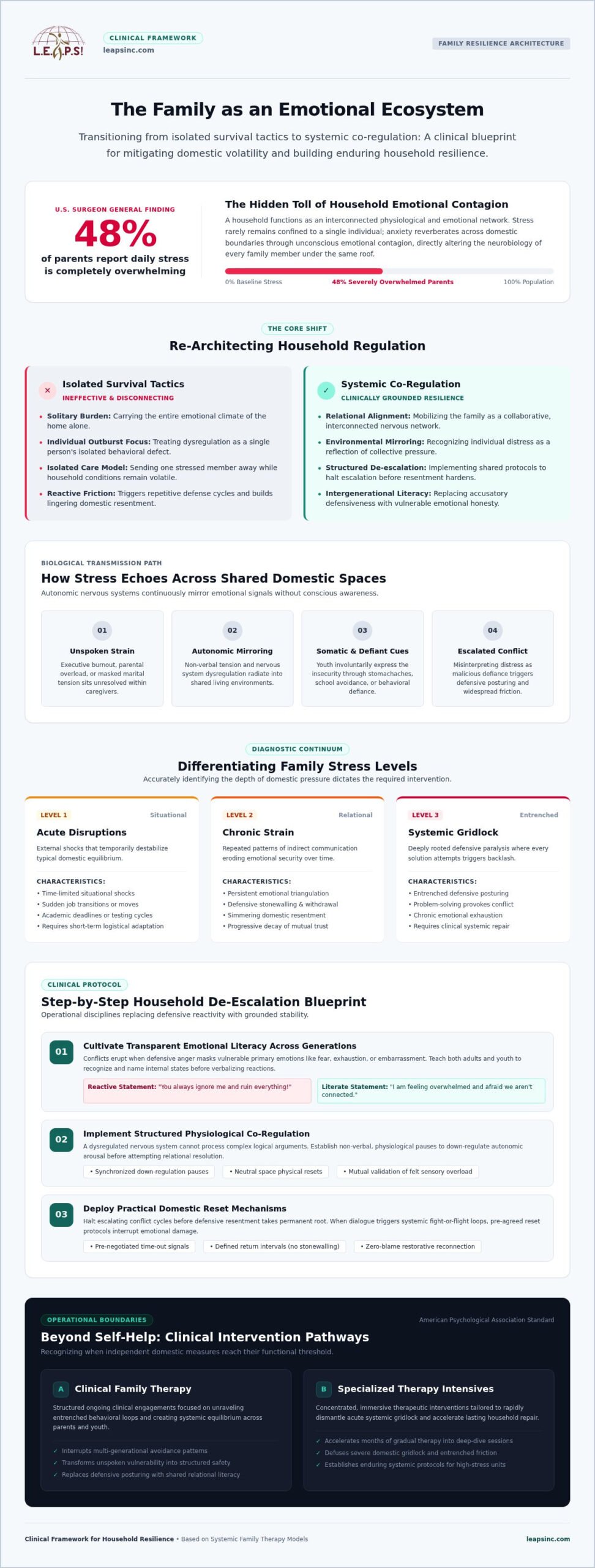
According to the U.S. Surgeon General, 48% of parents report that their daily stress is completely overwhelming. What if the answer to that chronic exhaustion isn’t solitary self-care, but establishing proactive emotional coping strategies for the family? It’s profoundly isolating to carry the emotional climate of your entire household alone, especially when daily friction triggers reactive cycles and leaves behind lingering resentment. You understand that your home should be an environment of security and growth, yet without structured guidance, navigating collective volatility often feels like an exhausting uphill battle.
True emotional resilience within a household requires systemic co-regulation rather than isolated survival tactics. When you shift focus from managing individual outbursts to aligning the relational ecosystem, you unlock your family’s latent capacity for connection. In this guide, you’ll discover actionable, clinically grounded methods to transform acute domestic stress into enduring relational strength. We examine structured de-escalation routines, evidence-based frameworks for intergenerational communication, and sustainable disciplines designed to cultivate psychological resilience across every generation under your roof.
Key Takeaways
- Understand the family as an interconnected ecosystem where individual emotional volatility unconsciously shapes the entire household’s nervous system.
- Discover clinically grounded emotional coping strategies for the family that replace defensive posturing with shared emotional literacy and physiological co-regulation.
- Identify the hidden relational costs of chronic emotional avoidance while learning to contrast reactive domestic cycles with structured, intentional coping protocols.
- Master a step-by-step de-escalation blueprint featuring practical reset mechanisms designed to halt escalating conflicts before resentment takes root.
- Recognize when self-help measures reach their operational limits and explore how structured clinical Family Therapy or specialized Therapy Intensives accelerate lasting systemic repair.
The Family as an Emotional Ecosystem: Beyond Isolated Stress
A household functions as an interconnected physiological and emotional network. When stress surfaces, it rarely remains confined to a single individual. Instead, anxiety unconsciously reverberates across domestic boundaries through emotional contagion, altering the neurobiology of every person under the same roof. Viewing domestic friction as merely one person’s behavioral defect misses the underlying architecture of human connection. Sustainable emotional coping strategies for the family operate not by suppressing isolated symptoms, but by orchestrating dynamic systemic alignment across the entire relational unit.
To examine how parents and youth can collaboratively navigate domestic tension, watch this insightful presentation:
Clinical practice reveals that sending one dysregulated child or stressed partner into isolated care seldom resolves systemic household instability. Rooted in the systemic family resilience framework, healthy coping recognizes that when individual distress arises, it acts as a mirror reflecting circulating pressure within the greater family ecosystem.
The Interconnected Nature of Household Stress
Autonomic nervous systems continuously mirror emotional signals in shared spaces. Unspoken parental pressure, executive burnout, or masked marital tension often surfaces in children as somatic complaints, school avoidance, or behavioral defiance. These reactions are rarely acts of deliberate malice; they are involuntary systemic communications signaling that the shared environment feels insecure. By establishing grounded family therapy interventions, households transform unspoken vulnerability into structured relational security.
Differentiating Acute Disruption from Chronic Family Strain
Families naturally experience situational crises, such as sudden job changes, bereavement, or academic pressure. However, these acute shocks differ fundamentally from chronic relational strain, which erodes family health over time:
- Acute Disruptions: Time-limited external crises requiring short-term logistical adaptation.
- Chronic Strain: Repetitive cycles of emotional triangulation, stonewalling, and simmering resentment that wear down mutual trust.
- Systemic Gridlock: Entrenched defensive posturing where every attempt at resolution inadvertently triggers escalated volatility.
The cumulative toll of unaddressed relational gridlock leads to sustained emotional exhaustion. Developing systemic awareness allows households to recognize these destructive cycles before they solidify, providing the bedrock required to cultivate proactive emotional coping strategies for the family.
Essential Emotional Coping Strategies for the Family Unit
Transitioning from chronic household tension to systemic calm demands operational disciplines rather than vague intentions. According to the American Psychological Association, building emotional resilience hinges on active regulatory habits and robust mutual support. Families thrive when they treat emotional health as a team practice, creating structure that turns unexpected chaos into relational alignment. Executing practical emotional coping strategies for the family bridges generational divides, helping parents and children replace defensive posturing with grounded stability.
Fostering Transparent Emotional Literacy Across Generations
Most household conflicts erupt because reactive anger masks softer, vulnerable emotions like embarrassment, fear, or exhaustion. Teaching children, teenagers, and adults to identify these primary emotional drivers defuses defensive reactions. Replace accusatory statements like “You always ignore me” with ownership language: “I feel overwhelmed and need quiet connection right now.” Establishing brief daily check-ins normalizes vulnerability, giving every generation equal emotional standing.
Somatic Grounding and Shared Sensory Co-Regulation
Words fail when biological stress systems reach high alert. In those moments, shared physiological regulation must precede cognitive problem-solving. Implementing somatic techniques resets overstimulated household nervous systems fast:
- Synchronous Breath Anchors: Inhale together for four counts, pause, and exhale for six counts to lower collective heart rates.
- Calm Vocal Modulation: Consciously drop vocal pitch and slow speech tempo during disagreements to signal physical safety.
- Designated Reset Sanctuaries: Create dedicated quiet zones in the home free from digital screens, work materials, and confrontational stimuli.
Adult self-regulation acts as the biological foundation for youth. When parents manage their own autonomic distress, children mirror that grounded internal baseline.
Predictable Connection Rituals as Emotional Containment
Resilience grows within sacred, predictable routines. Modern remote work and digital distractions often blur boundaries between executive responsibilities and domestic life. Carving out protected evening debriefs or unstructured family dinners without digital devices provides essential emotional containment. These spaces allow households to process daily pressures collaboratively rather than resorting to unilateral discipline.
If recurring emotional friction continues to outpace your home routines, you can schedule an appointment with a clinical specialist to establish structured frameworks tailored to your family’s distinct dynamics.
Reactive Reactions vs. Proactive Coping: A Systemic Comparison
Spontaneous emotional reactivity differs profoundly from structured coping. When unexpected stressors emerge, unprepared households default to instinctual survival responses: yelling, passive-aggressive withdrawal, or blaming. These reactions erode relational equity, leaving family members isolated under the same roof. Proactive systems replace these reflexive triggers with predetermined behavioral frameworks. Research in clinical approaches to managing family stress emphasizes that systemic stability depends on intentional processes rather than unguided emotional outbursts. Cultivating sustainable emotional coping strategies for the family demands contrasting these divergent modes side by side.
- Reactive Dynamics: Characterized by defensive counter-attacks, stonewalling, unaddressed anxiety contagion, and lingering domestic tension.
- Proactive Strategies: Grounded in scheduled emotional debriefs, explicit boundary setting, co-regulated calm, and collective ownership of conflict.
- Systemic Impact: Reactive households experience chronic relational depletion; proactive households generate enduring psychological safety and mutual trust.
Dismantling Emotional Triangulation and Defensiveness
When tension rises between two family members, anxiety often drives one person to pull in a third party. This pattern, known clinically as emotional triangulation, momentarily relieves individual pressure but severely damages systemic trust. A mother venting to a teenage son about her spouse or siblings pulling grandparents into nuclear disputes spreads hostility rather than resolving it. Direct, dyadic engagement is essential. By learning structured family conflict resolution techniques, family members learn to confront disputes at the true source without recruiting allies or allowing natural defensiveness to sabotage vulnerability.
Transitioning from Avoidance to Structured Conflict Engagement
Avoidance offers an illusory peace. Giving a partner the silent treatment or letting an adolescent retreat indefinitely behind a closed door may create temporary quiet, but it stores relational toxicity beneath the surface. Clinical research shows that 3 out of 5 adults hide their stress from loved ones because they fear burdening others. This silence exacts a steep operational price, breeding detachment and unvoiced resentment.
Transforming avoidance into healthy resolution requires structured emotional pauses. Agreeing on a mutual 20-minute reset protocol allows agitated nervous systems to cool down without triggering fears of abandonment. When approached with emotional maturity, conflict ceases to be a systemic threat. It becomes a vital doorway toward deeper understanding, genuine accountability, and enduring connection across the home.
A Step-by-Step Blueprint: Implementing Family Coping Checklists
Abstract advice like “communicate better” fails during real household crises. When cortisol spikes, cognitive bandwidth narrows, leaving family members unable to process complex instructions. True systemic resilience demands concrete, operational protocols. Integrating structured emotional coping strategies for the family into daily domestic routines ensures every household member knows precisely how to navigate emotional escalation without fracturing connection.
- Signal an Immediate Pause: Establish a universal, non-verbal hand gesture or code word that instantly pauses arguments when emotional thresholds are breached.
- Engage Sensory Reset Protocols: Step into separate spaces for 15 to 20 minutes to engage tactile grounding, cold water face splashes, or rhythmic breathing before discussing grievances.
- Articulate Primary Emotions: Re-enter the shared space using non-blaming sentence starters: “I felt dismissed when…” rather than “You attacked me because…”
- Execute a Repair Dialogue: Close the cycle by identifying specific operational adjustments to prevent identical recurring triggers.
Managing In-the-Moment Dysregulation and Overwhelm
Recognizing the biological signs of fight-or-flight activation stops escalation early. Clenched jaws, flushed cheeks, and elevated vocal volume signal that nervous systems have moved out of the green zone. Treat time-outs as essential emotional regulation rather than punitive measures. Never negotiate chores, finances, or family rules while someone is physiologically flooded; reasoning with a dysregulated nervous system only accelerates defensive hostility.
Executing Post-Crisis Repair and Restoring Relational Safety
Repair matters far more than having an argument-free household. When parents model accountability by apologizing for raised voices or unfair assumptions, they teach children humility and secure attachment. Once resting heart rates return, conduct a five-minute review to examine what failed in the communication chain. Clarify future expectations collaboratively so that tension transforms into structural alignment rather than lingering domestic resentment.
Clarifying Personal and Interpersonal Boundaries
Healthy systems balance togetherness with individual autonomy. Destructive emotional enmeshment occurs when one person’s bad mood dictates the emotional climate of the entire home. Individual family members must feel empowered to set firm boundaries without fearing emotional abandonment or retribution. Often, cultivating this self-differentiation starts from within. Pursuing specialized growth through individual therapy helps leaders and parents solidify internal stability, equipping them to support the wider household with confidence.
To implement these structured protocols within your own household, schedule an appointment with a licensed family clinician today to accelerate your family’s relational breakthrough.
Beyond Self-Help: Elevating Family Resilience Through Clinical Therapy
Home-based routines and de-escalation checklists provide an indispensable foundation for domestic peace. Even the most disciplined households, however, encounter moments where self-guided emotional coping strategies for the family reach their operational limits. Recognizing when self-help measures are no longer sufficient is not an admission of defeat. In clinical practice and executive leadership alike, identifying systemic bottlenecks and seeking targeted expertise is the highest expression of wisdom. Elevating your family’s dynamic through professional care transforms persistent friction into lasting relational resilience.
Critical Indicators Demanding Professional Mental Health Support
Certain behavioral patterns indicate that underlying emotional distress has overwhelmed the household’s coping capacity. When these friction points become chronic, professional intervention is vital to safeguard individual and collective well-being:
- Intractable Conflict: Arguments that routinely loop through identical defensive scripts without achieving meaningful resolution or mutual understanding.
- Pervasive Emotional Withdrawal: Sustained periods of stonewalling, chronic depressive isolation, or total disengagement between partners or across generations.
- Volatile Escalation: Frequent explosive outbursts, destructive property damage, or reliance on substance use to numb domestic anxiety.
- Somatic and Academic Decline: Children developing unexplained physical complaints, sudden drops in academic performance, or school refusal driven by domestic tension.
Viewing therapy as strategic emotional infrastructure dismantles unnecessary stigma. Just as an executive engages specialized counsel to navigate organizational challenges, families engage clinical support to secure their relational future.
The Transformative Architecture of Specialized Family Interventions
Professional systemic guidance offers objective clinical clarity that family members cannot access while caught inside the emotional storm. Engaging in dedicated family therapy allows a skilled clinician to uncover multigenerational behavioral patterns, dismantle emotional triangulation, and establish healthy differentiation. This structured environment ensures that every voice is heard without fear of retribution.
When schedules demand accelerated progress or entrenched gridlock requires profound recalibration, conventional weekly sessions may feel too slow. Immersive formats like a therapy intensive provide concentrated, deep-dive interventions designed to produce rapid breakthroughs in days rather than months. By treating domestic health as an intentional leadership discipline, you align relational harmony with your broader life purpose, ensuring your household fulfills its maximum potential.
Architecting a Resilient Future for Your Family
Building domestic harmony isn’t an accidental achievement; it’s an intentional leadership discipline. Transforming reactive cycles into lasting psychological safety requires viewing your home as an interconnected ecosystem, embedding physiological co-regulation into daily rhythms, and executing structured de-escalation protocols when pressure mounts. By committing to proactive emotional coping strategies for the family, you dismantle generational friction and unlock your household’s latent potential for deep, restorative connection.
When entrenched patterns demand expert recalibration, professional clinical guidance accelerates systemic healing. Led by seasoned expert Dr. John E. N. Daniel, LEAPS Inc. pairs clinical authority with a visionary leadership philosophy. Whether your path forward involves structured family therapy, individual counseling, or rapid-breakthrough therapy intensives, dedicated support empowers your household to thrive. Take the decisive step toward lasting relational alignment: schedule a confidential consultation with LEAPS Inc. today and begin architecting a peaceful, resilient future together.
Frequently Asked Questions
What are the most effective emotional coping strategies for the family during a sudden crisis?
The most effective emotional coping strategies for the family during an acute crisis prioritize physiological stabilization and structured information flow over immediate problem-solving. Establish transparent roles, designate quiet sensory recovery zones, and implement brief, mandatory pauses before making major decisions. Clear, calm communication shields children from circulating panic, ensuring that urgent family decisions emerge from deliberate focus rather than chaotic fight-or-flight reactions.
How can parents teach emotional regulation if their own coping mechanisms are strained?
Parents teach regulation most powerfully through transparent self-awareness and active repair rather than displaying false perfection. If your bandwidth feels exhausted, name your internal state honestly: “I am feeling overwhelmed right now, so I am taking five minutes to breathe before we speak.” Acknowledging biological limits normalizes emotional maintenance. Taking responsibility for snappy reactions teaches children that emotional maturity is a lifelong practice of intentional recovery.
What is the fundamental difference between family co-regulation and emotional enmeshment?
The critical difference lies in maintaining clear individual boundaries while offering compassionate connection. Co-regulation involves using your own calm nervous system to help a distressed family member feel grounded while remaining differentiated. In contrast, enmeshment occurs when boundaries dissolve and one person’s panic or anger hijacks the emotional state of everyone else. Healthy families offer steady presence without absorbing another member’s distress as their personal emotional burden.
How does family therapy differ from each member seeing an individual therapist?
Family therapy treats the relational system itself as the patient, whereas individual counseling focuses primarily on internal personal psychology. While individual sessions unpack personal histories, family clinicians observe live interactional patterns, systemic feedback loops, and triangular conflicts as they happen in real time. This systemic approach addresses how collective behavioral dynamics maintain dysfunction, producing coordinated shifts across the entire household that individual sessions cannot achieve on their own.
What should parents do when a teenager completely refuses to participate in family coping exercises?
Parents should respect the resistance without emotional reactivity while continuing to model proactive coping disciplines individually. Forcing adolescents into exercises often sparks defensive power struggles and deepens withdrawal. Instead, validate their autonomy and keep the door open without pressure. When parents consistently apply emotional coping strategies for the family in their own adult interactions, teenagers naturally register the reduction in domestic friction, gradually lowering their defenses as the environment feels safer.
When is it appropriate to consider an immersive family therapy intensive over weekly sessions?
A therapy intensive is appropriate when persistent gridlock, acute systemic crises, or demanding executive schedules require rapid, concentrated breakthroughs. Standard weekly therapy sessions often lose momentum between appointments, especially when families spend the first twenty minutes catching up on weekly events. An intensive provides consecutive hours or days of immersive clinical intervention. This compressed format removes daily domestic distractions, accelerating structural healing and creating profound relational recalibration in an efficient timeframe.