

What if the best online therapy for depression isn’t simply the easiest option to book, but the one that fits your needs and provides an appropriate level of support? If you’re weighing whether virtual sessions can help, it’s reasonable to have questions about privacy, therapist qualifications, and whether talking through a screen will feel comfortable.
Choosing care can feel especially demanding when depression has already made everyday decisions harder. A thoughtful comparison can help you move forward without assuming that one format works for everyone. Online therapy may suit some people, while others may need a different or more intensive form of support; the right fit depends on your circumstances and a clinician’s assessment.
This guide explains what online individual therapy involves and offers clear criteria for comparing a therapist’s credentials and approach, session formats, privacy practices, and practical access. You’ll also learn what to ask before beginning and how to identify a manageable next step. If you’re considering individual therapy with LEAPS Inc., confirm whether online sessions are available and ask about clinician qualifications, format, and fit before starting.
Key Takeaways
- Online therapy for depression can involve video, phone, or messaging; consider your needs and clinical fit, not convenience alone.
- Understand the steps from initial inquiry to setting goals and reviewing progress with a clinician.
- Compare therapist credentials, depression experience, approach, privacy practices, and session format before choosing.
- Use a decision checklist to weigh your goals, access needs, privacy, and level of support.
- LEAPS offers individual therapy; confirm directly whether online sessions are available, along with clinician credentials, location eligibility, fees, and insurance arrangements.
Online Therapy for Depression: What It Is and Who It May Suit
Online therapy for depression is mental-health care delivered remotely by a therapist through video, phone, or secure messaging. Unlike a self-guided mental-health app, it involves communication with a clinician who can listen, ask questions, and help assess what support may fit your circumstances. The format can vary: video offers face-to-face conversation, phone uses voice alone, and messaging allows written exchanges according to the provider’s arrangements. Online counseling provides an overview of remote counseling methods and considerations.
Remote care isn’t automatically the right choice for every person or concern. Suitability depends on symptoms, preferences, access, available support, and a clinical assessment. This guide can help you make informed comparisons, but it can’t diagnose depression or replace an evaluation by a qualified mental-health professional. If you’re considering care through LEAPS, you can review its individual therapy services; confirm directly whether online sessions are available and appropriate for you.
For a general look at depression and therapy, this webinar may offer additional context:
What happens in online therapy for depression?
An initial conversation may explore what’s been troubling you, how it affects daily life, what you hope to change, relevant personal history, and the support you already have. You can also ask how communication works, what happens if technology fails, and how privacy is handled. From there, you and the clinician can discuss goals and whether the format appears suitable.
There’s no single session structure or communication schedule that fits everyone. Clinicians and practices differ in how they organize care, so clarify expectations before starting and raise questions as your needs evolve. Progress is individual; your experience and goals should remain part of ongoing conversations with your treating clinician.
When might remote sessions be a practical fit?
Remote sessions may reduce travel demands or make it easier to arrange care around work, caregiving, or mobility barriers. They still require a private space where you can speak freely, a reliable internet or phone connection, and a communication format you can use comfortably. If privacy at home is difficult or messaging feels too limited for what you need, discuss alternatives rather than assuming remote care is your best option.
Start with an open conversation about your concerns and circumstances. A qualified provider can help assess whether remote sessions offer an appropriate level of support or whether another care arrangement may better suit your needs.
How Online Depression Therapy Works: Care, Communication, and Progress
A clear process can make starting care feel more manageable. Online therapy for depression typically moves through several stages, though the details vary by clinician and practice:
- Inquiry: Share what kind of support you’re looking for and ask about practical arrangements.
- Fit assessment: Discuss your concerns, preferences, and whether the clinician’s service seems appropriate.
- Collaborative goals: Identify what you hope to work toward, such as managing daily challenges or reconnecting with meaningful activities.
- Sessions and review: Meet using the agreed format, then discuss how the process is serving you and whether anything should change.
Approaches such as cognitive behavioral therapy or problem-solving therapy may be options to discuss with a qualified clinician. Their suitability depends on your circumstances, and no method should be assumed to be available through a particular practice without confirmation. The clinician can explain their approach and how it relates to your goals.
What to expect from an initial therapy conversation
Bring what feels most important: your current concerns, how they affect everyday life, your preferences for communication, and questions about care. A clinician may ask about your history and support needs, discuss confidentiality, and explain the service they provide. This first conversation helps both of you consider fit. It isn’t a promise that treatment will begin or that one particular format will be recommended.
You don’t need to arrive with a complete account or a polished explanation. It’s reasonable to say you’re unsure where to start, then ask what the clinician needs to understand next.
How therapists and clients review progress
Progress isn’t identical for everyone, and it doesn’t follow a guaranteed timeline. You and your clinician can agree on meaningful, observable goals, then revisit whether sessions are helping you move toward them. For example, you might discuss changes in your ability to manage a daily routine or take part in activities that matter to you. Goals and progress are reviewed collaboratively, not guaranteed.
Speak openly if symptoms change, a strategy doesn’t feel useful, or your needs shift. A clinician may use a validated measure such as the PHQ-9 to support assessment or track symptoms, but it’s a clinician-guided tool, not a stand-alone diagnosis or substitute for evaluation.
If you’d like to explore whether LEAPS individual therapy may fit your needs, you can use its appointment scheduling page to begin an inquiry. Confirm the available format and clinical fit directly with the practice.
Compare Online Therapy Options: Therapist Fit, Privacy, and Level of Care
Choosing online therapy for depression means looking beyond a convenient booking process. Compare the clinician’s qualifications and experience, the way sessions are delivered, the privacy safeguards, and whether the available support matches your needs. Remote care isn’t automatically suitable for every person or circumstance; a qualified provider can help assess whether it’s an appropriate fit.
Use this framework to guide questions, not as a substitute for checking details directly. Requirements and service availability can depend on where you’re located, so verify current eligibility with the provider.
| What to compare | What to ask or verify |
|---|---|
| Credentials | What is the clinician’s professional qualification, and are they authorized to provide care where you’ll be located during sessions? |
| Depression experience | Have they worked with concerns like yours, and how do they assess whether their experience fits your needs? |
| Therapeutic approach | How do they describe their approach? Ask what options they may consider and why, rather than assuming one method is right for everyone. |
| Format | Are sessions by video, phone, or another agreed method? What are the communication boundaries between sessions? |
| Privacy | How is information handled, and what technology or private space will you need to participate comfortably? |
| Access and support | Ask about availability, practical requirements, and what steps the clinician recommends if symptoms worsen or more support is needed. |
Questions to ask when comparing therapists
Before deciding, ask how the clinician assesses mutual fit and what experience they have with depression-related concerns. Clarify their approach, session format, confidentiality practices, technology requirements, and communication limits. It’s also reasonable to ask how they respond if your needs change, symptoms become harder to manage, or another form of care may be appropriate. Clear answers help you make an informed choice.
LEAPS provides individual therapy, but its online availability and depression-specific methods aren’t confirmed here. Review its individual therapy services and contact the practice to verify session format, clinician credentials, and fit.
When online therapy may not be enough on its own
If symptoms substantially disrupt daily functioning or feel difficult to manage, seek a professional assessment rather than relying on convenience as a measure of suitability. A clinician can discuss what level of care may meet your needs. If you face immediate danger or an urgent safety concern, contact emergency services or a crisis support service for immediate help instead of waiting for a routine appointment. LEAPS should not be assumed to provide crisis response, medication management, or inpatient care.
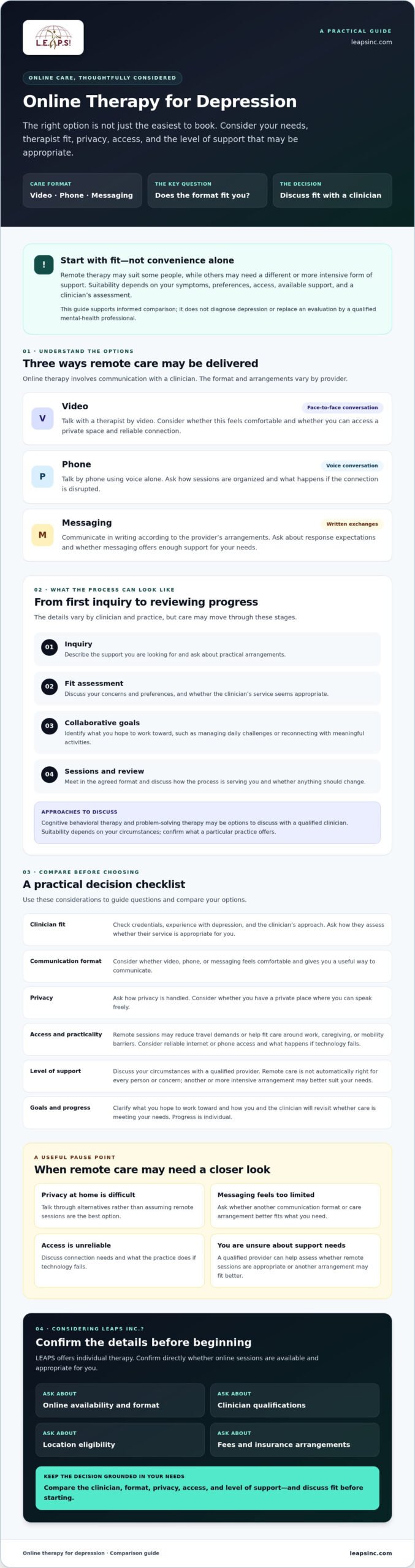
Choose an Online Therapy Option That Fits Your Needs and Circumstances
A practical choice starts with what you need from care, not just what is easiest to arrange. Use this checklist to compare options and identify questions to resolve before committing:
- Care goals: What would you like help with, and how will you and the clinician decide whether the support is relevant?
- Therapist fit: Do the clinician’s credentials, experience, and approach align with your concerns and preferences?
- Session access: Can you reliably attend the offered sessions, considering your schedule, location, and technology?
- Privacy: Can you participate somewhere you feel comfortable speaking openly, and have you asked how your information is handled?
- Support needs: Does the provider’s service appear appropriate for your current circumstances, and what happens if your needs change?
- Follow-up: How will you raise concerns, review goals, and discuss next steps with the clinician?
Convenience can make it easier to begin, but it doesn’t establish clinical suitability. Compare practical barriers alongside the quality of the therapeutic fit. Ask the practice directly about fees, payment arrangements, and whether your insurance may apply; don’t assume costs or coverage based on another provider’s policies.
Match communication format to your comfort and access
Ask which formats the provider actually offers. Video may feel more conversational for some people, while phone can be preferable if video isn’t practical. Written communication may not be available or may work differently from a live appointment, so confirm how it’s used. Consider accessibility needs, connection reliability, whether you can find a private space, and how comfortable you feel discussing personal concerns remotely.
Explore the different types of therapy to build your understanding of care options, then ask a provider which services and formats are available and clinically appropriate. LEAPS offers individual therapy, but its online-session availability isn’t confirmed, so verify the format directly.
Make the first step manageable
Keep the first inquiry simple. Write down a few priorities, such as what you want help with, your preferred session format, and questions about credentials, privacy, fees, insurance, or availability. If logistics feel difficult, you may ask a trusted person to help organize questions or support you while contacting a practice, if that feels comfortable.
Taking one informed step can be enough for now. If you’d like to discuss whether LEAPS individual therapy may fit your needs, contact the practice to inquire about an appointment and confirm the available format and fit.
Starting Individual Therapy with LEAPS: Confirm Fit and Plan a Next Step
LEAPS offers individual therapy as a form of professional mental-health support. If you’re exploring online therapy for depression, treat the first contact as a chance to clarify whether the practice’s services match your needs, not as confirmation that online care is available. The supplied information doesn’t establish LEAPS’s online formats or depression-specific methods, so ask before making plans.
For background on the practice, read about LEAPS clinical services. Then use a brief inquiry to establish the details that matter to you. A few focused questions can help turn uncertainty into a more informed decision.
What to confirm before scheduling
Ask whether online sessions are available for your location and circumstances, and which clinician would provide care. Confirm the clinician’s credentials and relevant experience, what appointment options are available, and how the intake process works. Because eligibility and availability can depend on where you’ll participate from, verify that the clinician can provide services in your location.
Clarify practical and clinical arrangements, too. Ask about fees, whether insurance may apply, how confidentiality is handled, and what technology or private space you’ll need. You can also ask what the practice recommends if your needs fall outside its scope or call for a different level of support. Getting clear answers helps you assess both practical access and clinical fit.
Turn consideration into an informed conversation
You don’t need to have everything figured out before reaching out. Briefly describe what has been concerning you, how it’s affecting daily life, and what you hope individual therapy might help you explore. Ask directly whether individual therapy could be an appropriate starting point and whether the available format suits your needs. It’s reasonable to ask questions before deciding whether to proceed.
An inquiry or appointment doesn’t guarantee acceptance into care, a particular treatment approach, or a specific outcome. It’s an opportunity to share relevant information, understand the service, and consider next steps with the practice. Take the time you need to decide whether the clinician, format, and arrangements feel appropriate.
If you’re ready to begin that conversation, schedule an appointment to discuss your needs and options. You can use the discussion to confirm availability, credentials, session modality, fees, insurance arrangements, and whether the service is a suitable fit.
Take a Thoughtful Next Step Toward Support
Choosing online therapy for depression is about more than selecting a convenient format. Consider whether the clinician’s experience, communication options, privacy practices, and level of support align with your needs, and discuss fit and progress collaboratively. If you’re considering LEAPS, individual therapy is a confirmed service, but online availability and depression-specific methods aren’t verified. Ask directly about session format, clinician credentials, location eligibility, fees, and insurance. LEAPS offers a broader suite of clinical services, so confirm which options are relevant to your situation.
You don’t need to resolve every question before beginning an inquiry. A clear conversation can help you understand what’s available and whether it may be appropriate. Schedule an appointment to discuss your needs and options, and use that conversation to determine a suitable next step. Taking time to seek informed support is a meaningful step toward greater clarity and well-being.
Frequently Asked Questions
Is online therapy effective for depression?
Research supports several forms of psychotherapy for depression, but that doesn’t mean online treatment will suit or help every person in the same way. Outcomes can vary with individual circumstances, the clinician, and the approach used. A qualified mental-health professional can help assess whether remote care is appropriate, discuss alternatives if needed, and review how you’re responding over time. Convenience alone doesn’t establish clinical fit.
How does online therapy for depression work?
Online therapy for depression may begin with an intake conversation about your concerns, needs, and goals, followed by agreement on how you’ll communicate. Depending on the provider, sessions may take place by video or phone. Approaches, frequency, privacy procedures, and progress reviews vary. Before beginning, verify which services are actually offered and ask how the clinician will assess your concerns and discuss whether the care is helping.
Can I get online therapy for depression without a diagnosis?
You can contact a qualified provider to discuss distressing symptoms without diagnosing yourself first. A clinician can ask how you’re feeling, understand how symptoms affect daily life, and assess a suitable next step. Whether a formal diagnosis is needed may depend on the care being considered, the provider, or coverage requirements. Ask about the intake process and share what you’ve noticed, even if you’re uncertain how to describe it.
How do I choose an online therapist for depression?
Compare professional credentials, experience with depression, therapeutic approach, communication format, confidentiality practices, and availability. Ask how the clinician assesses fit, discusses progress, and responds if you need additional care. Verify that the provider can serve clients in your location and confirm any relevant licensure requirements. Practical access matters, but so does feeling respected and understood. A conversation about your concerns can help you judge whether working together feels appropriate.
Is online therapy private and secure?
Ask the provider to explain how sessions and personal information are protected, what records are kept, and how confidentiality limits are discussed. No communication method should be treated as risk-free, and privacy practices can differ between providers. You can also support your own privacy by using a secure device and choosing a private space where you’re less likely to be overheard. If anything is unclear, request an explanation before sharing sensitive information.
Can online therapy treat severe depression or an immediate crisis?
Only a qualified clinician can assess what level of care is appropriate, and routine remote therapy may not meet every urgent need. If you’re in immediate danger or unable to stay safe, contact emergency services or call or text 988, the Suicide & Crisis Lifeline in the United States. Don’t wait for a routine appointment in an emergency. LEAPS should not be treated as a crisis response provider.
Does LEAPS offer online therapy for depression?
LEAPS offers individual therapy, but the available information doesn’t confirm online sessions or depression-specific treatment. Before scheduling, ask about session format, whether the practice can serve you where you’re located, clinician experience, appointment availability, fees, and insurance. You can contact LEAPS to inquire and discuss whether its individual therapy may fit your needs. An inquiry is an opportunity to clarify options, not confirmation that remote care is available.