
Table of Contents
- The Silent Crisis: Why High-Achievers Are Breaking Down
- Understanding Executive Burnout Beyond Surface Symptoms
- The Limitations of Traditional Stress Management Approaches
- How Resilience Coaching Differs from Generic Wellness Programs
- Our Integrated Approach to Executive Recovery and Leadership Renewal
- Assessing Your Readiness for Transformational Change
- Building Sustainable Resilience Through Personalized Coaching
- Faith-Integrated Strategies for Professional and Personal Alignment
- Real-World Outcomes: Executives Who Reclaimed Their Excellence
- Why In-Person and Telehealth Flexibility Matters for Busy Leaders
- Taking Your First Step: Schedule Your Free Consultation
- Frequently Asked Questions (FAQ)
The Silent Crisis: Why High-Achievers Are Breaking Down
The corner office doesn’t feel like a trophy anymore. It feels like a cage.
You’ve spent years building expertise, climbing the ladder, and proving yourself. Yet somewhere between the board meetings and the midnight emails, the energy that once fueled your ambition has drained away. You’re not alone. Among high-achieving professionals, burnout is reaching epidemic proportions, but it rarely announces itself loudly. Instead, it whispers through fatigue, cynicism, and a creeping sense that no achievement feels meaningful.
At LEAPS Inc., we’ve worked with hundreds of executives who describe the same pattern: stellar performance on the outside, profound exhaustion on the inside. The irony is sharp. Success itself becomes the problem. The very traits that made you excellent—relentless drive, perfectionism, unwavering focus—now work against your wellbeing.
What separates resilience coaching from simply “toughing it out” is this: we don’t ask you to work harder or push through. We help you understand what’s actually driving the breakdown and build a sustainable path forward. The alternative isn’t decline. It’s transformation.
Understanding Executive Burnout Beyond Surface Symptoms
Burnout masquerades as many things: low motivation, poor focus, irritability with your team, or detachment from work that once excited you. But these surface symptoms rarely tell the whole story.
True executive burnout operates on three levels:
Emotional exhaustion shows up as depleted energy reserves and difficulty bouncing back from setbacks. You may feel numb to feedback or disconnected from decisions that should matter.
Depersonalization or cynicism emerges when you start viewing your role, team, or industry with jadedness. Colleagues seem difficult. Projects feel pointless. Your sense of purpose fractures.
Reduced personal accomplishment strikes hardest for high-achievers. Despite external success, you feel ineffective, as though nothing you do truly matters. The disconnect between what you’ve achieved and how hollow it feels creates a painful gap.
We’ve observed that many executives don’t recognize burnout until it affects their relationships, health, or decision-making. A leader might attribute a marriage strain to being “too busy” without realizing burnout has eroded their capacity for emotional presence. Another might blame poor judgment on market conditions when the real issue is cognitive overload and chronic stress.
The key insight: burnout is not a personal failing or a sign of weakness. It’s a signal that your current approach to work and life is unsustainable. Recognizing that distinction is where recovery begins.
The Limitations of Traditional Stress Management Approaches
Most corporate wellness programs approach burnout as a problem to manage through relaxation. Meditation apps, yoga classes, and “take a mental health day” encouragement have their place, but they rarely address root causes.
Here’s what we’ve learned: surface-level stress management often enables executives to function longer on an unsustainable path. You feel slightly better after a massage or a quiet weekend, then return to the same patterns that drained you. The relief is temporary because nothing fundamental has shifted.
Traditional approaches also assume burnout is primarily about workload. In reality, burnout is about misalignment: between your values and your actions, between your capacity and your commitments, between who you’re becoming and who you want to be. A time-management course or a stress-reduction workshop can’t address that misalignment.
Additionally, generic wellness initiatives often fail to honor the complexity of executive life. They don’t account for the specific pressures of leadership decision-making, the burden of accountability, or the isolation that often accompanies authority. A one-size-fits-all program can’t meet you where you actually are.

What’s missing from traditional approaches is personalized insight paired with accountability for real change. This is where resilience coaching creates a meaningful difference.
How Resilience Coaching Differs from Generic Wellness Programs
Resilience coaching operates from a fundamentally different premise. Rather than teaching you coping techniques to manage burnout, we work with you to understand its roots and redesign your professional and personal approach.
Our resilience coaching process focuses on:
Self-assessment and insight. We use value-added assessments to help you clarify what matters most, identify where your current reality diverges from your values, and recognize patterns in your thinking that fuel exhaustion. This isn’t intuitive; it requires structured reflection and professional guidance.
Behavioral change, not just awareness. Many professionals know what they should change but lack a structured path to actually implement it. We provide that framework, helping you move from insight to concrete action.
Sustained support. Unlike a one-day workshop, coaching is ongoing. We work through obstacles, adjust strategies, and hold you accountable as you rebuild resilience muscle.
Integration of whole-self perspective. We recognize that your leadership effectiveness, emotional wellbeing, relationships, and sense of purpose are interconnected. Addressing burnout means attending to all these dimensions, not compartmentalizing them.
The distinction matters because resilience isn’t about becoming tougher or more efficient. It’s about becoming more intentional, more aligned with your values, and more capable of sustaining excellence without sacrificing yourself in the process.
Our Integrated Approach to Executive Recovery and Leadership Renewal
At LEAPS Inc., we’ve developed an integrated model that addresses both the immediate pain of burnout and the deeper patterns sustaining it. Our approach combines professional coaching expertise with therapeutic insight, designed specifically for high-achieving professionals.
We begin by understanding your unique situation: the specific pressures you’re facing, the relationships strained by burnout, and the gap between where you are and where you want to be. This foundation informs everything that follows.
Our executive coaching addresses strategic questions about your role, your leadership style, and your professional direction. We help you gain clarity on sustainable goals and identify leadership patterns that may be contributing to exhaustion. Simultaneously, we address the psychological and relational dimensions that shape your resilience.
We incorporate evidence-based assessments to clarify your values, strengths, and areas for growth. These assessments become mirrors for self-awareness and touchstones for your coaching journey. Throughout the process, we help you develop practical strategies for managing decision-making pressure, setting boundaries, and sustaining energy even during demanding seasons.
What sets our approach apart is the recognition that executive recovery requires both professional redirection and personal renewal. We won’t ask you to abandon your ambitions. We’ll help you pursue them in ways that don’t destroy you.
Assessing Your Readiness for Transformational Change
Resilience coaching requires more than recognizing you’re burned out. It requires a genuine willingness to examine patterns and make different choices, even when those choices feel uncomfortable or risky.
Consider these questions honestly:
Are you willing to question assumptions you’ve held about what success requires? Many executives discover that their definition of achievement has been inherited from others, not chosen. Changing that requires vulnerability.
Can you commit to regular, focused work on yourself? Coaching isn’t passive. It asks you to invest time and emotional energy in reflection and change.

Are you ready to have difficult conversations? Recovery often means discussing boundaries with your boss, renegotiating expectations with your team, or addressing disconnection with your family. These conversations require courage.
Do you value growth more than certainty? Transformation involves stepping into uncertainty. If you need guarantees before you move, coaching will feel frustrating.
Readiness isn’t about having all the answers. It’s about recognizing that your current path isn’t working and being willing to explore alternatives. If you find yourself nodding to most of these questions, you’re likely ready for the kind of work resilience coaching offers.
Our free 15-minute consultation gives you space to explore whether our approach fits your situation and your needs.
Building Sustainable Resilience Through Personalized Coaching
Resilience isn’t built through willpower alone. It’s cultivated through consistent practices paired with real shifts in how you approach work, relationships, and self-care.
We help you develop resilience practices tailored to your life:
Mental clarity practices that help you distinguish between urgent and important, reducing the constant sense of everything demanding immediate attention.
Relationship maintenance strategies that keep key connections strong even during high-pressure seasons, because isolation amplifies burnout.
Decision-making frameworks that build confidence and reduce the cognitive overload that comes from constantly second-guessing yourself.
Energy management systems that help you recognize what depletes you and what replenishes you, then intentionally structure your weeks accordingly.
The goal is to move beyond crisis management to a sustainable rhythm where high performance and wellbeing can coexist. This typically takes consistent effort over several months, though shifts often begin within weeks.
We track progress through regular check-ins and assessment reviews. You’re not just feeling better; you’re measurably building resilience capacity. That progress becomes motivation for continued change.
Faith-Integrated Strategies for Professional and Personal Alignment
For many of our clients, burnout signals a deeper misalignment between their faith, values, and daily life. The relentless pursuit of professional achievement can gradually pull you away from what matters most spiritually and relationally.
We offer Christian-based counseling and coaching that honors your faith perspective while addressing professional challenges. This integration isn’t about spiritualizing your workload. It’s about helping you live in congruence with your deepest convictions.
This might mean exploring how your faith shapes your definition of success, or recognizing where you’ve adopted worldly standards of achievement that contradict your spiritual values. It might involve developing practices like prayer, reflection, or sabbath-keeping that reconnect you with purpose beyond productivity.
Faith-integrated coaching creates space to ask harder questions: What am I building my life toward? Whose approval am I really seeking? Where have I traded spiritual conviction for professional advancement? These questions, when explored with a skilled coach who understands both business and faith, often unlock profound shifts in resilience and satisfaction.
Real-World Outcomes: Executives Who Reclaimed Their Excellence
The executives we work with typically describe similar transformations. A VP of Operations realized her perfectionism was rooted in childhood experiences with criticism. As she worked through this in individual therapy alongside her coaching, her leadership style became more empowering and less micromanaged. Her team’s performance improved, and her own stress dropped significantly.
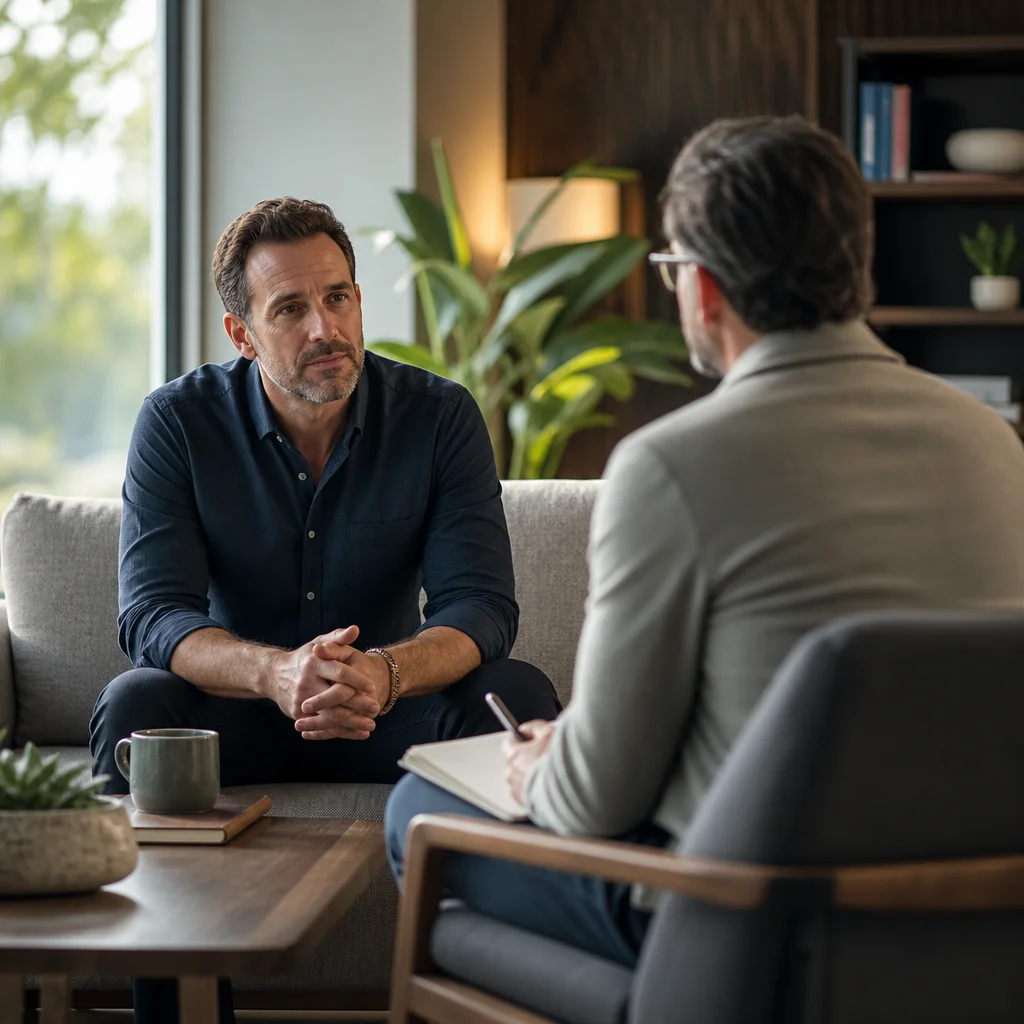
Another client, a C-suite leader facing marriage strain due to work obsession, discovered through our work that he’d been using achievement to avoid deeper fears about worthiness. Addressing these fears freed him to prioritize his marriage without losing his competitive edge. He’s still driven, but now he’s also present.
A third example: an entrepreneur caught in the trap of thinking she had to do everything herself redefined her leadership model with our guidance. She learned to delegate strategically, built a stronger team, and experienced genuine joy in her work again. Her company scaled, and so did her life.
These aren’t remarkable stories because the problems were simple. They’re remarkable because the solutions required seeing patterns, making difficult changes, and committing to growth. The executives who experience these shifts don’t do so passively. They engage deeply in the process and trust the journey.
Why In-Person and Telehealth Flexibility Matters for Busy Leaders
Your schedule is unpredictable. You might have a meeting cancel, then find yourself on a plane. Rigid coaching schedules don’t work for executive life.
We offer both in-person and telehealth sessions across our Florida locations: Orlando, Tampa, Fort Lauderdale, Jacksonville, Miami, St. Petersburg, Tallahassee, and Cape Coral. This flexibility ensures you can access support in the modality and location that works best for your week.
In-person sessions create a dedicated, distraction-free space for deep work. There’s something powerful about stepping away from your office environment into a therapeutic setting designed for reflection.
Telehealth provides flexibility without sacrificing quality. You can participate from your office, a quiet hotel room, or home. For many leaders, this accessibility means consistency that wouldn’t be possible otherwise. Consistency matters more than perfection in coaching.
The modality doesn’t determine effectiveness. What matters is your commitment to showing up and engaging authentically. We’re equipped to deliver that same quality and presence whether we’re meeting in person or on a screen.
Taking Your First Step: Schedule Your Free Consultation
Recovery from burnout doesn’t require quitting your job or abandoning your ambitions. It requires a different approach, professional guidance, and your own willingness to change.
Our free 15-minute consultation lets you explore whether resilience coaching is right for you. You’ll speak with a professional who understands executive life, burnout patterns, and the path to genuine recovery. We’ll discuss your specific situation, answer your questions, and help you understand what working together might look like.
You don’t need to have everything figured out before reaching out. You just need to recognize that your current path isn’t sustainable and be curious about alternatives.
Visit us at https://www.leapsinc.com or call to schedule your consultation today. Your excellence doesn’t have to cost you your wellbeing. Let’s build a different path forward.
Frequently Asked Questions (FAQ)
How is your resilience coaching different from standard stress management programs?
We recognize that executive burnout requires more than generic wellness tips. Our approach combines executive coaching, psychotherapy, and business consultation to address the root causes of burnout rather than just surface symptoms. We also integrate faith-based principles when aligned with your values, helping you reconnect your professional goals with deeper personal meaning.
Can I work with you if I’m extremely busy with limited availability?
We designed our services specifically for high-achieving professionals with demanding schedules. We offer both in-person sessions at our locations across Florida (Orlando, Tampa, Fort Lauderdale, Jacksonville, Miami, St. Petersburg, Tallahassee, and Cape Coral) and convenient telehealth options so you can engage in coaching without disrupting your work commitments. We also provide free 15-minute consultations to help you determine the best format and frequency for your situation.
What should I expect during my first consultation with you?
Our initial meeting focuses on understanding your unique challenges, current burnout patterns, and professional goals rather than offering quick fixes. We use value-added assessments to gain deeper insight into your situation, which helps us create a personalized recovery plan tailored to your needs as a leader and individual.