
Table of Contents
- Why Infidelity Betrayal Cuts So Deep for High-Achieving Couples
- The Spiritual Dimension of Healing From Relationship Betrayal
- How Our Christian Counseling Approach Bridges Faith and Professional Healing
- Understanding Trauma Responses After Infidelity Discovery
- Our Proven Framework for Reconstructing Trust and Connection
- Integrating Faith-Based Practices Into Your Recovery Journey
- Real Transformation: What Couples Achieve Through Our Program
- Taking Your First Step: Our Free 15-Minute Consultation
- Frequently Asked Questions (FAQ)
Why Infidelity Betrayal Cuts So Deep for High-Achieving Couples
When infidelity surfaces in a high-achieving relationship, the impact feels different than in other contexts. You’ve built a life around shared goals, mutual respect, and what felt like an unshakeable partnership. The discovery doesn’t just damage trust in your relationship; it challenges your identity as a couple and forces you to question judgments you’ve made in every other area of your life.
High performers often internalize betrayal as personal failure. You may find yourself replaying decisions, wondering how you missed signs, or feeling that your professional success somehow blinded you to what was happening at home. The cognitive dissonance is sharp: someone you trusted completely acted in direct contradiction to the values you built together.
What makes this pain distinctive is the compounding loss. You’re grieving not only the breach of fidelity but also the loss of the narrative you believed you were living. The future you’d planned together now feels uncertain. Many couples in this position describe a kind of existential vertigo, where the solid ground beneath them has shifted unexpectedly.
This is why infidelity recovery requires more than communication tips or conflict-resolution templates. It demands professional guidance that honors both the depth of the wound and your capacity to heal.
The Spiritual Dimension of Healing From Relationship Betrayal
Faith becomes particularly important when processing betrayal. For many couples, spirituality isn’t an accessory to healing; it’s central to how you make meaning from suffering and move toward restoration.
Betrayal creates spiritual questions alongside emotional ones. How do you reconcile faith teachings about forgiveness with the legitimate pain you feel? Can you trust again if trust was broken? Does moving forward mean you’ve minimized what happened? These questions deserve thoughtful, compassionate exploration, not dismissal.
Within a faith framework, forgiveness isn’t about erasing the harm or pretending the betrayal didn’t matter. It’s a deliberate choice made in your own timing, often after genuine accountability from your partner and real work to rebuild the relationship. This distinction matters enormously. Spiritual healing happens when you’re supported in distinguishing between forgiveness (a spiritual practice) and trust restoration (a relational process that takes time and consistent behavior change).
Many faith traditions also emphasize covenant and restoration as central themes. Drawing on these spiritual resources can provide both comfort and structure as you navigate recovery. Your faith community may offer additional support, but professional guidance helps you navigate complex questions that emerge in the spaces between theology and lived experience.
How Our Christian Counseling Approach Bridges Faith and Professional Healing
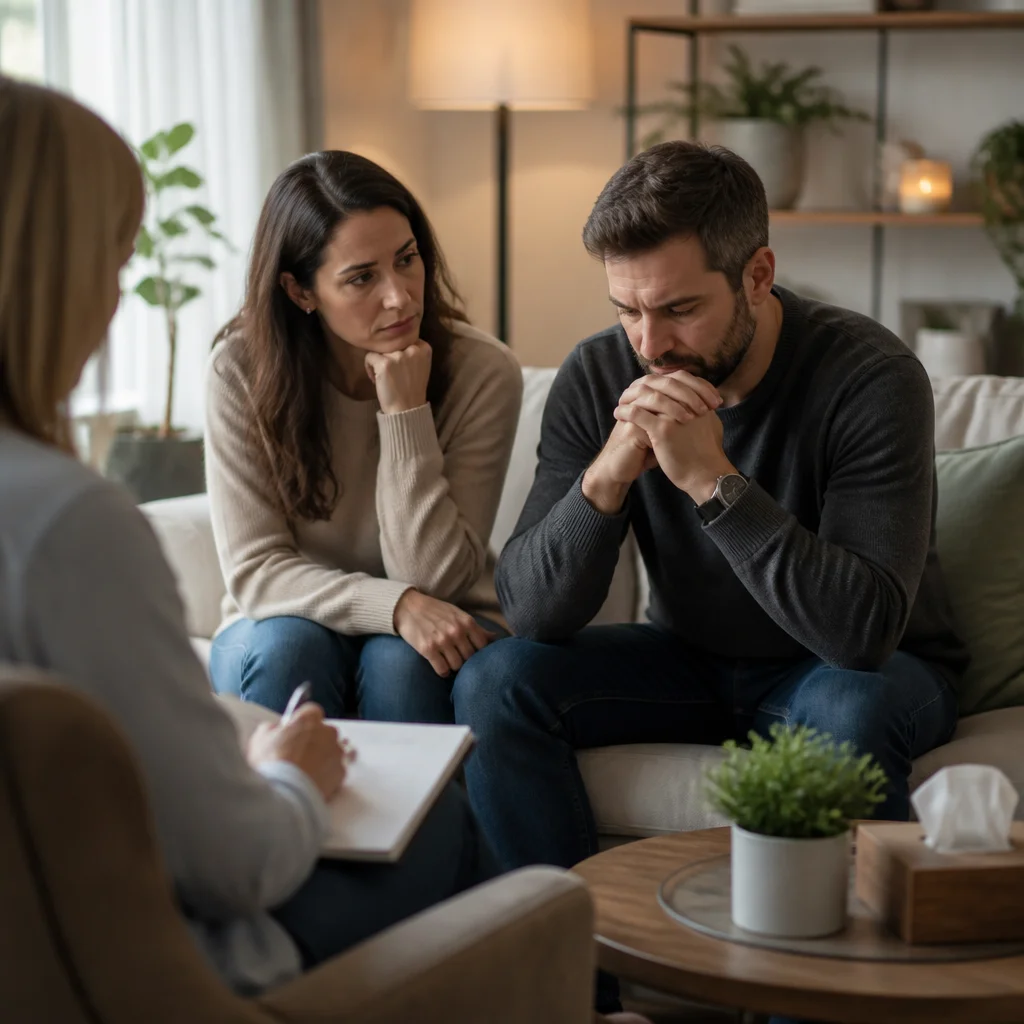
At LEAPS Inc., we integrate Christian principles with evidence-based therapeutic practice because we believe these approaches strengthen each other rather than compete. Our counselors are trained in trauma-informed therapy while honoring your faith commitments as non-negotiable anchors in your healing journey.
This integration means several practical things in session:
We help you examine infidelity through both psychological and spiritual lenses. The betrayal has real neurological and emotional impacts that require professional attention. Simultaneously, your faith provides ethical frameworks, hope narratives, and spiritual practices that support lasting recovery.
We don’t impose faith onto anyone. If you’re seeking Christian counseling, we work within your stated beliefs. If you’re exploring your faith as part of recovery, we support that exploration thoughtfully. Our role is to create space where professional healing and spiritual growth reinforce each other.
We understand that trust, in a Christian context, isn’t naive optimism. It’s a practiced choice grounded in observable behavior change and renewed covenant commitment. We help both partners understand what accountability looks like and how it differs from shame-based punishment or superficial reconciliation.
Our infidelity recovery therapy is structured to address the full person, not just the relationship mechanics. This comprehensive approach honors your complexity as high-achieving individuals navigating both professional excellence and intimate vulnerability.
Understanding Trauma Responses After Infidelity Discovery
Infidelity is a genuine trauma. The discovery activates your nervous system’s threat response, and the aftermath can look similar to other post-traumatic stress presentations. Understanding this helps normalize what you’re experiencing and makes treatment more effective.
Common trauma responses include hypervigilance (scanning for signs of further betrayal), intrusive thoughts (images or scenarios replaying without your control), emotional flooding (sudden waves of grief or rage), numbness or dissociation, and difficulty concentrating. High-achievers often report that their professional performance declines sharply in the weeks following discovery, which compounds feelings of loss of control.
Your nervous system doesn’t immediately accept that the crisis has passed. Even when the infidelity is acknowledged and your partner commits to recovery, your brain may remain in protection mode. This isn’t weakness or failure; it’s a physiological response that requires intentional support to resolve.
Trauma-informed therapy helps you gradually recalibrate your nervous system’s threat assessment. We use evidence-based techniques that help your brain and body register safety again, not through denial of what happened but through building new neural pathways associated with genuine safety and trustworthiness in your relationship.
Our Proven Framework for Reconstructing Trust and Connection
Trust reconstruction follows a different timeline and logic than initial relationship building. We use a structured framework that acknowledges both the damage and the realistic possibility of genuine restoration.

The first phase focuses on stabilization and safety. Both partners need to feel emotionally and relationally safe enough to engage in deeper work. For the partner who was betrayed, this means experiencing genuine accountability and consistent behavior change. For the partner who committed the infidelity, this means facing the impact of their choices without defensiveness and committing to specific behavioral changes.
The second phase addresses the relational rupture directly. This isn’t about rehashing every detail; it’s about each partner genuinely understanding how the betrayal affected the other. The betrayed partner’s experience is validated. The unfaithful partner develops genuine empathy for the pain they caused, moving beyond surface apology to authentic understanding.
The third phase involves rebuilding connection through renewed commitment and often through spiritual rituals that mark the transition from pain to restoration. This might include covenant renewal ceremonies, recommitment to shared values, or structured practices that rebuild emotional and physical intimacy.
Throughout this process, we help couples rebuild trust after infidelity by making trust concrete and observable. Trust isn’t a feeling that returns suddenly; it’s rebuilt through consistency, transparency, accountability, and time. We help you establish specific behaviors and practices that demonstrate trustworthiness and allow trust to gradually re-establish.
Integrating Faith-Based Practices Into Your Recovery Journey
Faith-based practices serve as active tools in recovery, not merely comforting background elements. We help couples identify which practices resonate most deeply and integrate them into your healing rhythm.
Prayer, studied reflection on Scripture, spiritual direction, and community support each offer specific benefits. Prayer can help you process emotions and reconnect to your spiritual center. Scriptural reflection can provide frameworks for understanding forgiveness, accountability, and restoration. Your faith community can offer practical support and belonging during an isolating time. Spiritual direction can help you explore how your faith is evolving through this experience.
We also help couples address faith questions that often arise after betrayal: Does God still bless this marriage? How do I pray when I’m angry at my partner and struggling to forgive? What does it mean to honor my commitment when trust is broken? These aren’t abstract theological questions; they’re deeply personal and deserve skilled guidance.
Some couples find meaning in fasting, in serving others together, or in deepening spiritual practices as a couple. Others benefit from engaging with faith leaders who can provide additional support. We help you discern what will genuinely support your healing rather than adding pressure or guilt.
Real Transformation: What Couples Achieve Through Our Program
Couples who engage fully in our Christian counseling for infidelity recovery report profound shifts in how they relate to each other and to their faith. They move from crisis to stability, from blame to genuine accountability, and from despair to hope that’s grounded in real work and behavioral change.
Many describe rediscovering their partner as a fuller person. The infidelity, while devastating, sometimes catalyzes deeper conversations and greater authenticity than existed before. High-achieving couples particularly report that the professional communication skills they’ve honed become tools for navigating intimate conversations with new depth.
Partners who were unfaithful often experience genuine transformation. When they move beyond defensiveness and truly understand the impact of their choices, something shifts. Recovery becomes less about damage control and more about becoming the person and partner they genuinely want to be.

Most importantly, couples report that their faith feels more real, more hard-won, and more grounded in actual experience. Forgiveness, when it comes, feels like a genuine spiritual achievement rather than a concept they read about. Their marriage, rebuilt through intentional work and spiritual commitment, becomes a source of strength rather than a source of ongoing anxiety.
Taking Your First Step: Our Free 15-Minute Consultation
Recovery from infidelity doesn’t happen in isolation, and it doesn’t follow a timeline you can predict. What it requires is professional support grounded in both therapeutic expertise and faith sensitivity, along with your genuine commitment to the hard work of reconstruction.
At LEAPS Inc., we’re here to walk alongside you. Our Christian counseling for infidelity recovery is available through both in-person and telehealth sessions across multiple Florida locations, including Orlando, Tampa, Fort Lauderdale, Jacksonville, Miami, St. Petersburg, Tallahassee, and Cape Coral.
We invite you to start with a free 15-minute consultation. This conversation lets us understand your specific situation, answer your questions, and help you determine whether our approach feels like the right fit for your journey. During this call, you’ll speak directly with a counselor who can discuss how we integrate faith and professional healing in a way that honors your values and addresses your real needs.
Take that first step today. Recovery is possible, restoration is real, and your faith can be a wellspring of healing when you have the right professional support alongside it.
Frequently Asked Questions (FAQ)
How do we integrate Christian faith into the infidelity recovery process?
We believe healing from betrayal is deepest when it honors your spiritual foundation. Our therapists work with you to explore forgiveness through a Christian lens, examine how faith can rebuild trust, and develop spiritually grounded practices that support your emotional healing. We don’t impose beliefs but rather weave your existing faith commitments into concrete therapeutic strategies for moving forward.
What makes our approach different from standard couples counseling for infidelity?
We combine evidence-based trauma therapy with faith-integrated principles specifically designed for high-achieving professionals navigating betrayal. Our framework addresses not just the relational breach, but the spiritual wound that infidelity creates, while providing practical tools for reconstructing connection. We also assess how achievement-oriented patterns may have contributed to the crisis, helping couples build healthier dynamics alongside their recovery.
Can we do infidelity recovery counseling through telehealth, or do we need to meet in person?
We offer both telehealth and in-person sessions across our Florida locations, so you can choose what feels most comfortable for your situation. Many of our clients find telehealth valuable for maintaining privacy and flexibility, while others prefer the deeper presence of face-to-face work. We recommend starting with our free 15-minute consultation to discuss which format serves your recovery journey best.