

After cheating, couples often feel trapped between painful conversations and an uncertain future. Marriage counseling can provide a structured setting to process betrayal, improve communication, establish accountability and boundaries, and decide whether rebuilding the relationship is a safe and realistic goal.
What problem are you trying to solve after cheating?
After infidelity, the immediate problem is usually a combination of emotional injury, broken trust, communication breakdown, and uncertainty about what should happen next. The hurt partner may feel shock, grief, anger, shame, or fear, while the partner who cheated may feel guilt, defensiveness, confusion, or fear of losing the relationship. Emotional distance can grow when every conversation turns into an argument or ends before either person feels heard.
The central decision is not simply whether you should stay together. You also need to consider what support can help you assess safety, accountability, transparency, boundaries, communication, and shared goals. Some couples begin with calm, self-directed conversations and agree on immediate boundaries. Repeated conflict, ongoing secrecy, emotional flooding, or stalled discussions often indicate that professional support could make the process more manageable.
If there are threats, coercion, intimidation, immediate safety concerns, or ongoing harm, address personal safety and seek appropriate specialized resources before beginning joint counseling.
Recognizing the immediate relationship strain
The first sign that support may help is a repeated cycle of accusation, denial, withdrawal, or escalation that prevents productive conversation. You may also notice sleep disruption, constant checking, fear of more disclosures, or an inability to discuss ordinary responsibilities without returning to the betrayal. Counseling can help identify these patterns without treating either partner’s pain as irrelevant.
Separating relationship repair from individual healing
Marriage counseling addresses the relationship, but each partner may also need individual space to process grief, shame, anger, anxiety, or personal responsibility. Joint sessions do not require instant forgiveness or a final decision about staying together. They can help clarify what each person needs, while individual therapy or another resource may support concerns that cannot be handled safely in a shared session.
How does general couples therapy differ from infidelity recovery counseling?
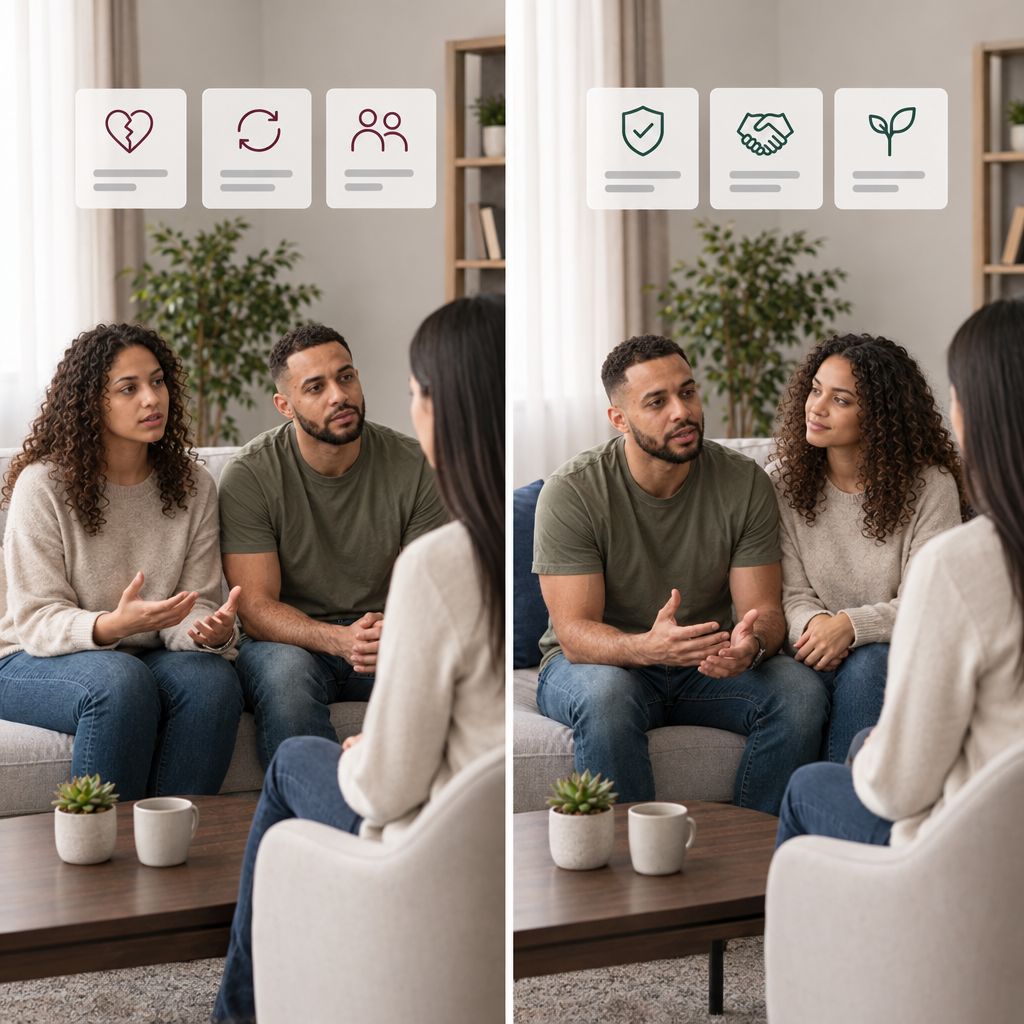
General couples therapy addresses relationship patterns, while infidelity recovery counseling focuses more directly on the injury caused by betrayal and the conditions needed for trust repair. Couples therapy may help with communication difficulties, recurring conflict, emotional distance, trust issues, intimacy, parenting stress, and conflict resolution. Specialized support may spend more time on betrayal trauma, anger, grief, shame, uncertainty, accountability, transparency, and relationship boundaries.
- Primary concern: General relationship patterns versus betrayal-related injury.
- Early goal: Improve communication versus establish enough emotional safety for honest conversations.
- Practical focus: Conflict resolution and connection versus accountability, transparency, and boundaries.
- Best fit: Couples with broad relationship concerns versus couples whose current crisis centers on cheating.
These approaches can overlap. A couple may need infidelity recovery support alongside individual therapy, or may begin with general couples therapy after the most urgent betrayal-related concerns have been addressed. A consultation can help clarify which starting point fits your situation rather than requiring you to choose a label on your own.
The broader work of couples and marriage therapy
Couples and marriage therapy can help partners understand recurring patterns and practice clearer communication during conflict. The work may include emotional connection, trust issues, parenting stress, intimacy, expectations, emotional regulation, and practical conflict resolution. This broader approach can be useful when cheating is one part of a longer period of disconnection or unresolved relationship strain.
The focused work of betrayal recovery
Infidelity recovery counseling centers the impact of the betrayal and the steps required for safer, more honest interaction. Sessions may address anger, grief, shame, uncertainty, accountability, transparency, contact boundaries, and the pace of rebuilding trust. The purpose is not to force reconciliation, but to create clearer conditions for informed decisions and healthier communication.
What happens when couples begin counseling after infidelity?
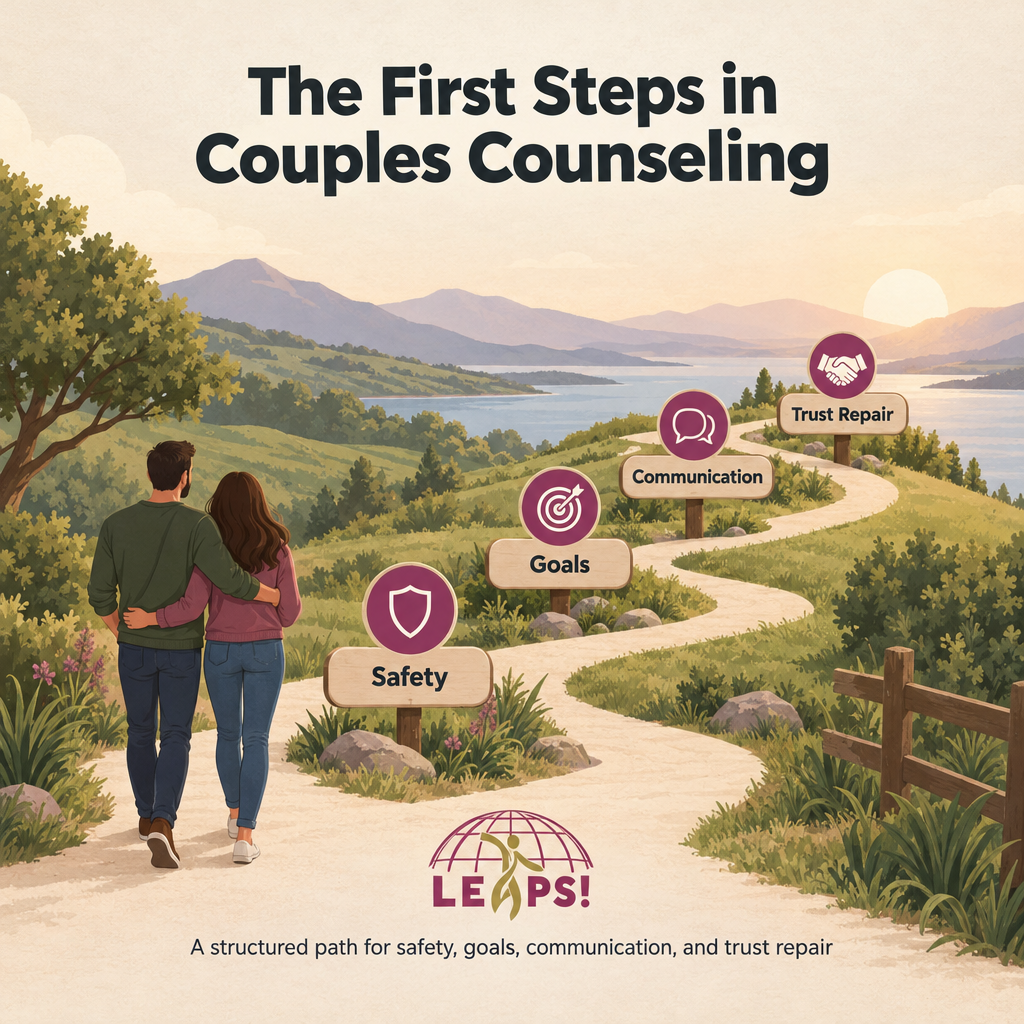
Early counseling usually begins by identifying each partner’s concerns, clarifying goals, discussing current communication patterns, and establishing boundaries for productive sessions. The clinician may help the couple decide which topics need attention first and how to discuss difficult information without allowing every conversation to become uncontrolled conflict.
Counseling can create room for accountability and transparency while making space for anger, grief, shame, fear, and uncertainty. Progress may appear as more honest conversations, clearer boundaries, fewer circular arguments, or a better understanding of what each partner is willing to change. Therapy should not be used to pressure someone into immediate forgiveness or a rushed decision about the relationship.
Before the first appointment, consider these practical preparations:
- Write down what you hope counseling will clarify.
- Identify topics that repeatedly trigger escalation.
- Describe what respectful communication would look like.
- Bring questions about confidentiality, session structure, and next steps.
Preparing for the first conversation
The first useful conversation is usually specific: explain why you are seeking help now, identify the recurring conflict, and name what you hope will change. You do not need to present a polished history or agree on every detail before starting. Bring questions about how the clinician handles disclosures, emotional escalation, accountability, and individual concerns so expectations are clearer from the beginning.
Building a workable repair process
A workable repair process uses manageable goals instead of demanding instant trust. Partners may begin by agreeing on communication limits, discussing transparency, identifying triggering situations, and practicing how to pause before an argument becomes harmful. A common pitfall is treating one calm session as proof that the injury is resolved; lasting change requires repeated honest participation and attention to boundaries.
How should couples decide whether they are ready for joint counseling?
Readiness for joint counseling means there is enough willingness to participate honestly and safely, not that both partners feel calm or equally certain about staying together. Couples should consider whether difficult conversations can happen without threats, intimidation, retaliation, minimization, or pressure for instant trust. The partner who cheated should be willing to address choices and consequences, while both partners should be prepared to examine personal and relational patterns.
- Safety: Can difficult conversations occur without threats, intimidation, or coercion?
- Accountability: Is the partner who cheated willing to address choices and consequences?
- Boundaries: Can both partners discuss contact, privacy, transparency, and communication limits?
- Goals: Are you seeking clarity, repair, improved communication, or a respectful separation process?
- Support: Would individual therapy or another resource help either partner participate safely?
A qualified clinician can help discuss fit and next steps, but the clinician does not decide for the couple whether reconciliation is appropriate. The goal is to support clearer decisions and safer interaction.
Readiness, accountability, and emotional safety
Emotional safety improves when neither partner uses counseling to punish, corner, or silence the other. Readiness may involve acknowledging harm, answering reasonable questions, respecting limits, and accepting that trust returns gradually. If either partner is being coerced, threatened, or exposed to ongoing harm, joint counseling may not be the first or safest resource.
Goals that counseling can realistically support
Counseling can support clearer communication, more honest discussions, accountability, boundaries, emotional regulation, and informed choices about the relationship. It cannot guarantee reconciliation, erase the betrayal, or make one partner feel ready on a fixed schedule. Couples may seek repair, clarity, improved co-parenting communication, or a respectful separation process.
When can local Florida couples benefit from specialized support?
Local fit matters because practical scheduling, service format, and experience with the specific concern can affect whether counseling is accessible and useful. Couples in Orlando, Tampa, and other Florida communities may want a practice that understands both broad relationship concerns and the particular strain created by infidelity.
LEAPS Inc. provides couples and marriage therapy for communication difficulties, recurring conflict, emotional distance, trust issues, betrayal, and infidelity recovery. Its counseling support can also address communication, expectations, emotional connection, intimacy, parenting and family stress, conflict resolution, and emotional regulation through relationship and premarital counseling. For couples seeking a focused starting point, we recommend reviewing our couples therapy and infidelity counseling services.
Choosing a practice for infidelity-related concerns
Choose a practice that can discuss betrayal directly while treating both partners with compassion and accountability. Ask whether the service addresses emotional safety, transparency, boundaries, communication, and the possibility of individual support. LEAPS Inc. offers specialized infidelity recovery support for couples working through betrayal, uncertainty, grief, anger, and trust-related concerns.
Questions to ask before scheduling
Ask, “Do you work with infidelity recovery?” and “How do you approach accountability, transparency, and boundaries?” You can also ask whether individual concerns may be discussed, what happens during the initial consultation, and how the clinician helps couples set realistic goals. LEAPS Inc. offers a free 15-minute consultation to discuss fit and an appropriate next step.
What should you do before contacting a marriage counselor after cheating?
Before contacting a counselor, identify why you are seeking help now, which issues keep repeating, what each partner hopes will change, and whether the relationship is safe enough for joint work. These answers do not need to be complete. They simply give the initial conversation enough direction to address your actual concerns.
Compare your options by considering the depth of betrayal-related distress, the level of communication breakdown, the need for boundaries, and each partner’s willingness to accept accountability. Self-directed repair may be a reasonable first step for some couples. General couples therapy may fit broad relationship patterns, while specialized infidelity recovery support may be more appropriate when betrayal, secrecy, grief, shame, or uncertainty dominate.
Gathering the information needed for a useful consultation
Write down the main questions you want answered, the conversations that repeatedly escalate, and any boundaries you believe are necessary. Also note whether both partners are willing to request help and whether individual support may be useful. Bringing this information to a consultation can help the clinician understand the immediate concern without requiring either partner to summarize the entire relationship perfectly.
Deciding on a clear next step
Begin by discussing whether both partners can participate safely, then contact LEAPS Inc. about the free 15-minute consultation. Couples in Orlando, Tampa, and the wider Florida service context can call LEAPS Inc. to discuss counseling options at +18558853277 or email info@leapsinc.com. We will use that conversation to discuss fit and an appropriate next step for couples or infidelity recovery therapy.
Frequently Asked Questions
Can marriage counseling help after cheating?
Yes, counseling can provide a structured setting to address betrayal, communication problems, emotional distance, accountability, transparency, and boundaries. It cannot guarantee reconciliation or erase the injury, so both partners need to participate honestly and clarify their goals.
Should we choose general couples therapy or specialized infidelity recovery counseling?
General couples therapy may fit recurring conflict, trust issues, emotional disconnection, or broader relationship patterns. Specialized infidelity recovery support may fit couples whose main concerns involve betrayal, grief, shame, anger, uncertainty, accountability, and rebuilding emotional safety; a consultation can help clarify the better starting point.
Do both partners have to want to stay together before starting counseling?
No. Couples can begin counseling while one or both partners feel uncertain about staying. The more important starting questions involve safety, willingness to communicate honestly, readiness to consider boundaries, and the goals each person wants to discuss.
What should we ask during a consultation for marriage counseling after cheating?
Ask whether the practice supports infidelity recovery, how it approaches accountability and transparency, how sessions are structured, whether individual concerns can be discussed, and what the clinician recommends next. LEAPS Inc. offers a free 15-minute consultation to discuss fit and appropriate next steps.