

If you were unfaithful, shame, fear, and urgency may be pushing you to find marriage counseling for cheating before you know what to say or do. Responsible repair starts with acknowledging the harm, ending avoidable secrecy, protecting emotional safety, and accepting that your partner—not your apology—sets the pace for rebuilding trust.
What to do first after you have been unfaithful
The first priority is to stop adding harm while making room for honest, supported conversations. An affair can leave both partners confused, angry, frightened, and emotionally overwhelmed. Your responsibility is to face the impact of your choices without demanding immediate comfort, forgiveness, or reassurance from the person who was hurt.
Acknowledge the harm without defending the decision
Begin with a direct acknowledgment that your choice damaged trust and affected your partner’s sense of safety. Explanations about loneliness, conflict, alcohol, or dissatisfaction may be relevant in therapy, but they should not become excuses during the first repair conversations. A clear apology names the behavior, recognizes the consequences, and leaves room for your partner’s feelings.
End the affair and stop avoidable secrecy
Where it is appropriate and safe, ending contact with the affair partner is a practical first step before asking the relationship to heal. Continuing private messages, deleting evidence, changing details, or offering partial truths makes reliable repair harder. If contact cannot be avoided because of work, family, or another obligation, discuss boundaries and communication expectations with a qualified therapist.
Assess immediate safety and emotional stability
Intense conflict, threats, coercion, physical danger, or concerns about self-harm require immediate safety planning and specialized support rather than a rushed couples conversation. Create physical and emotional space when needed, contact emergency or crisis resources for urgent danger, and tell a therapist about safety concerns before arranging a joint session.
- Take responsibility: Name what you did and acknowledge its effect without shifting blame.
- End secrecy: Stop the affair or establish necessary boundaries around unavoidable contact.
- Avoid pressure: Do not demand forgiveness, closeness, or a decision about the relationship.
- Document questions: Write down what each partner needs clarified so difficult conversations can be paced carefully.
- Schedule support: Seek individual or couples therapy suited to the current safety and readiness of both partners.
How accountability can make conversations safer and more productive
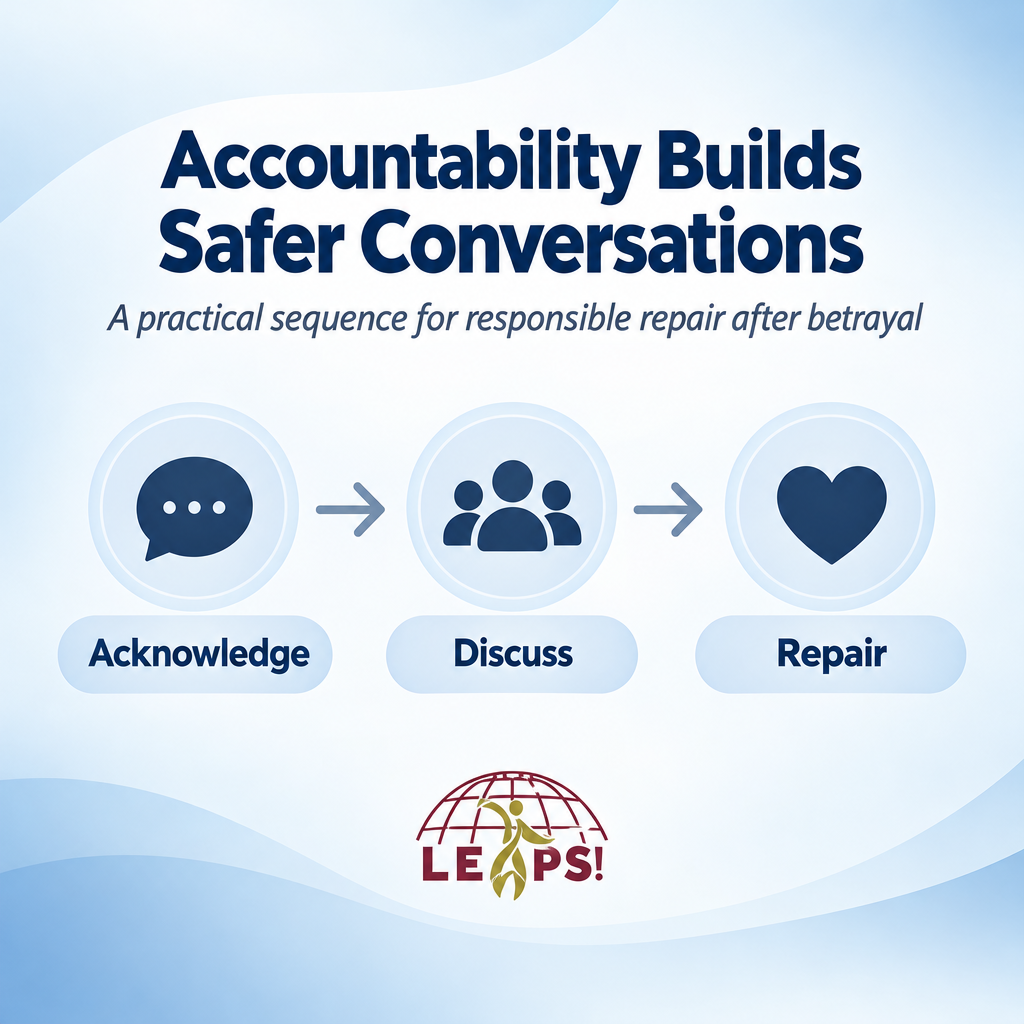
Accountability means naming the choice, accepting its consequences, and following through over time; it does not mean punishing yourself until your partner feels responsible for your pain. Trust cannot be demanded on a preferred timeline. A single apology may open a conversation, but transparency, agreed boundaries, and consistent behavior give the conversation a safer foundation.
What accountability sounds like in practice
Accountability sounds like, “I chose to be unfaithful, and I understand that my actions damaged your trust,” followed by a willingness to hear the response. It includes answering for your decisions, keeping commitments, and accepting consequences without arguing that your partner should already feel better. Self-punishment can distract from the practical work of becoming dependable.
How to answer questions without creating more harm
Answer appropriate questions honestly and avoid minimizing language such as “it meant nothing” or “you are overreacting.” Do not volunteer graphic details that may deepen injury without helping the recovery process. A therapist can help structure disclosure, clarify what information is necessary, and slow conversations when either partner becomes flooded or unable to listen.
Why the injured partner controls the pace of reconciliation
The injured partner may need space, individual therapy, or time before deciding whether to continue couples work. Reconciliation is not a reward for an apology, and counseling cannot promise that a relationship will continue. Respecting the hurt partner’s pace means allowing questions, boundaries, pauses, and uncertainty without using guilt or pressure to force closeness.
What infidelity recovery counseling can help you work through
Infidelity recovery therapy gives both partners structured support for processing betrayal while addressing the unfaithful partner’s responsibility. The work may include loss, anger, grief, shame, uncertainty, recurring conflict, emotional distance, communication difficulties, and trust issues. The affair matters deeply, but therapy can also examine relationship patterns without treating the affair as the only issue.
Processing shame, grief, anger, and uncertainty
The unfaithful partner may need help examining shame, guilt, choices, and patterns without turning the session into self-punishment. The injured partner may need space to process emotional trauma, anger, grief, loss, and uncertainty. LEAPS Inc. identifies infidelity recovery therapy as support for these experiences while helping couples move toward more responsible and compassionate communication.
Rebuilding communication and emotional safety
Couples therapy can create rules for difficult conversations, including when to pause, how to ask questions, and how to respond without intimidation or dismissal. Emotional safety grows through repeated experiences of honesty and respect, not through one emotionally powerful conversation. LEAPS Inc. provides couples and marriage therapy that addresses communication, conflict, trust, betrayal, and emotional distance.
Creating boundaries and accountability agreements
A therapist can help partners define relationship boundaries, transparency practices, contact expectations, and realistic signs of progress. Agreements should be specific enough to follow and review, rather than vague promises to “do better.” The purpose is responsible follow-through and clearer choices, not surveillance or a permanent requirement for one partner to prove loyalty.
How to choose the right next step for your relationship

The right starting point depends on safety, willingness to participate, whether the affair has ended, and whether both partners can discuss what happened without intimidation. Couples therapy may fit when both people can attend voluntarily and want help with communication, trust, boundaries, and relationship decisions. Individual therapy may be more appropriate when one partner needs private support first.
When couples therapy may be appropriate
Couples therapy may be appropriate when the affair has ended or its unavoidable contact has clear boundaries, both partners can participate safely, and the injured partner is not being pressured to reconcile. A therapist can pace disclosure and help the couple discuss trust, communication, emotional safety, and whether rebuilding the relationship is a shared choice.
When individual support should come first
Individual therapy can help the unfaithful partner examine choices, shame, patterns, accountability, and the effects of secrecy before entering difficult joint conversations. It may also support the injured partner’s emotional stability and decision-making. Individual support should come first when there is fear, coercion, physical danger, severe emotional dysregulation, or no genuine willingness to participate together.
Questions to ask a prospective therapist
Ask about experience with infidelity recovery, disclosure, emotional affairs, and rebuilding trust after infidelity. Ask how the therapist paces difficult conversations, protects confidentiality, responds to safety concerns, and supports both partners without pressuring either person toward reconciliation. You can also ask whether individual sessions, couples sessions, or a combination best fits your current needs.
What to expect when you contact LEAPS Inc. about infidelity recovery
LEAPS Inc. offers a free 15-minute consultation for prospective clients considering couples or infidelity recovery therapy. The consultation is a chance to discuss what happened, identify concerns, and consider an appropriate next step; it is not a promise of reconciliation or a guaranteed result.
Preparing for the first conversation
Prepare a short summary of what happened, whether contact with the affair partner has ended, and the main concern for each partner. Include immediate safety, privacy, scheduling, or emotional stability needs. You do not need to organize every detail perfectly before reaching out; a concise, honest starting point is enough to discuss fit.
How the free consultation helps clarify fit
The free consultation helps prospective clients understand whether infidelity recovery therapy is an appropriate service for their situation and what kind of support may be useful next. You can describe whether you are seeking accountability, communication help, emotional affairs counseling, or support with rebuilding trust. The conversation should respect uncertainty rather than push a predetermined outcome.
Building a practical recovery plan
LEAPS Inc.’s structured, compassionate approach can support work on accountability, transparency, boundaries, communication, and emotional safety. A practical plan should reflect both partners’ readiness and may include clear conversation limits, individual support, couples therapy, or time to decide. Readers in Orlando and Tampa can review infidelity recovery therapy options before contacting the practice.
How to keep repair work grounded after the first appointment
Repair becomes more credible when it appears in ordinary actions between appointments. Keep agreed boundaries, follow through on transparency commitments, use scheduled check-ins instead of constant interrogation, and pause conversations when either partner becomes overwhelmed. A pause should include a plan for returning to the topic, rather than becoming another form of avoidance.
Track actions rather than demanding quick reassurance
Watch for consistent behavior instead of asking your partner to confirm that everything is fine. Showing up, answering honestly, respecting boundaries, and following agreed communication practices provide information over time. Do not use counseling to pressure the injured partner to forgive, conceal information, avoid consequences, or prove love through immediate reconciliation.
Expect setbacks without abandoning responsibility
Strong emotions may return after a conversation appears to go well, and a setback does not automatically mean therapy has failed. Respond by acknowledging the effect, returning to agreed boundaries, and discussing what needs adjustment with the therapist. Responsibility continues when your partner remains angry, uncertain, or unable to offer reassurance.
Decide what progress means for both partners
Progress may mean more honest communication, clearer boundaries, and greater emotional safety, even before the couple decides whether to stay together or returns to a previous level of closeness. If you are in Orlando or Tampa, contact LEAPS Inc. at +18558853277 or info@leapsinc.com, or request the free 15-minute consultation to discuss the next step.
Frequently Asked Questions
Can marriage counseling help if I was the partner who cheated?
Yes, couples or marriage therapy can provide structure for accountability, communication, boundaries, and emotional safety after infidelity. It cannot guarantee reconciliation, and the work must respect the injured partner’s pace and choices.
Should I seek individual therapy or couples counseling after an affair?
The appropriate starting point depends on safety, readiness, whether the affair has ended, and what each partner needs. Individual therapy may help with responsibility and personal patterns, while couples therapy addresses trust, communication, boundaries, and relationship decisions.
What should I say to my spouse after I have been unfaithful?
Begin with a direct acknowledgment of the harm, take responsibility without excuses, answer appropriate questions honestly, and avoid demanding forgiveness. A qualified therapist can help structure disclosure and reduce the risk of turning a difficult conversation into further injury.