

Couples therapy addresses repeating arguments by helping partners identify the cycle beneath the topic, understand each person’s emotional response, and practice clearer communication, empathy, and repair.
Why do couples keep having the same argument?
Repeating arguments often continue because the visible topic is only one part of the conflict. Revisiting money, parenting, household responsibilities, trust, or time together can feel exhausting, especially when each conversation ends with hurt feelings and no lasting change.
Many couples fall into a predictable cycle: one partner raises a concern, the other becomes defensive or withdraws, and both leave feeling unheard. The argument may appear to be about a missed task or a spending choice, while the deeper needs involve emotional safety, respect, reassurance, fairness, or connection. Couples therapy creates a structured setting to slow that cycle down and examine it with care.
The visible disagreement and the deeper relationship pattern
The recurring subject may conceal a deeper pattern involving fear, disappointment, loneliness, or a need to feel valued. For example, a disagreement about household work may reflect concerns about fairness, while an argument about time together may express a need for reassurance and closeness. Understanding that deeper pattern helps partners address the relationship problem rather than only debate the latest incident.
Warning signs that conflict has become repetitive
Professional support may be useful when conversations remain unresolved, reactions escalate quickly, or one or both partners avoid important subjects. Emotional distance, repeated promises that do not change the pattern, frequent interruptions, criticism, silence, and arguments that return with the same wording are practical signs that the couple may need help learning a different response.
How does couples therapy identify the cycle beneath the disagreement?
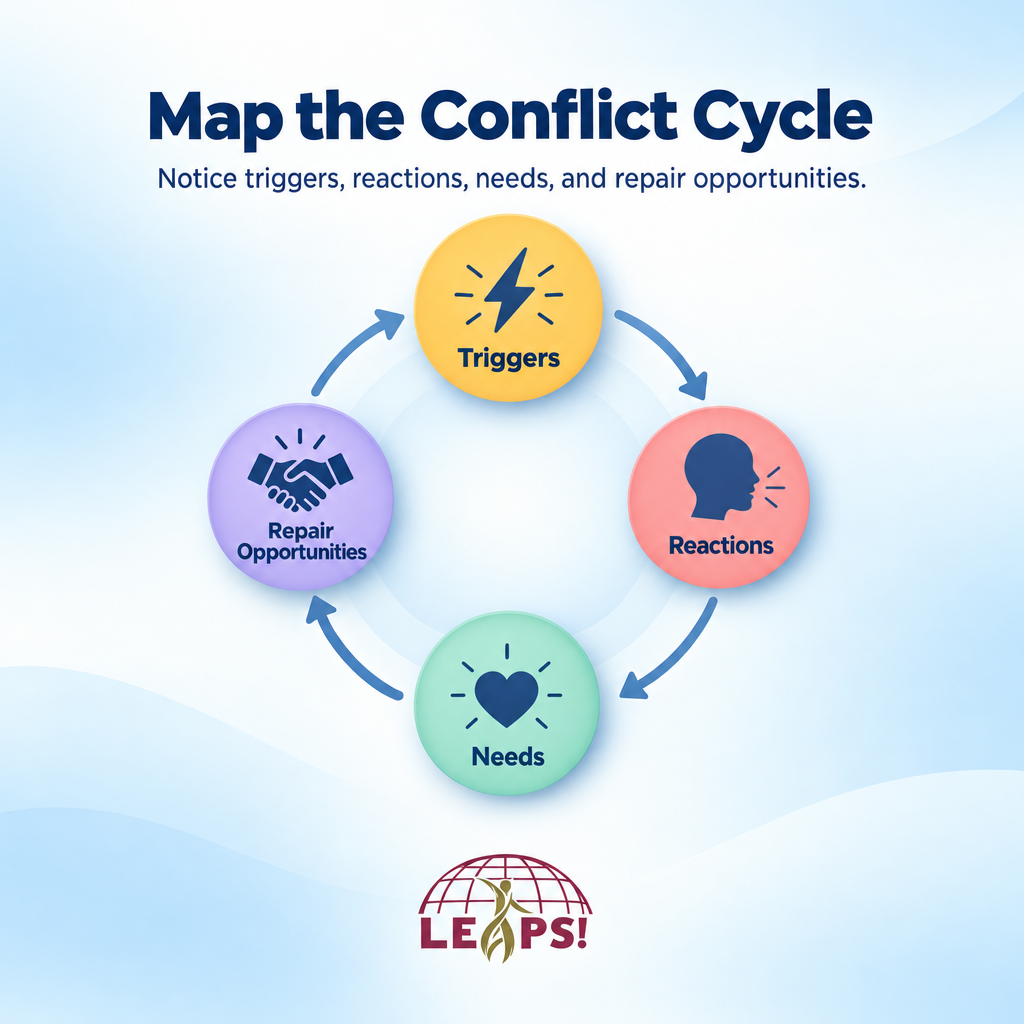
Couples therapy helps partners slow down an argument and examine what happens immediately before, during, and after conflict. Our team’s client-centered, integrative approach focuses on relationship patterns rather than deciding which partner is right or assigning blame.
A therapist may help each person notice triggers, assumptions, emotional responses, interruptions, criticism, defensiveness, silence, and attempts to reconnect. The goal is to make the sequence visible enough that both partners can recognize where a different choice might be possible.
- Name the trigger: Identify the moment the discussion shifts from a practical concern into an emotional conflict.
- Track the response: Describe what each partner says or does next, including criticism, withdrawal, defensiveness, or interruption.
- Identify the need: Connect the reaction to the underlying concern, such as reassurance, respect, fairness, safety, or connection.
- Choose a new response: Practice a calmer way to communicate the concern and respond to the other person.
Mapping triggers, reactions, and unmet needs
Mapping the cycle can show that a partner’s reaction is connected to an unmet need rather than a desire to create conflict. One person may pursue reassurance while the other seeks relief from pressure, creating a pattern in which each response intensifies the other. Naming that sequence gives the couple a shared problem to address.
Separating communication habits from character judgments
Therapy helps couples describe a behavior without turning it into a judgment about character. “You interrupted me twice” gives the conversation something specific to examine, while “You never respect me” can invite defensiveness and broaden the argument. This distinction supports conflict resolution because partners can change a communication habit without having to defend their entire identity.
What happens when couples practice a different response in therapy?

Couples therapy helps partners replace accusations and broad statements with specific descriptions of feelings, needs, and requests. In session, partners may take turns speaking, reflect what they heard, ask clarifying questions, name emotions, and pause when either person feels too overwhelmed to listen.
Practice matters because communication skills must work during ordinary disagreements, not only during major crises. A useful checkpoint is whether each partner can restate the concern, identify the request, and end the conversation with a specific next step. A pause can be more productive than forced resolution when either person is emotionally flooded.
Expressing concerns clearly without escalating
Clear communication starts with a specific observation, an honest feeling, and a reasonable request. A partner might describe what happened, explain why it mattered, and ask for one concrete change rather than listing every past disappointment. The skill is working when the other partner can restate the concern and the speaker can identify the request without adding new accusations.
Listening and responding with empathy
Empathetic listening means showing that the other person’s experience has been heard before offering a defense or solution. Partners can reflect the message, ask whether they understood correctly, and acknowledge the emotion involved. Progress is visible when both people can summarize the concern, respond to the underlying need, and agree on a next step without dismissing the other person.
How is couples therapy tailored to issues such as trust, parenting, or money?
Couples therapy should adapt to the relationship and the concern rather than follow one fixed script. At LEAPS Inc., therapy is client-centered, integrative, collaborative, and tailored to each relationship, with attention to emotional awareness and practical communication.
The same conflict cycle can appear around parenting, financial stewardship, household roles, intimacy, emotional disconnection, or trust, but the practical goals differ. LEAPS Inc. offers couples and marriage therapy, premarital counseling, family communication support, faith-based couples therapy, and specialized infidelity recovery services. Readers should ask how a therapist handles their specific concern, how both partners participate, and what the process addresses when trust has been damaged.
Matching the conversation to the couple’s actual concern
A parenting disagreement may require clearer roles and family communication, while a money conflict may require shared expectations and calmer decision-making. Premarital counseling may focus on patterns before they become entrenched. By identifying the real concern, the couple can practice communication skills that fit the situation instead of applying general advice that does not address their daily life.
Addressing complex relationship challenges carefully
Trust injuries and infidelity require careful discussion of the event, its emotional effects, and the couple’s current ability to communicate. LEAPS Inc. identifies infidelity recovery, rebuilding trust after infidelity, and emotional affairs counseling as areas to ask about. Couples can also review rebuilding trust after infidelity support when that concern is part of the repeating argument pattern.
How can you decide whether couples therapy is the right next step?
Couples therapy may be a reasonable next step when you can name the main concern, recognize a repeated conflict pattern, identify desired changes, and bring at least some willingness to listen and try new responses. Both partners do not need identical goals, but meaningful participation requires enough openness to reflect on each person’s contribution to the cycle.
Before contacting a therapist, consider whether the couple wants help with communication, emotional distance, parenting, financial conflict, trust, or another specific concern. Urgent safety concerns, coercion, threats, or violence require a careful safety-focused response and may call for individual support or specialized resources before joint sessions.
Questions to ask before scheduling
Ask how the therapist approaches repeating arguments, how both partners participate, and how sessions are tailored to concerns such as trust, parenting, or money. You can also ask about current fees, session details, and payment questions because the supplied information does not state a couples therapy price. These questions help you decide whether the approach feels appropriate.
Preparing for a productive first conversation
Prepare one or two recent examples rather than trying to summarize the entire relationship. Note what usually triggers the argument, how each person responds, what you wish would change, and what has already been tried. Couples in Tampa, Orlando, and nearby Florida areas can contact LEAPS Inc. at +18558853277 or info@leapsinc.com to ask about available couples therapy support and how to get started.
What should couples expect as they work to change repeating arguments?
Therapy can provide structure, emotional awareness, communication practice, and accountability, while lasting change depends on what partners practice between sessions. Improvement may appear gradually through shorter arguments, fewer interruptions, faster repair after conflict, clearer requests, and more consistent follow-through.
Setbacks do not automatically mean therapy has failed. A difficult conversation may reveal a trigger or response that needs more focused practice. Couples can bring that example into therapy, examine what happened, and adjust the plan instead of treating one setback as proof that change is impossible.
Tracking small changes between sessions
Choose a few observable indicators to track between sessions, such as whether both partners took turns speaking or whether a pause prevented escalation. After an argument, ask whether each person can state the concern, identify the request, and name the next step. Small, repeatable changes provide more useful information than expecting every disagreement to end perfectly.
When to seek additional or specialized support
Additional support may be appropriate when trust has been seriously damaged, conflict involves safety concerns, or individual stress is affecting the couple’s ability to participate. LEAPS Inc. offers specialized areas such as infidelity recovery and family communication support. Couples in Tampa, Orlando, and nearby Florida communities can contact LEAPS Inc. about couples therapy and discuss whether the service fits their repeating argument pattern.
Frequently Asked Questions
Can couples therapy help if we argue about the same issue every week?
Yes. Couples therapy can help partners identify the communication cycle beneath the topic, understand each person’s emotional response, and practice clearer, more empathetic ways to address the concern. Progress depends on participation and continued practice between sessions.
Do both partners need to agree that couples therapy is necessary?
Both partners do not need identical reasons for attending, but productive work usually requires enough willingness to participate, listen, and try new responses. A first conversation can clarify concerns, goals, and how sessions are tailored.
How does couples therapy address trust problems or infidelity?
A therapist can help the couple examine communication and trust patterns surrounding the injury, clarify concerns, and determine appropriate next steps. LEAPS Inc. identifies infidelity recovery, rebuilding trust after infidelity, and emotional affairs counseling as specialized areas to ask about.
How do I get started with couples therapy at LEAPS Inc.?
Couples in Tampa, Orlando, and nearby Florida areas can contact LEAPS Inc. at +18558853277 or info@leapsinc.com to ask about available couples therapy support, the concerns they want to address, and next steps for beginning.
How much does couples therapy cost?
The supplied business information does not state a couples therapy price. Contact LEAPS Inc. directly to ask about current fees, session details, and payment questions before scheduling.