

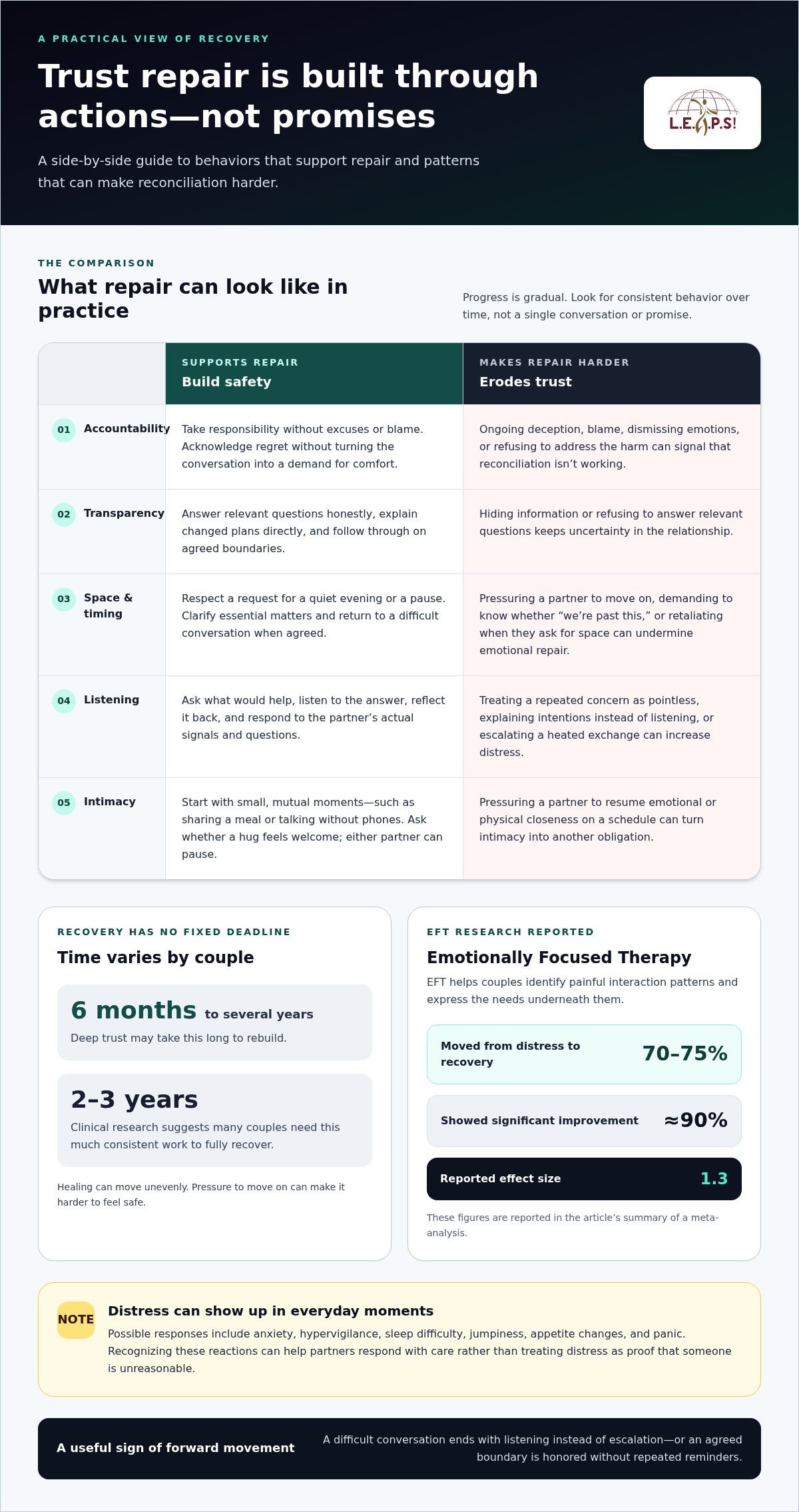
There’s no set timeline for how to rebuild trust after infidelity. Deep trust may take six months to several years, and clinical research suggests many couples need two to three years of consistent work to fully recover. The pace depends on whether both partners can make room for the hurt, communicate honestly, and build trust through consistent actions. Reconciliation isn’t about erasing what happened; it’s about deciding whether you can create a new foundation.
If you’re hoping for a clear date when things will feel normal again, it’s understandable to want one. Healing often moves unevenly, and pressure to move on can make it harder to feel safe. This article explains what rebuilding trust can involve, why giving the betrayed partner space matters, and how transparency and therapy can support the process. Individual therapy can also help you understand your needs and choices, whether you’re working to repair the relationship or seeking clarity about what comes next.
Key Takeaways
- Give the betrayed partner room to process what happened; pressure to move on can undermine emotional repair.
- Trust is rebuilt through a gradual pattern of accountability, transparency, and consistent behavior, not by trying to erase the past.
- There’s no fixed recovery timeline. Deep trust may take six months to several years, shaped by each partner’s needs and the work they do together.
- Structured couples therapy can help partners address the impact of the affair and navigate difficult conversations with support.
- Individual therapy can help you clarify your feelings, boundaries, and next steps, whether or not you’re pursuing reconciliation.
Giving the betrayed partner space
After infidelity, the betrayed partner may need time before discussing forgiveness, reconciliation, or future plans. The unfaithful partner should avoid pressuring them to move on before they’re ready. Asking, “Are we past this yet?” can make an already overwhelming conversation feel like a demand. A more respectful response is, “I’m here when you’re ready to talk, and I’ll listen without rushing you.” Space gives the betrayed partner room to decide what they need next.
Space doesn’t have to mean disappearing or refusing every conversation. It works best when both partners clarify what it means in practice. One person might ask for a quiet evening, a pause in relationship discussions, or time to think before answering a difficult question. The other can acknowledge the request and agree on how to handle essential matters, such as shared parenting or household plans. Clear expectations reduce confusion without setting a deadline for emotional recovery.
Attuning to a partner means responding to their actual signals rather than assuming how they feel. If your partner becomes quiet after a conversation, ask whether they want company, a listening ear, or time alone. If they raise the same concern again, don’t dismiss it as repetitive; answer the specific question calmly. Notice their words, tone, and requests, then check your understanding: “You want me to listen now, not explain my intentions. Did I get that right?”
For the unfaithful partner, accountability includes accepting the betrayed partner’s changing needs without retaliating or withdrawing. A request for space isn’t permission to conceal relevant information or punish each other with silence. If a conversation becomes heated, suggest a pause and agree to return to the subject when both can participate. Then follow through. Predictable responses, such as respecting a pause and returning as agreed, show consideration through actions rather than promises.
Self-compassion matters for both partners, but it isn’t the same as avoiding responsibility. The unfaithful partner can acknowledge regret without turning the conversation into a demand for comfort. The betrayed partner can recognize that feeling anger one day and uncertainty the next doesn’t require an immediate decision. Each person can name a need, such as rest, privacy, or a direct answer, and communicate it without attacking themselves or their partner.
To navigate a difficult moment, slow the exchange down: ask what would help, listen to the answer, reflect it back, and respect the response. If the betrayed partner says, “I can’t talk tonight,” the unfaithful partner can reply, “I understand. I won’t push. Tell me when you’re ready.” This won’t resolve the breach by itself. It creates a more respectful interaction, allowing both partners to choose their next step with greater clarity.
Can a Relationship Survive Infidelity?
Yes, some couples rebuild their relationship through accountability, emotional repair, and sustained transparency. Signs of progress include reliable follow-through and honest conversations. Ongoing deception, blame, or refusal to address harm can signal that reconciliation isn’t working.
Emotional and Trauma Responses
Infidelity can trigger intense emotions and trauma responses, including anxiety, hypervigilance, sleep difficulty, jumpiness, appetite changes, and panic. A betrayed partner might scan for signs of trouble, check a phone, or feel alarmed when plans change. These reactions can make ordinary moments overwhelming. Recognizing them helps both partners respond to distress with care instead of treating it as proof that someone is unreasonable.
Gradual Trust Repair
Gradual trust repair means replacing uncertainty with transparent behavior and emotional repair over time. The partner who was unfaithful takes responsibility without excuses or blame, answers relevant questions honestly, and follows through on agreed boundaries. The betrayed partner can name lingering doubts rather than suppressing them. If a changed plan causes anxiety, a direct explanation and consistent actions can help future conversations feel safer.
Rebuilding Emotional and Physical Intimacy
Intimacy returns through mutual emotional safety, not pressure to resume closeness on a schedule. Partners can begin with small moments, such as sharing a meal, talking without phones, or asking whether a hug feels welcome. Physical affection should be freely chosen, with either partner able to pause. Respecting a “not now” response protects consent and keeps closeness from becoming another obligation during a painful journey.
Emotionally Focused Therapy
Emotionally Focused Therapy (EFT) helps couples identify painful interaction patterns and express the needs underneath them. A partner who withdraws may be protecting against conflict; a partner who presses for answers may be seeking security. A meta-analysis reported that 70 to 75% of couples moved from distress to recovery through EFT, while approximately 90% showed significant improvement. The reported effect size was 1.3.
Signs of forward movement can be modest: one difficult conversation ends with listening instead of escalation, or an agreed boundary is honored without repeated reminders. Reconciliation becomes harder when one partner continues hiding information, dismissing the other’s emotions, or refusing responsibility. Couples can use these patterns to assess whether their actions match their stated intention to repair. If structured support could help you work through these conversations, you can schedule an appointment.
Does Online Couples Therapy Work for Infidelity?
Online couples therapy can offer structured guidance for affair recovery, including space to discuss what happened and plan repair. A five-year follow-up found that 57% of couples who disclosed an affair and engaged in structured couple therapy remained together.
Phases of Affair Recovery
Affair recovery often involves distinct tasks: understanding the breach, addressing its impact, and deciding how to move forward. This structure matters because couples may need different support at each point. Early conversations can focus on what happened and immediate concerns; later discussions can turn to boundaries, emotional repair, and rebuilding connection.
These tasks don’t follow a fixed schedule. A partner might feel ready to discuss future agreements, then become overwhelmed by a new question about the affair. Couples can pause, identify what needs attention now, and return to future planning when both can participate. A therapist can help organize conversations so urgent emotions aren’t ignored and decisions aren’t rushed.
Couples Therapy in Affair Recovery
Couples therapy provides a structured setting to address the affair’s effects with professional guidance. That structure matters when conversations at home quickly become defensive, circular, or silent. A therapist can help each person speak and listen, and identify what repair would mean in concrete terms, such as answering questions honestly or agreeing on a boundary.
Online sessions can make support accessible from separate or shared spaces, depending on how the couple participates. Before a session, each partner might write down a concern and a goal. During the conversation, they can take turns explaining what the affair caused them to feel or fear. Some couples begin to feel meaningful improvement within the first few months of therapy, though progress involves more than having a calmer session.
Discussing the Affair Openly
Open discussion means addressing relevant questions honestly without minimizing the betrayal or using disclosure to inflict additional harm. This matters because unanswered concerns can keep couples stuck in suspicion, while blame can prevent accountability. The unfaithful partner should recognize the impact of their choices and avoid calling the affair a mistake as if that word resolves its consequences.
A practical conversation can begin with a question, an answer, and a check that the answer was understood. The betrayed partner might ask what boundary was crossed, while the other listens fully before responding. If either person becomes too distressed to continue, they can pause and agree when to return. A therapist can help couples decide which details support understanding and which questions need more careful pacing.
Transparency and honest communication
Useful agreements clarify what information is shared, which boundaries protect the relationship, and how partners will raise concerns. A daily, uninterrupted 10-minute check-in can give each person a regular space to discuss how they’re doing.
Transparency and Accountability
Transparency and accountability mean communicating honestly and taking responsibility through consistent actions. A promise alone can’t answer the doubts caused by betrayal. If the unfaithful partner says they’ll share a change in plans, they should do so directly, without waiting to be questioned. If they make a mistake, they should acknowledge it plainly, explain what happened, and discuss how they’ll respond differently next time.
The betrayed partner can state what information would help them feel informed, then notice whether actions match words. An honest answer to a difficult question should address the question rather than criticize the person asking it. Accountability also means hearing the impact without shifting blame. This makes transparency a repeated practice, not a single disclosure or a demand that trust return immediately.
Transparency in Daily Life
Transparency in daily life means sharing relevant information consistently, especially about situations that could affect agreed boundaries. A couple might use the daily 10-minute check-in to name one concern, one helpful action, and one need for the next day. This routine can prevent difficult topics from surfacing only during conflict, while keeping communication focused and intentional.
Practical examples include promptly explaining a changed plan, answering a question without defensiveness, and following through on a commitment. The betrayed partner can raise lingering doubts rather than suppressing them; the other partner can listen and respond directly. Neither person needs to turn every interaction into an investigation. The goal is dependable openness, where relevant information is volunteered and questions receive clear answers.
Boundaries and Transparency Agreements
Boundaries and transparency agreements define which behaviors support safety and which choices could reopen the breach. Clear expectations reduce ambiguity. Partners can agree on how to handle contact with someone connected to the affair, how changes in plans will be communicated, and what each considers an honest response. Agreements should be specific enough to guide daily decisions.
A couple might agree to disclose unavoidable contact promptly and discuss any boundary concern during their check-in. They can also set a process for revisiting agreements when circumstances change: name the concern, hear each person’s perspective, and decide together whether the boundary needs clarification. A boundary doesn’t replace trust; it gives both partners a shared framework for acting transparently and addressing doubts.
Individual therapy after infidelity
Seek individual support when distress disrupts daily life or when you need private space to clarify your choices. Consider ending the relationship if ongoing deception, blame, or disregard for agreed boundaries leaves no workable path forward. A therapist can help you examine what’s happening without deciding for you.
Individual therapy gives each partner room to understand personal reactions outside shared conversations. If you’re exploring how to rebuild trust after infidelity, sessions can help you identify what you need from yourself and your relationship. The betrayed partner might explore anger, fear, grief, or uncertainty without managing the other person’s response. The partner who was unfaithful can examine the behavior and choices that contributed to the breach, then plan accountable actions.
Infidelity can affect psychological well-being. Anxiety, hypervigilance, sleep difficulty, jumpiness, appetite changes, and panic can make work, parenting, or routine decisions feel harder. In therapy, a person can identify what tends to intensify distress, such as unanswered questions or a sudden change in plans. They can then develop specific ways to respond, including naming a need or taking a pause.
Individual support can also help someone distinguish personal needs from pressure to forgive or leave. A person might write down what they need to feel respected, which boundary has been crossed, and what behavior would demonstrate change. Reviewing these points with a therapist can clarify how to rebuild trust after infidelity while honoring personal boundaries, especially when emotions shift from day to day.
For the partner who was unfaithful, therapy can focus on recognizing patterns, accepting responsibility, and understanding how actions affected the relationship. Saying “I want to change” is only a starting point. A session can help turn that intention into a concrete commitment, such as responding honestly to questions or honoring an agreed boundary. The effort becomes meaningful through consistent behavior outside the therapy room.
Individual work can complement couples therapy, but it serves a different purpose. One person may need to process personal pain before joining a difficult conversation; another may want to understand their values before deciding whether to continue. Progress can mean clearer boundaries, more grounded decisions, or a greater ability to express needs, even if the relationship’s future remains unresolved.
If you’re ready to explore personal support and clarify your next steps, schedule an appointment.
LEAPS: Individual Therapy
LEAPS offers Individual Therapy for people processing the personal impact of infidelity. It provides a dedicated space to examine emotional responses, clarify boundaries, and consider next steps without pressure to reconcile or separate. You might bring a specific concern, such as struggling to sleep after a difficult conversation or feeling uncertain about what you need from your partner. Individual work can help you explore these concerns and decide what feels aligned with your values.
If you and your partner want support together, LEAPS offers Couple Therapy to help you work through relationship conversations. For a more focused period of therapeutic work, LEAPS also offers Therapy Intensive. The right format depends on whether your immediate need is personal clarity, shared relationship support, or concentrated therapeutic attention.
Visit leapsinc.com to learn more about connecting with LEAPS.
Choose a Next Step That Honors Your Future
Deciding how to rebuild trust after infidelity is also an opportunity to consider what you need from a relationship and from yourself. You don’t have to resolve every question before taking a thoughtful step. Start by naming what you want support with: understanding your emotions, making a decision, or finding a more constructive way to talk together.
LEAPS offers Individual Therapy for personal reflection, Couple Therapy for shared relationship work, and Therapy Intensive for a more focused therapeutic experience. Each offers a different way to engage with the challenges ahead. Choose the option that fits the work you’re ready to do now, without turning support into pressure to reach a particular outcome.
If you’re ready to explore your options, contact LEAPS to explore your options. A deliberate next step can help you move toward greater clarity, stronger self-understanding, and a future shaped by your values.
Frequently Asked Questions
How Long Does It Take to Rebuild Trust After an Affair?
There’s no fixed timetable: deep trust may take six months to several years, and full recovery can involve two to three years of consistent work. The pace often reflects whether both partners follow through on agreements, address new concerns, and stay engaged when progress feels uneven. Instead of measuring recovery by a calendar, notice whether daily interactions are becoming more dependable and difficult conversations more manageable.
Can Individual Therapy Help After Infidelity?
Yes, individual therapy can help you understand your responses and choices after infidelity. You might bring a recent moment that left you unsettled, then explore what you felt, what you needed, and how you want to respond next time. LEAPS offers Individual Therapy for personal growth and emotional well-being. This support can help whether you’re considering reconciliation or seeking clarity about your future.
Can You Ever Fully Trust Someone After Cheating?
Some people develop trust again, but that doesn’t require forgetting the affair or restoring the relationship exactly as it was. Trust can mean relying on current behavior while remembering what happened. You might feel able to raise a concern without fearing retaliation. Each person can define what “fully trusting” means to them and decide whether the relationship’s present reality meets that standard.
Can a Marriage Survive After Cheating?
Yes, a marriage can survive infidelity, though staying together isn’t the same as repairing the relationship. In a five-year follow-up study, 57% of couples who disclosed an affair and engaged in structured couple therapy remained together. That finding describes those couples, not a promise for any marriage. A more personal measure is whether both spouses are willing to address the harm and make meaningful changes.
Do I Need Couples Therapy if Only One Partner Is Willing to Go?
No, both partners don’t have to begin therapy together for one person to seek support. Individual Therapy can help you clarify your needs, prepare for difficult conversations, and decide which boundaries matter to you. It can’t make your partner participate or replace their accountability. If they aren’t ready to attend, focus on what you can communicate and choose, rather than using therapy to persuade them.
How Long Does It Take to Build Trust After Infidelity?
There’s no universal deadline: deep trust may take six months to several years, while full recovery can involve two to three years of consistent work. To understand how to rebuild trust after infidelity, pay attention to whether agreed changes continue during ordinary stress, not only after conflict. A calendar matters less than a sustained pattern of openness, reliability, and willingness to address setbacks.
So, How Do You Show Your Partner That You Would Not Cheat on Them Again?
Show commitment through choices your partner can observe over time, rather than relying on repeated assurances. Honor agreed boundaries, communicate relevant changes in plans, and answer reasonable questions without turning them into arguments. If your actions cause fresh hurt, acknowledge the impact and address it honestly. These behaviors show accountability, but they can’t erase the past or dictate how quickly your partner feels secure.
What Are the Signs That a Couple Can Recover From Cheating?
Signs of potential recovery include both partners staying engaged in difficult conversations, acknowledging the affair’s impact, and making choices that support agreed boundaries. Notice what happens after a setback: can each person return to the issue with honesty and care? Repeated concealment, blame, or refusal to discuss the harm can signal that the couple isn’t making progress toward repair.