

The quiet after a child leaves home can change more than the household routine. Empty nest syndrome describes the sadness, anxiety, loss of purpose, or relationship shifts some parents experience as children leave for college or begin families of their own; therapy for empty nesters can offer support when those feelings are difficult to manage alone.
It’s understandable to miss the daily connection and familiar responsibilities of parenting, even as you feel proud of your adult child’s independence. This transition doesn’t have to define what comes next. New interests, meaningful routines, and stronger connections can help you shape a life that feels purposeful in its own right.
Here, you’ll learn what empty nest syndrome can feel like, how activities and routines may ease the adjustment, and when professional support could help. The goal isn’t to erase the change, but to understand it and move toward a more grounded, fulfilling next chapter.
Key Takeaways
- Recognize how sadness, anxiety, or a shift in purpose can arise as family life changes, and remember that the transition is personal.
- Explore interests beyond parenting with small, intentional activities that help you reconnect with what feels meaningful.
- Build a steadier rhythm through supportive habits, open conversations, and routines that fit your life now.
- Consider professional support if distress persists, intensifies, or begins to interfere with everyday life.
- Individual therapy can help you understand your emotional responses and shape practical steps toward a fulfilling next chapter.
1. What Is Empty Nest Syndrome?
When children leave for college or start their own families, parents may notice a sudden change in daily life. Empty nest syndrome describes the emotional responses some parents experience during this transition. It isn’t an officially recognized mental health condition, and it affects people differently. A quieter home can bring sadness, anxiety, loneliness, or a sense that familiar responsibilities and purpose have shifted.
Conflicting feelings are common: you may feel proud of your child’s independence and miss sharing meals or everyday conversations. You might also welcome more time for yourself while feeling unsettled by the change. The transition after a child leaves home lasts a few months for most parents, but emotions can unfold differently for each person. If feelings of depression or worry interfere with daily life, counseling can help you understand what’s changing and consider constructive ways forward.
Preparation can begin before the move. Identify interests, relationships, and routines you want to maintain, rather than making every plan depend on your child’s visits. For example, schedule a recurring lunch with a friend or set aside time for an activity you’ve postponed. This gives the coming change some structure and helps you build sources of meaning beyond parenting.
Staying connected doesn’t require constant contact. Agree on a natural rhythm for calls or video chats, then let your adult child manage their own decisions. Offer practical or emotional support when invited, and avoid relying on them as your primary source of reassurance. A text of encouragement, followed by space to respond, can show you care while respecting their independence.
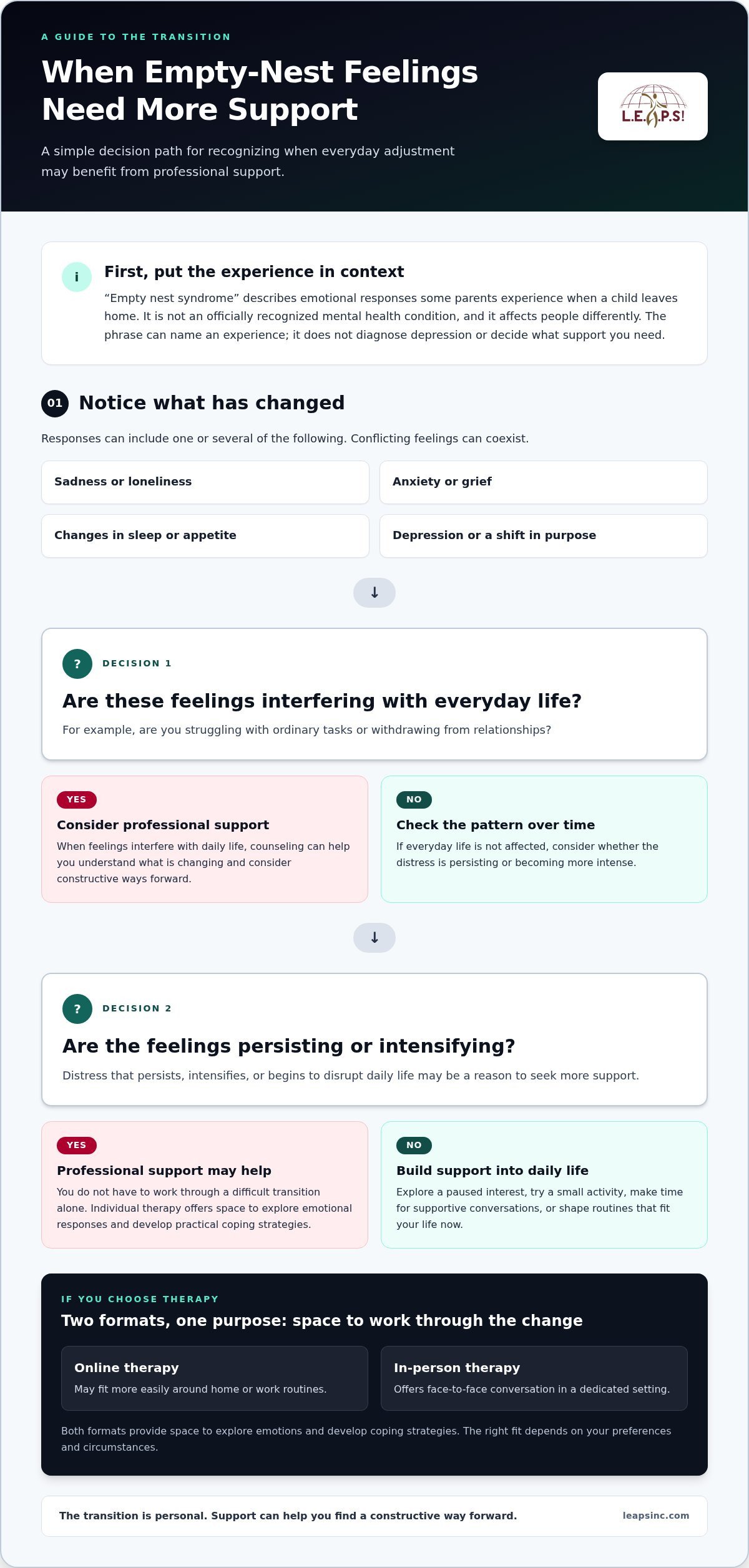
Online therapy can fit more easily around home or work routines, while in-person therapy offers face-to-face conversation in a dedicated setting. Both formats provide space to explore emotions and develop coping strategies. The right fit depends on your preferences and circumstances.
Insurance coverage depends on your plan’s behavioral health benefits and how the service is billed. Review your coverage details to understand applicable benefits and out-of-pocket responsibilities.
The cost of therapy for empty nesters depends on factors such as session format, provider, and treatment needs; the price depends on the case and is given after a quote request.
To support your adult child, combine warmth with clear boundaries: ask what kind of help they want, listen without taking over, and let them make their own choices. For a physical health emergency, the National 911 Program advises people in the United States to call 911 or go to the nearest emergency room.
2. What empty nest syndrome is
An empty nest is a family transition, not a verdict on a parent’s bond or identity. “Empty nest syndrome” describes emotional responses that may follow a child’s departure for college or independent adult life. It isn’t an officially recognized mental health condition. That distinction matters: the phrase can help name an experience, but it doesn’t diagnose depression or determine what support someone needs.
For parents who have spent 18 or more years responding to a child’s daily needs, this shift can unsettle routines and self-understanding. A parent who organized evenings around rides, meals, and school updates may suddenly need to decide how to use that time. The practical change is visible; the deeper task is revising a role that shaped everyday decisions.
Emotional responses can include sadness, loneliness, anxiety, grief, changes in sleep or appetite, and depression. They may not arrive in a predictable order. For example, a parent might feel relief when a demanding routine ends, then feel a pang of loss at dinner. Conflicting feelings can coexist without canceling each other out.
The term doesn’t mean every difficult response is a clinical disorder. It can describe adjustment to changing family roles, while persistent or severe symptoms may call for closer attention. Notice how feelings affect daily life: withdrawing from relationships, struggling with ordinary tasks, or losing interest in valued activities may signal that more support could help.
An empty nest can also reshape a couple’s relationship. With parenting demands reduced, partners may have more time together but fewer shared routines. Old disagreements can become more visible, or each person may expect the other to fill the new space differently. The UC Berkeley Greater Good Science Center tracked women across 18 years. It found marital satisfaction rose after their children left home.
Emotional preparation includes discussing the transition instead of assuming you and your partner experience it alike. Set aside time to name what each person anticipates, what they’ll miss, and what they want to build together. For example, agree on whether evenings will include shared plans or individual pursuits. A specific conversation can surface different expectations before they become a source of resentment.
Consider the transition as a chance to update your sense of purpose, not erase your parental identity. Write down the roles that matter beyond daily caregiving, such as partner, friend, colleague, or creator. If reflecting on these changes feels difficult to do alone, you can schedule an appointment to explore them with support.
3. Planning activities and rediscovering personal interests
Use this transition to identify goals that belong to you beyond your role as a parent. Start with a simple inventory: list interests you paused, skills you want to develop, and experiences you want to pursue. Then choose one small experiment instead of demanding an immediate life purpose. A cooking class, community garden, or weekly call with a friend can reveal what feels engaging now.
Try a weekly one-hour micro-experiment. Give each activity enough attention to notice your emotional response, without treating one session as a final verdict. For example, attend a pottery class once, take a neighborhood photography walk, or volunteer for a local event. Afterward, write down what energized you, what felt uncomfortable, and whether you’d like to try it again.
Make plans that are yours, not simply substitutes for time with your child. A meal with a friend the next day, a visit to a nearby spa, or an afternoon devoted to a long-delayed project can give the first days a personal anchor. Keep the plan specific: choose the activity, set a time, and decide what would make it worthwhile.
To reconnect with your strengths, write a letter naming what you appreciate about yourself and what others say you do well. Include concrete examples, such as organizing family gatherings, mentoring colleagues, or making time to listen. This exercise can broaden your identity beyond caregiving and help turn a remembered strength into a new goal.
Internal Family Systems, often shortened to IFS, offers one way to explore competing inner responses through “parts work.” You might notice one part eager to pursue a new interest and another that feels loyal to familiar parenting routines. Rather than labeling either response as a diagnosis, describe what each seems to want. This reflection can help you navigate anxiety and make choices with greater awareness.
Between therapy sessions, address loneliness with a planned point of connection and a meaningful activity. For instance, arrange coffee with a friend, then spend time on a personal project instead of waiting for a child’s call. Notice how each choice affects your mental and emotional state, and bring those observations into your next session.
Rediscovery doesn’t require a dramatic reinvention. Choose one interest, test it consistently, and adjust based on what you learn. If you want support translating these reflections into personal goals, you can schedule an appointment.
4. Adjusting to change and developing new routines
When children leave home, family life changes in practical ways: meals, conversations, and daily responsibilities may shift. Start by choosing reliable anchors, such as a regular wake time, a morning walk, and planned meals. These cues create structure without requiring you to decide immediately what your next chapter should look like.
Adjustment doesn’t follow a single timetable. The first three months after a child leaves can feel raw, with grief, longing, disorientation, or withdrawal. Between three and six months, parents may begin building routines and finding small new joys. By six to twelve months, they may feel more stable and less reactive.
After about a year, most parents feel normal again or settled into a new rhythm. However, an analysis of studies describes empty nest syndrome as a complex experience with stages that may last up to two years. These milestones are broad patterns, not deadlines. A college move, family relationship, or other life change can affect how adjustment unfolds.
Use a short evening journal to give difficult feelings a place beyond your thoughts. Write what felt hardest that day, what helped, and one practical step for tomorrow. For example, if Sunday evenings feel especially quiet, plan dinner with a friend or take a walk before settling in. Recording patterns can reveal which moments need extra care.
Couples can make space for each other’s experience through brief weekly emotional check-ins. Each partner can share one feeling, one concern, and one request without trying to solve everything immediately. This can keep small misunderstandings from growing into distance while allowing each person to adapt at their own pace.
Protect the foundations that support well-being: maintain healthy eating, sleep, and exercise habits. A walk, a nourishing meal, and a consistent bedtime can add stability when the household feels unfamiliar. A support group can also help parents share experiences and learn from adults facing similar changes, easing isolation through connection.
Building a new purpose doesn’t mean leaving your parental relationship behind. It means creating routines that make room for your own life while respecting your adult child’s independence. Choose repeatable activities, keep plans with friends, and stay open to small sources of enjoyment. If a routine feels forced, revise it rather than treating that response as failure.
5. When to seek professional help
Empty nest syndrome describes emotional challenges that can follow a child leaving home. Therapy may help when sadness, anxiety, or loneliness persists, disrupts daily life, or makes it difficult to reconnect with your identity and goals.
Pay attention to changes in everyday functioning, not only to whether you feel sad. For example, withdrawing from friends, abandoning activities you once valued, or struggling to manage ordinary responsibilities can signal a need for support. Persistent sadness, emptiness, irritability, or hopelessness lasting more than two weeks may indicate clinical depression, according to the National Institute of Mental Health.
Other signs deserve attention, too. Significant changes in sleep or appetite, intense anxiety, panic attacks, or growing isolation can make this chapter harder to navigate. Notice whether these changes affect work, relationships, or everyday routines. Writing down what has changed can help you describe your experience clearly in an initial conversation with a therapist.
Professional support can help you understand emotional patterns and build practical coping strategies. In individual therapy, you might explore how parenting shaped your sense of purpose, then identify steps toward connection and meaningful activity. Therapy for empty nesters can also help you consider whether you’re facing an adjustment challenge or symptoms that need further mental health support.
When choosing a therapist for a life transition, look for an approach that addresses changes in family roles, identity, or emotional well-being. Consider whether you prefer in-person, telephone, or webcam sessions, and prepare a brief description of your main concerns. For example, note when the sadness began and how it affects your daily life.
You don’t need to wait until distress feels severe before seeking help. A therapist can help you clarify what support would be useful, whether you’re coping with loneliness, relationship strain, or uncertainty about the next chapter. If you’re ready to discuss your concerns, schedule an appointment.
If you’re experiencing a mental health crisis in the United States, call 988 or go to the nearest emergency room, according to the Substance Abuse and Mental Health Services Administration.
LEAPS: Individual Therapy
LEAPS’s Individual Therapy offers a place to explore the emotions and identity shifts that can follow a child leaving home. If sadness, anxiety, or uncertainty is making it difficult to build a new rhythm, therapy can help you understand what’s happening and develop practical ways to move forward. Sessions can focus on your particular concerns, whether that means strengthening connection, clarifying personal goals, or working through family changes. This support is not about replacing your role as a parent; it can help you shape a meaningful chapter alongside it. If you’d like to explore Individual Therapy, you’re welcome to schedule an appointment with LEAPS.
Shape a Future That Feels Like Yours
A new chapter doesn’t require you to abandon the meaning parenting has brought to your life. It invites you to decide what else deserves your attention, energy, and care. That direction can take shape through small choices, honest reflection, and a willingness to let your priorities evolve.
Therapy for empty nesters can create room to explore questions that may have been set aside: What do you want to develop now? Which relationships or ambitions would you like to invest in? The answers don’t need to arrive all at once. Each considered step can help you move forward with greater intention and a fuller sense of possibility.
When you’re ready to explore support for this transition, contact LEAPS to discuss your next step. Your future can hold purpose, connection, and a renewed vision of who you’re becoming.
Frequently Asked Questions
What Is Empty Nest Syndrome?
Empty nest syndrome names emotional responses some parents experience when children move out. It isn’t a formal clinical diagnosis, and feeling grief or uncertainty doesn’t automatically mean you have a mental health disorder. For example, missing family dinners may coexist with excitement about a child’s independence. Consider the intensity and impact of your emotions, not just the label, when deciding what kind of support might help.
How long does adjustment typically take?
There’s no single adjustment schedule. The first three months can feel especially raw; between three and six months, some parents start building routines and noticing new joys. By six to twelve months, they may feel more stable, and after about a year, most feel settled into a new rhythm. These are general patterns, not deadlines. Family circumstances and the meaning of the transition shape each person’s experience.
Is what I am feeling normal?
Mixed emotions can be part of adapting to a major family change. You might miss daily contact and still value your adult child’s growing independence, or feel relieved by fewer responsibilities and sad about the quieter home. Notice whether those feelings are easing, staying constant, or making daily tasks harder. A brief note each evening about mood, sleep, and connection can help you recognize patterns.
What if my last child has not left yet?
You can begin preparing before your youngest child moves out. Talk together about practical changes, such as how you’ll stay in touch and what support they want as they manage adult responsibilities. Separately, identify interests or relationships you’d like to give more attention. For example, choose a class to explore or reconnect with a friend. Planning ahead gives the transition shape without making your future depend on your child’s schedule.
What interventions help most?
Helpful approaches depend on what’s weighing on you. Cognitive behavioral therapy can help identify and change unhelpful thought patterns, while acceptance and commitment therapy may support emotional self-regulation and cognitive flexibility. A support group can offer shared perspectives, and journaling can help you track situations that trigger loneliness. Choose a practical starting point, such as recording one recurring thought and considering a more balanced response.
When Should You Seek Help?
Seek professional support if distress interferes with everyday functioning, relationships, or your ability to care for yourself. Persistent sadness, emptiness, irritability, or hopelessness lasting more than two weeks may indicate clinical depression, according to the National Institute of Mental Health. Withdrawal from social activities, major sleep or appetite changes, and intense anxiety are also reasons to reach out. For a mental health crisis in the United States, call 988 or go to an emergency room.
What types of therapy help empty nesters adjust?
Individual therapy can help you explore your responses and develop coping strategies suited to your circumstances. Cognitive behavioral therapy focuses on thought patterns and actions; mindfulness can help you notice emotions without reacting automatically. If the transition is affecting a partnership or family communication, couple or family therapy may provide a structured setting for discussion. The focus can be on clarifying needs, strengthening communication, and planning how relationships will evolve.
How can couples therapy help partners after children leave home?
Couple therapy can help partners discuss how family roles, shared time, and expectations are changing. One person may want more activities together, while the other needs time to adjust independently. A therapist can help each partner express needs, listen without blame, and agree on practical next steps, such as setting aside time for a weekly conversation. LEAPS offers Couple Therapy for partners who want support addressing relationship concerns.