

Executive coaching is a strategic, reflective process that helps leaders clarify goals, strengthen leadership, and make decisions with greater awareness of their impact on an organization. Career coaching for executives focuses on the challenges and ambitions of senior roles, using purposeful questions and reflection rather than simply prescribing what to do. It looks ahead to the leader you want to become and the results you want to shape.
Executive leadership calls for more than technical expertise. The way you communicate, relate to others, and respond to organizational pressures can affect both your effectiveness and your sense of direction. Coaching creates a structured space to examine these demands and identify practical ways forward.
This article explains what executive coaching involves, how the process typically unfolds, and how sessions can be shaped around individual, interpersonal, and organizational needs. You’ll also learn how coaching differs from therapy, mentoring, and consulting, what to consider when choosing a coach, and when this support may help you approach your next chapter with greater clarity.
Key Takeaways
- Understand how executive coaching differs from therapy, mentoring, and consulting, and what each relationship is designed to address.
- Clarify confidentiality expectations and agree on how goals, progress, and any organizational involvement will be handled.
- Compare coaching formats and process steps to identify an approach that fits your leadership priorities and working style.
- Assess how coaching can address personal growth, relationships at work, and broader organizational needs.
- Recognize when Individual Therapy may better support emotional well-being alongside professional development.
What is Executive Coaching?
Executive coaching helps senior leaders strengthen how they lead, make decisions, and influence their organizations. It connects individual career goals with leadership behaviors and organizational needs through focused reflection and action.
Leadership transitions and onboarding
During a promotion or external appointment, coaching can help a leader understand a new mandate, relationships, and expectations. A practical first step is to identify the decisions the role requires, the people affected, and the behaviors that will build trust. Look for coaching grounded in your actual transition, not generic leadership advice.
Benefits for leaders and organizations
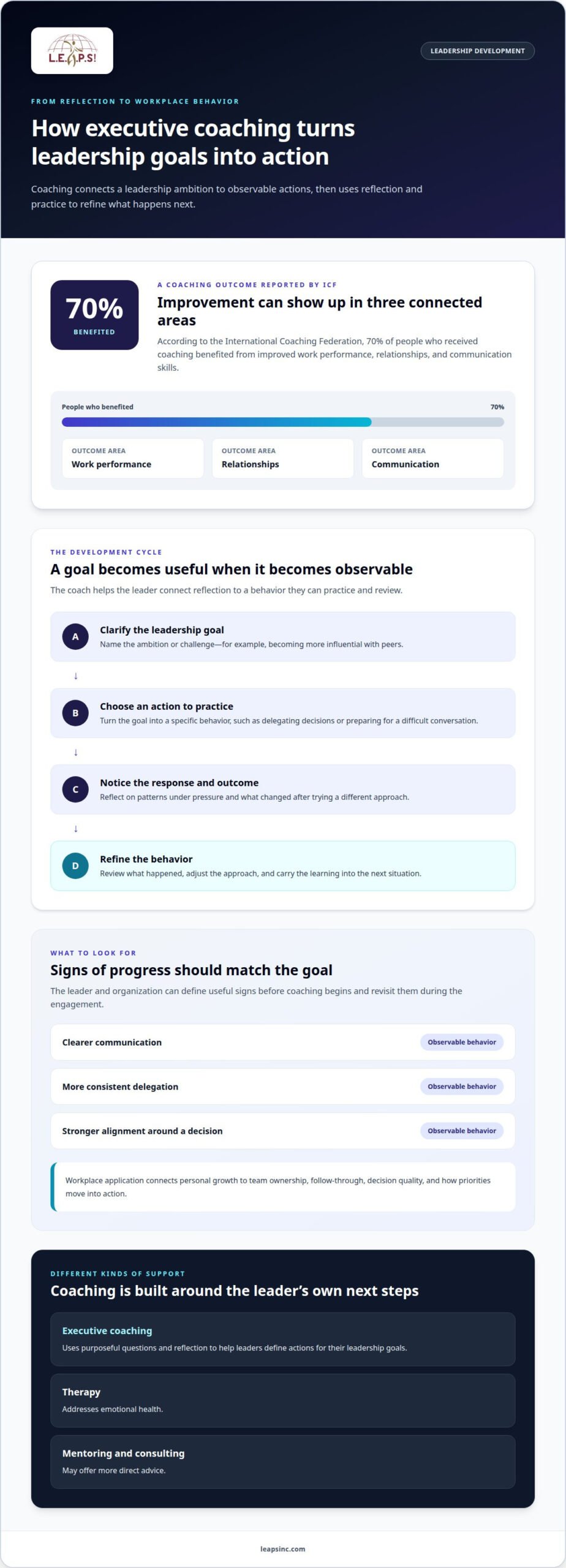
Coaching can help leaders communicate more effectively, build stronger working relationships, and improve performance. Those shifts matter to an organization when they influence team alignment, decision quality, and how priorities move into action. According to the International Coaching Federation, 70% of people who received coaching benefited from improved work performance, relationships, and communication skills.
To assess organizational value, connect each development goal to an observable workplace behavior. For example, a leader might practice delegating decisions, then review whether that changes team ownership and follow-through.
Individual leadership outcomes
At an individual level, coaching can help a leader clarify strengths, identify habits that limit effectiveness, and choose a more deliberate response under pressure. A useful session turns an ambition, such as becoming more influential with peers, into a specific behavior to practice and reflect on. An Enterprise Leader Institute development program can be assessed by asking how it connects personal growth with workplace application.
Career coaching for executives can also address career direction. Leadership coaching emphasizes how someone leads in a current or future role, while outplacement services focus on support during a departure and job transition.
Leadership performance and behavior development
Coaching connects a leadership goal to observable actions. A coach might help a senior leader prepare for a difficult conversation, notice patterns in their responses, and choose a different approach next time. The leader can then review the outcome and refine their behavior, making development a cycle of reflection, practice, and adjustment.
Useful measures relate directly to the goal: clearer communication, more consistent delegation, or stronger alignment around a decision. The leader and organization can define these signs before coaching begins, then revisit them during the engagement.
Executive coaching differs from therapy, which addresses emotional health, and from mentoring or consulting, where advice may be more direct. Coaching typically uses questions and reflection to help leaders define their own next steps.
Are executive career coaching fees tax deductible in the United States? There is no universal answer. Tax treatment depends on the purpose of the coaching and the taxpayer’s circumstances, not the fee alone.
Confidentiality and the coaching relationship
Trust grows when confidentiality is discussed before sensitive goals enter the conversation. At the start of a coaching relationship, clarify what stays between you and the coach, what may be shared, and how exceptions are handled. For example, distinguish private session notes from a brief progress update requested by an organizational sponsor. Clear boundaries help both parties work with focus.
If an employer funds coaching, the executive, coach, and sponsor may have different expectations. Agree on the purpose of the engagement and the information the sponsor will receive. A useful arrangement can report agreed goals and broad progress without relaying personal reflections or session details. Define who receives updates, how they are delivered, and whether the executive reviews them first.
Confidential career transitions call for careful separation from current workplace communication. An executive exploring a new role can keep search conversations on personal accounts and devices, schedule calls outside work commitments, and avoid sharing identifying details before choosing to disclose them. These steps reduce accidental exposure, while a coach can help plan messaging, assess options, and prepare for important conversations.
Before coaching begins, use these discussion points to make expectations concrete:
- Identify who participates, including any employer sponsor or human resources representative.
- Specify which goals and progress themes may be shared, and which session details remain private.
- Agree on the method and timing for updates, such as a scheduled review with the sponsor.
- Clarify how records, notes, and communication channels will be handled.
- Discuss what happens if the coaching goals or participants change.
External support can strengthen the work, but it should have a defined role. A coach may help an executive prepare for a conversation with a manager, while the executive decides what to disclose and when. If a sponsor joins a review, keep the discussion tied to agreed objectives, such as delegation or communication. This protects the working relationship and keeps the executive’s voice central.
Confidentiality also depends on choices made during transitions. Before sharing a sensitive example, remove names or details that could identify colleagues. If a workplace issue involves several relationships, describe the decision or behavior at stake rather than using coaching to transmit private accounts. This focus lets the executive examine options while respecting the people involved.
For a coaching engagement, raise confidentiality questions during the initial conversation and record the agreed boundaries before work begins. If you’re ready to discuss your coaching goals, you can schedule an appointment.
Coaching process and session formats
A coaching engagement turns a leadership priority into a plan, practice, and review. Connect each session to a specific challenge, such as preparing for a board presentation or improving delegation. A clear structure helps the executive and coach use time intentionally while adapting the work as priorities evolve.
- Set the direction. Define the leadership or career goal, the context, and what progress would look like. For example, a newly promoted executive might focus on communicating priorities across teams.
- Explore the current pattern. Examine decisions, relationships, strengths, and recurring obstacles. The coach uses questions and reflection to help the leader identify which behavior deserves attention first.
- Choose an action. Turn insight into a practical experiment, such as delegating a decision or changing the structure of a team meeting.
- Review and refine. At a later session, discuss what happened, what the leader learned, and what to adjust next.
The engagement length depends on its purpose. A focused executive transition coaching engagement is described as lasting 3-4 months, while a broader leadership shift coaching engagement is described as lasting 6-12 months. A transition plan may prioritize role clarity and early relationships; broader leadership development may involve sustained work on habits and influence.
Session formats can support different kinds of reflection. A one-to-one conversation gives an executive room to examine sensitive decisions and individual goals. Remote or in-person meetings can provide a regular point for reflection, while a focused session can address a particular challenge, such as preparing for a high-stakes conversation. The format should serve the goal, not become a goal itself.
Between sessions, a leader can test a chosen action in real workplace conditions. For example, after planning a more strategic team discussion, the executive can observe how colleagues respond and bring those observations to the next meeting. This turns leadership development into active practice rather than a discussion that ends with the session.
At review points, revisit the original objective and evidence of progress. If the goal was clearer communication, examine a specific meeting or decision: Were priorities understood, and did responsibilities become clearer? If the evidence points elsewhere, adjust the focus. This keeps the work responsive to the executive’s role and the organization’s needs.
A useful engagement has a defined purpose, practical sessions, and room to adapt. Before beginning, identify the challenge you want to address, the behavior you can practice, and how you’ll recognize meaningful progress. These decisions give leadership development a strategic direction without locking the work into a rigid script.
Executive coaching tailored to individual, interpersonal, and organizational needs
Effective coaching connects three layers of leadership: the person, their relationships, and the organization. A targeted plan might help an executive manage self-doubt, communicate more clearly with peers, and align a department around a strategic priority. The value lies in discovering how those needs interact, rather than treating each challenge as separate.
Individual needs begin with the leader’s own aims, strengths, and habits. An executive preparing for a broader role might want to delegate more, make decisions with greater confidence, or clarify their professional direction. Coaching can help identify the specific moments when an existing habit appears, then select a behavior to practice. The leader should define what progress looks like in daily work, such as making ownership clear during project discussions.
Personal context matters, too. Two people facing the same promotion may have different expectations and concerns. One might want to strengthen executive presence in presentations, while another wants to manage competing priorities without losing sight of long-term goals. A coach can tailor questions and exercises to each person’s situation, keeping development relevant to their responsibilities and aspirations.
Interpersonal needs emerge through relationships with colleagues, direct reports, boards, and other stakeholders. For example, an executive told that meetings feel directive can examine how they invite disagreement, respond to questions, and close discussions. One practice could be to ask for an alternative view before making a decision. The next conversation offers a chance to observe the effect and refine the approach.
These relationships are shaped by expectations. A CEO may expect independent execution, while a new leadership team may need more context before acting. Coaching can help the executive discover where those assumptions differ and choose a communication response. That might mean explaining the rationale behind a priority or agreeing on decision boundaries with a colleague.
Organizational needs connect leadership development to the wider environment. If a company is restructuring, coaching might help a leader communicate uncertainty responsibly while maintaining focus on decisions within their control. If teams work in silos, a coaching goal could be to create clearer handoffs between functions. The work is strongest when it considers who is affected and which organizational outcome the leader can influence.
To shape a useful engagement, define the desired change at each level:
- Individual: Name a leadership behavior the executive wants to strengthen.
- Interpersonal: Identify a key relationship and the interaction that needs attention.
- Organizational: Connect the behavior to a practical team or business priority.
Reviewing these three levels together helps keep coaching aligned as circumstances shift. A change in role expectations may alter which relationships need attention, while a new business priority may reshape the leader’s focus. Revisit the goals in light of current work, then adjust the practice so individual growth supports meaningful organizational contribution.
How much does executive career coaching cost in the United States?
There isn’t one standard fee for executive career coaching in the United States. The cost depends on the scope, session format, coaching goals, and length of the engagement. A focused transition plan, for example, differs from broader leadership development that addresses several priorities over time.
Start by defining the outcome you need. An executive preparing for a new role may want support with onboarding, stakeholder relationships, and early decisions. A leader seeking a career change may need to clarify direction and plan a confidential search. These distinct objectives shape the work, so compare proposals by what they include, not just by a single session fee.
Before requesting a quote, write down the factors that will help describe your needs:
- Primary goal: Identify the decision, transition, or leadership challenge you want to address.
- Engagement scope: Note whether you want focused support or a broader development process.
- Session format: Consider individual conversations, remote meetings, or another agreed structure.
- Organizational involvement: Clarify whether an employer sponsor will participate or receive progress updates.
- Review approach: Describe how you and the coach will assess progress against your goals.
Engagement length is one meaningful cost factor. A focused executive transition coaching engagement is described as lasting 3-4 months; a broader leadership shift engagement is described as lasting 6-12 months. These examples reflect different scopes, not a universal package or required schedule. A specific plan should connect duration to the work and priorities involved.
Session frequency and preparation can also shape the overall commitment. For example, a leader might use sessions to prepare for a board discussion, then bring observations from the meeting into later coaching. Ask how the proposed format supports practice between sessions, reflection, and progress reviews. A clear explanation makes it easier to understand what the engagement covers.
If an employer funds coaching, clarify who pays and what the organization expects in return. For example, a sponsor might seek progress toward delegation goals, while the executive prioritizes confidence in a new role. Agree on shared objectives and reporting boundaries before the work begins. This helps align the investment while preserving a useful coaching relationship.
Use a quote conversation to discuss your goals, the proposed scope, session structure, and how progress will be reviewed. If you’re ready to explore an executive coaching plan shaped around your priorities, schedule an appointment.
LEAPS: Individual Therapy
LEAPS offers Individual Therapy for people who want to explore personal growth and emotional well-being alongside professional development. Executive coaching focuses on leadership goals and workplace decisions; therapy may be a better fit when personal concerns or emotional strain need direct attention. For example, an executive navigating a career transition might use coaching for role strategy and therapy to reflect on its personal impact.
Individual Therapy offers a confidential setting to explore what matters to you and consider your next steps. It can complement, rather than replace, coaching when both professional ambitions and personal well-being deserve attention. If you’re considering support, contact LEAPS to discuss Individual Therapy.
Choose the Next Step with Intention
Your next leadership chapter can begin with one deliberate choice: name the change you want to create, then decide what kind of support fits the work. Career coaching for executives can help turn professional ambition into focused action, while personal concerns may call for a different kind of space. The right support should reflect what you’re ready to explore and the direction you want to take.
LEAPS offers Individual Therapy, Therapy Intensive, and Couple Therapy for people seeking support with personal well-being or relationships alongside professional growth. These services address needs distinct from executive coaching, and recognizing that difference can help you choose a meaningful next step.
When you’re ready to discuss coaching and clarify a direction that fits your goals, contact LEAPS to discuss coaching. Your next chapter can start with a thoughtful conversation and a clear intention.
Frequently Asked Questions
What challenges does an executive job seeker typically face?
Executive job seekers need to communicate their value while protecting sensitive career plans. A senior leader may need to explain a departure, reposition experience for a different sector, or build relationships before a role is publicly advertised. They also compete with candidates whose backgrounds appear similar. A practical first move is to define target roles and the leadership outcomes that distinguish your record, then tailor conversations around those outcomes.
What does executive career coaching include?
Executive career coaching can help leaders clarify their target role, communicate their experience, and organize their job-search efforts. For example, a coach might help you develop a concise leadership narrative, prepare for interviews, and plan conversations with professional contacts. You remain responsible for pursuing opportunities. Coaching does not provide a new job or conduct a proactive search on your behalf.
Who benefits most from executive career coaching?
Leaders can benefit from structured reflection and action around a meaningful career decision. This might include an executive considering a move to a different industry, a founder returning to corporate leadership, or a senior leader deciding whether to pursue a broader mandate. Coaching is especially relevant when you’re ready to invest effort in making and acting on decisions, rather than expecting someone else to direct your career.
How do I choose an executive career coach?
Choose a coach whose approach fits your goal and whose experience relates to the roles or market you’re targeting. Ask how they’ll help you sharpen your leadership story, prepare for conversations, and structure your search. Discuss how the work will stay focused on your priorities rather than follow a generic job-search template. A useful early conversation should leave you clearer about the process and your role in it.
What credentials and experience should an executive coach have?
Look for relevant coach training, leadership experience, and a clear explanation of how the coach works with senior professionals. Ask for examples of the challenges they address, without requesting private client details. LEAPS Inc. states that Dr. John Daniel holds multiple certifications in therapy, coaching, and leadership. His practice is also that of a Black African American therapist and a Christian therapist who integrates faith into healing.
What is the typical executive coaching process and timeline?
The process begins by agreeing on a goal, then turns it into actions and review points. A job-search engagement might start by clarifying target roles, followed by refining your professional narrative and practicing interviews. The timeline depends on the scope of the work and your priorities. Set a review point with your coach to assess whether the focus still fits your search, and adjust the plan as circumstances change.
How can executive career coaching help with a job search or career transition?
Coaching can bring structure to a search by helping you identify suitable roles, articulate your value, and prepare for important conversations. For instance, a leader moving into a new sector can translate previous accomplishments into language relevant to that industry. The coach supports your efforts, while you build connections, pursue openings, and make career decisions. This keeps ownership of the search with you.
What results can executives expect from career coaching, and how are they measured?
Assess results using evidence tied to your goal, not impressions alone. If you’re pursuing a new role, track whether your target list is clearer, your leadership story is ready, and conversations are progressing. For a transition, review how prepared you feel for key decisions and stakeholder discussions. Agree on indicators early, then revisit them with your coach to decide what to continue or refine.