

A difficult workplace decision can leave even an experienced leader second-guessing priorities, communication, and consequences. We recommend starting with one clearly defined decision and using executive coaching to improve the thinking, conversations, and follow-through around it.
When does a difficult workplace decision justify executive coaching?
Executive coaching can help when you own the decision but need clearer thinking, stronger communication, better prioritization, or consistent accountability. High-stakes choices become especially difficult when team members resist, stakeholders want different outcomes, priorities remain unclear, or an organization is moving through change. You may understand the business issue and still need a structured setting to examine assumptions before you act.
Prepare for an initial conversation by identifying one current workplace decision, gathering the relevant context, and allowing time to reflect honestly between sessions. The process requires moderate effort because coaching is most useful when you test new behaviors in real work situations. At LEAPS Inc., our structured and compassionate approach focuses on purposeful next steps rather than deciding for you.
Recognize the decision pattern causing difficulty
The recurring pattern often matters as much as the decision itself. You may be delaying a difficult conversation, avoiding delegation, revisiting the same options, reacting too quickly to pressure, or struggling to communicate a recommendation with confidence. Naming the pattern helps separate missing information from a leadership behavior that needs attention. It also gives coaching a practical starting point.
Separate a coaching need from a therapy or consulting need
Coaching supports leadership goals, judgment, communication, and action; therapy addresses mental health or relational concerns; consulting supplies specialized business advice or analysis. These needs can overlap, so ask how a provider handles concerns outside coaching scope. If you need legal, financial, technical, or clinical guidance, retain the appropriate qualified professional while using coaching for leadership execution.
How should you define the workplace decision before contacting a coach?

A concise decision brief gives you and a coach something concrete to work on. Write down the choice, deadline, available options, risks, authority level, and people affected. Then ask whether the obstacle is truly a decision or whether a related skill is slowing progress. For example, repeated delays may reflect difficulty delegating, weak executive presence, unclear roles, or hesitation about a difficult team conversation.
- Decision: State what must be decided and by when.
- Evidence: List known facts, assumptions, and missing information.
- Impact: Identify effects on employees, customers, operations, and strategy.
- Leadership pattern: Note the communication or behavior that may be slowing progress.
- Outcome: Define what better judgment or follow-through would look like.
This brief does not need to predict the perfect result. It needs to show the current choices and the leadership change you want to make. A defined objective helps a provider decide whether executive coaching, business coaching, leadership development, or another service is the better fit.
Describe the decision, constraints, and people affected
Start with a plain sentence such as, “I need to decide whether to reorganize this team before the next planning cycle.” Add the deadline, information you trust, information you still need, your authority, and the stakeholders who may support or resist the choice. This detail lets coaching focus on judgment and communication instead of spending every session reconstructing the situation.
Turn a broad concern into a coaching objective
Replace “I need to lead better” with an observable aim such as “I will compare three options, explain the recommendation clearly, and assign ownership by Friday.” A useful objective connects the decision to a behavior, a time frame, and a way to review progress. It can also reveal that the primary need is strategic planning, communication, organization, or conflict resolution.
What methods should executive coaching services use to improve judgment and communication?
Effective executive coaching connects reflection with a practical leadership action. Useful methods include collaborative goal-setting, positive psychology, experiential learning, structured reflection, practical action planning, and follow-up accountability. Together, these methods help you compare options, test assumptions, prepare stakeholder conversations, allocate time, organize priorities, and plan for organizational change.
At LEAPS Inc., our proprietary L.E.A.P.S. coaching model supports a structured and compassionate process. We may connect a conversation about executive presence to a planned presentation, or connect a decision review to clearer roles and a follow-up conversation with the team. The purpose is not to promise one outcome for every client. It is to create a disciplined way to think, act, learn, and adjust.
Connect reflection to practical leadership action
Reflection becomes useful when it changes what you do next. A coaching conversation might help you identify the assumption behind a recommendation, rehearse how to explain a difficult decision, or choose which responsibilities to delegate. The verification point is visible workplace behavior: a recommendation presented, roles clarified, a risk assessed, or a conflict addressed with greater care and precision.
Use accountability to test decisions in real conditions
Accountability turns an intention into a scheduled action. Before ending a session, identify what you will do, who needs to be involved, when it will happen, and what you will observe afterward. At the next review, discuss what worked, where resistance appeared, and whether the decision or the communication approach needs adjustment. This keeps coaching grounded in actual leadership conditions.
What should you ask an executive coach before choosing a service?
Ask enough questions to understand the provider’s experience, structure, boundaries, and working style before you commit. Useful questions include: Have you worked with C-suite leaders, entrepreneurs, managers, or aspiring executives? How are goals set and tracked? What happens between sessions? How is progress reviewed? How do you handle a decision that requires technical consulting, organizational data, mental health support, or a broader leadership development program?
Credentials and relevant experience matter, but a title alone does not establish fit. You should understand confidentiality expectations, communication boundaries, the role of your employer or team, and what the coach will and will not provide. LEAPS Inc. identifies board-certified executive coaching and business coaching credentials, more than 15 years as a professional counselor, and experience supporting leadership development and strategic decision-making.
Check structure, scope, and confidentiality expectations
Choose a service with a process you can understand before the first working session. Ask how goals are documented, how action items are reviewed, and whether communication between sessions is available. Clarify how confidential information is handled, especially if an organization sponsors the coaching. A clear scope protects the coaching relationship and makes it easier to refer legal, financial, clinical, or technical questions elsewhere.
Match the provider’s experience to your leadership situation
Your needs may differ as a first-time manager, entrepreneur, senior executive, or leader guiding organizational change. Ask for examples of the types of leadership challenges the provider is prepared to address, without expecting confidential client details. Relevant experience should include more than general encouragement; it should help you examine strategy, executive presence, communication, organization, and decision-making in context.
How can you judge whether an executive coaching engagement is working?
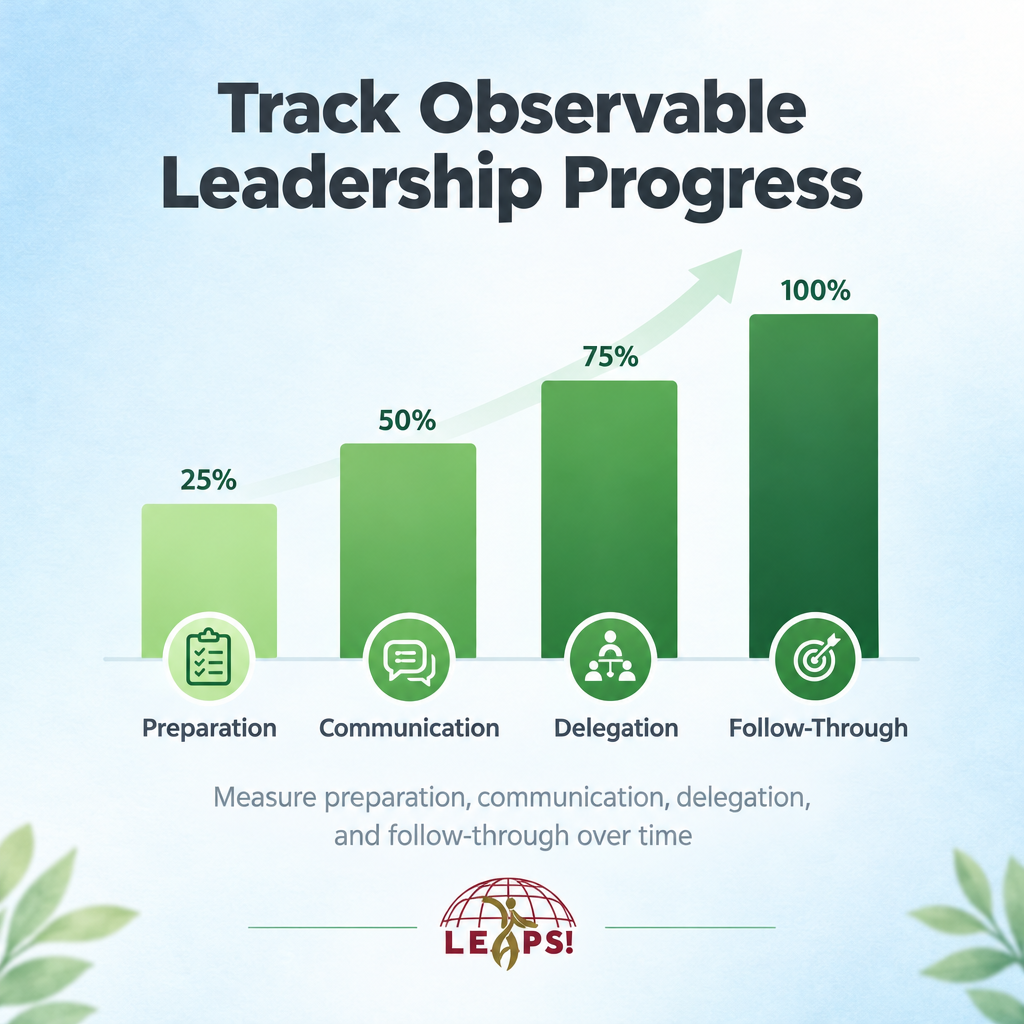
Judge progress through observable changes in how you prepare, communicate, decide, and follow through. Possible indicators include faster preparation for important decisions, clearer delegation, more consistent completion of commitments, improved meeting communication, or documented movement on a strategic priority. Progress can also appear as better questions, stronger listening, more deliberate risk assessment, and a clearer explanation of a difficult decision.
Review goals, completed actions, obstacles, and next steps on a recurring schedule. If the business context changes, revise the coaching objective rather than forcing an outdated plan. Coaching cannot guarantee a preferred business result, replace formal legal or financial advice, or resolve every organizational problem without participation from relevant leaders.
Set observable indicators before sessions begin
Write down what improvement would look like in your working week. You might track whether decisions reach a deadline, whether ownership is clear after meetings, whether you prepare stakeholder conversations earlier, or whether a strategic priority has a documented next action. These indicators create a useful baseline without reducing leadership growth to one business result that may depend on many people.
Review progress when the business context changes
Revisit the objective when a new leader joins, a deadline moves, resources change, or the original decision is no longer relevant. A good review asks what you learned, which actions were completed, what remains blocked, and what should happen next. Updating the plan is responsible coaching practice; it keeps the work connected to the situation you actually face.
Would LEAPS Inc. be a suitable executive coaching option for your situation?
LEAPS Inc. may be a suitable option if you are a C-suite leader, entrepreneur, manager, or aspiring executive who wants support with leadership development, strategy, executive presence, communication, organization, or decision-making. Our executive coaching and problem-solving coaching are designed to help clients move forward with clarity and purposeful next steps.
Our broader coaching services include life coaching, business coaching, career coaching, and entrepreneurship coaching. That range can help clarify whether your central need is a workplace leadership decision or a related personal and professional goal. LEAPS Inc. identifies Tampa and Orlando among its Florida service areas. Bring your decision brief, describe the change you want to make, ask how the L.E.A.P.S. model applies, discuss accountability, and confirm the next step. To discuss whether executive coaching fits your situation, contact LEAPS Inc. at +18558853277 or info@leapsinc.com.
Compare the service fit with your primary goal
Executive coaching fits best when you own the decision and want support with judgment, communication, organization, leadership presence, or follow-through. Business consulting may be better when you need specialized analysis or a technical recommendation delivered for you. Therapy may be more appropriate when mental health or relational concerns are central. Sharing that distinction during your first conversation helps us discuss the right path.
Prepare for the first conversation
Bring the decision, deadline, options, constraints, stakeholders, and leadership pattern you identified. Explain what you want to do differently, such as delegate more clearly, communicate a recommendation, or guide a team through change. Ask how accountability works and what progress review looks like. Contact LEAPS Inc. at +18558853277 or info@leapsinc.com to discuss executive coaching fit in Tampa, Orlando, or your broader Florida leadership context.
Frequently Asked Questions
Can executive coaching help with a high-stakes workplace decision?
Yes. Executive coaching can help you clarify options, examine assumptions, prepare stakeholder communication, and create an accountable action plan. It does not decide for you or guarantee a particular business outcome.
What is usually included in executive coaching services?
Services commonly include goal-setting, leadership reflection, practical action planning, accountability, communication work, and support for decision-making or organizational change. Ask each provider how sessions are structured and how progress is reviewed.
How do I know whether I need executive coaching or business consulting?
Choose coaching when you need support with leadership judgment, communication, organization, or follow-through. Consulting may be more appropriate when you need specialized analysis, technical recommendations, or a defined business solution.
What qualifications should I look for in an executive coach?
Review relevant coaching credentials, leadership experience, work with clients at your level, confidentiality practices, and the provider’s ability to explain the process. LEAPS Inc. identifies board-certified executive coaching and business coaching credentials.
How do I get started with executive coaching through LEAPS Inc.?
Prepare a short description of the workplace decision, the leadership pattern involved, and the change you want to make. Contact LEAPS Inc. at +18558853277 or info@leapsinc.com to discuss whether executive coaching fits your situation.
Is executive coaching appropriate for managers and aspiring executives?
Yes. Executive coaching can support managers and aspiring executives who want to strengthen communication, organization, strategic planning, decision-making, or leadership presence. The right scope depends on the person’s goals and responsibilities.