

Couples can discuss conflict before marriage by choosing one specific issue, preparing their feelings and needs, listening without interruption, and ending with a practical agreement or planned follow-up. The goal is not to eliminate differences; it is to learn whether you can address them with honesty, respect, emotional regulation, and repair.
How should couples prepare for a productive conflict conversation before marriage?
Prepare for a conflict conversation with enough time, privacy, and emotional steadiness to understand each other before trying to solve the issue. Disagreements about marriage can feel threatening, especially when both partners care deeply about building a lasting relationship. A difficult topic may seem to raise questions about compatibility, commitment, or the future, even when the real issue is a workable difference in expectations.
Rate this process as moderate difficulty and plan for 45 to 60 uninterrupted minutes. Use a shared notes document or printed worksheet, choose a calm setting, and remove phones and other time pressure. Each partner should choose one topic, write down hopes and concerns, and agree that the purpose is understanding and planning rather than winning.
Set the conditions before raising a difficult topic
Begin only when both partners can participate with reasonable calm and attention. Agree on the topic, the time available, and a simple rule such as taking turns without interrupting; avoid starting during an argument, late at night, or after alcohol use.
The first checkpoint is accurate understanding: each person should be able to summarize the other partner’s concern before offering a response. If the summary misses the concern, ask for clarification instead of defending your own position.
Agree on a pause and repair plan
Decide in advance how either partner can request a pause and when you will return to the discussion. A pause should regulate emotions, not punish the other person or leave the issue indefinitely unresolved.
For example, you might agree to take 20 minutes to walk, breathe, or write down thoughts, then reconnect at a specific time. The repair plan can include an apology for hurtful words, a short summary of what you heard, and one next step you can both attempt.
Which marriage expectations should couples discuss before conflict exposes them?
Discuss the expectations most likely to shape daily life before stress forces them into the open. Agreement on every preference is unnecessary, but unspoken assumptions require attention before marriage. We recommend that each partner mark every prompt as aligned, undecided, or needing further discussion, then choose one unresolved item for a follow-up conversation.
- Money and work: Discuss spending, saving, debt, financial stewardship, and career priorities.
- Family and parenting: Discuss children, discipline, caregiving, holidays, and boundaries with relatives.
- Intimacy and connection: Discuss affection, sex, privacy, quality time, and ways each partner feels loved.
- Home responsibilities: Discuss chores, decision-making, mental load, and support during illness or stress.
- Conflict and repair: Discuss triggers, communication habits, time-outs, apologies, and outside support.
Use a structured conversation checklist
A checklist helps couples notice differences without turning the conversation into a test of who is right. For each topic, ask what each person expects, what shaped that expectation, where flexibility exists, and what would require more information.
Premarital counseling can support these conversations by addressing expectations, intimacy, parenting and family stress, emotional regulation, and conflict resolution in a structured setting. The aim is to make informed choices together, including choices where respectful agreement takes time.
How can couples discuss a disagreement without becoming defensive?

Use a repeatable exchange: describe one specific situation, name the emotion, explain the underlying need or value, and make a concrete request. This approach gives your partner something clear to understand and respond to instead of requiring them to defend against a broad judgment.
Hypothetical example: Replace “You never help” with “When I handled dinner and cleanup alone three nights this week, I felt overwhelmed. I need us to share planning more reliably. Would you agree to a weekly household planning conversation?” The second version identifies an event, feeling, need, and request without turning the entire relationship into evidence.
The listening partner should reflect the message, ask one clarifying question, and respond with empathy before explaining their own position. The conversation is working when both partners can state the concern and the proposed next step. Avoid scorekeeping, global accusations, interrupting, and treating a pause as abandonment.
Use observations, feelings, needs, and requests
Start with what happened rather than what you believe your partner intended. Name the emotion plainly, connect it to a need or value, and ask for one concrete behavior that could help.
For instance, “When plans change without discussion, I feel anxious because predictability matters to me. Could we check in before changing weekend plans?” Specific requests make it easier to decide what you can try and when you will review it.
Practice reflective listening before problem-solving
Reflective listening means showing that you understand the message before presenting your own explanation. Try, “I hear that you felt alone when I made that decision without asking you. Did I understand that correctly?”
Then ask one clarifying question and acknowledge the emotional impact, even if your intention was different. Empathy does not require agreeing with every interpretation; it shows that the concern deserves attention before solutions are discussed.
When does a premarital disagreement need professional support?
Consider professional support when the same conflict repeats without repair, conversations end in shutdown or escalation, or one partner cannot express concerns safely. Repetition often indicates a relationship pattern rather than one isolated disagreement, especially when both partners leave each conversation feeling misunderstood or blamed.
Guided work may help with betrayal or trust issues, major differences about children, family boundaries, intimacy, emotional regulation, and persistent communication difficulties. LEAPS Inc. describes couples and premarital counseling as a supportive, structured setting for understanding relationship patterns, communicating clearly, listening effectively, and strengthening emotional connection.
Separate a solvable difference from a recurring relationship pattern
A solvable difference usually becomes clearer when both partners can state the issue, consider each other’s needs, and test a reasonable agreement. A recurring pattern continues despite repeated promises because the deeper cycle, such as criticism and withdrawal, has not changed.
Track what happens before, during, and after the conflict. If the same trigger repeatedly leads to defensiveness, silence, escalation, or unresolved resentment, couples therapy can provide structure for identifying unhealthy communication patterns and practicing different responses.
Protect emotional and physical safety
Couples counseling is not a substitute for immediate safety planning when there is intimidation, coercive control, or violence. The partner facing danger should seek appropriate individual and emergency support rather than relying on a joint conversation to make the situation safe.
If you can speak openly without fear, discuss boundaries and support options with a qualified provider. Safety includes the ability to pause, disagree, ask questions, and decide without threats or retaliation.
What should couples expect from premarital counseling sessions?
Expect premarital counseling to examine communication patterns, expectations, emotional connection, intimacy, parenting and family stress, conflict resolution, and emotional regulation rather than simply deciding who is right. Sessions may help couples identify triggers, express emotions clearly, practice empathic responses, create repair agreements, and set follow-up goals.
Before choosing a provider, discuss your main concerns, preferred format, scheduling needs, therapist fit, and what happens if a topic feels too sensitive to discuss jointly. LEAPS Inc. has provided professional counseling for over 15 years and offers a free 15-minute consultation for prospective couples therapy clients in its Tampa and Orlando service areas.
Turn recurring conflict into specific skills and agreements
Useful counseling should connect insight with behavior that you can practice between sessions. A couple might work on naming emotions, slowing an argument, reflecting a partner’s message, sharing household decisions, or creating a repair agreement after hurtful exchanges.
Bring one recent conflict and describe the sequence honestly. The provider can help you notice where communication changes from discussion to defense, then support a more useful response that protects both emotional connection and accountability.
Choose the right next step after the first conversation
The right next step may be another private conversation, a written agreement, or an initial consultation with a couples therapist. Choose based on whether you both feel able to continue respectfully and whether the disagreement affects trust, wedding decisions, or your sense of safety.
Couples in Tampa or Orlando can contact LEAPS Inc. to discuss concerns, format, and fit during the free 15-minute consultation. You can also review how premarital counseling helps couples prepare for marriage.
How can couples turn one conflict conversation into a marriage preparation plan?
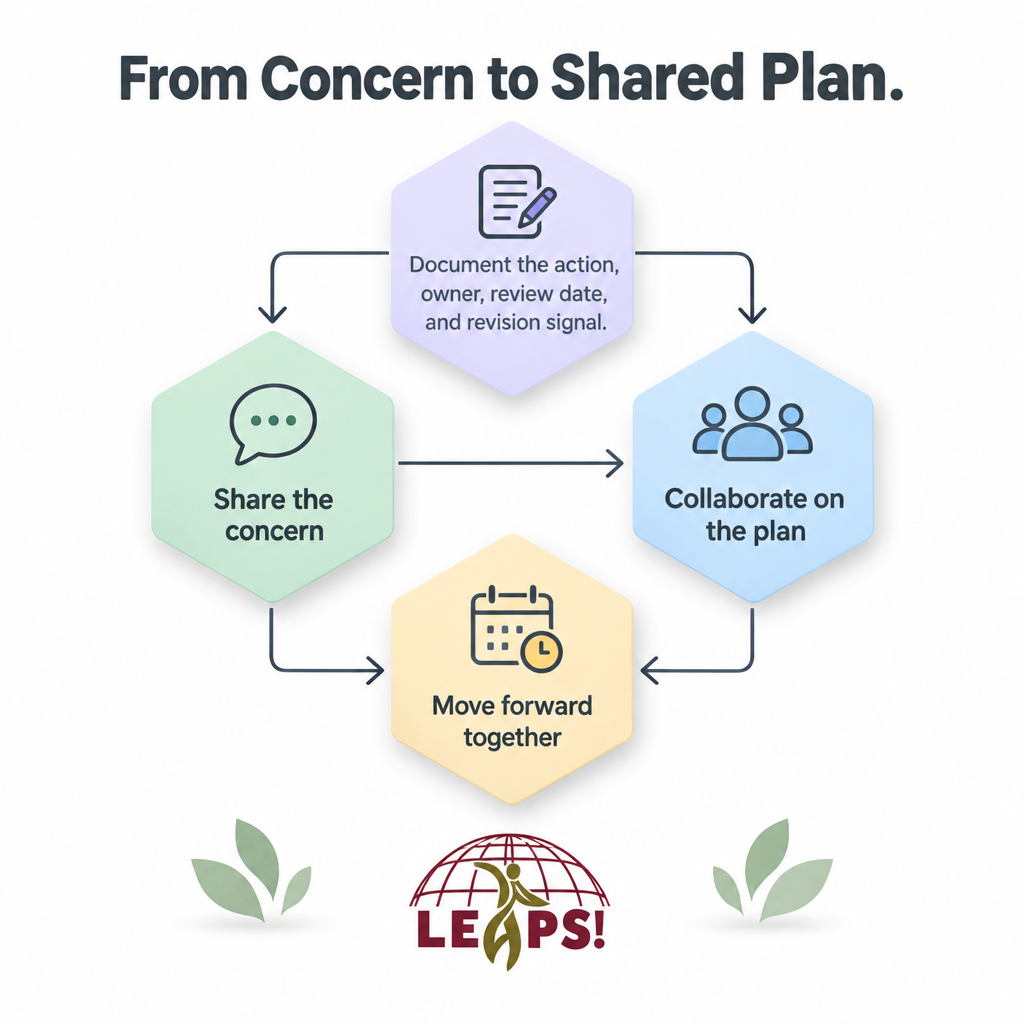
Turn the conversation into a plan by recording the concern, agreed action, responsible person, review date, and signal that means the plan needs revision. A written plan reduces the chance that a sincere discussion disappears once daily demands return.
Revisit major topics monthly during engagement instead of expecting one conversation to settle money, family, intimacy, and emotional support permanently. Circumstances change, and a strong marriage preparation process leaves room to update agreements as work, health, family needs, and wedding decisions develop.
Record agreements and unresolved questions
Write down what you agreed to try, what remains undecided, and what information you still need. Assigning responsibility should clarify ownership without turning the relationship into a scorecard.
Set a review date and identify the sign that the plan needs revision, such as repeated missed conversations or growing resentment. If either partner cannot reach a respectful pause or repeatedly minimizes the other’s needs, record that pattern as a reason to seek support.
Know when to contact a premarital counselor
Contact a premarital counselor when unresolved differences affect wedding decisions, trust, emotional connection, or your ability to communicate with respect. Support is especially appropriate when conflict repeats without repair or when one partner feels unable to raise concerns safely.
LEAPS Inc. offers a free 15-minute consultation for prospective couples therapy clients in Tampa and Orlando. Contact LEAPS Inc. to discuss whether premarital or couples therapy fits your next step.
Frequently Asked Questions
Should couples attend premarital counseling if they rarely argue?
Yes, calm periods can make it easier to discuss expectations about money, intimacy, parenting, family responsibilities, and conflict habits before stress intensifies. Counseling can support communication and emotional connection even when a couple does not report frequent arguments.
What should we do if a conflict conversation becomes heated?
Pause when either partner cannot listen or speak respectfully, state when you will return to the topic, and use the break to regulate rather than prepare a rebuttal. If this pattern repeats or feels unsafe, discuss it with a qualified couples or premarital counselor.
Can premarital counseling help with different expectations about parenting or family boundaries?
It can provide a structured setting to identify the assumptions beneath the disagreement, clarify values, and create practical agreements. Counseling does not force identical preferences; it helps couples assess whether they can make informed, respectful decisions together.
How do I get started with premarital counseling through LEAPS Inc.?
Prospective couples can contact LEAPS Inc. to use the free 15-minute consultation and discuss an appropriate next step for couples or premarital therapy. The listed service areas include Tampa and Orlando, Florida, without requiring a promise about availability, pricing, insurance coverage, or a specific appointment time.