


Article by
Dr. John E. N. Daniel
Dr. John E. N. Daniel is a visionary with a burning desire to coach, counsel, teach and empower individuals from diverse backgrounds towards the attainment of their maximum potential, life purpose and destiny. He coaches, counsels, consults, mentors, and ministers to the global community through diverse media and environments.
A business can look busy and still leave its owner unsure what deserves attention next. A business coach can help turn questions about growth, leadership, marketing, and decision-making into a clearer direction for the work ahead.
It’s reasonable to expect coaching to address more than one business problem. Owners may want to sharpen goals, understand customers, strengthen their brand, and build confidence in their decisions. Coaching can start with an assessment of the business, then provide structured support and accountability as the owner works toward those goals.
This guide covers the questions owners bring to coaching, how it can support strategy and leadership, and what business coaching can involve across the United States. You’ll also learn what to expect and how to decide whether coaching fits your priorities, so you can choose a thoughtful next step for your business and professional growth.
Key Takeaways
- Identify where coaching could strengthen your business, from leadership decisions to customer understanding and brand alignment.
- Explore the kinds of business coaching and development support available to owners in Clearwater and nearby areas.
- Turn broad ambitions into strategic goals, then use a focused marketing plan to guide your efforts.
- Understand how coaching can move from an initial business assessment to ongoing support and accountability.
- Match your priorities, whether they involve a startup, sales, leadership, or marketing, with the right coaching focus.
Benefits of business coaching
Business coaching can help owners connect daily decisions with a clearer direction for growth. That work may include examining customer needs, sharpening a brand’s identity, and identifying priorities. A coach can help turn broad ambitions into practical questions: Who is the business trying to reach? What should customers understand? Which decisions are slowing progress?
One benefit is stronger alignment between a company’s brand and its mission. If a service business promises personal attention, its messaging, customer experience, and marketing materials should support that promise. Coaching can help leaders identify where those elements diverge and set a more consistent direction. Employees gain a clearer reference point when communicating with customers, while customers encounter a more coherent experience.
Coaching can also bring structure to content and communication. A content calendar helps a business plan topics and formats instead of creating posts only when time allows. A consistent brand voice can make a blog, video, infographic, or social media post feel connected, even when each format serves a different purpose. For example, a business might plan educational posts around recurring customer questions, then adapt those themes for selected channels.
Understanding customers is another practical focus. Coaches can guide owners in researching customer demographics, preferences, and buying behaviors. This can clarify which audiences the business serves and what those customers value. Market segmentation organizes customers into meaningful groups, helping the company tailor its messaging, products, or services instead of relying on one broad message.
Seasonal operating patterns can inform decisions, too. A business in a tourism market can compare labor costs on slower days with costs during a busy beach week, then consider how staffing relates to customer demand. This comparison gives the owner a concrete starting point for discussing schedules, service capacity, and resources under different business conditions.
These benefits matter most when coaching leads to decisions an owner can act on. A focused discussion might help a business:
- Clarify how its mission should appear in its brand identity.
- Plan useful content through a calendar and consistent voice.
- Research customer preferences and buying behavior.
- Segment audiences and tailor messages to their needs.
- Review seasonal labor patterns alongside business priorities.
That structure can help owners move from scattered ideas to deliberate choices. Coaching doesn’t replace an owner’s judgment; it strengthens the decision-making process. Leaders can connect customer insight, brand expression, and operational choices to the future they want to build, then choose practical next steps that reflect their priorities.
Business coaching services in Clearwater and nearby areas
Compare coaching by format, focus, credentials, and the business decisions it can support. The right fit depends on the challenge you want to address.
Local and Online Coaching Options
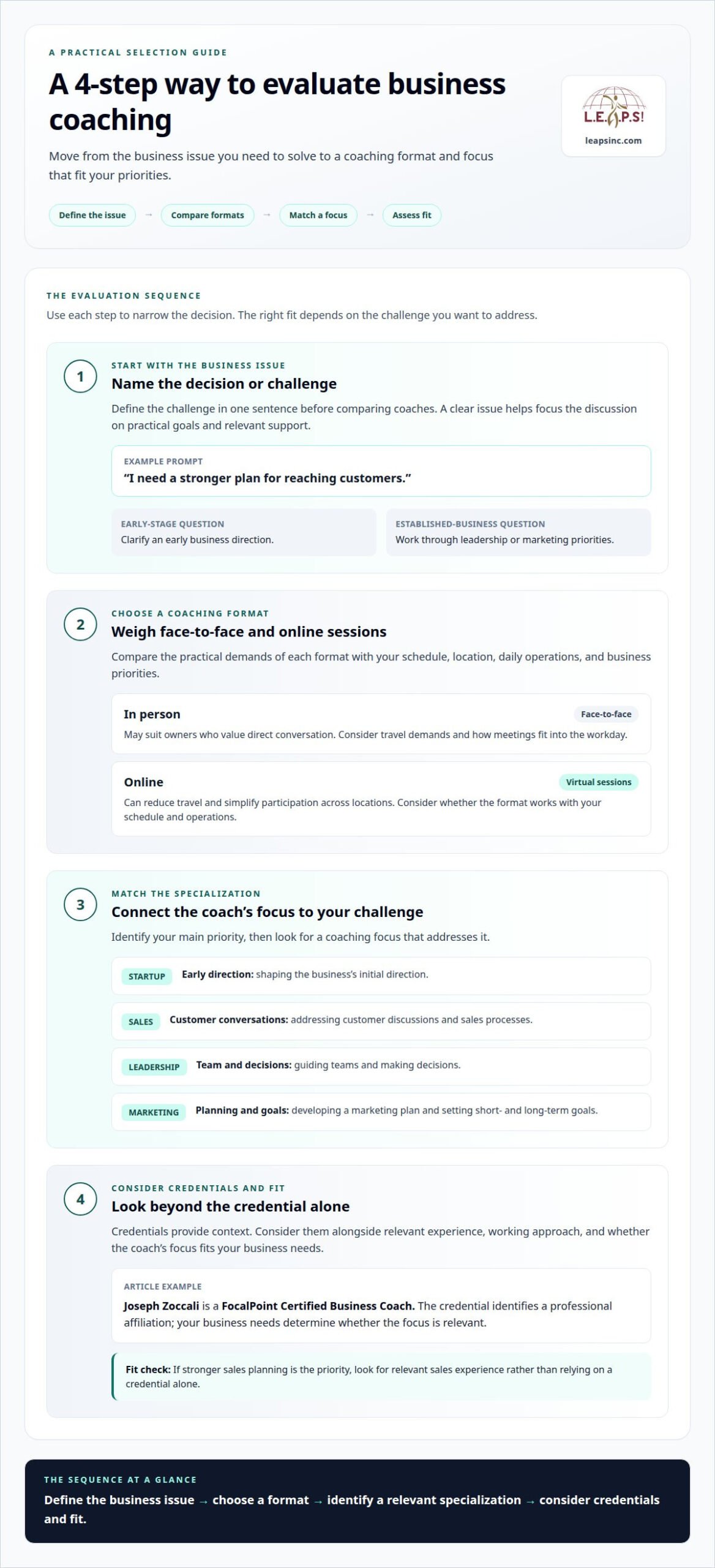
In-person and online coaching offer different practical considerations. Meeting face-to-face may suit owners who value direct conversation, while online sessions can reduce travel and simplify participation across locations. If you are looking for a business coach Clearwater business owners trust, nearby providers or virtual professionals can easily fit into your schedule. Compare the format, travel demands, and how well each option aligns with your daily operations and broader business priorities.
Choosing a Clearwater Business Coach
Choose a coach whose focus connects with the decision you need to make. A founder may need help clarifying an early business direction, while an established owner may be working through leadership or marketing priorities. When searching for a qualified business coach Clearwater professionals recommend, consider whether the approach supports clear goals, practical discussion, and accountability. Define the challenge in one sentence, such as, “I need a stronger plan for reaching customers.”
Coach Specializations
Specializations connect coaching to specific business challenges. Startup coaching can focus on shaping an early direction; sales coaching can address customer conversations and sales processes. Leadership coaching focuses on guiding teams and making decisions. A marketing-focused coach can help develop a marketing plan and set short- and long-term goals. Identify your main priority, then look for a matching focus.
Credentials and Experience
Credentials provide context, but consider them alongside relevant experience and working approach. Joseph Zoccali is a FocalPoint Certified Business Coach. That credential identifies a professional affiliation, while your business needs determine whether a coach’s focus is relevant. For example, if you need stronger sales planning, look for relevant sales experience rather than relying on a credential alone.
Use a practical sequence: define the business issue, choose a coaching format, identify a relevant specialization, then consider credentials and fit. An owner seeking marketing direction can prioritize support focused on planning and goals. If you’re ready to discuss your priorities with LEAPS Inc., schedule a conversation as a next step.
A business decision is easier to discuss when it’s tied to a comparison the owner can examine. Buzzazz Business Services recommends that business owners compare labor costs on slower days with costs during a busy beach week. This gives a coaching conversation a concrete topic without assuming that either period automatically calls for a particular staffing choice. An owner can use the comparison to clarify what they want to understand, which costs they’re weighing, and what decision they hope to make. Bringing that question to a coach keeps the discussion connected to the business rather than general advice.
The comparison can also help define a useful coaching goal: clarify the labor-cost difference enough to inform a decision. Before a conversation, an owner might describe the issue plainly, identify the periods being compared, and note what remains uncertain. A coach can help examine the question, test the reasoning behind possible choices, and identify what further consideration is needed. The point isn’t to assume that slower days and a busy beach week should be managed the same way or differently, but to use the comparison as a prompt for deliberate planning. Framing the issue this way gives the discussion a specific focus while leaving the final decision with the owner.
Business strategy and goal setting
A sound strategy connects a business’s direction with the decisions it makes each day. In Clearwater, an owner might want to expand, improve operations, or create a more deliberate path for the company. Coaching can help clarify the desired outcome, examine current priorities, and turn broad ambition into actions the business can pursue.
Begin by describing the future the business is working toward. A local service company, for example, might aim to serve a different customer group or make its service experience more consistent. A coach can help examine what that aim requires, which strengths support it, and which barriers deserve attention first. This creates a strategic focus rather than a collection of unrelated projects.
Next, translate the direction into goals with observable progress. “Grow the business” is hard to act on because it doesn’t identify what should change. A more useful goal might focus on improving customer retention, clarifying responsibilities, or developing a service. The owner and coach can define what progress would look like, identify the actions involved, and revisit the goal as circumstances evolve.
Priorities also need to reflect the business’s capacity. If a Clearwater company wants to serve new customers, its strategy might examine staffing, service delivery, and marketing together. Pursuing growth without considering those connected demands can strain daily operations. A coaching discussion can separate urgent tasks from strategic ones, then identify which decision should happen first and what information will support it.
Marketing belongs within the larger plan, not apart from it. A marketing plan can direct a business’s marketing resources and efforts. For example, a home-services company might define its audience, choose its central message, and decide which content formats fit its goals. The strategic question is how each marketing activity supports the business’s broader direction, not simply how to add more activity.
A practical planning conversation can organize the work into a few connected decisions:
- Define the business direction and the outcome it seeks.
- Identify the current obstacle most closely tied to that outcome.
- Choose actions that fit the company’s capacity and priorities.
- Decide what observable evidence will show progress.
- Review what changed and adjust the plan when needed.
For instance, an owner who wants a more dependable customer experience could map the customer journey, clarify team responsibilities, and identify where service becomes inconsistent. The resulting plan links the desired outcome to specific operational decisions. Coaching can help the owner maintain that connection, adapt the strategy as new information emerges, and lead with greater intention.
What to expect from coaching
Business coaching often starts by assessing the company and the owner’s priorities. The coach and owner discuss the business’s current position, challenges, and goals, then identify where focused support could help. For example, an owner facing unclear team responsibilities might examine how decisions move from leadership into daily operations.
Sessions may be one-on-one or in a group, depending on the coaching format. Individual work can give an owner room to examine a specific decision, such as entering a new market. Group coaching can bring business owners together to consider challenges and approaches. In either format, the discussion should connect to decisions the owner can put into practice.
After an initial assessment, coaching can continue with support and accountability as the owner works toward their goals. The process may involve revisiting priorities, discussing progress, and identifying barriers. If a business owner plans to improve sales conversations, for instance, coaching can focus on the decisions and behaviors related to that objective. The owner remains responsible for choosing and carrying out actions.
Free consultations or introductory sessions aren’t a universal feature of coaching; they’re a separate format choice. Before an introductory conversation, it can help to identify the business question you want to address and what you hope to understand about the coaching approach. That gives the discussion a practical focus, whether the topic is leadership, operations, or growth.
Reported results and client reviews vary because businesses set different goals and face different conditions. A review describing clearer leadership decisions, for example, reflects that reviewer’s experience, not a standard outcome for every owner. Consider what the review says the coaching addressed, how the owner describes the process, and whether that focus resembles your priorities. A specific account of the work offers more context than a general statement of satisfaction.
A coaching process can be easier to follow when its stages are explicit:
- Assess the business situation and define the owner’s priority.
- Agree on a goal that connects to a current business need.
- Discuss actions, obstacles, and decisions during coaching sessions.
- Review progress and refine the next steps as circumstances change.
For example, a Clearwater retailer seeking more consistent customer service might first examine where customer interactions become difficult. The coaching conversation can then focus on leadership decisions, team practices, and actions tied to that goal. This makes progress more concrete than relying on a broad ambition alone. Clear expectations, relevant discussion, and regular reflection give the owner a structured way to move forward.
Which Clearwater business coaches specialize in startups, sales, leadership, or marketing?
Specialization matters because a startup decision differs from a sales challenge or leadership concern. A business coach in Clearwater can focus conversations on the specific capability an owner wants to strengthen. Match the coaching focus to a current business need, such as clarifying a launch plan, improving sales conversations, guiding a team, or shaping marketing direction.
Startup coaching can help founders work through decisions involved in establishing a business. For example, a founder preparing to launch a service may need to clarify the intended customer, define the service’s value, and organize priorities. Entrepreneurship-focused coaching can bring those connected decisions into view, so the founder can concentrate on the questions most relevant to launching and developing the business.
Sales coaching is relevant when owners want to examine how their business attracts prospects and guides customer conversations. A Clearwater retailer might review how staff explain product options, respond to customer concerns, and follow up after an inquiry. The useful focus is the sales process itself: where customers hesitate, what information they need, and which parts of the interaction could become clearer.
Leadership coaching centers on how an owner sets direction, makes decisions, and supports employees. A growing company may need clearer responsibilities as work becomes more complex. Coaching can help the owner examine how decisions are communicated, how team members understand their roles, and where leadership practices could better support the company’s priorities.
Marketing coaching can address how a business plans its outreach and sets marketing goals. A marketing-focused coach can help develop a marketing plan and establish short- and long-term goals. For example, a Clearwater professional service firm could define which audience it wants to reach, what message it needs to communicate, and how its marketing activities connect to those objectives.
To identify the most relevant specialization, connect the challenge to the work involved:
- Choose startup or entrepreneurship guidance for launch and early business decisions.
- Focus on sales when customer conversations or the sales process need attention.
- Consider leadership when team direction, responsibilities, or decision-making are central.
- Look for marketing focus when planning outreach, messaging, or marketing goals.
Some business challenges overlap. A startup founder, for instance, may need both sales and marketing support; marketing training can cover blogs, videos, infographics, and social media posts as content formats. Start with the issue most directly affecting current decisions, then identify connected needs. If marketing priorities are the immediate focus, schedule a conversation about your goals with LEAPS Inc. and the direction you want your business to take.
LEAPS
LEAPS can support owners when business pressures also affect personal well-being or relationships. Business decisions may bring stress into family life, strain communication, or leave little room to reflect. In these situations, therapy can complement business planning by addressing the personal impact, while business strategy remains focused on the company’s goals.
Individual Therapy, Couple Therapy, Family Therapy, Group Therapy, and Therapy Intensive offer different settings for addressing personal or relationship concerns. The appropriate focus depends on what the owner is experiencing and who is affected. These services don’t replace business strategy; they offer a therapeutic path when emotional well-being is part of the challenge.
If you’d like to discuss whether therapeutic support fits your situation, contact LEAPS.
Choose a direction and take the next step
The next decision doesn’t need to solve every challenge at once. Start with the business priority that most needs your attention, then consider what kind of guidance could help you move forward. A business coach in Clearwater may be a useful partner when you want to examine leadership, business development, or marketing with greater focus.
LEAPS offers Business Coaching for owners pursuing professional growth. When personal or relationship concerns are also part of the picture, Individual Therapy, Therapy Intensive, and Couple Therapy offer additional forms of support. The right next step depends on whether you’re seeking strategic guidance for your business, support for personal well-being, or both.
Bring your central question and the direction you hope to pursue into the conversation. Contact LEAPS about business coaching to discuss a thoughtful path forward. Your next chapter can begin with one clear decision.
Frequently Asked Questions
What do owners ask in business coaching in Clearwater?
Owners often ask how to make a difficult business decision, delegate more effectively, or prepare for a change in direction. A business coach in Clearwater can help an owner clarify the issue behind the question. For example, “Should I hire?” may lead to examining workload, role responsibilities, and the business need that a new hire would address. Bringing a current decision helps focus the discussion.
What business coaches serve Clearwater, Florida?
LEAPS serves clients across the United States with coaching for executives, entrepreneurs, and businesses. Its offerings include Business Coaching, Executive Coaching, and Entrepreneurship Coaching, supporting different professional roles and organizational needs. If you’re considering support, identify whether the central need concerns leading a team, developing an enterprise, or addressing broader business priorities. That distinction helps frame the relevant coaching focus.
What should I expect during the first business coaching session?
The first session commonly begins with an assessment of the business and the owner’s goals. Be ready to describe a current challenge, such as uncertainty about a major decision or difficulty aligning a team around priorities. The coach and owner can explore the situation, identify what information matters, and clarify a useful direction for future work. The discussion establishes a foundation for support and accountability.
How do Clearwater business coaches compare with online coaching or nearby Tampa coaches?
In-person coaching offers direct conversation, while online sessions can reduce travel and simplify participation across locations. Compare travel demands, schedule fit, coaching focus, and how well each option supports your business priorities.