

Healthier coping skills begin with understanding what triggers your stress and practicing responses that support your goals. Individual therapy can offer confidential, client-centered support for anxiety, emotional overwhelm, self-esteem concerns, life transitions, and personal growth while you build practical ways to respond more thoughtfully.
What should you know before contacting an individual therapist?
Many people seek individual therapy while feeling stressed, emotionally overwhelmed, uncertain, or unable to describe the problem clearly. You do not need a diagnosis or a perfectly organized explanation before asking for help. A brief description such as “I am struggling to manage stress” or “my reactions are affecting my relationships” gives a therapist a useful starting point.
People explore individual therapy for many reasons, including anxiety, low self-esteem, difficult life transitions, emotional regulation, coping skills, self-awareness, and personal growth. At LEAPS Inc., individual therapy is described as confidential, client-centered support tailored to each person’s experiences, goals, comfort level, and emotional well-being needs.
Before contacting a provider, identify what feels hardest, what you have already tried, and what you hope will change. If you are comparing individual therapy options in New York City, confirm the provider’s location, availability, virtual options, and licensure directly. The supplied LEAPS Inc. information identifies Tampa and Orlando as service areas, so New York City availability should be verified before scheduling.
Recognizing when coping strategies no longer feel sufficient
Individual therapy may be worth considering when familiar coping strategies no longer reduce stress or help you recover after difficult moments. Ongoing anxiety, emotional overwhelm, repeated conflict, avoidance, harsh self-criticism, or trouble adjusting to change can signal a need for additional support. Therapy can help you understand patterns without treating your concerns as a personal failure.
Preparing a short list of concerns and questions
Write down one or two situations that feel especially difficult, the emotions or reactions that follow, and the change you want to see. Add questions about confidentiality, session structure, appointment format, cost, payment details, and whether the provider serves your location. This short list can make the first inquiry easier when words feel hard to find.
What happens during the first inquiry and initial session?
The first inquiry is a practical conversation about your general concern, scheduling, service location, confidentiality, fees, payment details, and what the initial appointment includes. You can ask these questions before sharing personal details, and you can explain only what feels comfortable at that stage.
You do not need a perfect diagnosis or polished story. A therapist may ask what brought you in, how the concern affects daily life, what you want to change, and whether there are immediate issues that need attention. Ask how sessions are structured, how urgent concerns are handled, and how the work can adapt to your comfort level and goals.
LEAPS Inc.’s supplied information does not state a current individual-therapy fee or a complete payment policy. Ask the practice directly for current cost, payment information, cancellation terms, and what the initial appointment includes before making plans.
Questions to ask before scheduling
Ask whether the provider is licensed for your location, whether sessions are in person or virtual, and whether the practice currently accepts clients with concerns like yours. You can also ask how confidentiality works, how appointments are scheduled, what payment methods are accepted, and whether the first session focuses on assessment, goal-setting, or immediate coping support.
What the first conversation may clarify
The first conversation can clarify whether your concerns fit individual therapy and what a reasonable starting goal might be. It can also show whether the therapist explains things clearly, listens without rushing, and responds respectfully to questions about pace, privacy, and practical skill-building. If the fit is uncertain, ask what information would help you decide.
How are therapy goals turned into healthier coping skills?
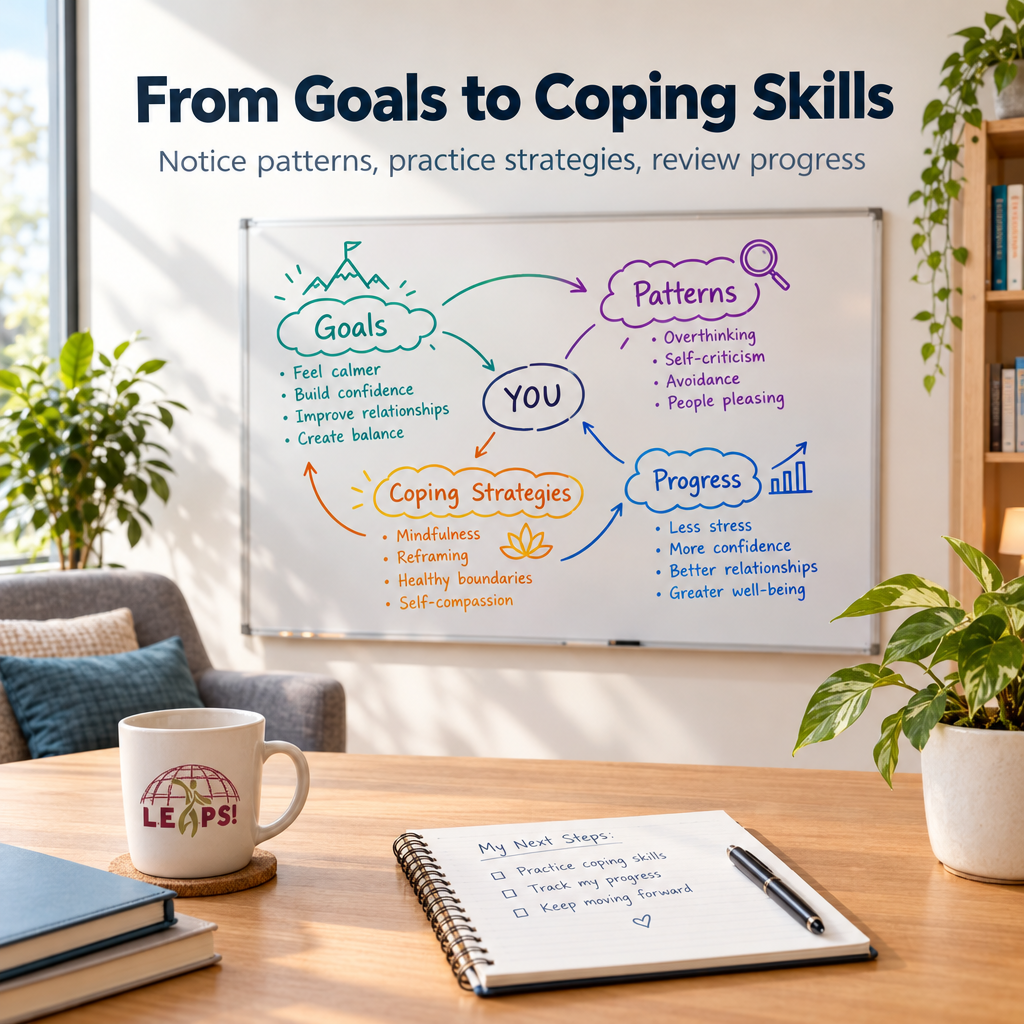
Therapy goals become coping skills through a shared process of identifying triggers, thoughts, emotions, behavior patterns, strengths, and desired changes. Instead of choosing techniques at random, you and your therapist can connect each skill to a specific situation, such as managing a stressful conversation, calming an anxious response, setting a boundary, or recovering from emotional overwhelm.
Skill areas may include emotional regulation, stress management, communication, boundaries, self-awareness, and responding thoughtfully during difficult moments. LEAPS Inc. describes its approach as collaborative and integrative, with attention to practical action planning and positive psychology. The exact exercises should reflect your concerns, comfort level, and goals.
- Name the concern: Describe the situation you want to handle differently. Verification: You can state the desired change in one clear sentence. Pitfall: Choosing a goal so broad that you cannot recognize progress.
- Notice the pattern: Track the trigger, thoughts, emotions, body signals, and usual response. Verification: You can identify what tends to happen first. Pitfall: Judging yourself instead of observing the sequence.
- Choose one skill: Select a manageable response, such as pausing, breathing, naming an emotion, or using a clear boundary statement. Verification: You know exactly when and how to try it. Pitfall: Attempting several new techniques at once.
- Practice in a real situation: Use the skill during a lower-risk moment when possible. Verification: You attempted the skill before the pattern fully took over. Pitfall: Waiting for a perfect situation.
- Review what happened: Discuss the outcome, obstacles, and emotional response. Verification: You can describe what helped and what did not. Pitfall: Calling the practice a failure because the situation stayed difficult.
- Adjust the plan: Refine the skill or choose a better timing, wording, or support. Verification: You can describe what triggered the response, what skill you attempted, and what you would change next time. Pitfall: Treating one difficult attempt as proof that change is impossible.
From emotional awareness to practical action
Emotional awareness gives you information that can guide action, such as recognizing rising tension before a conversation becomes reactive. A therapist can help you connect that signal to a specific response, including a pause, grounding exercise, communication choice, or boundary. The aim is not to eliminate every difficult feeling; it is to increase your ability to respond with intention.
A client-centered plan for between-session practice
Between-session practice works best when it is specific, realistic, and connected to daily life. You might record one trigger, identify the response you tried, and note what you would repeat or change. A client-centered plan should respect your pace and capacity rather than adding pressure, and your next session can be used to review and adjust it.
How can you tell whether the therapist-client fit feels appropriate?
A workable fit includes respect, clear communication, collaboration, and goals connected to your concerns. LEAPS Inc. describes its therapy as confidential, client-centered, integrative, and tailored to each person rather than based on a one-size-fits-all model.
Look for a therapist who helps you feel heard, explains the goals and methods, leaves room for questions, and offers practical guidance you can understand. You should also know how progress will be reviewed. Progress may involve noticing patterns more clearly, using a coping skill sooner, communicating differently, or feeling more able to manage a life transition.
A good fit does not mean every session feels easy. Difficult topics can bring discomfort, but the work should remain respectful, understandable, and connected to your goals. If you feel confused about the pace, uncomfortable with an approach, or unsure how sessions relate to your priorities, name that concern rather than silently ending care.
Signs of a workable therapeutic relationship
You can describe what you are working toward, ask questions without feeling dismissed, and understand why a suggested exercise may help. The therapist listens to your feedback and adjusts the conversation when your needs change. You also have a developing sense that sessions support self-awareness and practical action rather than leaving you unsure what to do next.
When to raise concerns or reconsider the match
Raise concerns when the pace feels wrong, the goals remain unclear, or you do not understand how the suggested strategies connect to your situation. Give the provider an opportunity to respond and adjust when doing so feels safe and appropriate. If the mismatch continues, you can ask whether another therapist, format, or level of support may better fit your needs.
When should individual therapy support couples or relationship work?
Individual therapy can address personal insight, emotional regulation, coping, and individual concerns, while couples therapy focuses more directly on interaction patterns and relationship dynamics. Someone may ask about both formats when recurring conflict, trust concerns, emotional overwhelm, communication difficulties, or personal reactions affect a relationship.
For example, individual work may help you understand why a disagreement triggers intense fear, anger, withdrawal, or shame. Couples work may then focus on how both partners communicate, repair conflict, set boundaries, or rebuild trust. The appropriate format depends on your goals, safety, readiness, and concerns discussed with a qualified provider.
LEAPS Inc. confirms offerings in individual, couples, family, group, and faith-based counseling. That range can make it useful to ask which format best matches the problem you want to address, while remembering that the supplied information does not confirm a New York City service location.
Separating personal patterns from relationship dynamics
Personal patterns include emotional triggers, coping habits, beliefs about yourself, and reactions shaped by earlier experiences. Relationship dynamics include the cycle between two or more people, such as pursuing and withdrawing, repeated criticism, or unresolved conflict. Individual therapy can clarify your part of a pattern without placing all responsibility on you or ignoring the relationship context.
Choosing individual, couples, or combined support
Choose individual therapy when your primary goals involve personal coping, emotional regulation, self-esteem, or life transitions. Ask about couples therapy when the central concern involves shared communication or interaction patterns. A provider can discuss whether both formats are appropriate, how goals may differ, and what boundaries are needed to protect confidentiality and safety.
What should you confirm before choosing a provider and taking the next step?

Confirm the provider’s credentials, service area, appointment format, confidentiality practices, fees, payment details, cancellation terms, communication expectations, and method for assessing progress. Also ask whether the provider has experience with your concerns and how goals are translated into practical coping work.
LEAPS Inc. states that its professional counselor experience exceeds 15 years and lists credentials including Licensed Christian Marriage and Family Therapist and multiple board-certified coaching roles. Ask which credential and service apply to your situation, since therapy and coaching address different types of goals and may involve different standards or structures.
For a quick comparison, write the same questions for each provider and record the answers. Pay attention to whether the response is clear, respectful, and specific enough for you to make an informed choice. If you are seeking individual therapy in New York City, verify service location and licensure directly because the supplied LEAPS Inc. service-area information identifies Tampa and Orlando.
A comparison checklist for prospective clients
Use a checklist covering credentials, location, virtual availability, confidentiality, current cost, payment details, cancellation terms, session goals, communication expectations, and how progress is assessed. Add one personal question: “How would you approach building coping skills for my concern?” Comparing answers can help you choose based on fit rather than urgency alone.
How to contact LEAPS Inc. with clear questions
We understand that reaching out can feel difficult, especially when you are already overwhelmed. Contact LEAPS Inc. at +18558853277 or info@leapsinc.com to ask about individual therapy, current availability, cost, what an initial appointment includes, and whether the practice fits your needs. You can also use the LEAPS Inc. contact page, and ask directly whether services are available in New York City.
Frequently Asked Questions
How much does individual therapy cost?
LEAPS Inc.’s supplied information does not state a current individual-therapy fee, so ask the practice for the current session price before scheduling. Also ask about payment methods, insurance or self-pay details if relevant, cancellation terms, and what the initial appointment includes. Clear cost information can help you plan without adding uncertainty.
What is included in individual therapy?
Individual therapy may include confidential, client-centered support for stress, anxiety, emotional overwhelm, self-esteem concerns, life transitions, coping strategies, self-awareness, and personal growth. Ask how the therapist will tailor goals, session structure, and between-session practice to your concerns. The work may focus on understanding patterns and building healthier responses over time.
Does LEAPS Inc. provide individual therapy in New York City?
The supplied business information confirms Tampa and Orlando as service areas but does not confirm New York City coverage. Contact LEAPS Inc. directly to verify location, licensure, appointment format, and current availability before making plans. Do not assume that a virtual option is available without asking.
How do I get started with individual therapy?
Start by contacting the practice with a brief description of what you are experiencing and questions about fit, cost, confidentiality, scheduling, and the first session. You do not need a complete diagnosis or a polished explanation. LEAPS Inc. can be reached at +18558853277 or info@leapsinc.com.
Is individual therapy right for people seeking more purpose and accountability?
It may be appropriate for people seeking greater fulfillment, self-awareness, healthier coping, emotional regulation, or personal change. Discuss your goals during the initial inquiry so the provider can explain whether individual therapy or another LEAPS Inc. service best matches them. Practical progress may begin with one clearly defined change.
Can individual therapy complement couples therapy?
Yes. Individual therapy may support personal insight and emotional regulation while couples sessions address relationship dynamics. Ask the provider how the formats would coordinate with your goals and circumstances, especially when trust concerns, recurring conflict, or communication difficulties affect both personal well-being and the relationship.