

Article by
Dr. John E. N. Daniel
Dr. John E. N. Daniel is a visionary with a burning desire to coach, counsel, teach and empower individuals from diverse backgrounds towards the attainment of their maximum potential, life purpose and destiny. He coaches, counsels, consults, mentors, and ministers to the global community through diverse media and environments.
Changing an organization takes more than adjusting its structure. An organizational development consultant helps a business understand how its people, leadership, teams, culture, and workplace practices affect performance, then supports a thoughtful process of change. The work is iterative: assess what’s happening, recommend actions, and evaluate how those actions are working.
It makes sense to seek support when a business needs to adapt but isn’t sure where to begin, or when a change feels disconnected from the people expected to carry it forward. Organizational development addresses the organization as a whole, while leadership development focuses more specifically on strengthening leaders’ skills and capabilities.
This article explains what organizational development consultants do, how they assess challenges and support business transitions, and what shapes the scope of their work. You’ll also learn how organizational development differs from leadership development and when business coaching or related support may be a useful next step.
Key Takeaways
- Organizational development examines how people, leadership, culture, and workplace practices work together, then uses assessment and evaluation to guide change.
- During a business transition, clear communication, employee input, and alignment between values and strategy can help changes take root.
- Organizational development addresses the effectiveness of the whole organization; leadership development focuses on building leaders’ capabilities.
- Surveys, interviews, and data analysis can reveal where communication, culture, retention, and the employee experience may need attention.
- Consultant responsibilities can span diagnosis, recommendations, and support through implementation, shaped by the organization’s needs and goals.
What Is an Organizational Development Consultant?
An organizational development consultant helps businesses understand how people and workplace systems shape organizational effectiveness. The work connects strategy with leadership, team relationships, culture, and everyday practices. Rather than prescribe a single fix, the consultant examines how these elements interact. For example, missed deadlines may reflect unclear roles, strained communication, or processes that no longer fit the business.
Applied psychology helps consultants examine how behavior, motivation, group dynamics, and workplace conditions influence performance. They gather perspectives through interviews, review available information, and identify patterns leaders may not see from inside the organization. If departments repeatedly misunderstand priorities, an assessment might trace where communication breaks down and how decision-making responsibilities are understood.
An organizational assessment turns observations into a clearer picture of strengths, barriers, and opportunities. It can examine structure, workflows, leadership practices, communication, and the alignment between stated values and daily behavior. The consultant connects findings to the organization’s goals, distinguishing root causes from visible symptoms. A recommendation might clarify role ownership before introducing a new process.
Assessment is iterative, not a one-time report. The consultant helps define the issue, gather relevant information, recommend changes, and evaluate how the changes affect work. Leaders and employees contribute different perspectives, which can reveal gaps between official procedures and actual practice. Business development planning may also address strategic direction; related business development support can help connect organizational priorities with business goals.
Pre-employment assessments may also form part of a broader organizational development initiative. They can help an organization examine how selection practices relate to role expectations and workforce needs. Their value depends on how clearly the organization defines the role and uses the results. A consultant can help leaders consider whether assessment practices support the capabilities and behaviors the organization needs.
When choosing a consultant, look for a clear approach to diagnosis, employee input, recommendations, and follow-through. Their experience should match your organization’s challenge, whether it involves culture, structure, or communication.
An organizational development consultant focuses on how people, systems, and culture affect an organization’s overall effectiveness. A management consultant may address broader business problems, including operations or strategy. The work can overlap when organizational change supports those goals.
Consulting has limits: findings depend on candid input and access to relevant information, while change can stall without leadership commitment. The U.S. median wage for management analysts, including organizational development consultants, was $87,660 in 2020, according to the U.S. Bureau of Labor Statistics. That occupational figure describes a broader job category, not a consulting fee or a measure of organizational outcomes.
Organizational development is an iterative process: consultants collect and assess information, recommend changes, and evaluate the effects of new processes and initiatives. Continued evaluation helps leaders understand how changes are working as they are introduced.
Change management and business transitions
Organizational change succeeds when strategy, working practices, and employee experience move together. A consultant helps leaders plan transitions, understand their effects, and adjust implementation as the organization responds.
Supporting Organizational Change and Growth
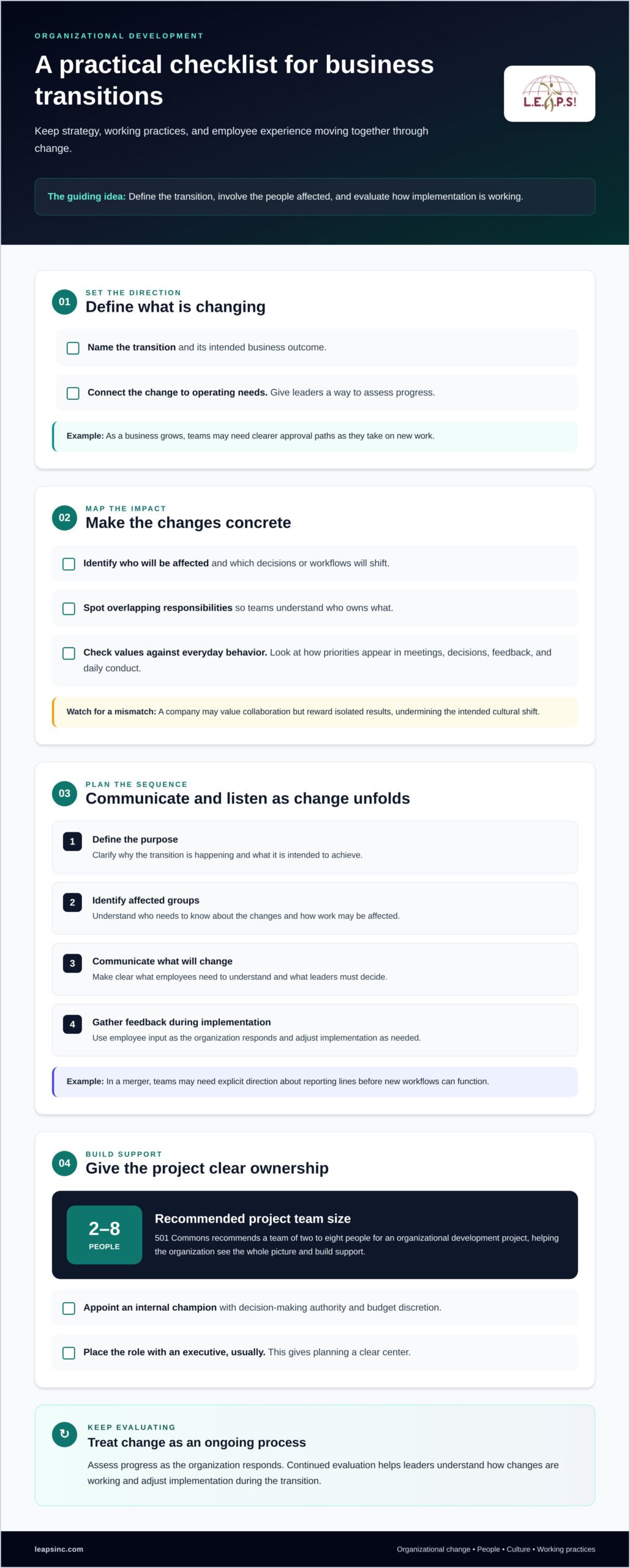
Change support begins by defining the transition and its intended business outcome. A consultant maps who will be affected, which decisions or workflows will shift, and where responsibilities may overlap. For example, a growing business might need clearer approval paths as teams take on new work. A practical plan connects each change to operating needs and gives leaders a way to assess progress.
Shaping Organizational Culture
Culture change involves more than adopting new value statements. DHR describes cultural transformation as aligning organizational values, beliefs, and behaviors with strategy. A consultant explores how these elements appear in meetings, decisions, feedback, and daily conduct. If a company values collaboration but rewards isolated results, that tension can undermine the intended shift. Leaders need to examine both stated priorities and workplace routines.
To create a workable transition, consultants help establish a sequence: define the purpose, identify affected groups, communicate what will change, and gather feedback during implementation. Each step should clarify what employees need to understand and what leaders must decide. In a merger, for instance, teams may need explicit direction about reporting lines before new workflows can function.
Change management also considers the people responsible for carrying a plan forward. 501 Commons recommends a team of two to eight people for an organizational development project, helping the organization see the whole picture and build support. It also advises appointing an internal champion with decision-making authority and budget discretion, usually an executive. Those roles give planning a clear center.
During a transition, employee engagement and retention may be influenced by manager effectiveness, communication, workplace culture, career development, team dynamics, and alignment with organizational goals. A consultant can help leaders identify which factors matter most to the change. For example, if a restructuring creates uncertainty, manager communication may need attention alongside the revised reporting structure.
Culture shifts require consistent action from leaders. DHR’s framework points toward aligning daily behaviors with strategic direction, so leaders must model the conduct they expect. If the strategy depends on cross-team coordination, leaders can reinforce shared decision-making and remove processes that reward conflicting priorities. Employees then experience the change through concrete practices, not just announcements.
Evaluation keeps the transition responsive. A consultant can compare intended changes with employee feedback and operational experience, then recommend adjustments. If a new approval process creates delays, leaders can revisit decision rights rather than treating the plan as fixed. Organizations seeking structured support for business transitions can schedule an appointment to discuss their goals and needs.
Organizational development versus leadership development
Organizational development addresses how the whole organization functions. Leadership development focuses on the capabilities of managers, executives, and emerging leaders. The approaches can work together, but they address different problems.
Consider a company where projects stall across departments. Organizational development examines communication, roles, decision paths, and team dynamics. Leadership development may strengthen managers’ skills in setting expectations and resolving conflict. If unclear authority is the core issue, coaching alone won’t redesign the structure. If managers lack the skills to lead within a new structure, structural changes alone may also fall short.
Leadership and executive coaching focus on an individual leader’s effectiveness in context. A coach may help a manager communicate priorities, navigate difficult conversations, or lead through uncertainty. Organizational development connects individual growth to wider conditions. For example, improved manager communication matters more when teams also have clear channels for sharing concerns and decisions.
Leadership development can include new manager development, leadership coaching, and preparation for future roles. Organizational development may use these interventions alongside strategic planning, team building, employee engagement surveys, succession planning, and workplace culture initiatives. The choice depends on the challenge: a newly promoted manager may need focused development, while inconsistent management practices across departments may call for organization-wide work.
Leadership continuity is another connection between the two. Succession planning identifies roles and prepares people to take on greater responsibility, while organizational development considers how those transitions fit the company’s structure and goals. If a senior leader leaves, a plan should address more than the successor’s readiness. It should also account for decision authority, team relationships, and knowledge that needs to remain accessible.
Leadership retreats give leaders dedicated time to strengthen relationships, establish priorities, and align on the organization’s future direction. A retreat can support organizational development when discussions lead to decisions affecting teams and operations. For instance, leaders might agree on strategic priorities, clarify who owns follow-up, and communicate resulting changes consistently after returning to daily work.
To determine the right emphasis, match the concern to its level. A capability gap in one leader points toward leadership development. Repeated friction across teams, unclear processes, or a gap between strategy and practice points toward organizational development. Where both appear, coordinate the work: develop leaders while addressing the structures and shared practices shaping their teams.
The distinction isn’t a choice between people and systems. Leadership development strengthens the people guiding change; organizational development aligns the wider conditions that help change take hold. A business facing both leadership transitions and cross-team coordination challenges may need an integrated approach rather than a single, isolated intervention.
The right fit begins with the needs the organization is trying to address. Organizational development may help organizations develop managers, prepare future leaders, improve communication, strengthen collaboration, increase engagement, support succession planning, and align employee performance with organizational goals. These areas can overlap, so ask whether the difficulty is limited to an individual’s capabilities or reflects conditions affecting people across the organization. Clarifying that distinction connects development efforts to the challenge and the outcomes the organization seeks.
Employee surveys, interviews, and data analysis
Employee feedback helps leaders see how policies and daily work are experienced across teams. Consultants combine that perspective with organizational information to identify patterns and guide decisions.
Gathering Employee Feedback
Surveys can gather consistent responses about communication, workplace culture, manager effectiveness, and the employee experience. A consultant connects each question to a decision the organization needs to make. For example, if leaders need to understand communication across departments, questions can explore how employees receive priorities and where messages become unclear.
Interviews add context that fixed-response questions may miss. A consultant can speak with employees and managers across roles, then compare themes without treating one account as the whole story. If employees describe conflicting priorities, follow-up questions can distinguish unclear direction from competing team demands. The organization should also explain how feedback will be used and reported.
Employee engagement insights can help HR and leadership teams identify opportunities to improve culture, communication, retention, and the employee experience. Consultants look for recurring themes across survey responses and interviews, including differences between teams or roles. If employees repeatedly ask for clearer expectations, for instance, leaders have a specific issue to examine rather than a broad impression of dissatisfaction.
Analyzing Data and Measuring Results
Analysis connects employee feedback to organizational questions. Consultants can group responses by topic, compare perspectives across teams, and examine relevant workforce information. They then distinguish recurring patterns from isolated comments. If employees report delayed decisions, the next step may be to examine approval paths and clarify where responsibility sits.
Consultants measure results by comparing agreed indicators before and after an intervention, then interpreting changes in context. Return on investment compares measurable benefits with resources invested, while recognizing that other organizational changes may also influence outcomes. A survey alone can’t establish that a particular initiative caused a business result.
A useful measurement plan starts with the intended outcome. If a communication initiative aims to improve clarity, the consultant can identify relevant employee feedback and review it again after implementation. If the goal concerns retention, leaders can examine related employee insights alongside retention information. Choose indicators that match the original question, not simply the data easiest to collect.
Reporting should translate findings into decisions. A consultant can present key themes, areas of agreement, differences between groups, and questions that need more attention. Leaders might then revise a process, give managers clearer guidance, or gather additional employee perspectives. Follow-up analysis tests whether the adjustment addressed the concern or revealed another barrier.
Strong measurement links employee voice, organizational evidence, and a defined action. Consultants help leaders establish that connection before collecting responses, interpret results carefully, and use findings to refine the next decision.
Organizational development consultant responsibilities
An organizational development consultant translates an organization’s priorities into coordinated work. The role can involve defining the project, gathering perspectives, interpreting findings, developing interventions, and reviewing their effects. Each responsibility should connect to a business objective. For example, improving collaboration may require examining how teams share information, make decisions, and resolve competing priorities.
At the outset, the organizational development consultant works with leaders to clarify the challenge and project scope. This means separating the requested change from the issue driving it. If managers report missed deadlines, the consultant may examine handoffs, priorities, role clarity, and decision delays before recommending action. A defined scope identifies the questions the work will address and the decisions that remain with organizational leaders.
During diagnosis, the consultant selects methods suited to the business question. Interviews can reveal contrasting experiences, surveys can show patterns across groups, and document reviews can expose gaps between policy and practice. The consultant interprets these perspectives together rather than treating one comment as definitive. If employee accounts conflict with a written procedure, that discrepancy becomes a finding for leaders to explore.
- Frame the work: clarify objectives, boundaries, stakeholders, and the decisions the project should inform.
- Interpret evidence: connect employee perspectives and organizational information to the stated challenge.
- Design interventions: recommend actions that address causes, such as clearer role definitions or manager development.
- Support implementation: help leaders communicate decisions, coordinate activities, and respond to barriers.
- Review progress: compare outcomes with project objectives and recommend adjustments.
Recommendations are only one part of the work. An organizational development consultant helps translate them into practical actions, identifying responsibilities and implementation needs. A revised workflow, for example, may require managers to explain roles, teams to understand new handoffs, and leaders to resolve decision conflicts. The consultant facilitates alignment while organizational leaders retain authority over business decisions.
The consultant also keeps the diagnosis connected to the intervention. If unclear ownership drives communication problems, a general team-building event may not address the cause. Clarifying accountability and creating a shared process for communicating priorities may be more relevant. This connection helps ensure that activities address a defined organizational need.
As implementation proceeds, the consultant reviews feedback and outcomes with leaders. If a new process creates confusion, the response might involve revising guidance or clarifying responsibilities. The consultant records what changed, what remains unresolved, and which decision comes next. Ongoing evaluation keeps the project responsive rather than ending with a presentation.
For support connecting organizational priorities with practical business planning, schedule an appointment to discuss the needs your organization is working to address.
LEAPS
LEAPS Inc. can be a next step when you’re considering how business goals, leadership, and personal growth intersect. Business Coaching offers space to explore business challenges and clarify priorities; Executive Coaching can support leaders reflecting on their role in organizational change. For concerns that also affect relationships or well-being, Therapy Intensive, Group Therapy, or Family Therapy may offer relevant support.
If you’re ready to discuss the questions your organization is facing, contact LEAPS Inc..
Build the Conditions for What Comes Next
Choosing an organizational development consultant is a decision to invest in how your organization can grow, adapt, and bring its people along. An organizational development consultant can help connect the challenge you face with the support your organization needs. A focused conversation can help clarify priorities and move toward deliberate action.
Organizational challenges can also intersect with personal and family well-being. LEAPS offers Therapy Intensive, Group Therapy, and Family Therapy for people seeking support in those areas. These services address needs distinct from organization-wide consulting, but may be relevant when well-being is part of the wider context.
To discuss your needs and consider a path forward, connect with LEAPS. The right next step can help you shape a more purposeful future for your organization and the people within it.
Frequently Asked Questions
How does this role support a business?
An organizational development consultant helps leaders connect workforce practices with the organization’s strategic direction. For example, if a company introduces a new customer service model, the consultant can help leaders consider how expectations, coordination, and employee capabilities need to shift. The consultant can also clarify which decisions belong to leaders and which changes require input from affected teams.
What kinds of support can an organization receive?
Support can include planning for organizational design, leadership succession, team development, and workplace culture initiatives. The right combination depends on the business need and the decisions leaders are preparing to make. A company expanding into a new market, for example, may need to consider whether its current responsibilities and communication practices can support that direction, alongside any development its managers require.
What steps does a consulting engagement typically involve?
An engagement typically begins by agreeing on the desired outcome, scope, and decision-making roles. The consultant then gathers relevant perspectives and organizational information, interprets the findings, and works with leaders to shape suitable actions. During implementation, the organization and consultant review progress, address emerging barriers, and adjust the approach. Clear decision ownership helps keep recommendations connected to business priorities.
How can I find organizational development consultants near me in the United States?
Look for a consultant whose experience matches your challenge and who has a clear approach to diagnosis, employee input, recommendations, and follow-through.