


Article by
Dr. John E. N. Daniel
Dr. John E. N. Daniel is a visionary with a burning desire to coach, counsel, teach and empower individuals from diverse backgrounds towards the attainment of their maximum potential, life purpose and destiny. He coaches, counsels, consults, mentors, and ministers to the global community through diverse media and environments.
Executive dysfunction in ADHD refers to difficulties with the mental skills used to plan, focus, stay organized, manage time, and regulate emotions. These challenges can make it harder to start, switch between, and finish tasks, but experiencing them alone doesn’t mean a person has ADHD. They describe a pattern of difficulty, not a character flaw or lack of effort.
If everyday responsibilities feel disproportionately demanding, that experience deserves a clear explanation. Executive function challenges can affect work, relationships, and personal routines, and their impact varies from person to person.
This article explains executive dysfunction, how it can appear in adults with ADHD, and how time-management strategies and supportive systems may help. You’ll learn how planning, task initiation, and emotional regulation fit into the picture, and what kinds of support can help you find practical ways forward.
Key Takeaways
- Executive function challenges can affect planning, focus, time management, and emotional regulation, but they don’t by themselves establish an ADHD diagnosis.
- Notice how difficulties with starting, switching, or finishing tasks can shape daily life, rather than treating them as a lack of effort.
- Explore practical ways to make time and tasks easier to manage, including external reminders and breaking work into smaller steps.
- Learn how accountability and supportive relationships can help with task initiation and follow-through.
- Consider how therapy or coaching may help you develop strategies that fit your needs and goals.
What is executive dysfunction?
Executive dysfunction describes difficulty using mental skills to plan, focus, organize, manage time, and regulate emotions. In ADHD, it is associated with these cognitive functions, but executive function difficulties alone do not establish an ADHD diagnosis.
ADHD and Executive Function Disorder
ADHD is a condition; executive dysfunction describes challenges with skills that help manage thoughts, actions, and emotions. The distinction matters because the phrase “executive function disorder” does not, by itself, explain why someone struggles or establish that they have ADHD. For example, difficulty organizing a workday is a challenge to understand, not a diagnosis on its own.
Look at the pattern behind the difficulty. Trouble starting a report, remembering its steps, and returning to it after an interruption may involve several executive functions. Naming the specific obstacles helps clarify what support might address them, without reducing a person’s abilities or identity to a label.
Executive Function Difficulties in ADHD
Executive function difficulties in ADHD can affect focus, planning, task initiation, switching tasks, impulse control, and clear expression. These functions work together: remembering an instruction, choosing the next step, and staying with it all influence whether a task gets completed. A missed deadline may reflect several connected difficulties, rather than a lack of care.
Demands can shift at key school transitions, including the move to 6th or 9th grade. A student may suddenly need to track different classes, deadlines, and materials, placing greater demands on planning and organization. The transition illustrates how a change in structure can make existing executive-function challenges more visible.
Individual Differences in Executive Functioning
Executive functioning varies by person and task. One adult may keep appointments but struggle to begin a complex project; another may start quickly but lose track of details or deadlines. Someone might focus well on an engaging activity but find routine paperwork difficult to sustain. These differences matter because a single example cannot describe every skill or challenge.
Context matters, too. Clear instructions may make a task easier, while interruptions or competing demands can make it harder to keep a plan in mind. Noticing where a person succeeds and where a task breaks down gives a more useful picture than calling them “disorganized.”
Causes and Diagnosis of Executive Dysfunction
In ADHD, executive dysfunction is associated with difficulties in the cognitive functions used to manage thoughts, actions, and emotions. It isn’t simply procrastination, laziness, or a lack of care. Executive function challenges alone don’t diagnose ADHD. The distinction depends on assessing ADHD as a broader condition, rather than treating one difficulty, such as missed deadlines, as conclusive.
When these struggles disrupt daily activities, describing concrete examples can clarify their impact: difficulty starting tasks, switching between priorities, or controlling an impulse. Therapy may help address emotional and practical challenges. If you’re in crisis in the United States, the Substance Abuse and Mental Health Services Administration advises calling 911 or the 988 Suicide & Crisis Lifeline.
What are executive functions?
Executive functions are mental skills that help people guide their actions toward goals. Working memory, cognitive flexibility, and inhibitory control are central examples. Together, they help someone keep instructions in mind, adapt when plans change, and pause before acting. In daily life, these skills shape how an adult with ADHD handles a meeting, shifting priorities, or an unexpected request.
Executive functions develop over time, beginning by age two and described as fully developed by age 30. Russell Barkley’s model groups them into nonverbal working memory, internalized speech, self-regulation of affect, motivation and arousal, and reconstitution. Thomas Brown’s model describes clusters for task activation, attention, effort, emotional regulation, working memory, and self-monitoring. These models offer different ways to understand skills that often work together.
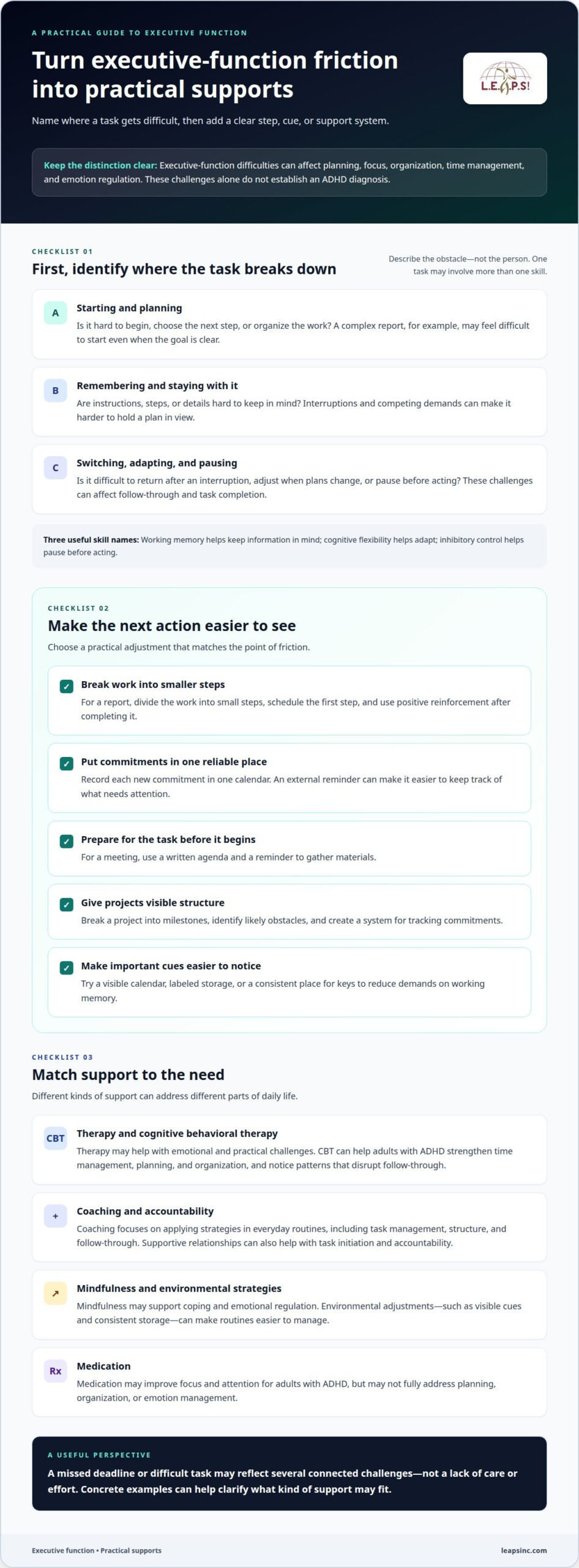
Support can combine practical strategies with therapy. Cognitive behavioral therapy (CBT) can help adults with ADHD strengthen time management, planning, and organization. For example, someone delaying a report might break it into small steps, schedule the first step, and use positive reinforcement after completing it. This makes the next action clearer and helps replace self-criticism with a workable plan.
CBT can also address patterns that disrupt follow-through. A therapist may help someone notice how a missed reminder leads to worry, avoidance, and a growing backlog. Together, they can identify a specific response, such as recording each new commitment in one calendar. Mindfulness may also support coping and emotional regulation, while coaching can focus on practical task management and accountability.
ADHD coaching focuses on applying strategies in everyday routines. A coach may help break a project into milestones, identify likely obstacles, and create a system for tracking commitments. For example, someone preparing for a meeting could use a written agenda and a reminder to gather materials. Coaching centers on structure and follow-through; therapy can address emotional or behavioral patterns that interfere with daily life.
Environmental adjustments can reduce demands on working memory. A visible calendar, labeled storage, or a consistent place for keys can make important cues easier to notice. Medication may improve focus and attention for adults with ADHD, but it may not fully address planning, organization, or emotion management. CBT, coaching, medication, and environmental strategies address different needs, so their roles depend on the challenge.
If you’re weighing which kind of support fits your goals, an appointment to discuss support options can help you consider a practical path forward.
Time blindness and time management
Time blindness refers to difficulty sensing how much time has passed or how long a task will take. An adult with ADHD might start preparing dinner and realize that a task meant to be brief has taken up the evening. This difficulty can make deadlines feel distant, then suddenly urgent. Planners, calendars, and digital apps make appointments and deadlines visible. Build in buffer time, too, since people with ADHD may underestimate how long tasks take.
Organization can also falter when a task has several steps, competing priorities, or unclear starting points. Prioritize the most important task first, then divide a larger project into manageable actions. For a research paper, one step could be researching topics for 30 minutes; another could be writing one sentence. Starting with that small action can make a project feel more accessible than facing the entire assignment at once.
Choose a structure that makes the next action and its timing clear. A planned start time, such as 10:00 AM, is more concrete than “work on the project later.” A time-blocking example is reserving 10 to 11:30 for a presentation. If you struggle to begin, a 15-minute timer can create a defined starting window. Short work intervals with breaks may help sustain focus without turning an ambitious plan into another source of stress.
At home, the same principles can support routine responsibilities. A visible timer can help make time easier to track while sorting laundry or preparing a meal. A shared calendar can display appointments, while a short evening planning session can identify the next day’s top tasks. The 2-minute rule suggests doing a task immediately if it takes less than two minutes. Keep goals realistic, and protect time for rest rather than filling every available space.
Hyperactivity may be part of ADHD, but time-management struggles can also center on attention, planning, or task initiation. Notice situations that repeatedly derail daily activities, such as forgetting appointments or being unable to start household chores. If executive dysfunction disrupts your life and usual activities, talk with a healthcare provider. The pattern, its impact, and the demands of daily routines help clarify what support may be useful. These difficulties describe challenges with skills, not a lack of effort.
Accountability and support systems
Accountability can make a task more visible and easier to begin. For adults with ADHD, executive function difficulties may affect organization, working memory, or emotional regulation. Support should address the practical obstacle, not frame missed steps as indifference. If an appointment is repeatedly forgotten, for example, an agreed reminder and a brief check-in can add external structure.
Body doubling means working alongside another person while each person completes their own task. A colleague might sit nearby while you open a document and draft its first section. Their presence creates a shared work period, but the task remains yours. This can support task initiation when starting alone feels difficult. The aim isn’t to monitor every action, but to make beginning feel more concrete.
Accountability works best when expectations are specific and respectful. Instead of asking someone to “keep me on track,” agree on one task, a clear check-in point, and the kind of prompt that helps. For example, a friend could ask whether you sent an application, rather than remind you repeatedly throughout the day. Clear boundaries matter, especially when missed commitments trigger frustration or shame.
External supports can also reduce reliance on working memory. A shared household list can record groceries, bills, and chores in one visible place. A recurring reminder can prompt someone to review the list before shopping. These tools don’t eliminate every executive function difficulty; they put information somewhere it can be seen and acted on. Choose a system that fits the task, then keep its purpose simple.
Support groups offer a place to share strategies and discuss the emotional impact of daily challenges. Hearing how another adult handles an overdue bill or a difficult transition may spark practical ideas. A therapist who understands ADHD can help explore patterns behind avoidance, frustration, or conflict. Cognitive behavioral therapy can support structured coping strategies, including examining thoughts that intensify distress and identifying a workable response.
Choose support based on the barrier. If starting is the main difficulty, working alongside someone may help. If unfinished household tasks lead to arguments, agree on responsibilities and reminders together. If emotions or persistent distress interfere with daily activities, therapy may help address those patterns. Review the arrangement when a routine changes, such as after a work-schedule change, so the system continues to help rather than becoming another demand.
Executive dysfunction symptoms in adults with ADHD
For adults, the gap between intention and action can appear in several ways. Someone may understand a request and agree to complete it, then struggle to find a starting point. At work, they might put off an email until the deadline feels urgent. At home, they may start several chores without finishing them. The result is visible, but the difficulty may involve planning, attention, or working memory rather than a lack of care.
Working memory challenges can disrupt everyday actions. An adult might enter a room to get a document, notice another task, and forget the original purpose. During a meeting, they may lose a spoken instruction before writing it down. Notes can preserve details, but symptoms may still affect how someone prioritizes and acts on reminders. Look for recurring patterns across settings rather than treating one forgotten item or difficult afternoon as the whole picture.
Task initiation and switching can create a distinct strain. A person may put off opening a complex spreadsheet, even with time available, because organizing the work feels difficult. Once focused, they may find it hard to turn to an urgent message. ADHD paralysis describes feeling so overwhelmed by tasks that starting or completing them becomes difficult. Too many priorities or anxiety about doing a task perfectly can contribute. Executive dysfunction in ADHD may affect different steps of the same task.
Emotional regulation and self-monitoring can shape these moments. A small change to a plan may trigger intense frustration, or an impulsive response may come before considering its consequences. Later, the person might replay the exchange and struggle to express their thoughts clearly. These reactions can affect colleagues, partners, and family members, particularly when unfinished responsibilities lead to repeated conflict or disappointment.
The ongoing effort to manage symptoms can also contribute to ADHD burnout. Someone compensating for forgetfulness or disorganization may notice exhaustion, increased frustration, and reduced productivity. Routine paperwork, for example, might take sustained effort and leave less energy for other responsibilities. Noticing when these signs arise, such as after a demanding work period, can clarify how symptoms affect daily functioning. Executive dysfunction in adults with ADHD can shape both work performance and personal routines.
Notice the pattern and its consequences, such as missed commitments, unfinished tasks, or relationship strain. If symptoms disrupt usual activities, discuss specific examples with a healthcare provider. They can assess the broader concerns and recommend appropriate support. If workplace demands are central, schedule an appointment to discuss your goals and consider a path toward stronger day-to-day functioning.
LEAPS: Executive Coaching
LEAPS offers Executive Coaching for professionals who want to strengthen leadership and organizational development while addressing practical workplace challenges. If planning, prioritizing, or follow-through affects your work, coaching can help you explore how these demands connect with your professional goals. Sessions can focus on leadership responsibilities and structures that support your performance, without reducing your potential to a diagnosis.
If emotional well-being or personal relationships are also affected, Individual Therapy or Couple Therapy may be a relevant form of support. The right starting point depends on where you want change: your leadership practice, your emotional health, or both. You’re invited to contact LEAPS to discuss your goals.
Choose a next step that supports your future
Understanding executive dysfunction in ADHD can shift the question from “Why can’t I just do this?” to “What support would help me move forward?” That change in perspective creates room to identify what matters, communicate your needs, and build a path aligned with your personal and professional priorities.
Support can be shaped around the part of life that needs attention. LEAPS offers Individual Therapy, Therapy Intensive, and Couple Therapy. Individual Therapy can provide space to explore personal concerns, while Couple Therapy can support partners working through relationship challenges. A Therapy Intensive is another option within the practice’s therapeutic services.
You don’t need to have every goal perfectly defined before taking a first step. Bring the concern that feels most important, whether it involves work, well-being, or relationships, and begin a conversation about what support may fit. Contact LEAPS to discuss your next step and move toward a future shaped by intention, clarity, and possibility.
Frequently Asked Questions
What Is ADHD Paralysis?
ADHD paralysis is feeling unable to start or finish tasks when demands feel overwhelming. For example, an adult facing several unanswered messages may spend time deciding which one to open, then avoid them all. Fear of making mistakes can intensify the freeze. Identify one immediate action, such as opening a message, rather than expecting yourself to clear the entire backlog at once.
What is executive dysfunction in ADHD?
Executive dysfunction in ADHD describes difficulty using mental skills to guide thoughts, emotions, and actions toward a goal. Imagine needing to submit a form: remembering the deadline, finding the document, and completing its fields draw on different skills. Someone may manage one step but struggle with another. The term describes a pattern of challenges; on its own, it does not establish an ADHD diagnosis.
How does ADHD affect executive functions like planning, focus, and working memory?
ADHD can make it harder to keep information in mind, sustain attention, and arrange actions in sequence. During a conversation, someone might understand the main point but forget a detail before writing it down. A brief written recap can preserve instructions for later. If priorities change, updating the plan may take effort, particularly when attention remains fixed on an earlier task.
What are common signs of executive dysfunction in adults and children with ADHD?
Signs can include difficulty starting tasks, shifting attention, planning steps, controlling impulses, or expressing thoughts clearly. A child might leave a needed assignment at school, while an adult may overlook a work commitment after a schedule change. The setting and demands matter: a transition to a new routine can reveal difficulties that were less visible before. One incident alone doesn’t establish ADHD.
How is executive dysfunction different from ADHD, depression, or anxiety?
ADHD is a diagnosis, while executive dysfunction describes challenges with skills such as planning, attention, and self-regulation. Similar difficulties can occur alongside depression or anxiety, so missed tasks alone don’t identify their cause. Anxiety may intensify avoidance, for example, when someone fears making a mistake. A fuller assessment considers the person’s experiences, patterns over time, and effects on daily life.
What strategies help manage executive dysfunction with ADHD?
Match the strategy to the specific obstacle. If a project feels too large, write down one next action and make the materials easy to find. If remembering commitments is difficult, record them in one calendar instead of relying on recall. Executive dysfunction in ADHD can affect different parts of a routine, so notice whether the tool addresses the actual barrier and adjust it when circumstances change.
What treatments are available for ADHD-related executive dysfunction, including medication and therapy?
Options can include medication, psychotherapy, mindfulness, and coaching, with the approach shaped by the person’s needs. Stimulant and non-stimulant medications may help adults with ADHD improve focus and attention; medication may not fully address planning or emotional regulation. Cognitive behavioral therapy can help develop coping strategies. Depending on its impact, executive dysfunction in ADHD may call for support beyond attention alone.
What accommodations can help students and employees with ADHD executive dysfunction?
Useful adjustments make instructions and priorities easier to access. A student might use written assignment steps and a calendar that displays upcoming work. An employee could request meeting follow-up notes or divide a project into visible milestones. These supports can reduce reliance on memory and clarify what comes next. Their usefulness depends on the particular barrier, such as losing instructions or overlooking shifting deadlines.