

What reveals your company’s values more clearly: what’s written on the wall, or what happens in a difficult meeting and an everyday decision? Learning how to create a positive company culture starts with closing that gap. Values matter when leaders and teams turn them into consistent, observable behaviors.
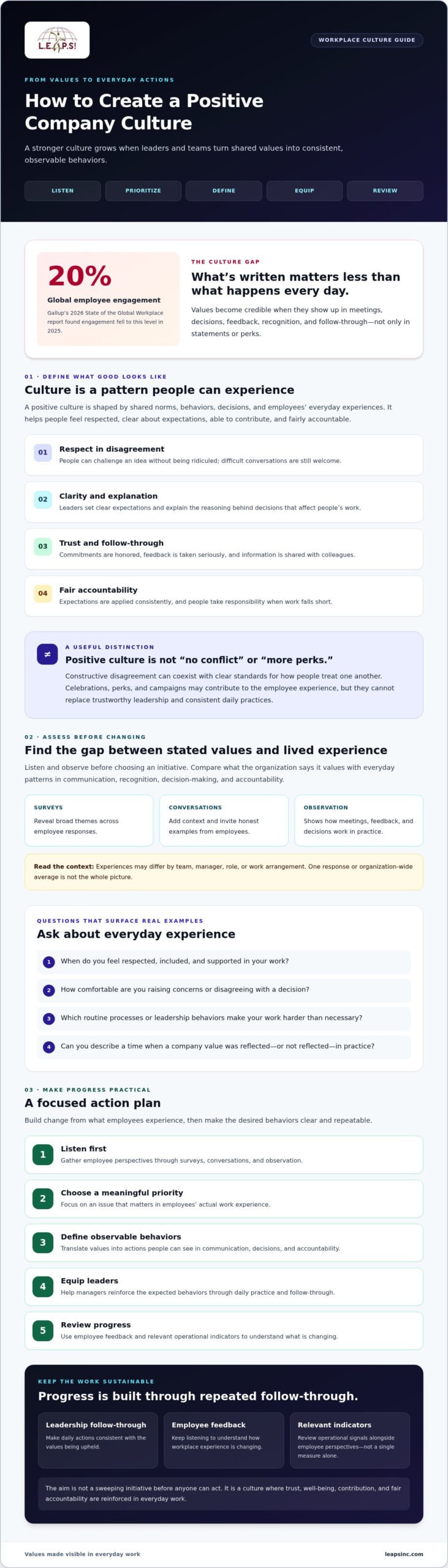
It can be hard to know where to begin. You may see a disconnect between stated values and daily decisions, or wonder whether employees feel heard, trusted, and recognized. These concerns reflect a wider challenge: Gallup’s 2026 State of the Global Workplace report found that global employee engagement fell to 20% in 2025.
A stronger culture doesn’t require a sweeping initiative before anyone can act. It calls for practical choices that reinforce trust, support well-being, and make accountability part of everyday work. This guide explains how to turn values into clear behaviors, improve feedback and recognition, and identify changes leaders and teams can sustain. You’ll also learn how communication, management practices, and employee-support resources can help create a culture where people and performance have room to grow.
Key Takeaways
- Company culture is shaped by shared norms and repeated behaviors, not values statements or perks alone.
- Compare what your organization says it values with everyday patterns in communication, recognition, decisions, and accountability.
- Learn how to create a positive company culture without avoiding constructive disagreement or expecting perks to make up for disrespectful leadership.
- Use a focused action plan: listen first, choose a meaningful priority, define observable behaviors, equip leaders, and review progress.
- Sustain progress through leadership follow-through, employee feedback, and relevant operational indicators, rather than relying on a single measure.
How to Create a Positive Company Culture Starts with Defining What It Means
To understand how to create a positive company culture, start by looking at what culture includes: shared norms, behaviors, decisions, and employees’ everyday experiences at work. It is more than values on a website or the atmosphere created by office perks. A positive company culture is a pattern of workplace behaviors and decisions that helps people feel respected, clear about expectations, able to contribute, and fairly accountable.
This definition gives leaders and teams something they can observe and shape. The broader concept of organizational culture includes the assumptions and practices people share. In daily work, these show up in how meetings are run, feedback is given, and decisions are explained. Belonging, trust, clarity, and fair accountability all influence how employees experience their work.
For a practical perspective on the subject, watch this video:
What does a positive company culture look like in practice?
Look for repeated actions, not isolated gestures. A team that values respect makes room for employees to disagree without ridicule. Leaders set clear expectations, explain the reasoning behind decisions, and follow through on commitments. Colleagues share information, raise concerns constructively, and take responsibility when work falls short.
These behaviors bring values to life in ordinary moments: who gets heard in a meeting, how a manager responds to feedback, whether recognition reflects real contributions, and whether expectations are applied consistently. A healthy culture doesn’t require constant agreement or an absence of difficult conversations. It makes room for challenge while setting clear standards for how people treat one another.
Why do company culture efforts often feel disconnected
Slogans lose credibility when leadership actions tell a different story. An organization may promote transparency, for example, while leaving employees uncertain about decisions that affect their work. Celebrations, perks, and internal campaigns can contribute to the employee experience, but they cannot replace trustworthy leadership and consistent daily practices.
For leaders considering how personal well-being connects with workplace conditions, corporate wellness solutions explore a related, distinct topic. LEAPS Inc. also shares its company background and approach. The essential starting point is to understand what employees experience, then align everyday actions with the values the organization wants to uphold.
Assess Your Current Company Culture Before Choosing What to Change
Before deciding how to create a positive company culture, find out how employees experience the culture you already have. A quick announcement or new initiative may miss the real issue. Start by listening and observing. Compare the values your organization names with patterns in communication, recognition, decision-making, and accountability.
Use more than one perspective. A survey can reveal broad themes, while conversations and observation can add context. Experiences may differ by team, manager, role, or work arrangement, so don’t treat one response or organization-wide average as the whole picture. Harvard Division of Continuing Education’s Why Workplace Culture Matters offers further context on how workplace culture shapes employees’ experience.
Which questions reveal the gap between values and daily experience?
Ask questions that invite honest examples rather than confirmation of what leaders hope to hear. For instance:
- When do you feel respected, included, and supported in your work?
- How comfortable are you raising concerns or disagreeing with a decision?
- Which routine processes or leadership behaviors make your work harder than necessary?
- Can you describe a time when a company value was reflected in a decision, or wasn’t?
Look for recurring patterns, not just vivid individual stories. If employees say collaboration matters but describe teams withholding information, investigate what may be driving that gap. The goal isn’t to defend current practices. It’s to understand what people encounter and where expectations aren’t being met.
How can leaders listen without creating false expectations?
Explain why you’re gathering input, who will see responses, and how you’ll share findings. Don’t promise anonymity or confidentiality unless the process can genuinely provide it. Be clear about limits, including what leaders can address, what may take time, and what sits outside their control.
After listening, report the themes to employees and explain what happens next. For example, a team may raise unclear decision ownership as a concern. Leaders can acknowledge the pattern, clarify who makes which decisions, and later ask whether the change is helping. Closing the loop shows that input was considered, even when not every request can be adopted.
If leaders need to align organizational purpose and direction before setting priorities, corporate visioning services may provide relevant structured support. LEAPS Inc. offers corporate visioning, though the appropriate scope depends on the organization’s needs. Leaders considering outside support can discuss their organizational priorities with the team.
Can You Create a Positive Company Culture Without Perks or Avoiding Conflict?
Yes. Perks can make work more enjoyable, but they can’t make up for disrespectful or inconsistent leadership. A team lunch may be welcome, for example, while unclear responsibilities or uneven treatment continue to frustrate employees. Understanding how to create a positive company culture means looking beyond visible benefits to the everyday conditions that shape people’s experience.
Culture also doesn’t mean keeping the peace at all costs. Teams need room to question decisions, raise concerns, and disagree about the work. The goal is not “no conflict.” It’s respectful conduct, clear expectations, and a fair process for addressing the impact of people’s actions. The right balance will vary with an organization’s needs and employees’ experiences.
What is the difference between workplace perks and culture?
Perks are benefits or events employees may appreciate. Culture is reflected in the recurring behaviors and practices they encounter while doing their jobs. One can enhance the experience; the other shapes how work is conducted.
| Visible perks | Foundational practices |
|---|---|
| A team meal or social event | Making space for employees to contribute in meetings |
| A comfortable office or extra benefit | Setting clear roles and applying expectations fairly |
| A recognition campaign | Giving specific, timely feedback and following through on commitments |
| A themed company celebration | Communicating decisions and inviting relevant questions |
These examples show different contributions, not guaranteed satisfaction or retention. Employees may value a benefit, but it won’t resolve an unclear role or inconsistent treatment. Consider what employees actually need rather than assuming one perk or management practice will work for everyone.
How can leaders address conflict while preserving psychological safety?
Psychological safety means people can ask questions, raise concerns, or acknowledge a mistake without being humiliated. It doesn’t mean every idea must be accepted or harmful conduct goes unaddressed. Safety and accountability work together: people need confidence that they can speak honestly and clarity about how they’re expected to treat others.
Address the behavior and its impact, not someone’s character. A manager might say, “The interruption kept your colleague from finishing their point. Let’s make room for them to complete it,” rather than labeling the person as disrespectful. Invite a response, listen to context, and agree on what should change. Apply expectations consistently, and don’t tolerate retaliation against someone for raising a concern.
How to Create a Positive Company Culture: A Practical Step-by-Step Plan
Once you understand what employees experience, turn those insights into a focused plan. A practical approach to how to create a positive company culture is to choose a small number of meaningful changes, define what they look like in daily work, and revisit them consistently.
- Listen for patterns. Gather employee perspectives and review everyday practices to understand which experiences help or hinder people.
- Select a priority. Choose one or two issues employees identify as meaningful. A long list of simultaneous initiatives can dilute attention before any change becomes part of normal work.
- Define observable behaviors. Translate the relevant value into actions people can recognize, such as sharing decision context or inviting input before a decision is finalized.
- Equip leaders and teams. Clarify who will model, support, and reinforce each behavior. Culture is not solely HR’s responsibility. Leaders and employees shape it through their daily choices.
- Review progress. Set realistic points to ask whether the behavior is showing up and how employees experience it. Use feedback to adjust the approach rather than treating the plan as fixed.
How should leaders turn company values into observable behaviors?
Make each value specific enough to guide action. If the value is respect, define how it appears in meetings, feedback, decisions, and collaboration. For instance, teammates can let a colleague finish before responding, while managers can explain changes that affect people’s work. Assign an owner to coordinate progress, and invite leaders across teams to model the practice and employees to reinforce shared expectations.
Leaders who want structured professional development may explore business coaching. LEAPS Inc. offers business coaching, though the scope and fit of support depend on an organization’s needs.
Culture initiatives need visible leadership participation and consistent follow-through to become part of everyday work. Announcing a value is only the beginning. Employees notice whether leaders practice it, especially when decisions are difficult.
What should a realistic first 90 days include?
Treat 90 days as a planning example, not a promise that culture will change within a set period. A practical sequence could be:
- Early phase: Listen to employees, observe routine interactions, and share the concern the organization intends to address.
- Middle phase: Commit to one or two priorities, define the behaviors, and give managers clear guidance on how to model them.
- Review phase: Invite feedback, consider what has changed, and communicate what did not change and why.
Close the loop with employees. If a proposed action isn’t feasible, explain why and what alternatives will be considered. If a practice is helping, identify how to sustain it. Leaders ready to discuss support for their culture-building priorities can schedule a conversation.
Sustain a Positive Company Culture Through Leadership, Feedback, and Follow-Through
Culture takes shape through repeated choices, so a promising initiative needs attention after its launch. Leaders sustain progress by modeling the behaviors they expect, asking employees how those behaviors feel in practice, and applying decisions consistently. That’s how to create a positive company culture as a lasting way of working rather than a short-term campaign.
Keep reviews tied to the priorities you selected. If the goal was clearer communication, for example, ask employees whether they understand important decisions and observe whether managers share relevant context. Consider employee feedback alongside suitable operational indicators, such as patterns in attendance, retention, or workflow, where available and appropriate. No single measure explains culture on its own. Interpret signals in context and look for patterns over time.
How can leaders know whether culture efforts are helping?
Return to the specific concerns and behaviors identified at the outset. Ask employees for feedback more than once, and compare what they report with what leaders can observe. A policy may be in place, for instance, while employees still experience inconsistent practices across teams. That difference is useful information, not a reason to declare success or failure based on one response.
Share what the organization is learning, including where progress is uneven. If an approach isn’t working, explain what will change and why. If it appears helpful, describe how leaders will keep reinforcing it. This creates a cycle of listening, action, review, and adjustment, with accountability kept visible.
When can external coaching or employee support help?
Outside support may be useful when leaders need space to strengthen communication, clarify direction, or examine management practices. LEAPS Inc. offers business and executive coaching, corporate visioning, and an Employee Assistance Program (EAP). These options can complement an organization’s efforts, but they don’t replace leaders’ responsibility to model respectful behavior and respond to employee concerns in everyday work. EAP services can be one resource for employee support, not a shortcut to culture change.
Learn more about LEAPS Inc. and its professional services to understand the organization behind these offerings. Scope and fit depend on the organization’s needs, so consider what support would be relevant to your goals.
Culture is built through follow-through: keep listening, make decisions that align with shared expectations, and revisit their impact. If you’re considering how outside support might fit your organization’s priorities, schedule a conversation about your organization’s goals.
Make Your Culture a Practice, Not a Campaign
Learning how to create a positive company culture begins with understanding employees’ everyday experiences, then turning shared values into visible behaviors. Choose a meaningful priority, give leaders and teams clear roles, and keep listening as you review what’s changing. Perks may add to the employee experience, but trust, fair accountability, and respectful communication come from consistent actions.
Culture work is ongoing. Use employee feedback alongside relevant workplace indicators, share what you learn, and adjust when an approach isn’t helping. Outside support can complement this work, while daily leadership remains essential. LEAPS Inc. offers business and executive coaching, corporate visioning, business development, and Employee Assistance Program services as possible resources for organizations and employees.
If you’re considering what support could fit your organization’s needs, schedule a conversation about your organization’s goals. Each thoughtful, consistent step can help create a workplace where people are better able to contribute and grow.
Frequently Asked Questions
What is a positive company culture?
A positive company culture is the shared pattern of behaviors, expectations, and relationships employees experience at work. It shows up in how people communicate, make decisions, address conflict, and support one another. Written values can offer direction, but employees judge them through repeated actions. There’s no single model for every organization. The aim is to align the values a company states with the experience people have in daily work.
How do you create a positive company culture?
Start by listening to employees and identifying a specific gap between stated values and daily experience. Choose a priority, define observable behaviors that address it, and make leaders responsible for modeling those behaviors. Then explain what will change and review progress with employees. A focused effort is often more manageable than launching several disconnected initiatives at once. Creating a positive company culture depends on consistent action, not a one-time announcement.
Can company culture be changed?
Yes. Organizations can work to change culture by shifting recurring behaviors, expectations, and systems over time. The effort calls for leadership participation, employee input, clear communication, and regular review. Culture change isn’t instant, and progress depends on the organization’s circumstances. Rather than promising a fixed timeline, leaders can report honestly on actions taken, what employees are experiencing, and which challenges still need attention.
Do perks create a positive company culture?
Perks can contribute to employees’ experience, but they don’t define culture on their own. People also notice whether expectations are clear, feedback is respectful, decisions are consistent, and concerns can be raised. A benefit may be welcome, yet it can’t reliably resolve persistent problems in management or communication. Consider perks alongside the everyday behaviors and working conditions employees describe, and address the underlying issues they identify.
How can small businesses build a positive workplace culture?
Small businesses can build a positive workplace culture by establishing practical habits that fit their team and resources. Clarify responsibilities, invite honest feedback, recognize contributions fairly, and address concerns directly. Leaders in smaller organizations may have a visible influence on daily norms, so consistency matters. Ask employees what’s working and what needs attention, choose a manageable improvement, and explain how you’ll review whether it’s making a useful difference.
How do you measure company culture?
Assess company culture using more than one source of information, such as employee feedback, listening sessions, and relevant workplace indicators. Ask consistent questions over time, explain privacy limits, and interpret findings in context. A survey score alone can’t explain why employees feel a certain way or whether experiences differ across teams. Share key themes, describe the actions you’re taking, and invite employees to say whether those actions address the concerns they raised.
What should leaders do when employees do not trust management?
Leaders should listen to concerns without retaliation, defensiveness, or demands for immediate trust. Acknowledge specific issues, explain what can be addressed and what can’t, and communicate decisions or delays clearly. Then follow through on commitments and make changes visible in everyday conduct. Trust develops through consistent actions over time. Statements and announcements may communicate intent, but employees need opportunities to see whether leadership behavior is changing.