

Communication barriers often grow from assumptions, unspoken needs, stress, and different ways of expressing feelings. Learning how to improve communication in a relationship starts with listening to understand, responding with empathy, and making room for both partners to speak. Regular check-ins can help keep concerns from building into conflict.
It can be frustrating when a conversation meant to bring you closer ends in defensiveness or silence. Wanting to feel heard is understandable. Better communication doesn’t require perfect words; it takes curiosity, attention, and a willingness to clarify what each person means.
This article offers practical ways to strengthen everyday conversations, from asking open-ended questions and reflecting what you hear to expressing needs without blame. You’ll also learn how to set up regular check-ins and recognize when recurring conflict may call for counseling or therapy. These skills can help you approach difficult moments as partners working together, with a clearer understanding of the connection you want to build.
Key Takeaways
- Give your partner undivided attention, reflect what you hear, and ask clarifying questions before drawing conclusions.
- Use empathy and “I” statements to express feelings and needs without turning a difficult conversation into blame.
- Agree on regular check-ins and discuss how each of you prefers to communicate, especially during conflict.
- When conversations become emotionally charged, pause and return to the issue when you can both engage calmly.
- If communication difficulties persist or conflict escalates, counseling or individual therapy can help you explore patterns and develop new ways to respond.
1. Active listening and empathy
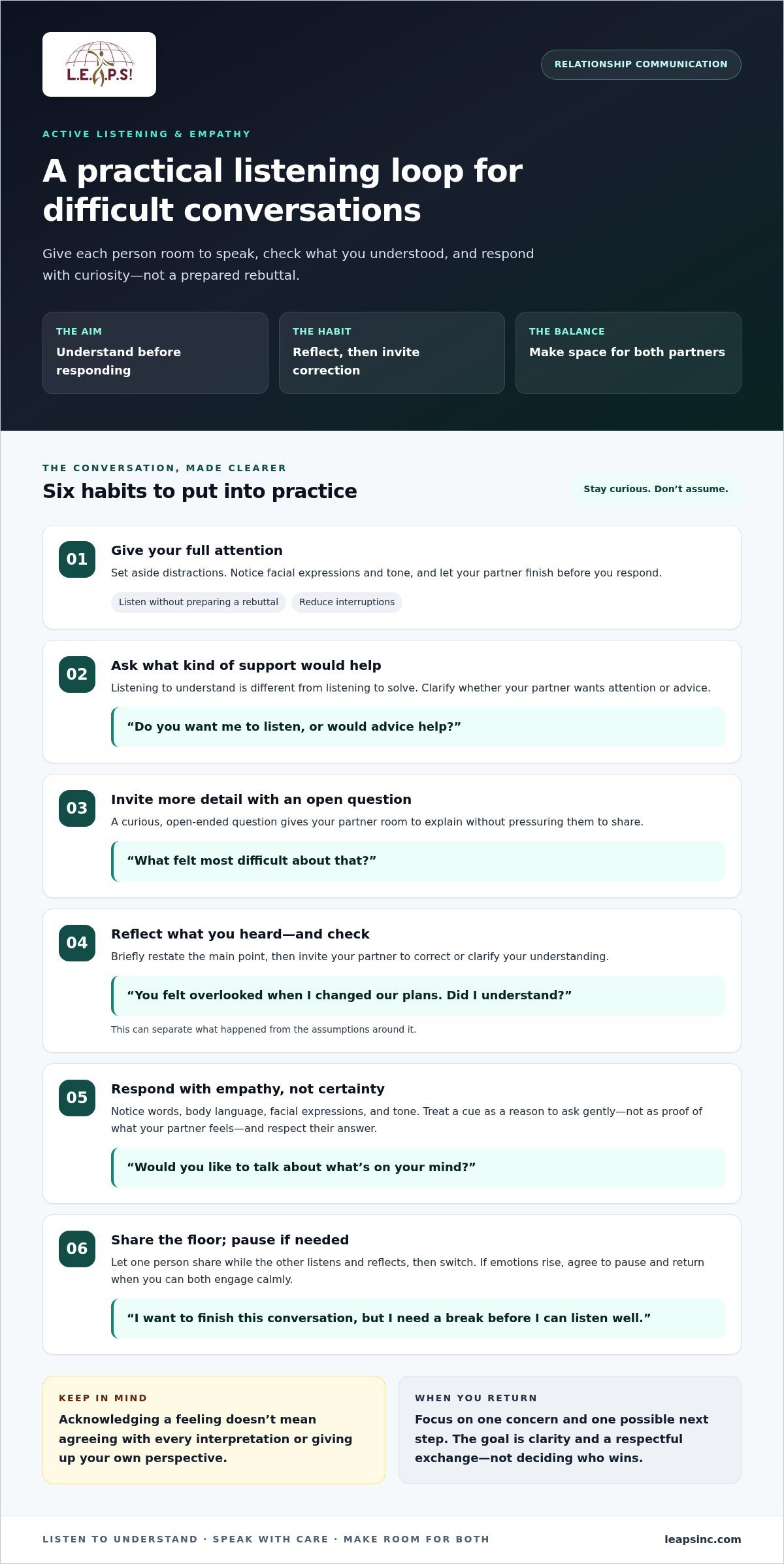
Active listening means giving your partner your full attention instead of preparing a rebuttal while they speak. Partners may have different communication needs, so stay curious rather than assuming you already understand. Set aside distractions, notice facial expressions and tone, and let the speaker finish. These habits make room for clear expression and can strengthen your connection during difficult conversations.
Listening to understand is different from listening to solve. If your partner describes a tense exchange with a colleague, resist offering advice straight away. You might ask, “That sounds exhausting. Do you want me to listen, or would advice help?” This clarifies what kind of support they want. Acknowledging a feeling doesn’t mean agreeing with every interpretation or abandoning your own perspective.
The video below explores how couples can build stronger listening habits in everyday conversations:
Couples can practice active listening by reducing interruptions and distractions, then acknowledging what they heard. Let your partner finish a thought before responding. If you feel an urge to interrupt, hold it and return to your point after they finish. Ask an open-ended question such as, “What felt most difficult about that?” This invites more detail without pressuring your partner to share. Full attention shows that their experience deserves consideration.
Reflective dialogue helps you check whether you understood. Briefly restate the main point, then invite correction: “You felt overlooked when I changed our plans. Did I understand?” This separates what happened from the assumptions around it. When details are unclear, ask what your partner meant instead of interpreting their words defensively. A careful reflection can reveal the concern beneath an argument.
Empathy means approaching your partner’s account with genuine curiosity, even when your experiences differ. Notice body language, facial expressions, and tone alongside their words. For example, a quiet “I’m fine” paired with a tense posture may be a cue to ask gently, “Would you like to talk about what’s on your mind?” Treat the cue as a reason to ask, not as proof, and respect the answer.
To balance speaking and listening, make space for both partners to share before deciding what to do. One person can describe a concern while the other listens and reflects it, then you can switch roles. Boundaries might include agreeing not to talk over each other, choosing a calmer time when emotions rise, and asking for a pause when needed. State the boundary clearly: “I want to finish this conversation, but I need a break before I can listen well.”
2. What is effective communication?
Effective communication lets both partners express their perspectives and understand what the other is trying to convey. It doesn’t require agreement on every decision. For example, when deciding how to spend a holiday, partners can explain what matters to them, check their understanding, and choose a plan that considers both preferences. The goal is clarity and a respectful next step, not deciding who wins.
If you’re wondering how to improve communication in a relationship, start by separating an event from the meaning attached to it. If one partner cancels dinner plans, the other may feel disappointed without knowing why the plans changed. Ask what happened before concluding that the change signals a lack of care. That distinction can open a conversation about expectations instead of an argument about assumed intent.
Before raising a concern, identify what you want your partner to understand. Try writing a short note with three points: the situation, your response, and the change you’re requesting. For example: “When plans change without notice, I feel unsettled. Could we update each other as soon as possible?” Preparing helps you speak honestly and keep the request concrete, especially when emotions make it difficult to find the right words.
Choose a moment when neither person is rushing, distracted, or preparing to sleep. You might say, “I’d like to discuss how we’re dividing responsibilities. Is after dinner a good time?” Asking first gives your partner a chance to be present. If the timing doesn’t work, agree on another time rather than letting the subject disappear into an uncertain “later.”
Outside stress can affect how partners interpret even ordinary remarks. If work pressure is weighing on you, explain what response would help: “I need to talk through a difficult meeting, but I’m not looking for solutions yet.” Your partner can offer attention instead of advice. Being clear about what you need can reduce misunderstandings and help you feel like a team.
Learning how to improve communication in a relationship also means noticing when a conversation becomes reactive. If either person feels overwhelmed, pause and agree when you’ll return to the subject. During the break, focus on your breathing or notice physical tension rather than rehearsing a rebuttal. Planning to resume helps make the pause a chance for a calmer exchange, not a way to leave the issue unresolved.
When you resume, focus on one concern and one possible next step. You can recognize your partner’s feelings without sharing the same interpretation: “I understand why that upset you, even though I remember the conversation differently.” This makes room for honest disagreement while keeping attention on what both of you can do next.
If difficult conversations continue to stall, schedule an appointment to explore support for communication challenges.
3. Scheduling regular relationship check-ins
A regular check-in gives couples planned time to talk before small concerns become larger disagreements. For example, a couple might set aside an hour each week to discuss how supported each partner feels, what has gone well, and where they want more connection. The aim isn’t to create a weekly performance review. It’s to make attention to the relationship part of everyday life.
Choose a time and setting that both partners can protect. A quiet evening at home may work better than talking between errands or while one person is preparing for bed. Agree on a simple structure: share one appreciation, raise one concern, then identify one practical next step. Keeping the conversation focused can reduce defensiveness and make it easier to return to unfinished topics later.
Couples can try a simple at-home communication exercise: each person rates their day on a scale of 1 to 10, then explains what shaped that number. Follow with a question such as, “What would help you feel supported tomorrow?” This gives both partners a clear opening for talking about feelings and needs, without requiring either person to guess what the other is experiencing.
Check-ins can also clarify differences in communication preferences. Discuss how often each person likes to talk when apart, whether they prefer a call or text, and how they want to handle disagreements. One partner, for instance, may value a brief message during a busy day, while the other prefers a longer conversation later. Naming these preferences gives you a shared reference point instead of treating different habits as proof of disinterest.
Small gestures help keep you connected between planned conversations. Leave a note before work or send a message such as, “I’m thinking of you. How are you feeling about tonight?” These moments don’t replace deeper discussions, but they offer a low-pressure way to check in. If a message raises a concern, agree to discuss it properly instead of trying to resolve a sensitive issue through scattered texts.
Use each check-in to notice patterns, not to build a case against your partner. If the same issue returns, describe what has changed and what still needs attention. You might say, “We’ve made time for one another this week, but I’m still missing shared plans.” Specific observations keep the conversation grounded in the relationship you’re building instead of turning it into a list of old grievances.
Consistency matters more than a perfect script. If you miss a scheduled conversation, choose another time together rather than treating the lapse as proof that check-ins have failed. A regular, respectful ritual helps both partners stay aware of each other’s needs, notice opportunities for growth, and address tension while there’s still room for a thoughtful response.
4. Seeking counseling for persistent or escalating conflict
Conflict becomes harder to manage when the same disagreement returns without resolution. Notice the pattern: conversations about household responsibilities, for example, may repeatedly shift into criticism, defensiveness, or silence. Avoiding the subject may preserve calm briefly, but unspoken resentment can make the next discussion more charged. Naming the recurring issue gives both partners a clearer place to begin.
Use “I” statements to express needs without blame by connecting what happened, how you feel, and what you need. For example: “I feel overwhelmed when plans change without discussion, and I need us to talk before making new arrangements.” This focuses on your experience instead of saying, “You never consider me.” A specific request gives your partner something practical to respond to.
Avoid aggressive speech during conflict, including name-calling, accusations, and unrelated grievances. If you’re tempted to say, “You always do this,” pause and describe the current issue instead. Choose a time when both partners can engage, stay with the topic, and speak honestly and gently. A calm tone doesn’t mean minimizing a concern; it helps make the concern easier to understand.
When emotions rise, either partner can ask for a pause and name a time to resume. For example: “I’m getting defensive and need time to settle. Let’s return to this after dinner.” During the pause, focus on your breathing or notice physical tension instead of rehearsing a rebuttal. Returning at the agreed time shows that the pause is for managing conflict, not avoiding it.
Resolving conflict doesn’t require identical perspectives. Each partner can explain what matters most, acknowledge the other’s concerns, and look for a workable compromise. If one wants more time together and the other needs quiet after work, you might agree on a shared evening and protected personal time. Treat the problem as something to address together, not as evidence that one partner has to lose.
Consider speaking with a trained couples counselor when communication remains difficult or conflict persists or escalates uncomfortably. Counseling can provide a structured setting to identify recurring patterns, understand each partner’s perspective, and practice more constructive ways to discuss sensitive issues. Reaching out before resentment hardens can help you examine what happens during conflict instead of replaying the same argument.
Before counseling, each partner can identify one recurring issue and one desired change. Bring a specific example, such as an argument about schedules, and describe what each person was saying or needed at the time. A friend who hears only one side may offer comfort, but counseling can help both partners examine the interaction together. The goal is clearer communication and more respectful ways to work through disagreement.
5. Seeking therapy for communication difficulties
Communication habits can be difficult to change when the same situation keeps repeating. One partner may ask a question, hear criticism, and withdraw; the other may interpret the silence as indifference and press harder. Therapy offers a structured place to examine this sequence, identify the feelings and thoughts beneath it, and consider how each person’s responses affect the conversation.
A therapist can help partners slow down an interaction and notice its turning points. For example, they might look at what happened before an argument, the words each person used, and the moment either felt misunderstood. This isn’t about deciding who is right. It’s about understanding the pattern well enough to choose a different response next time.
Therapy can also help each person find words for concerns that feel difficult to express. A partner who tends to shut down might practice saying, “I need time to think, and I’ll return to this conversation.” Someone who becomes defensive might learn to ask, “What did you hear me say?” before responding. These small, intentional shifts can make communication easier, even when partners disagree.
For a first session, identify a specific communication challenge rather than trying to solve the whole relationship at once. Bring a recent example, such as a disagreement about shared responsibilities, and describe what you wanted your partner to understand. Each person can also name a goal, such as staying present during hard conversations or expressing a need without withdrawing. Clear goals give therapy a practical focus.
Therapy may involve exploring personal experiences that shape how someone handles conflict. For instance, someone who learned to avoid disagreement might find direct conversations threatening, while their partner may prefer to discuss issues immediately. Understanding these different responses can replace judgment with context. The aim isn’t to erase either person’s style, but to build skills and shared language that respect both perspectives.
Between sessions, partners can practice one agreed skill in a low-pressure moment. They might take turns describing a minor concern, reflecting what they heard, and checking whether they understood. Afterwards, discuss what felt useful and what remained difficult. This reflection helps bring new communication habits into daily life rather than leaving insights in the therapy room.
If communication difficulties keep limiting your ability to connect, schedule an appointment to explore therapy support. Bringing one recurring situation and a clear goal can help you begin with a focused conversation about the change you want to create.
LEAPS: Individual Therapy
LEAPS offers Individual Therapy for people who want to understand their communication patterns and strengthen how they express needs, emotions, and boundaries. It can be a useful next step when personal reactions make conversations difficult, even if a partner isn’t ready to seek support together.
For concerns rooted in recurring relationship dynamics, LEAPS also offers Couple Therapy, where partners can work on communication together. Therapy Intensive offers another option for focused therapeutic work. The right path depends on whether you want to explore individual patterns, work together on recurring conflict, or pursue a more focused process.
Before reaching out, consider what you want to change, such as speaking more directly, listening without withdrawing, or approaching disagreements with greater care. Contact LEAPS or visit leapsinc.com to take the next step.
Choose the kind of connection you want to build
The next step isn’t to communicate perfectly. Decide what you want to make possible: more honest conversations, greater emotional understanding, or a different way through recurring conflict. That intention can guide how to improve communication in a relationship, even when change begins with one person choosing to respond differently.
If you want professional support, LEAPS offers Individual Therapy, Therapy Intensive, and Couple Therapy. Individual work can help you examine your own reactions and communication patterns. Couple Therapy gives partners space to work on shared dynamics, while a Therapy Intensive offers another format for therapeutic work. Choose the support that aligns with what you’re ready to explore and the change you hope to create.
A thoughtful conversation about your goals can be a meaningful beginning. Contact LEAPS to talk about your next step, and move toward a relationship where both people can speak, listen, and grow with greater intention.
Frequently Asked Questions
What Causes Communication Barriers?
Communication barriers often arise when partners have different expectations, needs, or ways of interpreting a situation. One person may see an evening together as quality time, while the other expects shared activities and conversation. Differences in values, family pressures, intimacy, and financial stress can also complicate discussions. First identify the concern beneath the disagreement, then ask whether you’re addressing the same issue or reacting to different assumptions.
What is effective communication?
Effective communication lets both partners express their perspectives and understand what the other is trying to convey. It doesn’t require agreement on every decision. For example, when deciding how to spend a holiday, partners can explain what matters to them, check their understanding, and choose a plan that considers both preferences. The measure is whether the exchange leads to clarity and a respectful next step, not whether one person wins.
What are practical ways to improve communication in a relationship?
Build communication into ordinary decisions, not just serious conversations. Before accepting a social invitation, for example, share your preference and ask about your partner’s plans. Make direct requests instead of hinting, and acknowledge when you’ve misunderstood. If a discussion becomes circular, pause and state the unresolved question plainly. These habits help partners address everyday choices before frustration grows into a larger grievance.
How can couples communicate calmly during arguments and de-escalate conflict?
Keep the discussion focused on the current disagreement and avoid threats, insults, or unrelated complaints. If one partner becomes overwhelmed, agree to pause and name when you’ll return to the topic. During the break, don’t compose a stronger counterargument; focus instead on the outcome that matters. When you resume, each partner can describe one concern and one possible compromise. This shifts the aim from defeating a partner to resolving a shared problem.
What is the best way to bring up a difficult topic with a partner?
Ask for a suitable time, name the subject, and explain why you want to discuss it. For example: “Could we talk tonight about how we’re handling visits with family? I want us to make a plan together.” This opening gives your partner context without framing the concern as an accusation. Be specific about the situation and invite their perspective instead of assuming you already know their intentions.
How often should couples have relationship check-ins?
Couples can choose a recurring rhythm that fits their schedules and communication needs. A weekly hour is one practical example of time set aside to discuss how the relationship is going. Keep the check-in focused with a few prompts: what felt connecting, what created strain, and what each person wants to address next. If a concern needs more time, make a separate plan to discuss it rather than rushing through it.
How can couples improve communication over text and avoid misunderstandings?
Use text for clear, low-stakes information, such as confirming plans or sharing a brief expression of care. Add context when a message could sound abrupt: “I’m tied up right now, but I saw your message and want to respond thoughtfully later.” Avoid trying to resolve a complex disagreement through a string of texts. If tone or meaning is uncertain, ask what your partner intended and move the discussion to a conversation.
When should couples seek relationship counseling for communication problems?
Consider counseling when communication remains difficult, conflict keeps recurring, or disagreements escalate uncomfortably. It can also help when one partner withdraws from important discussions and the other feels unable to reach them. Before seeking support, identify a recent example and what you hope will change. A trained couples counselor can help partners examine their interaction patterns and practice discussing concerns with greater understanding.