

What if becoming a more effective leader depends less on finding the perfect answer and more on changing how you lead? Leadership development coaching creates space to examine the decisions, patterns, and blind spots that shape your impact, then turn new insight into deliberate practice.
If leadership demands are growing faster than your capacity, advice alone may not address the gap. A confidential setting can help you think clearly, test assumptions, and decide what to do differently. Reflection matters most when it leads to action.
This article explores what coaching can help you change, how to evaluate a coach’s experience and approach, and what a purposeful engagement may involve. You’ll also learn how to distinguish coaching from therapy and consulting, clarify your priorities, and connect leadership growth to observable changes in your day-to-day practice.
Key Takeaways
- Use leadership development coaching to identify a focused growth priority and translate it into behaviors you can practice at work.
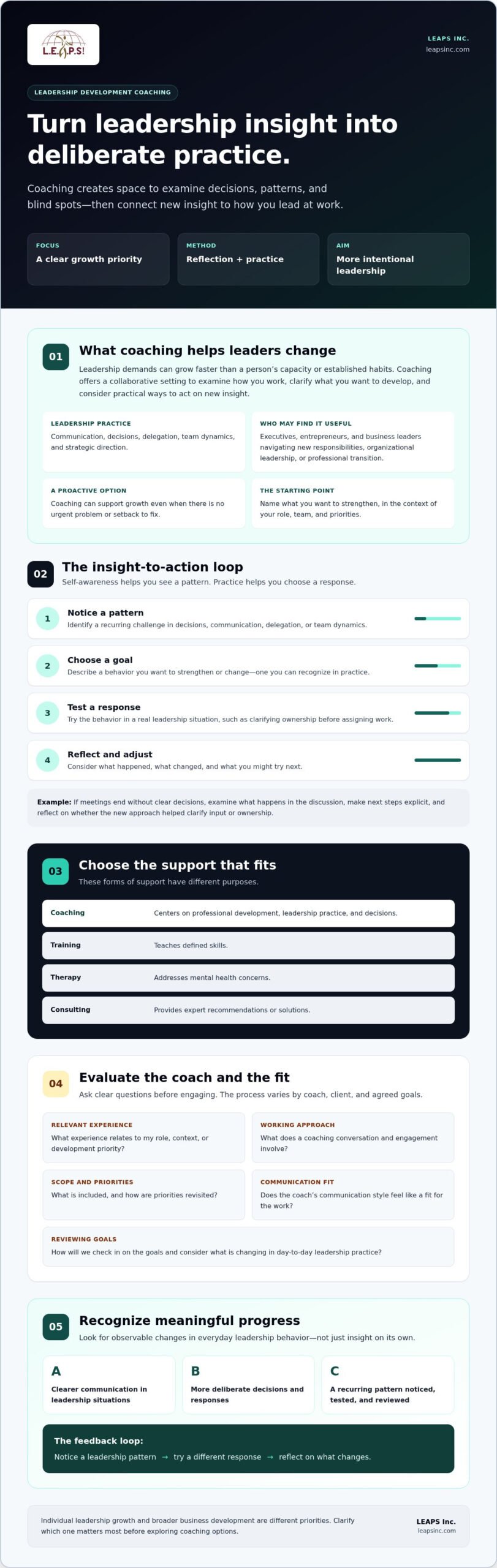
- Build a feedback loop: notice a leadership pattern, try a different response, and reflect on what changes.
- Choose support that fits your need: coaching centers on professional development, while therapy and consulting serve different purposes.
- Before engaging a coach, ask about relevant experience, working approach, scope, communication fit, and how goals will be reviewed.
- Consider whether your priority is individual leadership growth or broader business development when exploring coaching options with LEAPS Inc.
What Leadership Development Coaching Helps Leaders Change
Leaders are expected to set direction, communicate clearly, support people, and make sound decisions, often while priorities shift and responsibilities expand. That pressure can reveal a gap between what a role demands and the habits or capacity a leader has had time to develop. You don’t have to be failing to benefit from leadership development coaching. Wanting to lead with greater intention is a useful starting point.
At its core, coaching is a collaborative process for strengthening leadership capacity and practice. It helps a leader examine how they work, clarify what they want to develop, and consider practical ways to act on new insight. The leader development process can include goal-setting and coaching, while the specific focus depends on the leader’s context. Put simply, coaching supports a leader’s development and decisions; training teaches defined skills, therapy addresses mental health concerns, and consulting provides expert recommendations or solutions.
For an introduction to leadership coaching, watch Coaching for Leadership Development:
What happens during leadership development coaching?
A coaching conversation may involve reflection, focused questions, goal-setting, and follow-through. For example, a leader whose meetings end without clear decisions might examine what happens in those discussions, set a goal to make next steps explicit, and try a different way to invite input or confirm ownership. Later, reflection helps the leader consider what worked and what to adjust.
The process varies by coach, client, and agreed goals. Ask what an engagement involves and how priorities are revisited. Don’t assume every coach follows the same method or guarantees a particular result. The purpose is to create room for considered choices and connect insight to leadership practice.
Who may benefit from leadership coaching?
Executives, entrepreneurs, and business leaders may find coaching useful as they take on new responsibilities, guide an organization, or move through a professional transition. It can also support leaders who want greater self-awareness, clearer communication, or more strategic direction, even when no urgent problem needs fixing. Coaching can be proactive, not just a response to a setback.
If your focus is individual leadership growth, executive coaching may be relevant to explore. Start by clarifying what you want to strengthen, then ask whether the coach’s approach aligns with that goal.
How Leadership Coaching Connects Self-Awareness to Workplace Practice
Insight matters when it informs what you do next. A leader might recognize a habit of stepping in too quickly when work feels uncertain, or notice that their messages become less clear under pressure. Leadership development coaching can help turn that observation into a deliberate practice grounded in the demands of the leader’s role.
Self-awareness gives leaders a clearer view of their habits; intentional practice helps them choose how to respond. The process can move through four steps:
- Notice a pattern: Identify a recurring challenge in decisions, communication, delegation, or team dynamics.
- Choose a goal: Describe a behavior you want to strengthen or change.
- Test a response: Apply that behavior in a real leadership situation.
- Reflect and adjust: Consider what happened and what you might try next.
From leadership patterns to development goals
Start with a situation that repeats. Do you hold on to decisions your team could own? Do you delay a direct conversation until a concern grows? Turn the observation into a goal you can notice in practice. Instead of “be a better delegator,” you might aim to clarify ownership and decision boundaries before assigning a project. The right goal depends on your role, team, and priorities, not a universal template.
A coach may ask questions that help you examine assumptions behind a pattern and distinguish intention from impact. Relevant feedback can add perspective when it’s available and agreed upon. For example, you might ask a trusted colleague whether project expectations felt clear, then consider their input alongside your own reflection.
Practicing change amid real leadership demands
Development becomes tangible when you bring a new behavior into an upcoming conversation, decision, or responsibility. An entrepreneur preparing to clarify priorities with a business partner might plan to state the key decision, ask for the other person’s view, and confirm next steps. Afterward, reflect: What did I do differently? What response did I observe? What would I adjust next time?
Progress doesn’t mean every interaction goes smoothly. A more useful measure is whether you can identify your choices, learn from the situation, and keep practicing with intention. With appropriate agreement, feedback from colleagues or team members may help you understand how a change is experienced by others. It should support reflection, not replace it or promise business results.
Leadership growth takes attention, action, and honest review. To explore how coaching might fit your goals, learn about scheduling an appointment with LEAPS Inc.
Leadership Coaching, Therapy, and Consulting: Which Support Fits?
Choosing support starts with naming the need. Are you looking to strengthen how you lead, address a mental health concern, or get expert recommendations for a business challenge? These approaches can all involve thoughtful conversation, but their purposes and boundaries differ. Leadership development coaching is focused on development; it isn’t a substitute for therapy or a promise to resolve every workplace problem.
| Support | Primary focus | Typical goals | Kind of support |
|---|---|---|---|
| Coaching | Professional growth and leadership practice | Develop skills, clarify goals, navigate a transition | Questions, reflection, goal-setting, and support as the client considers actions |
| Therapy | Mental and emotional well-being | Address concerns within the therapist’s professional scope | Clinical support provided by a qualified mental health professional |
| Consulting | A defined organizational or business need | Assess a challenge and consider recommendations or solutions | Specialized expertise and advice from a consultant |
These are useful distinctions, not universal rules for every provider. Some professionals have multiple areas of expertise, but that doesn’t make the services interchangeable. Ask what the provider is qualified to address, what falls outside their scope, and whether they refer clients to other support when needed.
When leadership development coaching may be the right fit
Coaching may suit a leader who wants to improve communication, build confidence in decision-making, prepare for greater responsibility, or gain strategic clarity during a professional transition. It can be proactive, not just a response to difficulty. The work is most relevant when you’re ready to reflect, set a development goal, and engage with questions or actions between conversations.
Before choosing, describe the outcome you’re seeking and the circumstances around it. “I need to lead a larger team” may call for different support than “I need an expert to assess our operating plan.” Clarifying the distinction can help you discuss fit and expectations with a prospective provider.
When therapy or consulting may better address the need
If your primary concern involves mental health, consider therapy with a qualified professional whose scope fits that need. Coaching focuses on professional development and shouldn’t be presented as diagnosing or treating mental health conditions. If you need specialized business advice or recommendations on a defined challenge, consulting may be a closer fit than a coaching conversation centered on your learning and decisions.
For a deeper discussion of the distinctions, explore Therapy vs. Coaching: A Visionary Guide to Integrated Growth in 2026. If your focus is developing as a leader, you can also review LEAPS Inc.’s executive coaching services and consider whether that support aligns with your goals.
How to Evaluate a Leadership Coach and Recognize Meaningful Progress
The right coach should help you think more clearly about the leadership you want to practice, in a working relationship that fits your needs and context. Use these questions to evaluate potential fit before committing to leadership development coaching. Direct, specific answers matter more than broad promises.
- Clarify your goals. What do you want to handle differently, and why does it matter in your role? Ask how the coach helps set goals and how you’ll revisit them as your priorities evolve.
- Explore relevant experience. Ask about experience with leaders facing responsibilities, organizational settings, or development priorities like yours. You can also ask about relevant training or credentials and how those relate to the work you’re seeking.
- Understand the working approach. What might conversations involve? How are reflection, questions, practice, and follow-through balanced? Ask what a typical session looks like without assuming the coach uses a standardized method.
- Clarify scope and expectations. Discuss what coaching can address, what falls outside the coach’s scope, and how referrals are handled if another kind of support is more appropriate. Confirm expectations around confidentiality and any information shared with an employer or organization.
- Assess communication fit. Does the coach listen carefully, ask useful questions, and explain their approach clearly? Discuss how you’ll communicate between sessions, if applicable, and how you can raise concerns about fit.
Questions to ask before choosing a leadership coach
Invite an open conversation about how coaching would relate to your role and goals. Ask, “How will we know whether this work is useful?” and “What happens if my priorities change?” A thoughtful response should make room for your context, explain the process plainly, and avoid guaranteeing specific results. Fit is something to discuss, not infer from a polished promise.
How to review coaching progress responsibly
Review progress against behaviors or professional indicators agreed upon by you and your coach, rather than a universal score. If your goal is clearer delegation, for example, consider whether you’re defining ownership and decision boundaries more consistently. Notice what you intended to practice, what you actually did, and what you learned. The value is in honest review, not a claim that every attempt will succeed.
Feedback from colleagues or other appropriate sources may add perspective, but only when it suits the situation and everyone involved has agreed to the process. Revisit goals as responsibilities or organizational circumstances shift. To discuss whether coaching fits your leadership priorities, schedule an appointment with LEAPS Inc.
Explore Leadership Development Coaching with LEAPS Inc.
Leadership growth involves more than refining workplace skills. It can also mean examining how your values, communication, and decisions shape the way you lead. LEAPS Inc. offers therapy, coaching, and consultation services that support personal growth and professional development. The right starting point depends on whether you’re developing as an individual leader or seeking broader support for a business.
Choosing the coaching service that matches your goals
If you’re an executive focused on your leadership responsibilities, explore executive coaching. If your priorities are more closely tied to leading a business or shaping an entrepreneurial venture, LEAPS Inc. also offers business coaching and entrepreneurship coaching. Consider the central question: Do you want to strengthen how you lead, or do you need support with a wider business development concern? Naming the need can help clarify which service to discuss.
For example, an executive seeking greater clarity in decision-making may have an individual leadership development goal. A business owner working through a broader organizational challenge may want to ask whether business coaching or business development support is a better fit. You don’t need to resolve the distinction alone before reaching out. A conversation about your context and intended outcome can help identify a relevant option without assuming one approach fits every leader.
Begin with a focused conversation
Before an appointment, consider bringing one current leadership challenge and one outcome you hope to work toward. You might want to communicate expectations more clearly, navigate an expanded role, or connect your leadership priorities to the direction of your business. These specifics offer a grounded starting point for discussing fit, goals, and possible next steps.
LEAPS Inc. offers executive, business, and entrepreneurship coaching, as well as business development services. The appropriate support depends on your situation and what you’re seeking to change. Use a conversation to ask questions, explain your priorities, and clarify which service may align with them. Leadership development coaching is most purposeful when its focus reflects both the leader’s growth and the demands of their professional context.
Schedule an appointment to discuss your leadership development goals and explore fit, goals, and next steps with LEAPS Inc.
Shape the Leadership You’re Becoming
Leadership growth begins with a clear intention: identify what you want to lead differently, then choose support that fits the goal. Leadership development coaching can offer a focused space to examine your leadership practice and consider how to bring greater clarity and purpose to your role. The coach, process, and measures of progress should align with your needs rather than rely on broad promises.
LEAPS Inc., founded and led by Dr. John E. N. Daniel, offers executive, business, and entrepreneurship coaching. Whether your priority is your own leadership development or a wider business concern, a conversation can help clarify which direction may be appropriate and what next steps to consider.
You don’t need every answer before you begin. Bring the leadership challenge you’re facing and the change you hope to pursue. Schedule an appointment to explore your leadership development goals and discuss whether the support aligns with your aspirations.
Frequently Asked Questions
What is leadership development coaching?
Leadership development coaching is a collaborative process that helps a leader strengthen their capacity and day-to-day leadership practice. It may involve examining patterns, setting a development goal, considering possible responses, and reflecting on what happens when those responses are applied at work. The focus is professional growth: a leader can seek coaching to prepare for greater responsibility or develop an existing strength, not only to address a difficulty.
How does leadership development coaching work?
Leadership development coaching typically begins with a conversation about the leader’s role, priorities, and desired outcomes. The coach and client may use reflection and focused questions to identify a useful development goal, then discuss ways to practice related behaviors in real situations. Follow-up conversations can help review what the leader noticed and adjust goals. The format and process vary, so ask how the coach works before deciding whether it fits.
Who can benefit from leadership development coaching?
Executives, entrepreneurs, business owners, and other leaders may benefit when responsibilities change or expand. Coaching may also suit someone who wants to communicate more clearly, understand their leadership patterns, strengthen decision-making, or gain direction during a professional transition. A leader doesn’t need to be struggling to begin. The key is having a development priority they’re ready to explore and a willingness to reflect on how their actions affect their work.
How is leadership coaching different from executive coaching?
Leadership coaching is a broad term for coaching focused on how someone leads, and it can apply across roles and career stages. Executive coaching is generally oriented toward the responsibilities and context of executives, which may include senior-level decisions and organizational leadership. The terms can overlap, and providers may define their services differently. Ask how the coach’s experience and approach relate to your role, goals, and organizational context.
Is leadership coaching the same as therapy?
No. Leadership coaching focuses on professional development, leadership goals, and workplace practice. Therapy provides mental health support within a qualified professional’s scope and has different purposes and boundaries. Coaching shouldn’t be treated as a way to diagnose or treat a mental health condition. If you’re unsure what kind of support fits, ask prospective providers about their qualifications, scope of practice, and referral practices before beginning.
How do you measure progress in leadership coaching?
Review progress against goals and behaviors agreed upon with the coach, rather than relying on a universal measure. If your goal is clearer delegation, for example, reflect on whether you’re stating ownership and decision boundaries more consistently. Feedback from colleagues may offer another perspective when appropriate and agreed to. Revisit the goals if your role or organizational circumstances change, and consider both learning and observable practice.
How do I choose the right leadership development coach?
Choose by examining fit, not broad promises. Ask about the coach’s experience with leaders in contexts like yours, their working approach, relevant qualifications, confidentiality practices, scope, and how goals are set and revisited. Clarify what progress discussions involve and how concerns about fit can be raised. A strong first conversation should help you explain your priorities, understand the process, and assess whether the coach’s approach feels relevant to your development needs.