

Addressing burnout is about more than getting through the next workday. Therapy for job-related stress can help you examine exhaustion, cynicism or detachment from work, and feelings of ineffectiveness or lack of accomplishment. It can also help you explore what is driving the strain, strengthen coping skills, set workplace boundaries, and prepare for future challenges.
It’s understandable to want relief from immediate pressure, especially when work stress affects your well-being outside the office. Lasting change often involves more than managing a difficult moment: it means understanding patterns, identifying what you can influence, and choosing responses that support your health and goals.
This article explains how therapy can help you assess possible burnout, explore underlying causes, and develop practical coping skills and boundaries. You’ll also learn how therapy can support longer-term plans for work and personal life, making relief part of a more sustainable way forward.
Key Takeaways
- Track stressful work situations and your reactions to spot patterns that can guide practical coping strategies.
- Set clear expectations around availability and communicate boundaries that protect time for recovery.
- Notice whether exhaustion, detachment, or a sense of ineffectiveness may point to burnout.
- Explore how workload, workplace dynamics, and personal patterns may contribute to ongoing stress.
- Build a longer-term plan that supports future work challenges alongside your personal-life goals.
Emotional resilience and coping skills
Recognizing your reactions makes it easier to respond to work stress and choose a deliberate next step. Practical coping skills turn that awareness into repeatable actions for demanding workdays.
To access an employee assistance program (EAP), review your employee handbook or benefits portal, or ask your human resources team about the process. An employer’s EAP may offer counseling and referrals to mental health professionals.
Healthy Coping Strategies
Healthy coping strategies address stress without adding to it. The American Psychological Association (APA) recommends keeping a journal for a week or two to identify stressful work situations and your reactions. Note what happened, the thoughts or feelings that followed, and how you responded. For example, record whether an urgent email interrupted focused work and what you did next.
Use your notes to choose a specific response to practice. You might pause before replying to a tense message, write down the next manageable task, or take a short break after a difficult conversation. Choose strategies that fit the situation and your actual workday, rather than expecting one technique to resolve every source of pressure.
Building Emotional Resilience
Emotional resilience means noticing pressure and regaining the ability to respond thoughtfully instead of reacting automatically. The APA recommends starting relaxation practice by spending a few minutes each day focusing on a simple activity. You could pay attention to slow breathing or the sensations of a familiar routine. A brief, consistent practice can create a clear pause in a busy day.
Resilience also develops through reflection and adjustment. After a challenging interaction, consider what was within your control, what support or information you needed, and one response to try next time. A therapist can help you examine recurring reactions, rehearse coping choices, and adapt them to workplace situations. This gives you a more specific goal than simply trying to “stay calm.”
For a practical starting point, choose one work situation from your journal and map the sequence: the trigger, your reaction, and what you did next. Then consider an alternative, such as clarifying a deadline before accepting another task. In therapy, this sequence can connect emotional responses with workplace pressures and highlight skills to practice. Track what you try and how your response changes, then refine your approach over time.
When stress persists, therapy for job-related stress can provide a structured setting to understand your reactions and develop coping skills. Sessions can help you explore which strategies suit your circumstances, build emotional awareness, and plan responses to demanding moments. The aim isn’t to eliminate every difficult day, but to approach work challenges more thoughtfully.
Setting and communicating workplace boundaries
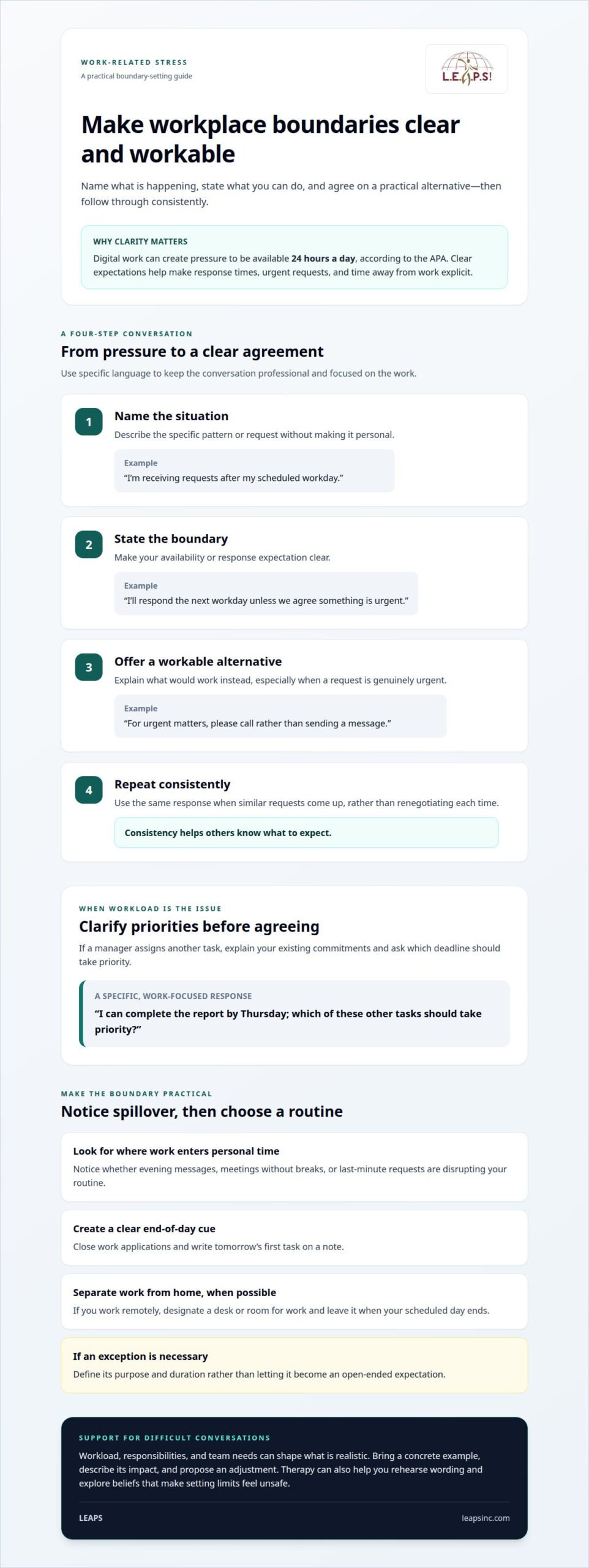
A boundary makes expectations around work more explicit. It can define when you’re available, which tasks take priority, and how interruptions are handled. Digital work can create pressure to be available 24 hours a day, according to the American Psychological Association (APA). A practical boundary turns that pressure into a clear conversation about response times, urgent requests, and time away from work.
Start by identifying where work is spilling into your personal time. For example, note whether evening messages, meetings without breaks, or last-minute requests are disrupting your routine. Decide what change would help, then describe it in terms of the work and timing. “I can complete the report by Thursday; which of these other tasks should take priority?” offers a clear choice rather than a general refusal.
Use a simple process to prepare the conversation:
- Name the situation: “I’m receiving requests after my scheduled workday.”
- State the boundary: “I’ll respond the next workday unless we agree something is urgent.”
- Offer a workable alternative: “For urgent matters, please call rather than sending a message.”
- Repeat consistently: Use the same response when similar requests arise, rather than renegotiating each time.
These steps keep the conversation specific and professional. If a manager assigns another task, clarify the deadline and your existing commitments before agreeing. If a colleague sends a late message, use a prepared response during your next work period. Concrete language reduces ambiguity, while consistent follow-through shows others what to expect.
Work-life boundaries also depend on routines outside the office. Choose a clear end-of-day action, such as closing work applications and writing tomorrow’s first task on a note. If you work remotely, designate a desk or room for work and leave it when your scheduled day ends. These cues help separate work from personal time. If an exception is necessary, define its purpose and duration rather than letting it become an open-ended expectation.
Not every boundary can be set unilaterally. Workload, responsibilities, and team needs may shape what’s realistic. Bring a concrete example, describe its impact, and propose an adjustment, such as prioritizing one deadline over another. If anxiety or guilt makes these conversations difficult, therapy can help you rehearse wording and explore the beliefs that make limits feel unsafe. You can schedule an appointment to discuss workplace stress and boundary-setting in therapy.
Underlying patterns and causes of burnout
Work stress can stem from workplace conditions, personal expectations, or a combination of the two. The American Psychological Association’s annual Stress in America survey has consistently found that work is a significant source of stress for a majority of Americans. Identifying recurring triggers can help distinguish a difficult assignment from a pattern that repeatedly drains your energy.
Start by mapping a stressful episode: note the situation, what you felt, and what happened next. For example, repeated deadline changes may trigger worry, longer work hours, and less time to recover. Reviewing these details with a therapist can help reveal how workload, communication, control, or expectations shape your response.
Common pressures include an unmanageable workload, unclear priorities, limited decision-making authority, conflict with colleagues, or uncertainty about expectations. These examples don’t establish a diagnosis. They point to specific questions: Is the workload consistently greater than the available time? Do competing requests arrive without clear priorities? Does a difficult relationship affect your concentration or confidence?
Burnout risk is increased for healthcare workers and people with high workloads. Workload is only one possible factor. A mismatch between responsibilities and available resources, repeated high-pressure interactions, or little opportunity to recover may also contribute. Look at patterns across workdays rather than judging the situation by one demanding shift or project.
In-person therapy may suit someone who values a dedicated office setting and face-to-face conversation. Online therapy may be more practical when travel or scheduling creates barriers. Compare privacy, access, comfort, and which format supports consistent participation. Either option can provide space to examine workplace patterns and practice responses.
Health insurance coverage for therapy depends on the specific plan, type of care, and clinician participation arrangements. Review your plan’s mental health benefits, including coverage conditions and any out-of-pocket responsibilities, before planning ongoing care.
The cost of therapy for job-related stress in the United States depends on the case and is provided after a quote request. Factors can include the therapy format, session frequency, and the type of support needed.
Cognitive behavioral therapy (CBT) addresses workplace stress by examining how thoughts, emotions, and actions affect one another. For example, a therapist may help you test the belief “one mistake will ruin my career” against the evidence, then plan a constructive response to feedback.
To find a therapist for work stress near you, identify the concerns you want to address, such as burnout, workload anxiety, or workplace conflict. Ask about their experience with those concerns and how sessions connect insight with practical coping steps. A focused first conversation can help you assess whether their approach fits your goals.
Assessing possible burnout
Consider talking with a mental health professional when work stress persists or begins to affect your daily functioning. For example, seek support if exhaustion, detachment, or feelings of ineffectiveness disrupt your work, relationships, or ability to recover after work.
Burnout is described through exhaustion, cynicism or detachment from work or school, and a sense of ineffectiveness or lack of accomplishment. These experiences can overlap, but noticing how they show up in your work life can clarify what needs attention. For instance, exhaustion may make routine tasks harder to focus on, while detachment may feel like growing disconnection from colleagues or responsibilities.
Look for patterns rather than judging yourself by one difficult day. A demanding deadline can leave anyone tired; a repeated pattern of feeling depleted, disengaged, or unable to complete meaningful work deserves closer attention. Consider whether the experience changes across tasks, teams, or work settings. If you feel engaged during one project but consistently overwhelmed by another, that contrast may help you understand what contributes to the strain.
Use a brief reflection after a workday to make your observations specific:
- Energy: Note which task left you unusually drained, such as back-to-back meetings.
- Connection: Record whether you felt involved or detached during a team discussion.
- Effectiveness: Describe a task you completed and whether it felt meaningful or manageable.
- Recovery: Notice whether a clear end to work helped you shift attention to personal activities.
These observations aren’t a diagnosis. They give you concrete examples to discuss with a therapist, who can explore how work conditions and personal responses interact. You might describe a recurring pattern: “After urgent requests arrive, I feel overwhelmed and struggle to focus on planned work.” That detail is more useful than blaming yourself as incapable or assuming every part of your job is the problem.
A conversation with a mental health professional can help distinguish burnout concerns from other sources of distress and identify possible next steps. Bring examples of changes you’ve noticed, such as reduced engagement in familiar tasks or growing difficulty completing routine responsibilities. Explain what you’ve tried and what happened. This creates a clearer starting point for understanding your experience and considering practical support.
Assessment isn’t about proving you’ve reached a breaking point. It’s about recognizing meaningful changes and deciding what support may help. If work stress is limiting your ability to function, connect with people in your life, or feel effective at work, discussing the pattern with a mental health professional can help you plan a response.
Long-term strategies for work-related stress
Lasting change takes more than a response for the next difficult shift. A therapist describes work-stress treatment as including strategies for future work challenges and long-term career and personal-life goals. This wider view connects immediate coping with the life you want to build. For example, a plan might address both anxiety before presentations and the kind of role you want to pursue.
Begin by separating recurring stressors from isolated events. A sudden project deadline may call for a short-term adjustment, while constant priority changes may require a broader conversation about workload. Write down the pattern, its effect on your work, and what you can influence. This distinction helps you choose a response instead of treating every difficult day as the same problem.
Next, turn your observations into a forward-looking plan. Identify a likely challenge, choose a response, and decide how you’ll tell whether it helps. If a manager regularly assigns competing tasks, for instance, prepare language to ask which deadline takes priority. If presentations cause distress, plan how to prepare and what support or practice could help.
- Work challenge: Identify a recurring trigger, such as unclear project ownership.
- Personal response: Notice what happens next, such as taking on extra work without clarifying expectations.
- Planned action: Prepare a direct question about roles, priorities, or deadlines.
- Life goal: Name what you want to protect or develop, such as time for family or a career direction aligned with your values.
Review your plan with a therapist and revise it when workplace circumstances change. A strategy that works with a supportive supervisor may not suit a team with shifting expectations. Bring specific examples, such as a conversation that went differently after you clarified a deadline. These details help you see whether an adjustment is useful or needs refining.
Long-term planning also includes choices about work itself. Therapy can help you consider whether a role still fits your priorities, what changes could make it more sustainable, and what you want from your career and personal life. This reflection doesn’t require an immediate resignation or dramatic decision. It creates space to weigh options, prepare conversations, and act with greater intention.
Choose one next step you can take, such as documenting recurring demands or preparing a question for your next supervision meeting. Then connect that step to a wider goal, like protecting personal time or developing a more meaningful career path. If you want support turning work stress into a structured plan, schedule an appointment to discuss your goals.
LEAPS: Individual Therapy
LEAPS offers Individual Therapy for people who want to understand how work stress affects their well-being and choices. In therapy, you can examine recurring pressures, explore your responses, and develop practical ways to manage workplace challenges. This may be a useful next step when stress affects your daily life or you want support turning insight into a longer-term plan.
Sessions can focus on the concerns most relevant to you, such as burnout, work-life boundaries, or career and personal-life goals. Bring a specific situation, such as persistent workload pressure, and work toward a clearer response. Visit leapsinc.com to learn more or connect with LEAPS.
Choose a More Sustainable Way Forward
Your next step doesn’t need to solve every workplace challenge at once. Choose one concern you’re ready to understand more deeply, then consider what support could help you move forward with intention. Therapy for job-related stress can create space to examine how work affects your well-being and what you want for your future.
LEAPS offers Individual Therapy, Therapy Intensive, and Couple Therapy. Individual support can help you explore work pressures and personal goals, while Couple Therapy may be relevant if work strain is also affecting your relationship. The right starting point depends on the concern you want to address and the support you’re seeking.
If you’re ready to discuss your needs and possible next steps, contact LEAPS to discuss therapy. A thoughtful step today can help you shape a more grounded and purposeful path ahead.
Frequently Asked Questions
How is burnout treated?
Addressing burnout involves understanding the pressures and choosing support suited to the person’s circumstances. Therapy can help someone examine how work affects their thoughts, emotions, and decisions, then develop responses to use in real situations. For example, a session might explore how to approach a conversation about changing responsibilities. Reviewing what feels helpful over time can guide adjustments to the plan.
What is Work Stress or Burnout?
Work stress is strain connected to job demands, while burnout refers to a pattern that can affect a person’s connection with work and sense of effectiveness. A difficult project alone doesn’t establish burnout. Consider whether the experience is recurring and whether it changes how you approach ordinary responsibilities. A therapist can help you describe those changes and consider what work or personal circumstances may be contributing.
Why Does Burnout Occur?
Burnout can develop when work demands and a person’s available resources remain out of balance. The specific factors vary: persistent pressure may interact with limited influence over decisions, unclear expectations, or difficulty recovering outside work. Consider which conditions keep recurring rather than looking for one cause. For instance, a demanding role may feel different when priorities are clear and support is available.
What types of therapy help with job-related stress?
Individual Therapy can provide space to explore personal responses to workplace pressures and develop ways to address them. LEAPS also uses CBT, Emotionally Focused Therapy and Mindfulness. The focus depends on the concerns you bring and the goals you want to pursue. For example, sessions might examine unhelpful thoughts about performance or build awareness of emotional responses during challenging work interactions.
What are the signs that workplace stress is affecting mental health or physical health?
Pay attention to changes from your usual baseline, especially if they persist or interfere with daily activities. Examples may include ongoing worry, irritability, difficulty concentrating, disrupted sleep, or recurring physical tension. These experiences can have different causes and don’t establish a diagnosis on their own. Note when they occur, such as before a particular meeting, and share that context with a health professional.
Can therapy help with burnout, anxiety, or depression caused by work?
Therapy can help you explore distress connected with work, including anxiety, low mood, or burnout concerns. In sessions, you can describe when symptoms arise, how they affect daily life, and what changes you want to pursue. For example, you might examine whether a difficult team interaction affects your confidence outside work. A therapist can help you consider coping approaches and personal goals.