

What if focused therapy could make room for meaningful work without asking you to rush your healing? Weekend intensives can be appealing, but they also raise practical questions: How is the time structured? What might the emotional demands feel like? And is concentrated therapy a good fit for you?
It’s reasonable to want clarity before committing to a different pace of therapy. An intensive isn’t simply regular therapy compressed into a weekend. Its structure should reflect your goals, readiness, and clinical needs. Focused work can give sustained attention to a concern, while ongoing sessions provide a steadier rhythm and more time to reflect between appointments.
This guide explains what to expect from a weekend intensive, how preparation and follow-up can support the process, and what to consider when weighing focused therapy against regular sessions. You’ll also find questions to help you assess whether this approach fits your needs now, so you can move forward with a clearer plan rather than pressure for quick change.
Key Takeaways
- Understand how a weekend intensive creates focused time for therapeutic work without promising a fixed schedule or outcome.
- Learn how goals and presenting concerns can shape the structure of an intensive.
- Compare intensive therapy with weekly sessions to consider which pace and continuity may better support your needs.
- Prepare by clarifying your hopes, noting concerns, planning logistics, and leaving room to reflect afterward.
- Explore how LEAPS Inc. therapy intensives can fit within a thoughtful plan for personal or relational growth.
Weekend Intensives: What Focused Therapy Means
Wanting focused help doesn’t mean expecting therapy to resolve everything in a short time. If you’re considering a more concentrated format, it’s reasonable to want a clear sense of what it involves, how emotionally demanding it might feel, and whether it fits your needs.
Weekend intensives bring therapeutic attention to a concern within a limited timeframe, but they aren’t a guaranteed shortcut or a universal replacement for ongoing care. The focus, participants, and pace should reflect the clinical goals and the people involved.
For a visual example of how a couples intensive may be presented, watch this overview:
A weekend intensive is concentrated therapeutic work arranged within a limited timeframe, with its focus and pace shaped by clinical goals. It may create room to stay with a topic instead of returning to it after a gap between appointments. Still, more concentrated time does not automatically mean better therapy. Fit, readiness, and continued support matter. The term can also refer to specific therapeutic approaches, such as Intensive short-term dynamic psychotherapy, but not every intensive uses that approach.
How a weekend intensive differs from a weekly therapy appointment
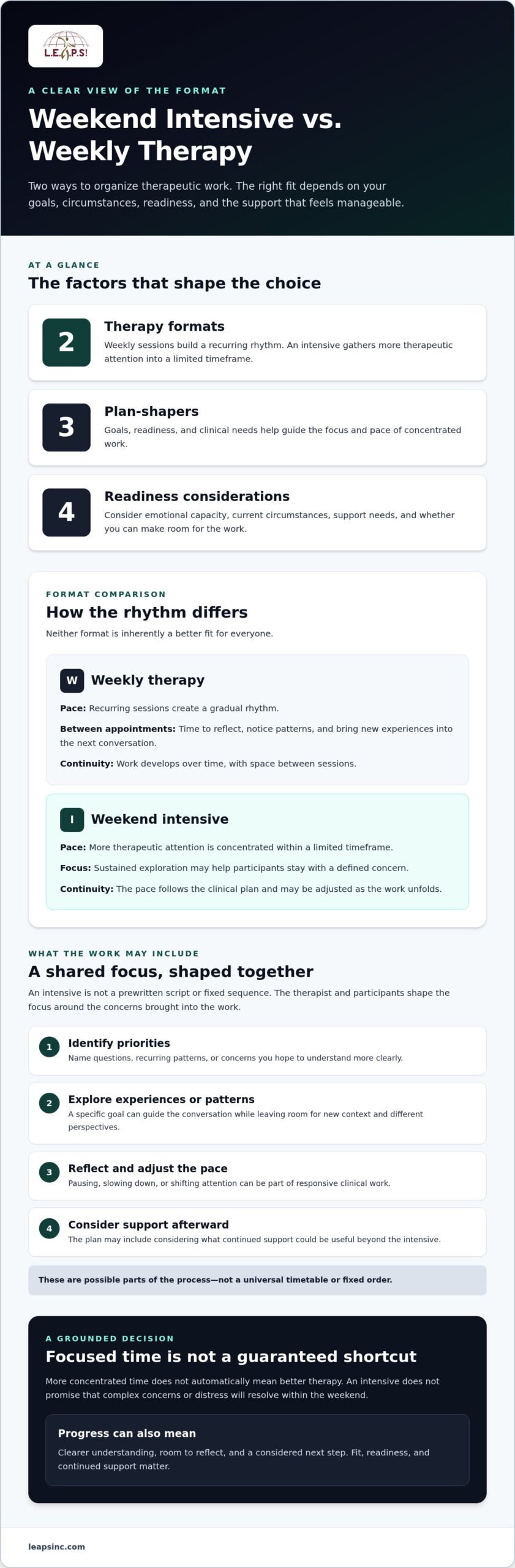
Weekly therapy offers recurring sessions over time, with space between appointments to reflect, notice patterns, and bring new experiences into the next conversation. An intensive gathers more therapeutic work into a shorter span, which may help participants maintain continuity around a defined concern. Neither format suits everyone. Therapy should remain collaborative and responsive, with the clinician and participants adjusting the pace as the work unfolds.
Who may consider a weekend therapy intensive?
An individual or couple seeking focused attention on a specific concern may want to explore whether an intensive is appropriate. Readiness involves more than motivation: consider your emotional capacity, current circumstances, support needs, and ability to make room for the work. A clinical conversation can help clarify whether concentrated work aligns with your goals or whether ongoing sessions may be a better fit. LEAPS Inc. offers therapy intensives as part of a broader clinical picture, not as a promise of a particular outcome.
What Happens During a Weekend Therapy Intensive?
A weekend intensive isn’t a prewritten script or a fixed sequence of sessions. The work is organized around the concerns brought by the individual or couple, with the therapist and participants shaping the focus together. Depending on the clinical plan, the process may include identifying priorities, exploring relevant experiences or patterns, taking time to reflect, and considering what support could be useful afterward. There is no universal timetable for every intensive.
An intensive concentrates therapeutic attention into a shorter period; it doesn’t make complex concerns resolve instantly. The aim is to create room for sustained exploration, not to force a breakthrough or measure success by how much ground is covered. Breaks and changes in pace can be part of thoughtful clinical work, especially when a conversation brings up strong emotions.
Setting goals and creating a shared focus
Before the work begins, participants can identify questions, recurring patterns, or concerns they hope to understand more clearly. A useful goal is specific enough to guide the conversation, yet open enough to be refined as new context emerges. For example, a couple might want to understand a recurring communication breakdown. Each partner may have a different view of when it begins and what it means, so making room for both perspectives can establish a shared focus without assuming their experiences are identical.
Goals can provide direction, not pressure. Participants don’t need to script every conversation or arrive with a complete explanation. Naming what feels most important, uncertain, or difficult to discuss gives the therapist a starting point for collaborative planning.
Working at an emotionally manageable pace
Focused work can bring difficult feelings closer to the surface. A therapist can help participants notice when to slow down, pause, reflect, or shift attention while remaining engaged with the concern. Breaks may support reflection and emotional regulation, but their timing and role depend on the plan and participants’ needs. A careful pace responds to clinical judgment and a sense of safety, rather than a requirement to push through every topic.
For that reason, weekend intensives should allow room to adjust. A concern may take a different shape once explored, or participants may decide that a topic needs more time beyond the intensive. No format can promise that distress will be resolved within the weekend; meaningful progress may include clearer understanding and a considered next step.
If you’re weighing this focused format, an appointment to discuss your therapy goals can help you identify the questions and clinical considerations that should shape the plan.
Weekend Intensive vs. Weekly Therapy: Which Format Fits?
Neither therapy format is inherently more effective for everyone. The right fit depends on your goals, circumstances, readiness, and the kind of support that feels manageable. Use this comparison as a starting point for discussing what you need, not as a substitute for clinical guidance.
| Consideration | Weekly therapy | Weekend intensive |
|---|---|---|
| Pace | Recurring sessions create a gradual rhythm, with time between appointments to reflect and apply insights. | More therapeutic attention is concentrated within a limited timeframe, with pace guided by the clinical plan. |
| Continuity | Gaps between appointments can offer room to process experiences and return with new questions. | Fewer gaps during the focused work may help sustain a discussion across related concerns. |
| Scheduling | Appointments are arranged on a recurring basis, supporting an ongoing routine. | Sessions are organized into a concentrated period, with the schedule shaped by the plan. |
| Nature of the work | May support gradual exploration, ongoing care, and concerns that evolve over time. | May provide focused attention to a defined concern when concentrated work is clinically appropriate. |
When concentrated therapy may be worth considering
A person or couple may consider an intensive when there’s a particular concern they want to explore with sustained attention, rather than returning to it across recurring appointments. Readiness matters: participants need to be willing and able to engage with focused therapeutic work while allowing the therapist to guide the process. A clear goal can help shape the work, but it doesn’t guarantee faster progress or a specific outcome.
When recurring therapy may be a better fit
Weekly sessions may suit goals that benefit from gradual exploration, ongoing support, or time between appointments to observe changes and reflect. Needs can also shift as therapy unfolds, so the format can be revisited rather than treated as a permanent choice. An intensive doesn’t automatically replace future therapy; some people may continue with sessions afterward, depending on their goals and clinical plan.
For a closer look at focused support, explore LEAPS Inc.’s therapy intensive. The decision isn’t about choosing the most concentrated option. It’s about finding a thoughtful pace and structure that fit your circumstances and support meaningful work.
How to Prepare for a Weekend Intensive, and Carry the Work Forward
Preparation doesn’t mean rehearsing every sentence or arriving with a complete solution. For weekend intensives, reflection and practical planning can help you use the time intentionally while staying open to what emerges. Think of preparation as creating a steady starting point, not setting a test you need to pass.
Before the intensive: clarify goals and practical needs
Begin by noting what you hope to understand, change, or approach differently. A few prompts can help you focus:
- What concern feels most important to bring into the work?
- What questions or recurring patterns would you like to explore?
- What are you worried about, or what boundaries would help you feel more able to participate?
Bring these notes as reminders, not a script. The conversation may develop in an unexpected direction, and your goals can be refined as you and the therapist clarify what matters. Share concerns about emotional readiness openly; an honest discussion helps inform the plan and its pace.
Consider the practical side, too. Review the arrangements for your sessions, plan how you’ll manage other responsibilities, and think about whether you can protect some quieter time around the intensive. Rest and a less crowded schedule may make reflection easier, but they aren’t universal clinical requirements. Discuss specific preparation questions with your therapist rather than assuming every intensive follows the same process.
After the intensive: translate insight into continued growth
New understanding often needs time to settle. Rather than expecting to act on every insight at once, identify one or two ideas you want to keep noticing in everyday life. You might record a reflection, pay attention to a familiar interaction, or revisit a question that arose during the work. The aim is to carry learning forward at a manageable pace, not to turn the experience into another performance standard.
Before concluding, consider discussing follow-up with your therapist. Depending on your goals and clinical plan, continued therapy, reflection, or other agreed next steps may help connect the focused work with daily life. A concentrated experience alone can’t guarantee lasting change; progress may involve revisiting insights and adapting your approach over time.
If you’re considering this format, an appointment to discuss your therapy goals can help you explore your hopes, concerns, and questions about fit and next steps.
Considering a Weekend Intensive With LEAPS Inc.?
Choosing a focused format is a clinical decision, not a test of how committed you are to change. LEAPS Inc. offers therapy intensives as an option for focused personal or relational work, alongside ongoing therapy. Whether an intensive fits depends on the concern you want to address, your readiness, and the support structure that makes sense for your circumstances.
What to consider when exploring an intensive
Before deciding, name what you hope to work on and why concentrated time appeals to you. You might be seeking sustained attention to a recurring relationship pattern or a focused opportunity to understand a personal concern. Consider these questions:
- What would you like to understand or approach differently?
- What feels uncertain, emotionally demanding, or important to discuss before beginning?
- Would you prefer focused work, recurring sessions, or a combination shaped around your needs?
You don’t need polished answers. Bringing honest questions about readiness, pacing, and support can help shape a useful conversation. An appointment is an opportunity to discuss your goals and explore fit, not a commitment to a particular format or outcome.
LEAPS Inc.’s therapeutic philosophy offers context for the practice’s approach to clinical work. If ongoing support may be part of your goals, learn more about individual therapy as another format to consider. Each person’s needs are distinct, and the structure, focus, and next steps of therapy should reflect that.
Take a thoughtful next step
Rather than choosing based on duration alone, consider which pace gives you a workable balance of focus, reflection, and continuity. Weekend intensives may be one option for concentrated work, but the format itself doesn’t determine what you’ll achieve. Goals, clinical fit, emotional readiness, and a plan for continuing the work all matter.
You can bring questions about the concern you want to address, what feels manageable, and how an intensive might relate to ongoing therapy. A clear discussion can help you consider your options without pressure or promises of rapid change. If you’re ready to explore the fit, schedule an appointment to discuss your goals.
Choose a Therapy Path That Supports Your Next Step
Weekend intensives can create focused space for therapeutic work, but the right format depends on your goals, readiness, and clinical needs. A concentrated schedule isn’t a guarantee of quick resolution, and it doesn’t automatically replace ongoing care. Thoughtful preparation and a plan for carrying insights forward can help you approach the experience with greater clarity.
LEAPS Inc. offers therapy intensives alongside individual, couple, family, and group therapy, providing different formats for clinical support. Founded and led by Dr. John E. N. Daniel, the practice can help you explore which approach may align with your concerns and desired direction.
You don’t need every answer before taking a next step. Bring your questions about focus, emotional readiness, structure, and continued support to a conversation about fit. Schedule an appointment to discuss your goals and consider a path forward at a pace that feels purposeful and manageable. Your next chapter can begin with a clear, thoughtful conversation.
Frequently Asked Questions
Are weekend intensives as effective as weekly therapy?
Neither format is universally more effective; suitability depends on a person’s goals, circumstances, and clinical needs. Weekly therapy offers recurring support and time between sessions to reflect, while weekend intensives concentrate attention into a limited period. A focused format doesn’t guarantee faster progress or a particular outcome. A clinician can help weigh the potential benefits and demands of each approach, including whether ongoing sessions may remain helpful.
Who can benefit from a weekend therapy intensive?
An individual or couple with a concern they want to explore in a concentrated way may consider an intensive. The key question is whether this structure fits their emotional readiness, capacity, goals, and support needs. Motivation alone doesn’t determine suitability. A clinical conversation can help clarify what participants hope to address and whether focused work, recurring therapy, or another support structure is a better match for their circumstances.
Can a weekend intensive replace regular therapy?
Not automatically. A weekend intensive may be one part of a broader care plan, but it doesn’t guarantee that ongoing therapy will no longer be useful. Some people may continue with recurring sessions to reflect on what emerged and apply insights over time. Others may have different next steps. The appropriate plan depends on clinical goals and individual needs, so discuss continuity and follow-up when considering the format.
How should I prepare for a weekend intensive?
Write down the concerns, questions, and hopes you want to bring, but don’t script every conversation. Consider what feels difficult or uncertain, and share relevant worries, boundaries, and readiness with the therapist. Review the practical arrangements and, if possible, protect time around the experience for reflection. Rest can be helpful, but preparation requirements vary. Discuss the plan rather than assuming every intensive follows the same process.
What happens after a weekend therapy intensive?
After an intensive, participants may reflect on what they learned, notice how familiar patterns show up in daily life, and discuss appropriate next steps with their therapist. Depending on goals and the clinical plan, follow-up could involve continued therapy or another agreed approach to integration. Insights can take time to apply. A concentrated experience alone can’t guarantee lasting change, so it’s useful to consider how the work may continue beyond the sessions.
Are weekend intensives only for couples?
No. Weekend intensives aren’t inherently limited to couples, though the participant format depends on the clinical plan and the goals being addressed. LEAPS Inc. offers therapy intensives alongside individual, couple, family, and group therapy. These different forms of clinical support can serve different needs, while each intensive’s structure and participants are determined by its specific plan. Discussing your concern and goals can help clarify what format may fit.