
Table of Contents
- 1. Align Your Leadership Vision with Your Faith Foundation
- 2. Navigate Ethical Decision-Making Through a Faith-Based Lens
- 3. Build Authentic Servant Leadership in Your Organization
- 4. Overcome Burnout by Integrating Spiritual Wellness into Your Leadership
- 5. Develop Emotional Intelligence Rooted in Faith Principles
- 6. Transform Workplace Culture Through Purpose-Driven Leadership
- 7. Create Sustainable Success by Balancing Ambition with Spiritual Growth
- Frequently Asked Questions (FAQ)
1. Align Your Leadership Vision with Your Faith Foundation
Leading a high-growth organization while staying true to your faith requires more than business acumen. It demands a coherent leadership philosophy that doesn’t compartmentalize your values. Many Florida executives face a silent tension: they excel professionally yet feel disconnected from their deeper purpose. The gap between corporate success and spiritual fulfillment creates stress, decision paralysis, and a sense that something essential is missing.
At LEAPS Inc., we’ve worked with dozens of leaders who discovered that integrating faith into executive coaching didn’t dilute their effectiveness. It strengthened it. When your leadership vision, ethical framework, and daily decisions flow from a unified worldview, you lead with clarity, confidence, and resilience that others can sense and respect.
Here are seven evidence-informed strategies we guide faith-centered leaders through as they navigate the unique pressures of leading in Florida’s competitive business landscape.
Your leadership vision should emerge from your faith foundation, not conflict with it. Many executives build strategic plans that ignore their deepest convictions, creating internal friction that exhausts them over time.
Start by articulating how your faith informs what you want your organization to become. Ask yourself: What does stewardship mean in my industry? How does my faith call me to treat employees, customers, and stakeholders? What legacy am I building beyond quarterly metrics?
We guide leaders through a structured reflection process where they define non-negotiable values rooted in their faith, then map how those values show up in hiring, decision-making, conflict resolution, and long-term strategy. A manufacturing executive we coached realized his faith commitment to dignity meant redesigning his performance management system to emphasize development over punishment. Another leader recognized that her Christian values around generosity should shape her company’s community involvement budget.
When your vision is anchored in faith, you make decisions faster because you have a clear north star. You also attract and retain people who share your values, reducing turnover and increasing psychological safety within your team.
Actionable step: Block two hours this week to write down three ways your faith directly shapes how you want to lead. Then identify one operational change that would align your current practices with that faith-centered vision.
2. Navigate Ethical Decision-Making Through a Faith-Based Lens
Ethical gray zones are where most leaders stumble. Pressure to hit revenue targets, competitive threats, and complex stakeholder dynamics create situations where the “right” choice isn’t obvious.
Faith provides a decision-making framework that transcends situational pressure. Rather than asking “What can I get away with?” or “What maximizes short-term gain?”, faith-centered leaders ask “What does integrity require here? What would I do if nobody was watching? What example am I setting?”
We work with clients to develop a personal ethical decision tree: identifying their core faith principles, clarifying how those principles apply to their industry’s common dilemmas, and rehearsing how they’ll respond when pressure mounts. One financial services executive we coached used this process to establish clear boundaries around aggressive sales tactics her industry normalized. Another manufacturing leader used faith-based ethics to navigate a supplier relationship where cost-cutting would have compromised worker safety.

This isn’t naive idealism. It’s strategic. Leaders with strong ethical anchors build trust faster, weather crises better, and create cultures where people feel safe speaking up about problems before they explode.
Actionable step: Identify the three ethical decisions you’ve wrestled with most in the past year. For each, write down what your faith tradition teaches about integrity in that situation. Use that clarity to establish one new decision-making boundary.
3. Build Authentic Servant Leadership in Your Organization
Servant leadership, rooted in faith teachings about humility and service, fundamentally changes how you show up with your team. It’s not weakness or abdication of authority. It’s a different power dynamic entirely.
Servant leaders ask “How can I develop this person?” before “How can this person serve my agenda?” They admit mistakes, seek input from those closest to the work, and measure success partly by the growth of those they lead.
We help leaders translate servant leadership from concept into daily practice. This includes coaching them to delegate development opportunities, not just tasks; to ask questions before offering solutions; and to invest in frontline employees’ career goals even when it means losing them to other roles.
A healthcare executive we coached realized her autocratic decision-making style, born from pressure and ambition, was stifling her best people. Shifting to servant leadership meant she slowed down, gathered input, and created a leadership pipeline that reduced management turnover by 60 percent in two years.
The faith dimension matters here because it addresses motivation. Servant leadership done from obligation feels draining. Servant leadership rooted in faith, in belief that you’re stewarding talent God has entrusted to you, feels purposeful.
Actionable step: Identify one talented employee whose development you’ve neglected. Schedule a conversation this month to learn what growth they want and commit to one specific development investment.
4. Overcome Burnout by Integrating Spiritual Wellness into Your Leadership
Executive burnout is epidemic. High-achieving leaders push relentlessly, sacrificing sleep, relationships, and rest, then wonder why they feel hollow.
Spiritual wellness isn’t escape from responsibility. It’s the fuel that sustains you through legitimate pressure without destroying yourself in the process. We work with leaders to build sustainable rhythms: regular prayer or spiritual reflection, Sabbath rest (actually protecting one day weekly), community connection, and practices that reconnect them to purpose when they’re running on fumes.
The leaders we work with who integrate spiritual practices report clearer thinking, better decision-making, and greater resilience during crisis. One executive we coached had been working 70-hour weeks for five years. Committing to daily prayer, weekly worship, and monthly spiritual direction created space for her to think strategically instead of reactively. Within a year, she restructured her company to create more delegation, reduced her work hours to 50 per week, and grew revenue 12 percent.
This works because spiritual practices interrupt the false urgency that drives burnout. When you’re connected to something bigger than quarterly targets, you make different trade-offs. You say no to good opportunities to protect what matters. You invest in your team instead of burning them out. You lead from abundance instead of desperation.
Actionable step: Choose one spiritual practice (prayer, worship, nature time, study, meditation) and commit to it three times per week for the next month. Notice how it changes your clarity and decision-making.
5. Develop Emotional Intelligence Rooted in Faith Principles
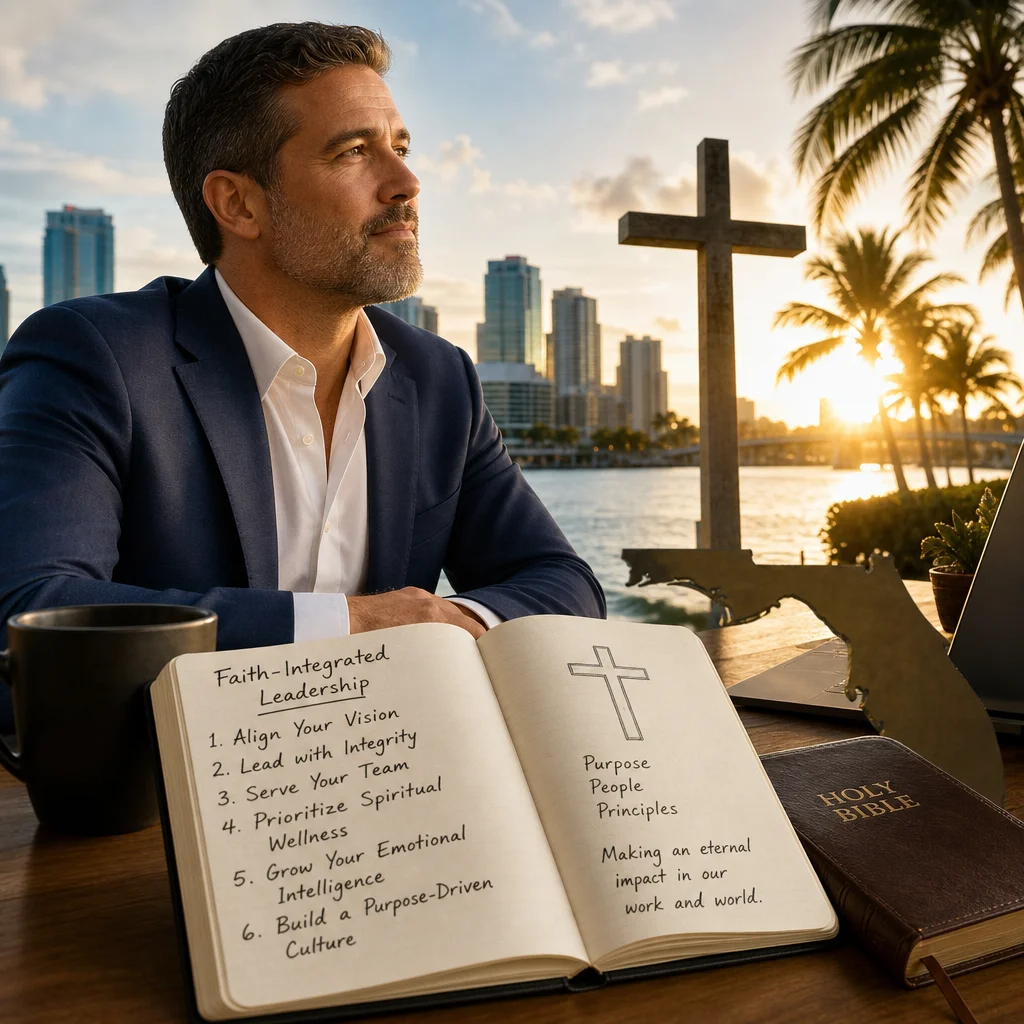
Emotional intelligence, the ability to understand and manage your emotions and recognize emotions in others, is a secular concept with deep faith roots. Proverbs speaks repeatedly about self-awareness, managing anger, and choosing humility.
We guide leaders through emotional intelligence development by showing how faith deepens it. Self-awareness becomes examining your heart: What wounds or fears drive your reactions? What unhealed grief shows up as irritability with your team? Social awareness becomes genuine care: Can you see people’s dignity beyond their productivity? Can you notice who’s struggling?
One executive discovered through our coaching that his harshness with underperforming employees came from childhood shame about not being “good enough.” His faith taught him grace he’d never extended to himself. As he healed that wound, his leadership became more empathetic. People felt safe admitting mistakes and asking for help, which accelerated problem-solving.
Emotional intelligence rooted in faith also builds resilience. You’re not just managing emotions for professional advantage. You’re developing character, integrity, and the capacity to love and be loved well.
Actionable step: Ask three trusted colleagues or direct reports how you show up emotionally under pressure. Listen for patterns without defending. Then explore with a coach or counselor what wounds or fears those patterns protect.
6. Transform Workplace Culture Through Purpose-Driven Leadership
Culture flows from leadership. When you lead with faith integration, purposefulness, and genuine care for people, culture shifts dramatically.
Purpose-driven leadership means your company exists for something beyond profit. Profit is necessary, but not the ultimate why. One client we coached built a logistics company with the explicit faith-centered mission of treating drivers with dignity in an industry known for exploitation. That mission attracted drivers who felt valued, reduced turnover by 40 percent, and became a competitive advantage.
We help leaders articulate their company’s purpose in faith terms, then embed it in hiring, onboarding, decision-making, and celebration. This isn’t corporate messaging. It’s the foundation of how you operate.
Faith-centered cultures also navigate conflict differently. People ground disagreements in shared values rather than self-protection. They speak truth with love rather than fear-based criticism. They assume good intent and work toward understanding.
Actionable step: Draft a one-paragraph statement of your company’s ultimate purpose beyond profit. Share it with your leadership team and ask where current practices misalign with it. Choose one misalignment to address in the next 90 days.
7. Create Sustainable Success by Balancing Ambition with Spiritual Growth
The final strategy addresses a paradox many high-achievers face: How do you pursue excellence and growth without letting ambition consume you?
The answer lies in integration. Ambition isn’t sinful; misdirected ambition is. Ambition rooted in faith means pursuing excellence as an offering, not as a path to significance. You want your company to thrive and your leadership to improve, not because external validation will finally feel enough, but because you’re stewarding well.
We work with leaders on what we call “ambition alignment”: making sure career goals and business goals are integrated with life goals (family, health, faith community, rest). This prevents the common pattern where someone builds an empire and loses everything else.
One entrepreneur we coached realized his obsessive work pace was driven by a deep belief that he wasn’t enough. His faith tradition taught him his worth was unconditional, not earned. That reframe changed everything. He still pursued growth, but from a place of freedom rather than desperation. His company thrived, his marriage healed, and he became a better leader because he was more grounded.

Sustainable success is possible. It requires integrating all parts of your life, not compartmentalizing. Faith provides the framework for that integration.
Actionable step: Map your life across four domains: work, family, health, and faith. Rate each 1-10 for satisfaction. Identify which imbalances are draining you and which would improve if you rebalanced ambition toward them.
—
These strategies work because they address the whole leader, not just the professional persona. We’ve guided Florida executives through each of these areas, watching as they discovered that faith-centered leadership isn’t a liability. It’s a clarity advantage that attracts better people, creates stronger cultures, and builds businesses that outlast market cycles.
If you’re a high-achieving leader feeling the tension between professional success and spiritual purpose, or if you sense that leading without integrating your faith is costing you more than you realize, we invite you to explore faith-integrated leadership coaching with us at LEAPS Inc.
Our executive coaching combines strategic business thinking with therapeutic insight and faith-centered wisdom. We help you build a leadership philosophy that works because it’s honest about who you are and what you believe. That coherence, once you find it, changes everything.
Contact us to schedule a consultation. Let’s explore how to align your leadership vision with your faith foundation and create the sustainable success you’re designed for.
For further reading: Faith-integrated leadership coaching.
Call us today for a free 15 minute consultation.
Frequently Asked Questions (FAQ)
What makes faith-integrated executive coaching different from standard leadership development?
We combine evidence-based executive coaching techniques with faith principles that align your leadership decisions with your spiritual values. Our approach helps you see your professional role as an extension of your faith journey, enabling you to lead with greater authenticity and purpose. Many of our clients find this integration reduces the internal conflict between their business ambitions and their spiritual convictions, creating more sustainable success.
How does your coaching address the specific challenges Florida leaders face?
We work with high-achieving professionals in Florida’s competitive business landscape who struggle to balance their faith with professional pressures like ethical compromises, burnout, and workplace culture challenges. Our coaches understand the unique demands of leadership in our state’s diverse industries and help you develop decision-making frameworks rooted in both business wisdom and spiritual principles. We’ve found that leaders who intentionally integrate these two areas experience improved emotional resilience and more authentic team relationships.
Can faith-integrated coaching help if I’m experiencing leadership burnout?
Absolutely. We’ve discovered that burnout often intensifies when leaders feel disconnected from their deeper purpose and values. Through our coaching, we help you reconnect with the spiritual foundations that originally called you to leadership, then rebuild your daily practices and organizational systems to support that purpose. This approach addresses both the immediate exhaustion and the underlying spiritual disconnect that fuels it.