
Table of Contents
- Why Selecting the Right Executive Coach Matters More Than You Think
- The Hidden Costs of Choosing the Wrong Coaching Partner
- Defining Your Organization's Coaching Objectives and Success Metrics
- Building Your Request for Proposal: Essential Components and Questions
- Creating an Evaluation Scorecard That Aligns With Your Leadership Goals
- Assessing Credentials, Certifications, and Proven Track Record
- The Importance of Therapeutic Competency and Trauma-Informed Expertise
- Evaluating Cultural Competence and Diversity in Coaching Approaches
- How We Structure Our Coaching Engagements for Maximum Impact
- Making Your Final Selection: Beyond the Numbers
- Onboarding Your Executive Coach for Successful Implementation
- Measuring Results and Ensuring Accountability Throughout Your Engagement
- Frequently Asked Questions (FAQ)
Why Selecting the Right Executive Coach Matters More Than You Think
Finding the right executive coach requires more than browsing credentials online. Your coaching partnership will shape how your leadership team responds to crisis, navigates organizational change, and ultimately performs under pressure. At LEAPS Inc., we’ve guided hundreds of executives through transformational growth, and we understand that this decision deserves a rigorous, thoughtful process.
This guide walks you through selecting an executive coaching partner using a structured RFP and evaluation framework that protects your investment and ensures alignment with your organization’s real needs.
Your executive coach becomes a trusted advisor during your most vulnerable professional moments. When you’re facing burnout, struggling with team dynamics, or navigating a major career transition, you need someone who understands both the complexity of leadership and the emotional undercurrents driving your behavior.
The wrong coach can waste your time with generic frameworks that ignore your unique challenges. The right coach accelerates your self-awareness, unlocks blind spots, and equips you with tools tailored to your specific context. This matters because executive effectiveness directly impacts organizational culture, employee retention, and bottom-line results.
A structured selection process protects you from overpromising coaches and ensures you’re investing in someone whose approach and expertise align with your goals.
The Hidden Costs of Choosing the Wrong Coaching Partner
Many leaders skip the formal evaluation process, trusting gut instinct or referrals alone. This often backfires.
A poorly matched coach may:
- Focus on generic leadership theory rather than your actual business challenges
- Lack experience with your industry, leadership level, or organizational structure
- Miss underlying emotional or relational dynamics that drive performance problems
- Provide surface-level advice without exploring root causes
- Fail to hold you accountable or challenge you when you need it most
These missteps cost far more than the coaching fee. They cost time, lost momentum, and the opportunity cost of delayed growth. An eight-month coaching engagement with the wrong partner means eight months of limited progress.
By contrast, the right partnership delivers measurable shifts in confidence, decision-making, relationship quality, and team performance within the first quarter.
Defining Your Organization’s Coaching Objectives and Success Metrics
Before you write a single RFP question, get crystal clear on what winning looks like.
Start by naming your primary coaching objectives. Are you addressing a specific leadership challenge (delegation, communication, emotional resilience)? Building capability across a leadership team? Preparing an executive for promotion? Supporting someone through a high-stakes transition?
Next, define measurable success metrics that matter to your business:
- 360-degree feedback improvements in specific competencies
- Measurable changes in team engagement or retention
- Improved decision-making speed or quality
- Better cross-functional collaboration
- Reduction in avoidable conflict or misalignment
Be honest about the emotional dimensions too. Does your leader need to build confidence after a setback? Recover from burnout? Rebuild trust with their team? These are legitimate coaching outcomes and should shape your evaluation criteria.
Document these objectives and metrics before evaluating any coaches. They become your lens for assessing fit.
Building Your Request for Proposal: Essential Components and Questions
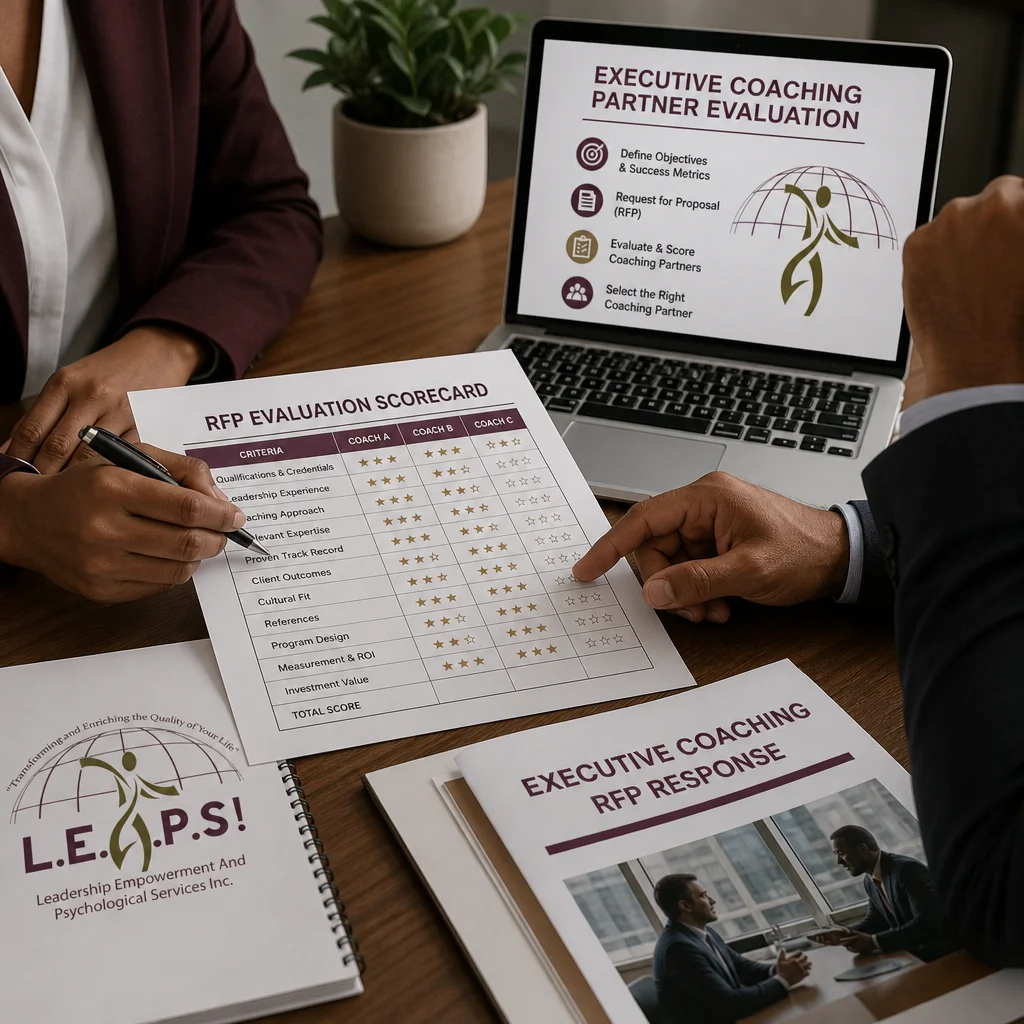
A strong RFP clarifies what you’re seeking and allows coaches to demonstrate their approach transparently.
Include these essential sections:
Organization and Context: Describe your industry, company size, organizational structure, and the specific leadership position(s) needing coaching. Help the coach understand your world.
The Coaching Challenge: Articulate the situation clearly. For example: “Our VP of Operations is strong technically but struggles with executive presence and stakeholder communication. We need a coach who can help her build confidence and communication impact.”
Desired Outcomes: List your measurable success metrics and timeframe (typically 6-12 months).
Coaching Approach and Philosophy: Ask coaches to describe their methodology. How do they conduct initial assessments? What frameworks or tools do they use? How frequently do they meet with clients? Do they involve 360-degree feedback or other feedback mechanisms?
Experience and Credentials: Request details on relevant certifications, professional licenses, years of experience, and specific experience with your industry or leadership level.
Cultural and Organizational Understanding: Ask how they assess organizational culture, work with teams alongside individual executives, and adapt their approach to different contexts.
Trauma-Informed and Therapeutic Competency: If your coach will address stress, anxiety, burnout, or complex interpersonal dynamics, ask about their training in trauma-informed coaching and emotional intelligence frameworks.
References and Case Studies: Request references from similar clients and anonymized case studies showing before/after outcomes.
Creating an Evaluation Scorecard That Aligns With Your Leadership Goals
Reduce bias and make defensible decisions by scoring responses against weighted criteria.
Create a scorecard with these components:
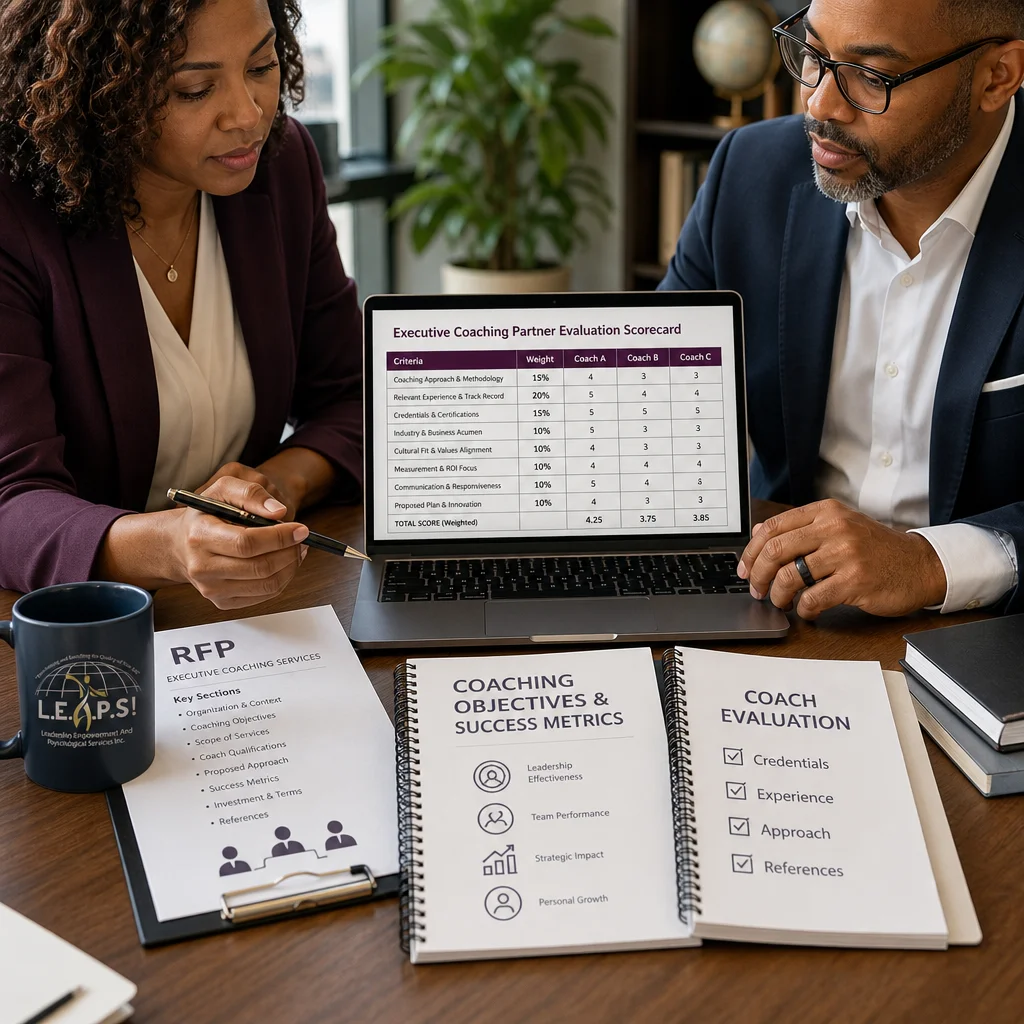
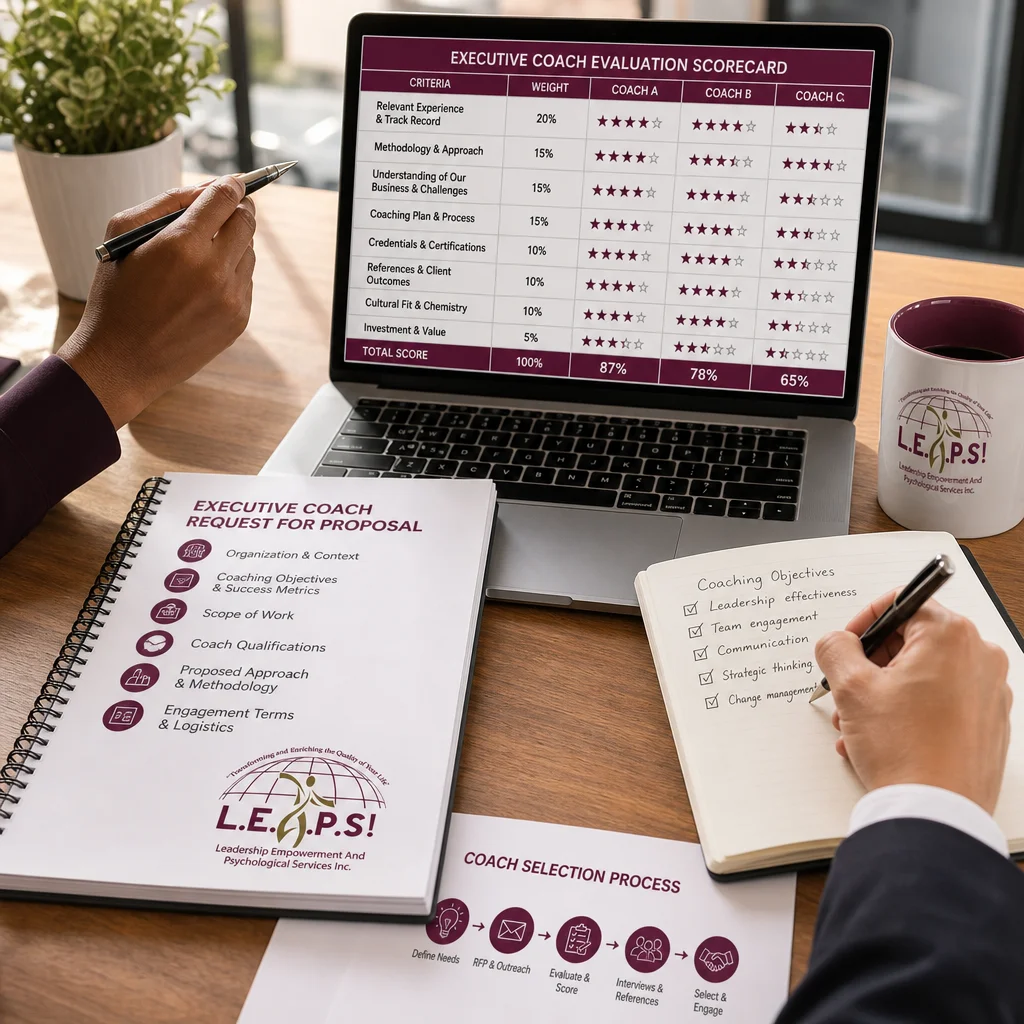
Criterion | Weight | Scoring (1-5) —|—|— Relevant experience and track record | 25% | Does the coach have 5+ years with your level/industry? Credentials, certifications, and professional standing | 20% | Are credentials current and relevant? Licensed? Board certified? Coaching methodology and approach alignment | 20% | Does their approach match your culture and needs? Emotional intelligence and trauma awareness | 15% | Evidence of therapeutic competency and sensitivity to complex dynamics? Cultural competence and diversity awareness | 10% | Can they work effectively across differences and build trust across cultures? Chemistry and communication | 10% | Does the coach communicate clearly and build rapport in conversations?
Assign each coach scores across these dimensions, then calculate weighted totals. This numerical framework prevents decisions from hinging solely on likability or one impressive conversation.
Assessing Credentials, Certifications, and Proven Track Record
Credentials matter because they indicate formal training and accountability.
Look for coaches with:
- A master’s degree or higher in psychology, counseling, organizational development, or related fields
- Certifications from recognized coaching bodies (ICF, IPEC, or similar)
- Relevant supplemental training in emotional intelligence, systems thinking, or organizational psychology
- Professional licenses where applicable (LMHC, LCSW, psychologist credentials)
- 5+ years of direct executive coaching experience
But don’t stop at credential review. Ask about specific outcomes they’ve produced. How many executives have they coached? What percentage improved their 360-degree feedback scores? How many were promoted or stabilized in crisis situations?
A coach’s willingness to share metrics demonstrates confidence and accountability. We’re transparent about our outcomes because we stand behind the work.
The Importance of Therapeutic Competency and Trauma-Informed Expertise
This element separates skilled coaches from transformational ones.
Many high-performing leaders carry unresolved trauma, childhood patterns, or deeply rooted emotional blocks that limit their leadership effectiveness. Without a coach trained in trauma awareness and emotional processing, these dynamics remain invisible. You get tactical advice on delegation or communication without addressing the anxiety or self-doubt driving avoidance.
Trauma-informed coaches understand:
- How past experiences shape current stress responses and decision-making
- How to create psychological safety for vulnerability and honest reflection
- When emotional work requires a therapist versus when coaching suffices
- How to normalize emotional dimensions of leadership without medicalizing normal human challenges
Ask candidates directly: “What training do you have in trauma-informed coaching? How do you distinguish between coaching and clinical therapy?” A strong answer shows they’ve thought deeply about scope and ethics.
Evaluating Cultural Competence and Diversity in Coaching Approaches
Your coach will shape how your leaders think about people, culture, and inclusion.
Choose someone who demonstrates:
- Understanding of different cultural values around hierarchy, communication, and decision-making
- Experience coaching leaders from diverse backgrounds
- Awareness of how identity, privilege, and bias show up in organizational dynamics
- Skill in naming systemic patterns without shaming individuals
- Commitment to continuous learning about emerging organizational challenges
Ask: “Tell me about a time you coached a leader whose cultural background or identity differed significantly from yours. How did you adapt your approach?” Listen for humility, specificity, and genuine curiosity.
At LEAPS Inc., we view cultural competence as foundational to effective coaching. We don’t assume all leaders respond to the same approach. We meet you where you are and work in ways that honor your values and context.
How We Structure Our Coaching Engagements for Maximum Impact
We design coaching relationships that balance intensive focus with sustainable change.
Our approach includes:
- Initial assessment and contracting: 360-degree feedback, leadership assessments, and conversation to understand your context and goals
- Biweekly or monthly coaching sessions: Flexible scheduling that accommodates executive calendars
- Advanced coaching assessments: Advanced coaching assessments that identify blind spots and track progress
- Team feedback loops: Optional 360-degree feedback refreshes and stakeholder conversations to measure impact
- Crisis support: Access between sessions when major decisions or conflicts arise
- Intensive coaching retreats: Optional immersive experiences for accelerated breakthroughs
We treat coaching as a collaborative partnership. You drive the agenda. We bring the expertise, accountability, and compassionate challenge. Learn more about our executive coaching overview to see if we’re the right fit for your organization.
Making Your Final Selection: Beyond the Numbers
After scoring all candidates, you’ll likely have a top 2-3. Now trust your judgment about fit.
Schedule conversations with your top choices. Notice:
- Do they ask thoughtful questions about your context, or do they launch into their process immediately?
- How do you feel after talking with them? Energized? Heard? Skeptical?
- Do they acknowledge what they don’t know and express genuine curiosity?
- Can they explain complex ideas in accessible language?
- Do they communicate confidence without arrogance?
Chemistry matters because coaching requires vulnerability. You won’t open up to someone who feels dismissive or inauthentic.
Also ask your top candidates about how they handle disagreement. A good coach will challenge you respectfully when you’re avoiding hard work or hiding behind excuses. They won’t just affirm your existing perspective.
Onboarding Your Executive Coach for Successful Implementation
Once selected, structure the first 30 days intentionally.
In your initial sessions, establish:
- A written coaching agreement outlining goals, frequency, duration, and financial terms
- Clear confidentiality boundaries and how feedback will be handled
- Communication norms and between-session expectations
- A baseline assessment (360 feedback, leadership inventory, or structured conversation) to measure progress
- Specific focus areas and success metrics
Communicate the coaching engagement to relevant stakeholders. Team members don’t need details, but they should know that their leader is investing in development and may be testing new approaches.
Schedule the first 360-degree feedback assessment early so you have objective data at baseline.
Measuring Results and Ensuring Accountability Throughout Your Engagement
Good coaching produces measurable progress. Check in quarterly.
Track:
- 360-degree feedback improvements in target competencies
- Stakeholder feedback on changes they notice
- Self-reported progress on specific goals
- Team metrics (engagement, retention, collaboration)
- The leader’s own sense of confidence and clarity
At the three-month mark, pause and assess. Are you seeing meaningful movement? Is the coach responsive and adapting? Speak honestly if the engagement isn’t working. Most coaching relationships find rhythm by month four, but if fundamental misalignment exists, it’s better to reset early.
By month six, you should see clear evidence of progress. By month twelve, meaningful transformation in how your leader shows up.
The best coaching partnerships continue beyond the formal engagement. What you build becomes part of how you lead. That’s the goal: not dependence on a coach, but lasting capability change that sustains long after coaching ends.
Ready to evaluate your coaching options? We’re here to answer questions, provide references, and explore whether a partnership with LEAPS Inc. makes sense for your organization.
Call us today for a free 15 minute consultation.
Frequently Asked Questions (FAQ)
How do we help organizations move beyond surface-level credentials when evaluating an executive coaching partner?
We believe credentials matter, but they’re only the starting point. We encourage our clients to dig deeper by assessing whether a coaching partner understands trauma-informed practices, has successfully worked with leaders facing similar challenges, and can demonstrate measurable results from past engagements. Our evaluation scorecard framework helps you identify coaches who combine board licensure and certifications with genuine expertise in your specific industry and leadership challenges.
What makes cultural competence essential in selecting an executive coach?
We’ve learned that effective coaching requires understanding the unique pressures and worldviews of the leaders we work with. When you’re evaluating potential partners, we recommend asking about their experience serving diverse organizations and their commitment to culturally sensitive approaches. At LEAPS Inc., we integrate cultural competency throughout our coaching relationships because we recognize that leadership challenges look different across different backgrounds and contexts.
How should we structure our coaching engagement to ensure we actually see results?
We recommend defining success metrics before you select your partner, then building accountability checkpoints into your contract. We structure our engagements with clarity around transformation goals, regular assessment intervals, and transparent communication about progress. This approach ensures both our team and your leaders stay aligned on what success looks like throughout the coaching journey.