

Building trust with a senior leader starts with a private, candid coaching relationship where the leader can name real challenges, define observable outcomes, and test practical changes between sessions. Executive coaching services are most useful when trust and accountability work together.
What to prepare before the first executive coaching session
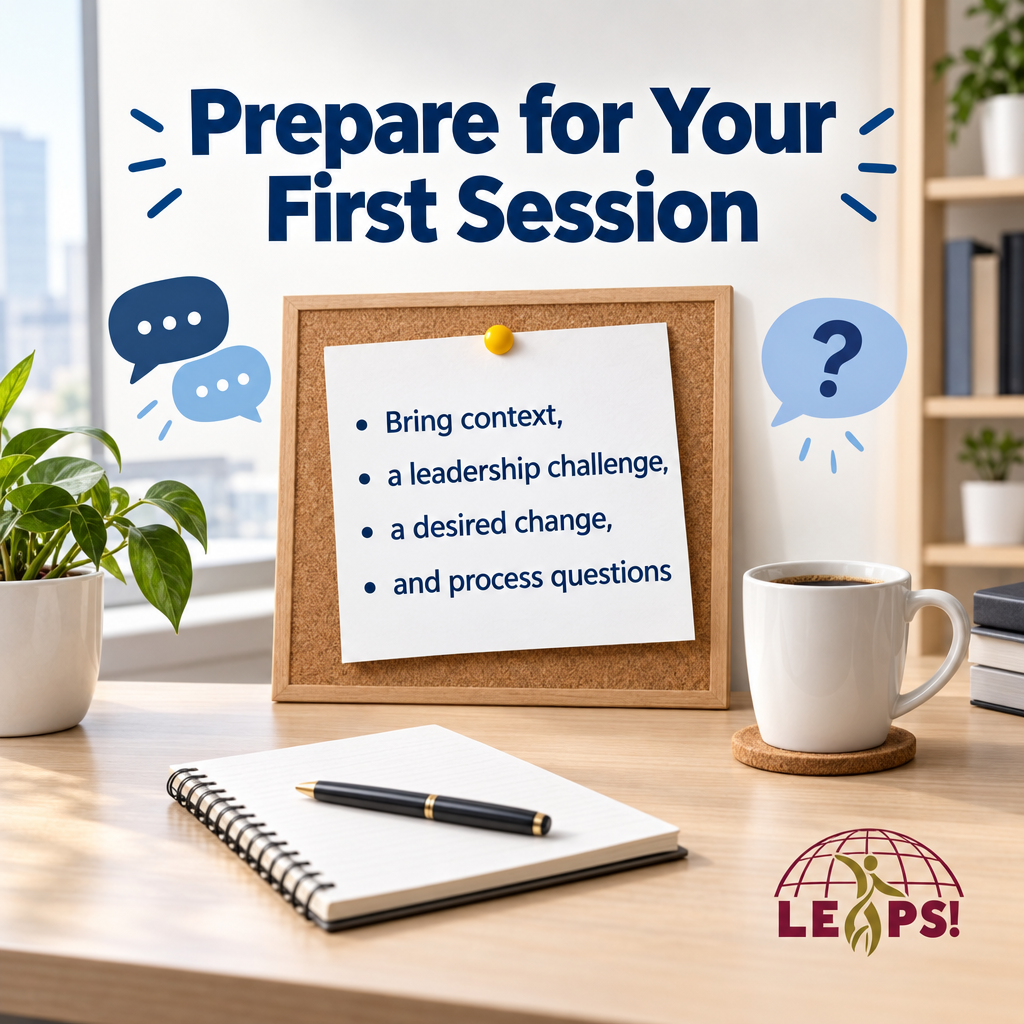
A senior leader may seek executive coaching services because priorities feel unclear, difficult decisions keep returning, communication has become strained, leadership-team friction is affecting work, or current results do not match the effort being invested. Preparing well can make the first conversation more useful without requiring you to arrive with a polished diagnosis.
Set aside a private place to think and 30 to 60 minutes for preparation. Bring recent examples from work, along with a willingness to discuss both your strengths and the patterns that may need attention. The initial coaching experience can help clarify what matters most, identify barriers, recognize leadership strengths, and establish the current and desired states.
A practical preparation checklist includes:
- Recent decisions that felt difficult or incomplete
- Recurring conversations you keep postponing or repeating
- Feedback from team members, peers, or other appropriate stakeholders
- Competing priorities that are consuming attention
- The outcome or leadership behavior you most want to change
Set aside time for honest reflection
Honest reflection gives the coaching relationship a workable starting point. Write down what you believe is happening, what you have already tried, and where your own assumptions or habits may be contributing. You do not need to explain everything perfectly; you need enough privacy and openness to examine the situation without performing competence.
Bring three recent leadership situations
Three recent situations can reveal more than a broad statement that leadership feels difficult. Choose examples involving a decision, a conversation, and a team or strategic challenge, then note what happened, how you responded, and what remains unresolved. Specific examples help a coach understand your context while preserving room to discover the deeper pattern together.
How to name the leadership problem without oversimplifying it
A useful leadership problem statement describes one concrete situation, your response, its effects, and the change you want to make. Saying that a team is underperforming or that leadership feels difficult may reflect real frustration, but those descriptions do not yet show where coaching can help.
Use this sequence to prepare one situation for discussion:
- Situation: Describe what happened, when it happened, and who was involved.
- Personal response: Explain what you said, decided, avoided, or assumed.
- Effect on others: Note how the situation affected communication, trust, decisions, or follow-through.
- Attempted solution: Identify the action you took and what happened afterward.
- Unresolved question: State what you still need to understand or change.
This structure can expose patterns involving delegation, executive presence, conflict resolution, time allocation, strategic focus, communication, or decision-making. The statement is useful when a coach can understand what happened, who was affected, what you tried, and what still needs to change. Blaming the team or searching for a quick technique before examining your own behavior can limit the value of coaching.
Separate the visible symptom from the recurring pattern
The visible symptom may be missed deadlines, unfocused meetings, or repeated disagreement, while the recurring pattern may involve unclear delegation, avoidance of conflict, or changing priorities. Ask what tends to happen across more than one situation and what role your leadership behavior plays. This distinction helps coaching address a pattern that can be practiced and changed rather than only treating one episode.
Describe the effect on people, decisions, and results
Describe how the situation affected specific people, decisions, and work rather than labeling others as resistant or unmotivated. Explain whether people became less clear, delayed action, stopped raising concerns, or received conflicting direction. A coach can then help you consider communication, accountability, and decision-making together instead of treating each consequence as an unrelated problem.
How to define a coaching outcome that can guide each session
A strong coaching outcome turns a broad aim such as becoming a better leader into an observable behavior or result. You might aim for clearer delegation, more focused meetings, stronger feedback conversations, more consistent strategic decisions, or a better organized approach to competing priorities.
Leadership development goals may involve leadership style, strategic planning, vision, mission, core values, executive presence, communication, or leadership-team performance. Agree on two or three progress indicators, such as completing a difficult conversation, improving follow-through, clarifying priorities for a team, or gathering relevant stakeholder feedback. These indicators support review without promising a guaranteed business result.
Collaborative goal-setting keeps the process connected to your actual leadership context. Accountability makes the goal practical, while flexibility allows it to develop as you gain insight. A goal that begins with communication may reveal a delegation or decision-making issue, and the coaching plan can adapt without losing its direction.
Describe the desired leadership behavior
Describe what you want to do differently in a situation that matters. For example, you may want to explain priorities before assigning work, ask for dissent before making a strategic decision, or give direct feedback without delaying the conversation. A behavior-based goal gives you something to practice, observe, and discuss rather than an abstract standard such as being more inspirational.
Choose evidence that would show progress
Choose evidence that you can reasonably observe, such as clearer meeting decisions, completed follow-up, more direct conversations, or feedback from people affected by your leadership. Review the evidence with care rather than treating one positive interaction as proof that everything has changed. The purpose is to notice movement, identify obstacles, and decide what to practice next.
What to ask about the coaching process before you commit
Ask a prospective coach how the method, session cadence, preparation, between-session actions, feedback, confidentiality, and progress reviews will work. A trusted relationship should feel candid and respectful: you need enough challenge to examine assumptions and enough trust to discuss uncertainty without pretending to have every answer.
LEAPS Inc. presents its L.E.A.P.S. coaching model as structured guidance that combines positive psychology, experiential learning, collaborative goal-setting, accountability, and practical action planning. LEAPS Inc. offers executive coaching for C-suite leaders, entrepreneurs, managers, and aspiring executives. Its published information also lists board certifications in executive coaching, business coaching, life coaching, and entrepreneurship coaching; verify specific program details directly before beginning.
Useful questions include:
- How will we define the leadership challenge and desired outcome?
- What preparation is expected before each session?
- Will we agree on actions to test between sessions?
- How will confidentiality and communication with any sponsoring organization be handled?
- How will we review progress and adjust goals?
Clarify roles, confidentiality, and communication
Clarify who the client is, what information remains private, and how communication will work between sessions. This matters especially when an organization is involved in arranging coaching. Ask how feedback is gathered, who receives progress updates, and what boundaries protect a candid conversation. Clear expectations help both sides build trust without confusion about the coach’s role.
Understand the structure between sessions
Understand what happens after the conversation ends. Ask whether you will leave with a practical action, how you should record observations, and when the action will be reviewed. A useful structure connects reflection to real leadership situations, such as delegation, a difficult employee conversation, a strategic planning meeting, a change initiative, or a reset of personal priorities.
How to turn each coaching conversation into leadership action
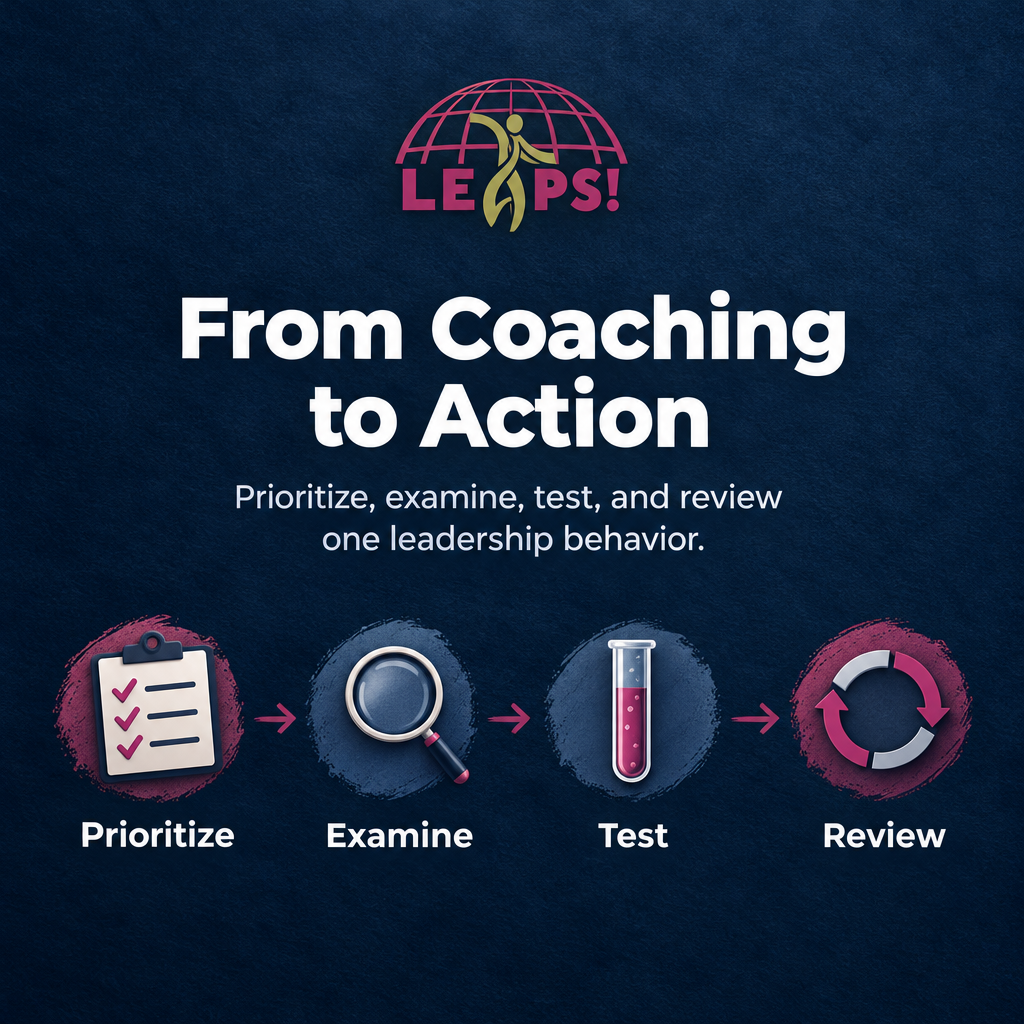
Each coaching conversation should end with a practical leadership action that you can test in a defined context. A repeatable rhythm is to identify the priority, explore assumptions, select one behavior to test, define where and with whom you will use it, and schedule a review.
For example, a leader preparing to delegate a complex project might test a clearer explanation of the outcome, decision rights, and follow-up points. A leader facing a difficult conversation might plan the opening statement, the question to ask, and the response to likely concerns. Afterward, record what you said or did, how others responded, what changed, and what you would adjust next time.
Common obstacles include missing the practice, choosing a vague goal, loading the week with too many actions, or using coaching to analyze other people while avoiding personal accountability. Start with one meaningful experiment. Specificity makes it easier to learn from both progress and an imperfect attempt.
End every session with a specific experiment
End every session by naming one action, one context, and one sign that the action occurred. “Communicate better” is too broad; “open Thursday’s planning meeting by confirming the decision needed and asking for two risks” is testable. Write down the action while it is fresh and make sure it fits the leader’s actual schedule.
Review what happened before changing the plan
Review what happened before deciding that the approach failed or choosing a new technique. Compare your intention with your words, the other person’s response, the decision or behavior that followed, and your next adjustment. This review turns experience into learning and helps prevent coaching from becoming repeated discussion without action.
When executive coaching is a good fit and what to do next
Executive coaching may fit a senior leader who wants greater clarity, stronger communication, better decisions, improved organization, sharper leadership skills, or a more effective approach to leading people. It works best when the leader can participate voluntarily, discuss real situations openly, act between sessions, and evaluate progress honestly.
Coaching is a development and accountability resource, not a substitute for therapy, crisis care, legal advice, or an organizational investigation when those needs apply. If the challenge involves personal distress, safety, legal exposure, or a formal workplace process, clarify which form of support is appropriate before relying on coaching alone.
LEAPS Inc. provides information about its executive coaching services for leaders in the Tampa and Orlando, Florida areas. To review the program details, visit the executive coaching information and consider whether the stated approach matches your leadership challenge and desired outcome.
Use coaching for development, accountability, and leadership change
Use coaching when you are ready to examine your choices, practice new leadership behaviors, and return with an honest account of what happened. The relationship is strongest when the leader and coach jointly define the work, connect it to real responsibilities, and keep accountability supportive rather than punitive. That combination can help turn insight into sustained leadership change.
Know when another form of support may be needed
Seek another or additional form of support when the primary need involves crisis care, significant mental health symptoms, legal advice, or a formal investigation. Coaching can still complement appropriate services in some situations, but the boundaries should be clear. If you are unsure, describe the concern directly when you make contact so the next step can be discussed responsibly.
Frequently Asked Questions
What should a senior leader bring to the first executive coaching session?
Bring one or two recent leadership situations, a description of the change you want, questions about the coaching process, and feedback or priorities that explain the context. You do not need a complete diagnosis because the first conversation can help clarify the current state, desired state, barriers, and leadership strengths.
How do I know whether executive coaching is right for my leadership challenge?
Executive coaching may fit when you want clearer priorities, stronger communication, better decisions, improved delegation, greater accountability, or leadership development. It is most useful when you can discuss real situations openly and apply agreed actions between sessions.
What should I ask an executive coach before starting?
Ask about the coaching model, session structure, preparation, between-session work, confidentiality, progress measures, communication expectations, and the coach’s experience with your leadership context. Also ask how the coach will help define goals instead of relying on generic advice.
How does LEAPS Inc. approach executive coaching?
LEAPS Inc. describes a structured approach that begins by clarifying what matters most, identifying barriers, recognizing leadership strengths, and establishing current and desired states. Its L.E.A.P.S. model combines positive psychology, experiential learning, collaborative goal-setting, accountability, and practical action planning.
How do I get started with executive coaching services from LEAPS Inc.?
Review LEAPS Inc.’s executive coaching information, then contact LEAPS Inc. at +18558853277 or info@leapsinc.com. Ask about fit, coaching structure, confidentiality, and how your leadership goal would be addressed.