
Table of Contents
- When Ethical Lapses Damage Your Leadership Foundation
- The Hidden Cost of Lost Trust in Organizations
- Why Leaders Struggle with Accountability and Recovery
- The Psychological Barriers to Rebuilding Credibility
- Our Comprehensive Approach to Leadership Trust Restoration
- Executive Coaching Strategies for Ethical Recovery
- Creating Sustainable Accountability Systems
- Restoring Team Confidence Through Transparent Communication
- The Role of Personal Transformation in Leadership Recovery
- Real-World Success Stories of Rebuilt Leadership
- Starting Your Leadership Trust Recovery Journey Today
- Frequently Asked Questions (FAQ)
When Ethical Lapses Damage Your Leadership Foundation
An ethical lapse—whether it’s a breach of confidentiality, a financial misstep, inconsistent communication, or a failure to keep commitments—can shake the foundation of your leadership in ways that feel irreversible. We’ve worked with executives who describe this moment as devastating: the realization that their credibility, something built over years, has fractured in days.
The damage extends beyond your own emotional state. Your team notices immediately. Projects stall. Collaboration becomes mechanical. People stop bringing ideas forward because they’ve lost confidence in your judgment. The organizational culture shifts from one of trust to one of vigilance and self-protection.
What makes this recovery uniquely challenging is that ethical lapses don’t just create a professional problem. They trigger deeper questions about identity, values, and whether you can be trusted again. Many high-achieving leaders we work with feel trapped between the need to move forward and the weight of what happened.
What to do next: Acknowledge honestly that this is a multifaceted recovery. It requires both practical steps and internal work.
The Hidden Cost of Lost Trust in Organizations
Trust isn’t just a nice-to-have in leadership. It’s the operating system of organizational effectiveness. When trust erodes, productivity doesn’t decline by a percentage point or two. Research consistently shows that low-trust environments experience higher turnover, decreased engagement, increased absenteeism, and slower decision-making.
We’ve observed that organizations with broken leadership trust often see:
- Team members spending energy on self-protection rather than innovation
- Information hoarding instead of open communication
- Reduced willingness to take calculated risks
- Increased skepticism about leadership decisions and strategic direction
- Higher rates of quiet resignation, where people stay physically but disengage emotionally
The financial impact is real. Rebuilding trust requires investment in new systems, increased oversight, possible coaching and training, and time that could have gone toward growth. Yet the alternative—allowing distrust to calcify—costs far more.
Beyond metrics, there’s a human cost. Leaders carrying the weight of lost trust often experience burnout, anxiety, and a loss of the sense of purpose that originally drew them to leadership. Your team suffers too, working in an environment where they can’t fully relax or be vulnerable.
What to do next: Calculate what lost trust is actually costing your organization by looking at turnover, engagement scores, and project delays over the past six months.
Why Leaders Struggle with Accountability and Recovery
Taking full accountability for an ethical lapse sounds straightforward, but it’s psychologically complex. We work with accomplished leaders who intellectually understand they need to own their mistake, yet find themselves minimizing, contextualizing, or shifting focus when the moment comes.
Several patterns emerge:
Threat response. Leaders often have a strong achievement orientation. An ethical lapse feels like a threat to identity and status, triggering defensive reactions even when you consciously want to be accountable.
Shame avoidance. There’s a difference between guilt (I did something bad) and shame (I am bad). Shame is harder to sit with, and leaders often flee into action, justification, or blame-shifting rather than staying present with it.
Fear of consequences. Admitting a mistake opens the possibility of real repercussions: loss of authority, demotion, job loss, or legal liability. This uncertainty makes genuine accountability feel risky.
Isolation. Leaders often process crises alone, compounding these psychological barriers. Without external perspective, internal narratives become reinforced rather than challenged.
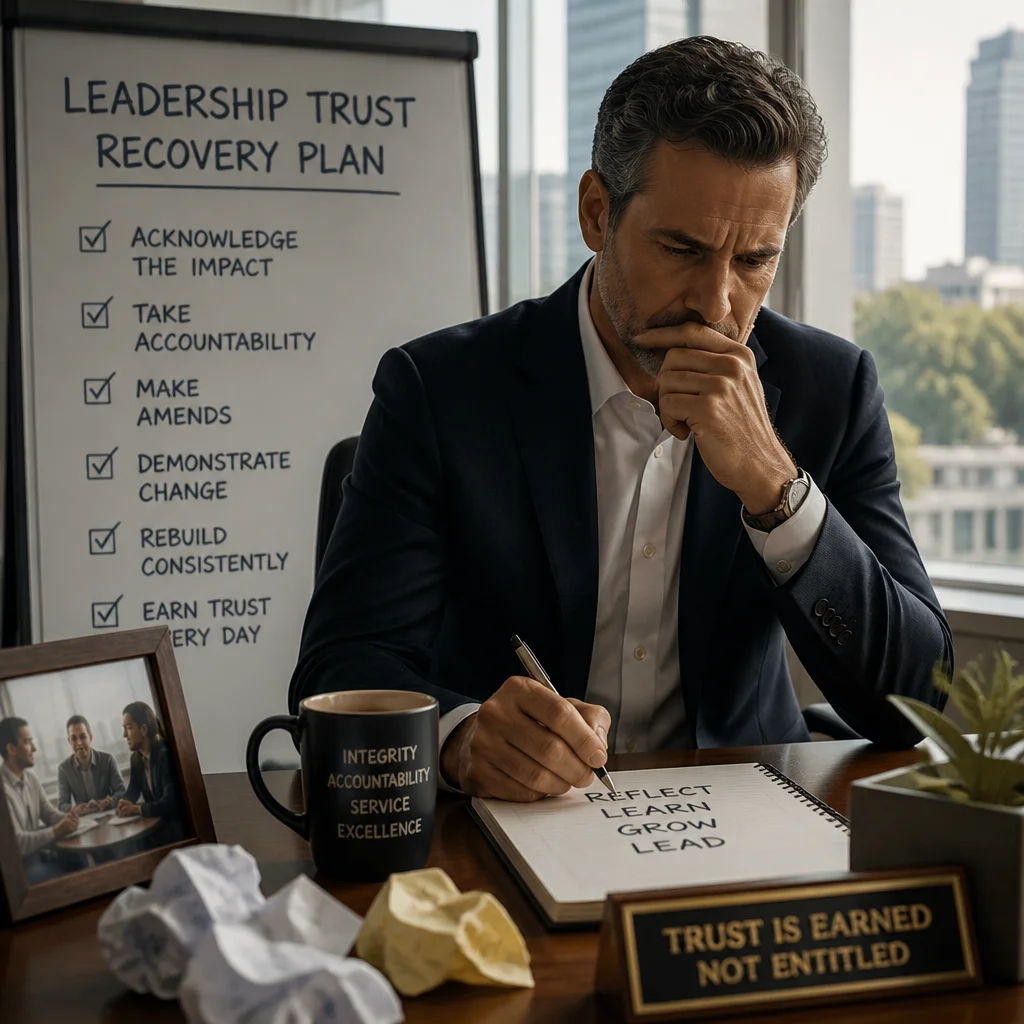
The irony is that accountability accelerates recovery, while avoidance perpetuates distrust. Yet moving toward accountability requires support and a framework that helps you separate your worth as a person from the mistake you made.
What to do next: Identify which psychological barrier most resonates with your experience. Naming it is the first step toward moving past it.
The Psychological Barriers to Rebuilding Credibility
Beyond accountability, several psychological dynamics complicate the path to restored credibility. Understanding these helps you navigate them more deliberately.
Imposter syndrome in recovery. Leaders rebuilding trust often feel like they’re “performing” credibility rather than having earned it back. This creates an exhausting internal disconnect. You’re being cautious and transparent, but you don’t feel like the leader you were before.
Hypervigilance. After an ethical lapse, many leaders become hyperfocused on control, documentation, and prevention. While accountability systems are important, hypervigilance exhausts both you and your team. People sense the tension and respond with their own caution.
Perfectionism as a coping strategy. Some leaders unconsciously try to rebuild credibility through flawless performance, believing that enough excellence will erase the lapse. This creates unsustainable pressure and often leads to burnout or another failure.
Difficulty accepting that trust rebuilds slowly. Trust may have broken quickly, but rebuilding takes time. Consistent, aligned actions over months create credibility restoration. Many leaders underestimate this timeline and interpret slower-than-expected recovery as permanent damage.
These barriers are not character flaws. They’re natural responses to a high-stakes situation. Working through them typically requires external perspective and structured coaching to build awareness and create new patterns.
What to do next: Reflect on which barrier might be affecting your recovery effort most directly.
Our Comprehensive Approach to Leadership Trust Restoration
At LEAPS Inc., we understand that recovering leadership trust requires more than a public apology or a new policy. We help leaders integrate the emotional, psychological, and strategic dimensions of authentic recovery.
Our approach combines executive coaching with the therapeutic awareness that builds genuine accountability and sustainable change. We work with you to:
Develop authentic accountability. We help you move beyond performative accountability into a genuine understanding of the impact of your lapse and what needs to change internally.
Rebuild self-trust. Recovery isn’t just about convincing others. It’s about rebuilding your own confidence that you can make values-aligned decisions moving forward.
Create actionable accountability systems. Practical structures matter. We help you design systems that are rigorous without being punitive, and transparent without being performative.
Communicate strategically and authentically. We coach you through difficult conversations with teams, boards, and stakeholders, ensuring your communication feels genuine and forward-focused.
Our experience working with high-achieving professionals across industries gives us insight into the specific pressures leaders face and the frameworks that create lasting change.
Executive Coaching Strategies for Ethical Recovery
Effective coaching during leadership trust recovery focuses on three core areas.
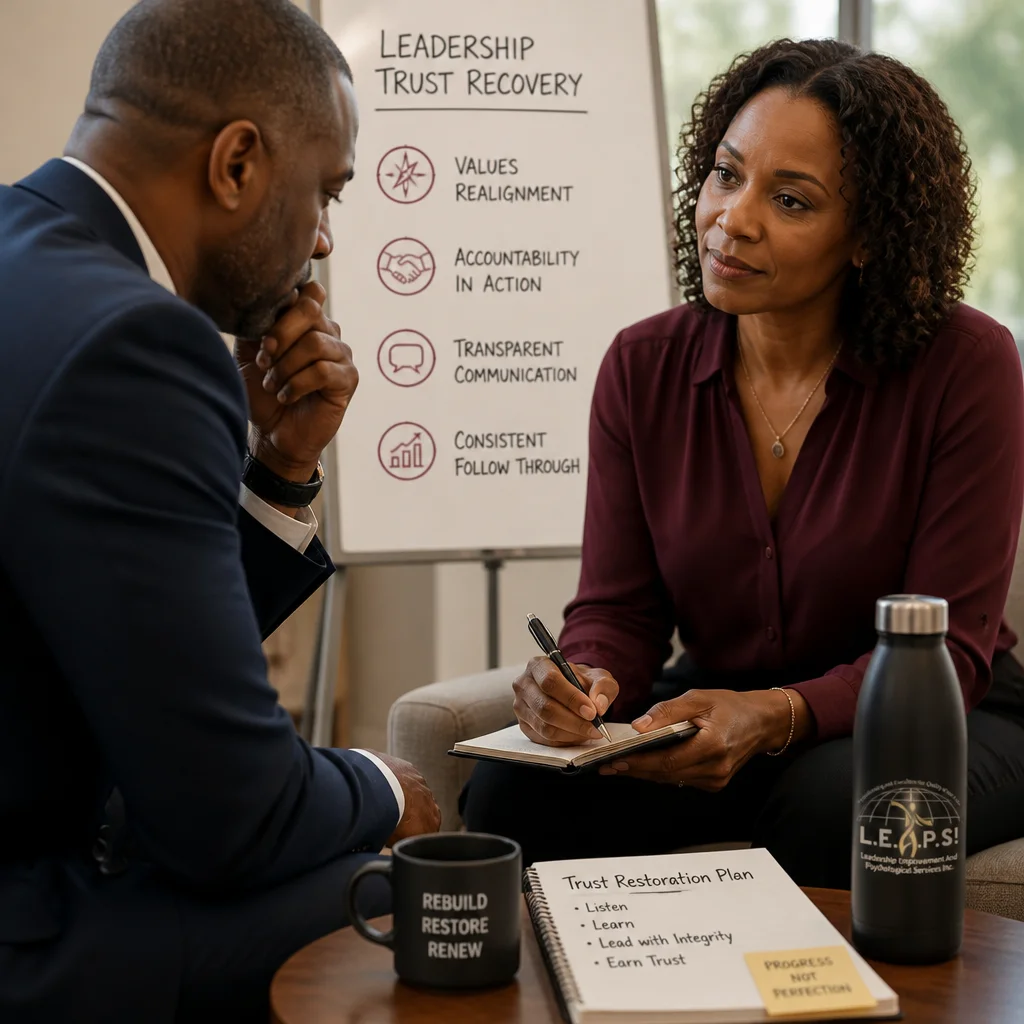
Values clarification and realignment. We start by helping you articulate your core values and identify where the lapse represented a misalignment. This isn’t abstract reflection. It’s concrete work: When did you compromise? What pressures created that compromise? What values matter most to you moving forward? From this clarity, your recovery effort becomes rooted in something deeper than fear or obligation.
Building accountability without perfectionism. We coach you to distinguish between healthy accountability and perfectionism. You need systems that create consistency and transparency, but not at the cost of sustainability. This includes learning to acknowledge ongoing mistakes as they emerge, rather than waiting for a larger revelation.
Stakeholder communication and relationship repair. Different stakeholders need different approaches. Board members need strategic assurance. Your direct team needs transparent vulnerability. Peers need acknowledgment of the impact. We help you craft authentic, appropriate communication for each constituency.
What to do next: If you’re ready to explore structured coaching for trust recovery, schedule a consultation with our executive coaching team to discuss your specific situation.
Creating Sustainable Accountability Systems
Credibility restoration requires more than intention. It requires systems that make accountability visible and consistent over time.
Consider implementing:
Regular feedback loops. Establish quarterly forums where your team can provide candid feedback on your leadership behaviors and decisions. This creates ongoing opportunity for you to demonstrate responsiveness and learning.
Decision transparency. Document key decisions and the reasoning behind them. Share this with relevant stakeholders. This addresses the fear that drives much distrust: “What is the leader doing that I can’t see?”
Progress tracking against stated commitments. Whatever you commit to as part of your recovery (new communication cadence, policy changes, skill development), track and report on progress. Visible follow-through builds credibility faster than good intentions.
Third-party accountability. This might be a coach, advisor, or board committee member who has regular check-ins about your recovery progress. External accountability often feels more credible to teams than leader self-reporting.
Inclusive process design. When creating new systems or policies related to your lapse, involve your team in the design. People support what they help create, and this collaborative approach demonstrates that you’re genuinely learning from the situation.
These systems shouldn’t feel like punishment or control. They should feel like the natural infrastructure of a transparent, values-driven organization.
Restoring Team Confidence Through Transparent Communication
Your team wants to trust you again. Most people are rooting for their leaders to succeed. Your job is to make trust psychologically safe and practically believable.
Transparency is the mechanism. This doesn’t mean oversharing personal details or creating additional anxiety. It means:
Being honest about what happened. Explain the lapse clearly, without minimizing or over-explaining. “I made a decision that wasn’t aligned with our values, and here’s what I’m doing about it.”
Acknowledging the impact. Don’t skip the part where you recognize how your action affected the team. “I understand this has created uncertainty about my judgment. That’s legitimate, and I’m committed to rebuilding that confidence through consistent action.”
Explaining your recovery plan specifically. People don’t just want to know you’re sorry. They want to know what’s actually changing. Be concrete about new behaviors, structures, or systems.
Sharing progress regularly. As you rebuild trust, periodically report on what you’re doing and what you’re learning. This keeps the recovery visible and demonstrates ongoing commitment.
Being willing to sit with discomfort. Some team members may express skepticism or anger. Stay present with those emotions rather than rushing to convince them you’ve changed. Trust rebuilds through consistent experience over time, not through persuasion.
The Role of Personal Transformation in Leadership Recovery
The most effective trust recovery involves genuine personal transformation, not just behavioral adjustment. This is where many leaders get stuck: they change what they do without changing what’s driving their decisions.
Personal transformation in this context means:
Understanding the vulnerabilities that created the lapse. Were you operating from scarcity? Trying to protect something you feared losing? Avoiding a difficult conversation? Disconnected from your values? Real change requires understanding the underlying patterns.
Developing emotional literacy and resilience. Many leaders who experience ethical lapses haven’t built sufficient awareness of their emotional state before they make high-stakes decisions. We help you develop practices that create space between impulse and action.
Reconnecting with purpose. Leadership exists for something larger than achievement or status. Reconnecting with why you lead and what you’re trying to build creates motivation for sustained change that accountability systems alone can’t generate.
Building a support network. Transformation happens in relationship. This might include executive coaching, peer advisory groups, mentorship, therapy to address underlying trauma or patterns, or spiritual community. The specifics matter less than having people who know your story and can offer perspective.
This personal work isn’t separate from credibility restoration. It’s the foundation that makes everything else sustainable.
Real-World Success Stories of Rebuilt Leadership
We’ve worked with executives who’ve navigated ethical lapses and rebuilt credibility and organizational trust. Their paths share common elements, though their situations varied significantly.
One C-level executive discovered he’d been misrepresenting product timelines to investors, driven by pressure to meet growth targets. His recovery involved acknowledging the gap between his values and his decisions, implementing transparent product roadmapping with his team, and coaching to address his perfectionism and fear of disappointing others. Eighteen months later, his organization had higher engagement scores and stronger relationships with investors, who appreciated the honest communication.
Another leader had a lapse in confidentiality that damaged a key relationship. Her recovery required genuine understanding of why she’d breached trust (seeking validation from a peer), rebuilding her own self-trust through therapy and coaching, and implementing clear protocols around sensitive information. Her team reported that her increased vulnerability about the recovery process actually deepened their connection.
In both cases, what distinguished successful recovery was the leader’s willingness to do internal work alongside external accountability. Behavioral change alone isn’t enough. People can sense whether someone has genuinely transformed or is simply managing perception.
Starting Your Leadership Trust Recovery Journey Today
Recovering leadership trust is possible, though it requires honesty, time, and typically external support. The leaders we’ve worked with describe the process as difficult but ultimately clarifying. On the other side of recovery, they often report a stronger sense of integrity and deeper relationships with their teams.
Your next step depends on where you are in your recovery:
If you’re in the immediate aftermath, focus on honesty and acknowledgment. Get clear on what happened and why, then communicate this simply and directly to affected parties.
If you’re actively working on recovery, consider executive coaching to provide structured support, accountability, and strategic guidance. Coaching accelerates recovery by helping you understand underlying patterns and navigate complex stakeholder relationships.
If you’re dealing with trauma, shame, or deeper patterns, therapy can be a valuable complement to coaching. Working through the emotional dimensions of the lapse often unlocks the personal transformation that makes behavioral change sustainable.
We’re here to help. Whether you need coaching to restore credibility, therapy to address underlying vulnerabilities, or both, we bring compassionate expertise and real-world experience to leadership recovery. Reach out to discuss your situation and how we can support your path forward.
Call us today for a free 15 minute consultation.
Frequently Asked Questions (FAQ)
How do we help leaders rebuild trust after an ethical lapse?
We work with executives through a personalized coaching process that combines accountability work with practical communication strategies. Our approach focuses on understanding what led to the ethical breach, developing genuine behavioral change, and creating a transparent action plan that demonstrates commitment to your team. We guide you through difficult conversations and help you establish new systems that prevent future lapses while rebuilding confidence from the inside out.
What makes leadership trust recovery different from standard executive coaching?
We specialize in the specific psychological and organizational challenges that arise when trust has been broken, not just general performance improvement. Our coaches understand the shame, defensiveness, and fear that leaders experience after ethical failures, and we address these barriers alongside the practical steps needed for credibility restoration. We’ve worked extensively with high-achieving professionals in your situation, so we know what sustainable recovery actually requires.
How long does the trust recovery process typically take?
The timeline varies based on the severity of the breach and your organization’s culture, but we typically see meaningful progress within 3-6 months of consistent work. We measure success through specific indicators like improved team feedback, measurable behavioral changes, and restored stakeholder confidence rather than arbitrary timelines. We’ll be transparent with you from the start about what realistic recovery looks like for your particular situation.