

Professional help after an affair is worth considering when conversations stay trapped in blame, silence, repeated questioning, or escalating conflict. A consultation can help clarify safety, boundaries, accountability, and possible next steps without requiring either partner to promise reconciliation.
How do you know an affair has created a problem you cannot resolve alone?
Start by identifying the immediate concern, writing down what you hope counseling will clarify, and setting aside about 15 minutes for an initial consultation. The decision does not require a promise to stay together. Grief, anger, shame, fear, confusion, and uncertainty can make private conversations difficult to manage, especially when each partner remembers the crisis differently.
Signs conversations are stuck
Professional support may help when discussions repeatedly end in blame, shutdown, defensiveness, repeated questioning, or escalating conflict. A therapist can slow the exchange, identify the issue underneath the argument, and help each partner speak about harm and needs without turning every conversation into another confrontation.
When emotional safety has weakened
Emotional safety has weakened when one partner feels unable to ask reasonable questions, express grief, or discuss boundaries without retaliation or dismissal. Infidelity can affect sleep, concentration, parenting, intimacy, and daily decision-making, so structured support may be appropriate even when both partners are still uncertain about the relationship.
What to assess before scheduling
Both partners should be able to participate without coercion, and the affair should have ended or its current status should be openly addressed. You do not need every fact resolved before contacting a therapist, but it helps to know whether you want clarity, stabilization, trust repair, or guidance while deciding what comes next.
What should couples address before starting marriage counseling after cheating?
Separate urgent safety concerns from longer-term trust repair before the first appointment. Threats, intimidation, acute emotional distress, ongoing deception, or continued contact with an affair partner may require immediate attention alongside couples work. Counseling cannot replace emergency or crisis support when someone faces immediate danger; contact appropriate local emergency resources in that situation.
It is useful to identify what is known, what remains uncertain, and which relationship boundaries need immediate discussion. You do not have to force complete resolution before the first session. One partner may also benefit from individual therapy for trauma, grief, shame, anger, or private decision-making while the couple addresses shared concerns.
Immediate safety and stabilization
Immediate safety comes before trust exercises or difficult disclosure conversations. If either partner fears violence, feels unable to stay safe, or is experiencing a mental health crisis, seek emergency or crisis support rather than relying only on marriage counseling. A therapist can help with relationship concerns, but urgent danger requires the appropriate local response.
Disclosure, contact, and boundary questions
Clarify whether contact with the affair partner continues, what information affects present-day decisions, and which boundaries need to be discussed first. A therapist can help organize these questions so the conversation remains purposeful. The goal is not to force a perfect account in one sitting, but to address information and behaviors that affect safety and trust.
Individual support alongside couples work
Individual therapy may be useful when one partner needs private space to process trauma, grief, shame, anger, or uncertainty about staying. Couples therapy addresses the relationship system, while individual support can help someone regulate emotions and make thoughtful decisions. Using both forms of care should be discussed openly with the providers involved.
What happens in the first sessions for infidelity recovery counseling?
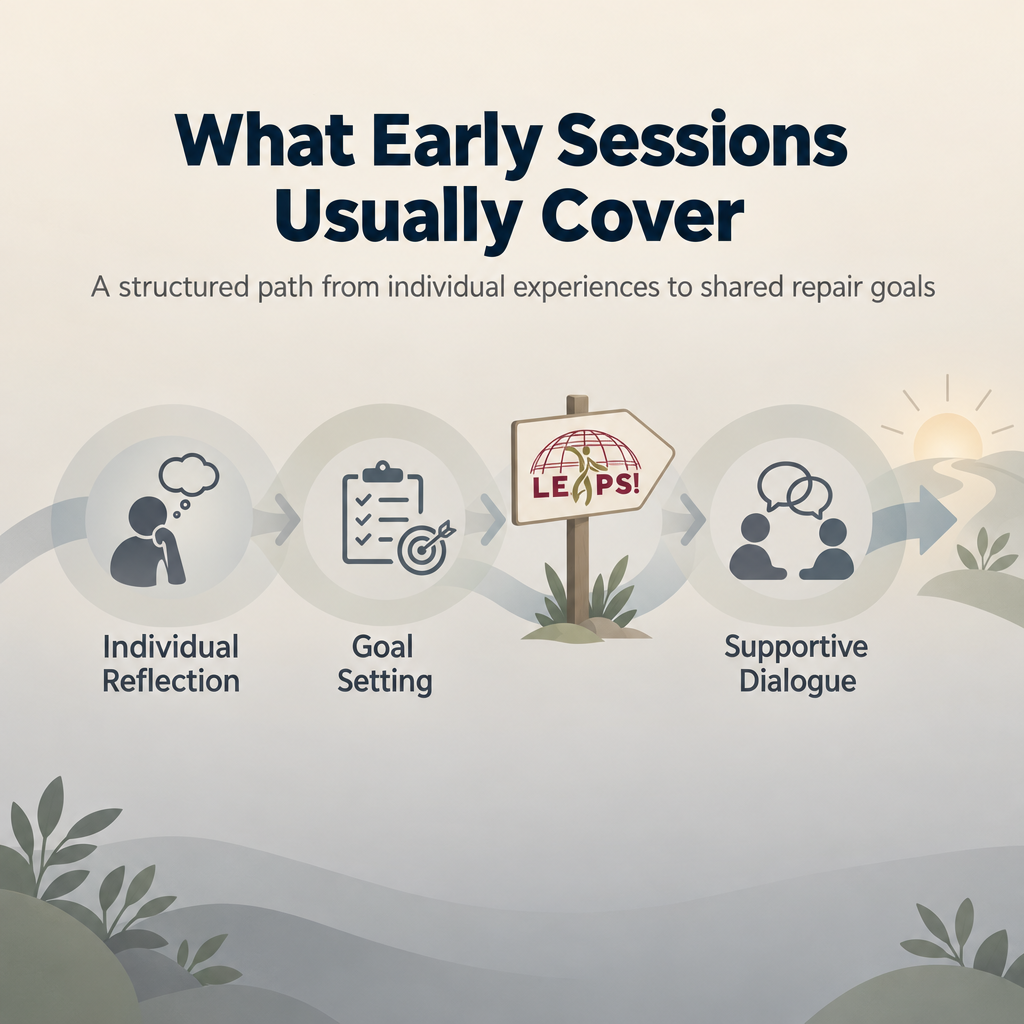
Early infidelity recovery counseling usually focuses on each partner’s experience, the impact of betrayal, current communication patterns, and shared goals rather than rushing toward a final relationship decision. LEAPS Inc. describes this support as helping couples process betrayal, loss, emotional trauma, anger, grief, shame, and uncertainty while rebuilding communication and connection.
A therapist may structure difficult conversations around accountability, transparency, emotional safety, and boundaries so partners can speak with less escalation. A typical early process may include:
- Identify immediate concerns and safety needs.
- Describe how the betrayal has affected each partner and the relationship.
- Agree on boundaries for difficult conversations.
- Define short-term goals that can be observed and revisited.
- Review progress and decide on next steps.
Establishing a shared picture of the crisis
The first task is often to understand the crisis clearly enough to decide what requires attention now. Each partner may describe different facts, meanings, and emotional effects. A therapist can separate confirmed information from assumptions, identify repeating patterns, and make room for both the injured partner’s questions and the other partner’s accountability.
Creating communication rules
Clear communication rules can prevent every discussion from becoming an argument. Partners might agree to avoid insults, pause when emotions become overwhelming, speak one person at a time, and return to the topic at a planned time. These rules do not erase pain, but they create a safer structure for discussing it.
Setting measurable relationship goals
Short-term goals should describe behavior rather than vague promises. Examples include completing a scheduled check-in, following an agreed boundary, answering a defined question honestly, or practicing a pause-and-return plan. Goals can change as new information emerges, and they do not have to assume that reconciliation is the final outcome.
How can counseling help rebuild trust after an affair?
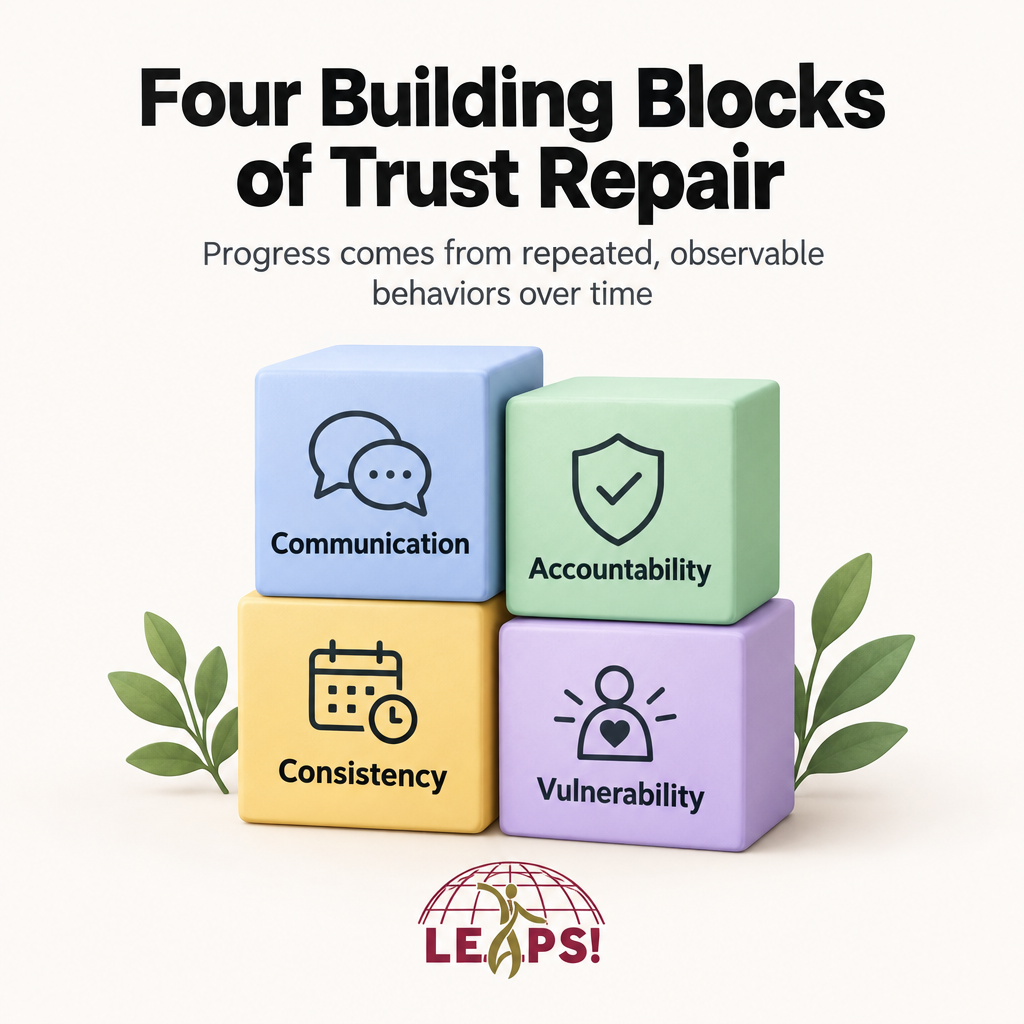
Trust repair depends on repeated, observable behavior over time, including honest communication, agreed boundaries, follow-through, and room for the injured partner’s questions. Accountability is different from forced forgiveness. Counseling can help partners name the harm, understand patterns, and decide what repair would require without prescribing reconciliation.
Between sessions, couples may schedule calm check-ins, document agreed boundaries, pause when either partner becomes emotionally flooded, and return to the topic at a planned time. These practices align with LEAPS Inc.’s focus on accountability, transparency, boundaries, communication, emotional safety, and stronger connection.
Accountability without endless punishment
Accountability means acknowledging the harm, answering relevant questions honestly, and following through on agreed changes. It does not require either partner to remain in an endless cycle of punishment or repeated arguments. A therapist can help distinguish necessary repair conversations from exchanges that increase distress without creating understanding or responsible action.
Transparency and consistent behavior
Transparency becomes meaningful when it is specific, mutually understood, and sustained over time. Partners can define what information, contact limits, schedules, or check-ins support emotional safety in their situation. The most reassuring conversation cannot replace consistent behavior, so counseling often returns to whether agreements are being followed and repaired when they are not.
Repairing emotional connection
Emotional connection can begin with small, reliable interactions rather than immediate intimacy. Partners may practice listening without interruption, name feelings accurately, and schedule time to discuss topics unrelated to the affair. Progress may include greater steadiness and respect, even while grief and uncertainty remain present.
How should you choose a therapist and prepare for the first consultation?
Choose a provider who works with infidelity recovery, emotional affairs, betrayal-related grief, communication breakdowns, and couples who are still deciding what they want. Before meeting, bring a brief timeline, current concerns, known boundaries, questions about the process, and each partner’s preferred goals. You do not need to present a perfect account.
Fit includes feeling heard, understanding how sessions are structured, knowing how individual and joint conversations may be handled, and receiving clear next-step guidance. LEAPS Inc. offers a free 15-minute consultation to help prospective clients determine an appropriate next step for couples or infidelity recovery therapy.
Questions about training and approach
Ask how the therapist approaches infidelity recovery, emotional affairs counseling, disclosure, trust repair, and high-conflict conversations. You can also ask whether the provider works with couples who are undecided about reconciliation. Clear answers should help you understand the therapist’s role, the expected structure of sessions, and how safety concerns are handled.
Information to bring
Bring the basic timeline, the most urgent concern, current contact or boundary questions, and what you hope the first conversation will clarify. Each partner can write private goals before the appointment. Notes can keep the session focused, but they should support honest discussion rather than function as a demand to prove every detail immediately.
How to evaluate fit
After the consultation, consider whether both partners felt respected, whether the therapist explained the process clearly, and whether the proposed next step matched the current level of distress. A good fit does not mean the conversation feels easy. It means the structure feels safe enough to address difficult material with purpose.
When is professional help after an affair the right next step?
Professional help is a reasonable next step when conversations remain stuck, trust damage affects daily life, partners need help setting boundaries, or both want a structured way to assess repair. Counseling does not guarantee reconciliation. It can support informed decisions about repair, separation, or continued individual work while reducing confusion about what needs to happen next.
Indicators that structured support may help
Consider scheduling when one or both partners cannot discuss the affair without repeated escalation, when uncertainty is affecting daily functioning, or when agreements about contact and transparency keep breaking down. Counseling may also help when both partners want to understand whether trust can be rebuilt but do not know how to begin that assessment.
When to pause or seek another level of care
Pause ordinary couples work and seek more immediate or specialized support if there are threats, intimidation, immediate danger, severe emotional distress, or an inability to participate without coercion. These concerns require attention before relationship exercises. A therapist can help identify an appropriate next step, but emergency situations call for local emergency or crisis resources.
A practical next step for Florida couples
LEAPS Inc. provides infidelity recovery therapy for clients in Tampa and Orlando, Florida, and offers a free 15-minute consultation for couples or infidelity recovery therapy. Contact LEAPS Inc. to discuss what next step may fit your situation, whether that means couples counseling, individual support, or initial stabilization.
Frequently Asked Questions
Should we start marriage counseling immediately after an affair?
You can consider an initial consultation once you need structure, even if emotions remain intense. The first conversation can clarify safety, participation, boundaries, and whether couples counseling, individual support, or another next step is appropriate. You do not need to have resolved the relationship before asking for professional guidance.
Can marriage counseling help if the affair is not fully discussed?
Counseling can organize difficult conversations, but meaningful trust repair requires honesty about issues affecting the relationship. A therapist can help determine what needs attention first and how to discuss it without unnecessary escalation. You do not have to resolve every detail before the first appointment.
How does infidelity recovery counseling address trust?
Infidelity recovery counseling may address accountability, transparency, communication, emotional safety, boundaries, and consistent behavior over time. Trust generally develops through repeated actions rather than one conversation or immediate forgiveness. The work can help partners decide what observable repair would mean in their relationship.