

What if the true value of your mental health benefit isn’t found in how many people use it, but in how many people finally unlock their maximum professional potential? While the 2026 regulatory landscape demands higher standards for care access, only 9% of employers are currently measuring EAP effectiveness through a lens of actual return on investment. This gap leaves visionary leaders struggling to connect clinical support with corporate strategy.
You likely feel the weight of rising costs and persistent burnout, even while your current program sits underutilized and disconnected from your broader mission. It’s difficult to justify a wellness budget to the board when you can’t point to tangible evidence of improved retention or strategic growth. This guide will show you how to move beyond basic utilization rates to capture the deep psychological and strategic impact of your program. We’ll explore a clear framework for 2026 that aligns clinical interventions with executive leadership goals, turning a standard benefit into a powerful catalyst for your organization’s destiny.
Key Takeaways
- Shift your perspective from tracking mere participation to evaluating how mental health interventions actively fuel professional transformation and organizational growth.
- Identify the three strategic pillars for measuring EAP effectiveness, focusing on quantitative adoption, clinical outcomes, and the reduction of workplace stressors.
- Master the “Visionary Mentor” test to ensure your provider offers the clinical depth and seasoned expertise required to challenge your leadership.
- Implement a structured HR measurement strategy that establishes baseline wellness climates and sets specific KPIs for reaching maximum team potential.
- Discover how a holistic integration of clinical therapy and executive coaching creates a quantifiable path toward fulfilling your corporate destiny.
Beyond Utilization: Why Traditional EAP Metrics Fail Visionary Leaders
Measuring EAP effectiveness requires looking beyond the surface-level dashboard provided by standard vendors. An Employee Assistance Program (EAP) shouldn’t just be a safety net for crises; it acts as a strategic engine for corporate growth. True effectiveness is defined by the measurable improvement in both clinical health and professional performance. It’s about moving the needle on an individual’s internal life so they can show up fully in their external career. When you only track how many people logged in, you miss the narrative of transformation that drives your company forward.
High utilization rates often masquerade as success in HR meetings. However, a surge in sessions might actually signal a reactive culture where employees only seek help at the breaking point. If your team only uses the program when they’re drowning, the program isn’t fostering wellness; it’s just managing exhaustion. Visionary leaders don’t just want volume. They want resolution. They look for data that proves employees are returning to their roles with renewed clarity and energy.
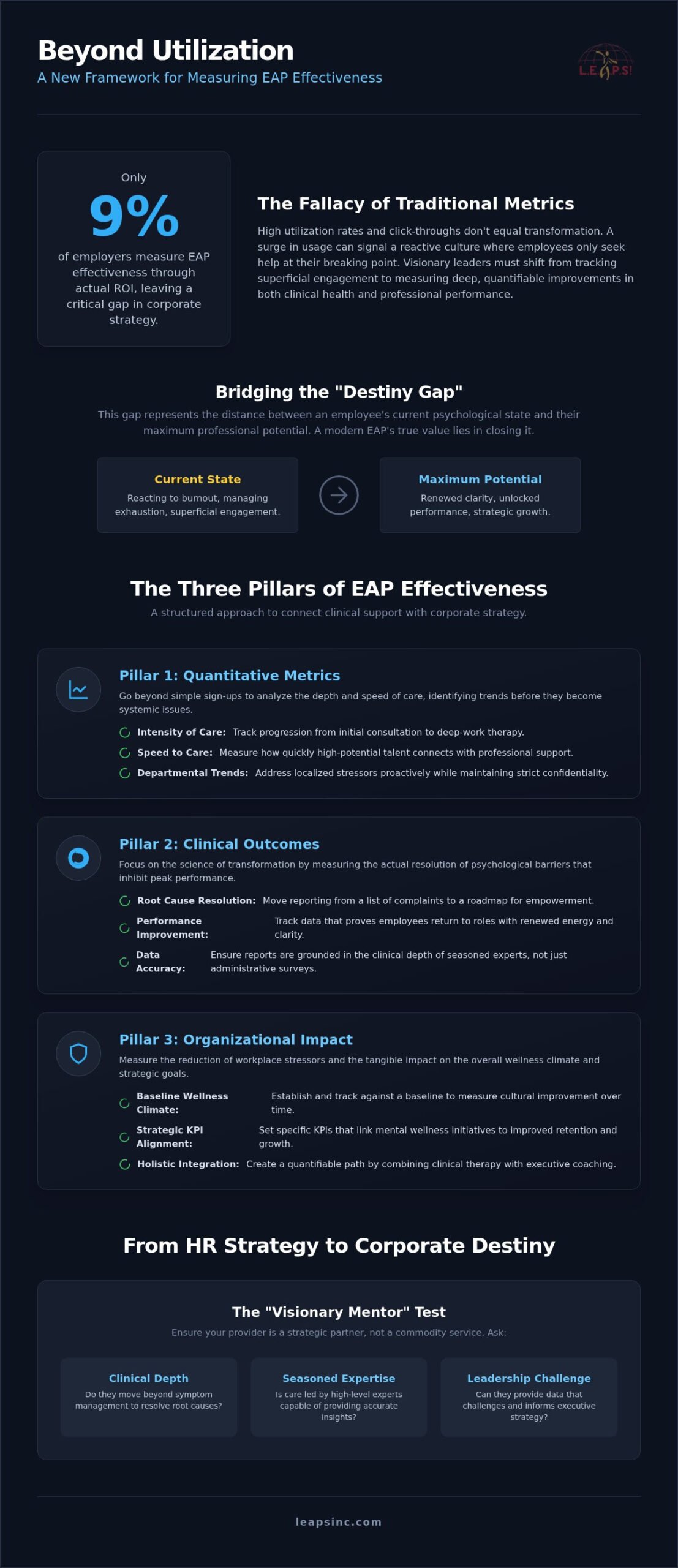
Commodity EAPs focus on clicks and low-cost digital interactions, treating mental health like a retail transaction. This creates a massive “Destiny Gap.” This gap represents the distance between an employee’s current psychological state and their maximum professional potential. Closing this gap requires a visionary approach that prioritizes deep transformation over superficial engagement. You can’t bridge that distance with a library of articles; you bridge it with high-level clinical expertise.
The Fallacy of the ‘Click-Through’ Rate
Digital engagement metrics are seductive, but they often mask a lack of deep clinical intervention. A click on a generic wellness article or a five-minute chatbot session doesn’t resolve a deep-seated psychological barrier. When providers prioritize “access” over “intervention,” the resulting data is hollow. Accessing a resource isn’t the same as resolving a conflict. This low-quality data can lead to misguided corporate strategy because it suggests the workforce is supported when, in reality, they’re just browsing. Measuring EAP effectiveness must involve tracking the resolution of the barriers that prevent peak performance.
Clinical Depth as the Foundation of Data Accuracy
Your EAP reports are only as reliable as the clinicians providing the care. Meaningful workplace data doesn’t come from administrative surveys; it stems from high-level individual therapy led by seasoned experts. By moving from simple symptom management to root cause resolution, your reporting shifts from a list of complaints to a roadmap for organizational empowerment. Clinical depth ensures that the insights you receive are grounded in professional credibility. It allows you to see the true clinical trends within your organization, providing a secure foundation for visionary leadership decisions.
The Three Pillars of Measuring EAP Effectiveness
Measuring EAP effectiveness isn’t a one-dimensional task. It requires a structured approach that examines the delicate intersection of data, psychology, and organizational culture. By establishing three distinct pillars, leaders move from guessing about impact to possessing a clear vision of their team’s mental health. This framework draws on industry guidance on managing and measuring EAPs to ensure that every dollar spent translates into human potential. These pillars are essential for achieving long-term corporate visioning and fostering a culture of excellence.
Quantitative Metrics: Analyzing Reach and Intensity
Numbers tell a story, but only if you’re reading the right ones. Traditional metrics often stop at the sign-up page, yet a visionary approach to measuring EAP effectiveness tracks the actual intensity of care. We look at the transition from an initial consultation to deep-work therapy intensives. We also measure “Speed to Care,” which tracks how quickly your high-potential talent moves from a moment of vulnerability to professional support. Identifying departmental trends allows you to address localized stress before it creates a systemic crisis, all while maintaining the strict confidentiality that high-level professionals expect.
Clinical Outcomes: The Science of Transformation
True growth is quantifiable through clinical science. We use validated instruments to measure shifts in emotional resilience and co-regulation. It’s not enough to ask if an employee “liked” their therapist; we need to know if their capacity for strategic thinking has increased and if their anxiety levels have meaningfully dropped. Tracking long-term psychological health over multiple quarters provides a far more accurate picture of impact than “one-off” crisis sessions. This clinical data bridges the gap between basic wellness and high-level leadership development, ensuring your people aren’t just surviving, but thriving.
Organizational Synergy: The Psychosocial Safety Climate (PSC)
The Psychosocial Safety Climate (PSC) is a leading indicator of whether your workplace benefits will actually succeed. It measures the alignment between your executive vision and the actual lived experience of your employees. When a company prioritizes mental health as a core value, the EAP becomes an empowerment tool rather than just a passive benefit. This synergy extends beyond the office walls. For instance, addressing conflict through family therapy creates a foundation of domestic stability that directly translates to workplace focus and retention.
If you’re ready to see how these pillars can transform your workforce, consider how a consultation can help you align your organizational goals with clinical depth.
Assessing Provider Frameworks: Clinical Depth vs. Commodity Services
Selecting a mental health partner is a strategic decision that determines the ceiling of your organization’s growth. When measuring EAP effectiveness, you must apply the ‘Visionary Mentor’ test. Does your current provider merely manage crises as they arise, or do they challenge your leadership to reach its maximum potential? Commodity services often provide a facade of support through automated platforms, but these lack the human clinical authority necessary for true transformation. A visionary provider acts as a catalyst, moving beyond passive care to active organizational development.
The Clinician-Led Advantage
High-achieving professionals require a different caliber of provider. You can’t expect a generalist to navigate the nuanced psychological demands of an executive. Evaluating the credentials and seasoned experience of the clinical team is paramount. This depth is especially critical when handling complex cases that bleed into professional performance, such as infidelity recovery or deep-seated trauma. When clinicians possess high-level expertise, their organizational reports offer far more than just data; they provide strategic insights that inform your corporate destiny.
Integration of Coaching and Therapy
A truly effective program doesn’t silo mental health from professional achievement. Integrating executive coaching into the EAP ecosystem ensures that emotional resilience translates directly into leadership impact. While therapy resolves internal barriers, entrepreneurship coaching complements these services by focusing on the external execution of a visionary mission. This holistic approach helps identify the “Peak State,” a point where an employee moves from being merely functional to becoming a visionary leader.
Sustaining these improvements requires the ongoing structure of business coaching. Measuring EAP effectiveness in 2026 means looking at how these integrated services reduce the “Destiny Gap” between current performance and latent ability. Automated EAPs might offer convenience, but they often lose the clinical authority required to facilitate profound change. Choose a partner that values the structured categorization of interventions, ensuring that every session is a step toward fulfilling a collective purpose.
HR Measurement Strategy: A Step-by-Step Guide
Measuring EAP effectiveness requires a transition from passive observation to active strategic management. You can’t simply wait for a year-end report to understand if your workforce is thriving. A visionary HR strategy involves a methodical roadmap that integrates clinical insights directly into your organizational architecture. This process ensures that mental health support isn’t just an expense, but a fundamental driver of your collective success. It’s about moving from a reactive posture to a proactive, purpose-driven alignment.
Establishing the Baseline Worldview
The first step involves a comprehensive audit of your current mental health literacy. You must understand the “Worldview” of your employees. Do they see the EAP as a confidential resource for growth, or a last resort for failure? Identifying hidden “Psychological Friction” within leadership teams is crucial. This friction often manifests as a resistance to vulnerability or a lack of emotional co-regulation. Once you identify these baselines, you can begin the strategic marketing of your wellness program, positioning it as a prestigious tool for high-potential development rather than a reactive medical benefit.
Defining success moves you away from survival-based metrics. Instead, set “Maximum Potential” KPIs for individuals and teams. These indicators shouldn’t just track absence; they should track presence. Are your leaders showing up with more clarity? Is the creative output of your teams increasing? By establishing these benchmarks early, you create a quantifiable path toward fulfilling your corporate destiny. This structured approach values order and clear frameworks for growth.
The Quarterly Visionary Review
Your measurement strategy matures during the Quarterly Strategic Review. This is where you move beyond the standard PDF report and engage in a collaborative consultation. You’ll learn to read clinical data through the lens of business development goals. For instance, if data shows a decrease in stress-related fatigue in your sales department, you can directly correlate this to improved client engagement and revenue growth. This evidence justifies the “Destiny Investment” in your human capital, proving that psychological health is the bedrock of strategic advancement.
Finally, use these insights for ongoing cultural refinement. EAP data can reveal systemic issues that require adjustments in your brand development. If the data suggests a lack of alignment between personal purpose and company mission, it’s time to refine how your brand communicates its vision to the internal team. This holistic loop transforms wellness data into actionable leadership intelligence, ensuring your culture remains a high-energy catalyst for transformation.
Ready to build a measurement framework that captures the true impact of your investment? Schedule an appointment with our clinical experts today to begin your strategic audit.
Partnering for Potential: The LEAPS Inc. Approach to Quantifiable Transformation
LEAPS Inc. doesn’t offer a generic benefit; we build a strategic clinical partnership designed for the maximum potential of your organization. When measuring EAP effectiveness with us, you aren’t just looking at spreadsheets. You’re viewing your workforce through a “Visionary Lens” that transforms raw data into actionable leadership insights. This approach bridges the gap between individual emotional vulnerability and collective professional success. Our methodology seamlessly integrates the depth of our clinical therapy division with the strategic advancement of our executive coaching team, ensuring that mental health support fuels your organizational destiny.
The LEAPS Methodology: From Crisis to Vision
We facilitate destiny-focused growth by treating workplace wellness as a catalyst for professional transformation. Our corporate consulting intensives serve as a high-level tool for measurement and intervention. During these intensives, we don’t just observe; we actively challenge your leadership to align their personal purpose with the organization’s mission. By measuring EAP effectiveness through our structured categorization of clinical interventions, you gain a clear overview of your team’s psychological momentum. Our greatest asset is our seasoned clinical experience. We provide the professional credibility required to handle complex psychological barriers, ensuring your data is grounded in expert analysis rather than automated algorithms.
Next Steps: Your Consultation for Growth
Transitioning from a legacy provider to a visionary partner is a decisive step toward reclaiming your organizational power. We invite HR leaders and executives to a Strategic Visioning session for their LEAPS Inc. Employee Assistance Program. This isn’t a sales call; it’s a professional consultation designed to evaluate your current wellness climate and define your future potential. We’ll help you move away from the passive reporting of the past and toward a structured framework for quantifiable transformation that resonates with your corporate vision.
Leading with emotional vulnerability requires clinical strength. By choosing a partner that values depth, confidentiality, and strategic advancement, you’re not just providing a service. You’re investing in the destiny of every individual within your firm. It’s time to stop settling for commodity care and start demanding a program that reflects the prestige and purpose of your brand. Contact us to schedule your Strategic Visioning session and begin the journey toward maximum potential.
Reclaiming the Strategic Power of Workplace Wellness
The journey toward organizational excellence begins when you stop viewing mental health as a line-item expense and start seeing it as the fuel for your corporate destiny. By shifting your focus from simple clicks to deep clinical outcomes, you bridge the gap between where your team is and their maximum potential. Measuring EAP effectiveness in 2026 requires a rigorous commitment to clinical depth, organizational synergy, and structured strategic reviews. This approach ensures that every intervention moves your people closer to their professional purpose.
LEAPS Inc. provides a national visionary framework that’s clinically led by Dr. John E. N. Daniel, offering a sophisticated integration of executive coaching and therapy. We don’t just manage crises; we facilitate the transformation required for high-level leadership and sustained growth. It’s time to demand more from your wellness partner and lead your organization with both clinical strength and visionary clarity.
Schedule your Strategic EAP Consultation with LEAPS Inc. to begin aligning your mental health strategy with your corporate vision. Your team’s destiny is within reach.
Frequently Asked Questions
How can we measure EAP effectiveness without violating employee confidentiality?
Confidentiality is maintained by providing aggregate reports that group data by departments or themes rather than individuals. When measuring EAP effectiveness, providers only share de-identified metrics once a minimum threshold of participants is reached, typically ten or more. This allows you to identify systemic stressors while protecting the internal depth of each person’s journey. By focusing on collective trends, you can assess the program’s impact on culture without ever compromising the private nature of the therapeutic process.
What is the industry benchmark for EAP utilization in 2026?
A healthy industry benchmark for EAP utilization in 2026 is considered to be between 10% and 15% annually. While the global average often hovers between 5% and 10%, visionary organizations aim for higher engagement. High utilization shouldn’t just be a numbers game; it should reflect a culture that values proactive growth. If your rates fall below these levels, it may indicate a lack of strategic marketing or a disconnect between your corporate vision and the program’s perceived value.
Can EAP metrics really predict employee retention and turnover?
Yes, specific EAP metrics serve as powerful leading indicators for retention and turnover. By tracking shifts in emotional resilience and workplace stress levels, you can identify departments at risk of burnout before resignations occur. When employees feel supported in their professional destiny, their loyalty to the firm increases. This provides a clearer picture of your human capital’s stability than traditional exit interviews ever could, allowing you to move beyond surface level data and address root causes.
How do we distinguish between ‘utilization’ and ‘impact’ in our reports?
Utilization measures how many people accessed the service, while impact measures the clinical transformation that occurred afterward. When measuring EAP effectiveness, impact is captured through validated outcome tools that track improvements in anxiety, depression, and work performance. While utilization proves the program is visible, impact proves it’s fulfilling its purpose. A visionary report doesn’t just list the number of calls; it demonstrates how those calls closed the gap between an employee’s current state and their maximum potential.
What are the key qualitative questions we should ask in an EAP satisfaction survey?
Effective surveys should move beyond asking if an employee liked their therapist to focus on transformation. Ask if the support helped them resolve a specific professional barrier or if they feel more aligned with the corporate vision. Other key questions include: “Do you feel better equipped to handle leadership challenges?” and “Has this program improved your ability to focus on long-term goals?” These inquiries reveal the depth of the program’s influence on an individual’s professional destiny and career.
How does Psychosocial Safety Climate (PSC) affect the ROI of an EAP?
A strong Psychosocial Safety Climate acts as a force multiplier for your EAP’s return on investment. When leadership prioritizes psychological health, employees feel safer accessing support early, which prevents minor issues from becoming costly crises. This alignment ensures that the EAP isn’t just a reactive tool but a strategic component of organizational growth. High PSC scores correlate with higher productivity and lower healthcare claims, directly amplifying the financial and human impact of your wellness investment.
Should we measure the effectiveness of executive coaching differently than standard EAP therapy?
Yes, executive coaching should be measured through the lens of strategic advancement and leadership impact. While standard therapy often focuses on root cause resolution and emotional health, coaching targets the fulfillment of professional potential and executive performance. You should track KPIs related to decision-making clarity, team co-regulation, and the execution of visionary goals. Combining these distinct metrics provides a holistic view of how your program supports both the individual’s inner life and their external career success.
What role does ‘clinical depth’ play in the long-term ROI of workplace wellness?
Clinical depth is the cornerstone of sustainable ROI because it addresses the core psychological barriers that hinder long-term growth. Commodity services often provide temporary relief, but seasoned clinicians facilitate profound transformation. This depth ensures that improvements in employee well-being are permanent rather than fleeting. By investing in high-level expertise, you reduce the likelihood of recurring issues. This ultimately fosters a resilient workforce capable of reaching its peak professional state and fulfilling its destiny through purposeful advancement.