

Major life changes can leave you stressed, uncertain, or emotionally overwhelmed, even when the change was expected or chosen. Counseling can give you confidential space to understand what is happening, strengthen coping strategies, and decide what purposeful next steps look like.
What kind of support do you need after a major life change?
Individual therapy can help you process the emotional and practical effects of relocation, relationship loss, career disruption, grief, parenting shifts, or health concerns. A transition may affect sleep, confidence, communication, routines, decision-making, and your sense of identity. You do not need to wait until your situation feels unmanageable to seek support.
As preparation, write down four items: the change you are facing, the symptoms or concerns you notice, the outcome you hope for, and any immediate safety needs. This exercise is not a diagnosis. It gives you and a therapist a clearer starting point. At LEAPS Inc., our confidential, client-centered individual therapy is tailored to your experiences, goals, comfort level, and emotional well-being needs.
Start with the problem you can describe
Begin with the concern that feels easiest to name, such as persistent worry, grief, difficulty setting boundaries, low self-esteem, or trouble adjusting to a new role. You can also describe what has changed in daily life, including concentration, relationships, routines, or confidence. A therapist can help organize concerns that currently feel tangled.
Decide whether individual therapy fits the situation
Individual therapy may fit when you want private support for stress, anxiety, emotional overwhelm, coping, self-awareness, or personal growth. If the central issue involves a partner, family system, or group, couples, family, or group counseling may also deserve consideration. Urgent safety concerns, severe symptoms, or a crisis require immediate professional or emergency support rather than waiting for a routine appointment.
How can individual therapy help you adjust and decide?
Individual therapy can help you name emotions, examine recurring thoughts, regulate reactions, strengthen coping skills, and clarify values during a transition. A therapist may help you separate the facts of a situation from assumptions, identify choices that align with your priorities, and notice patterns that make change harder.
A session commonly includes a check-in, a focus for the meeting, exploration of concerns, practice or planning, and a review of next steps. The exact approach depends on your needs and the therapist’s professional judgment. At LEAPS Inc., collaborative goal-setting can connect reflection to concrete aims such as healthier communication, clearer boundaries, steadier routines, greater confidence, or a career decision.
Identify emotional patterns and practical obstacles
A therapist can help you notice whether fear, guilt, anger, sadness, or self-criticism is shaping your responses. Together, you might examine when a reaction appears, what triggers it, and which coping strategy could help in that moment. This work can make a large transition feel more understandable without forcing you to move faster than your comfort level allows.
Turn insight into manageable next steps
Therapy becomes practical when goals translate into actions you can review, such as having one boundary-setting conversation, rebuilding a routine, scheduling needed care, or preparing questions for a career discussion. Progress may involve practicing a skill repeatedly rather than feeling better immediately. Your therapist can help adjust the plan as circumstances change.
Which therapy format works best for your circumstances?

The best format depends on privacy, technology access, schedule, comfort speaking from home, need for physical presence, and the provider’s licensing rules for your location. In-person sessions may suit people who value a dedicated setting, while tele-counseling or video counseling may fit a demanding schedule or a private home environment.
LEAPS Inc. lists one-on-one counseling, tele-counseling, and video counseling. The confirmed service areas supplied for this practice are Tampa and Orlando, Florida, so New York City residents should confirm current availability and authorization before scheduling.
- Confirm location: Ask whether the provider can legally serve your state and current location.
- Clarify delivery: Ask whether sessions are in person, by telephone, or by secure video.
- Test privacy and technology: Check your connection, headphones, lighting, and private space.
- Choose a backup plan: Decide what will happen if technology fails or privacy changes.
- Reassess the format: Review whether it supports your goals after the first few sessions.
Compare in-person, tele-counseling, and video counseling
In-person counseling offers a physical setting with fewer technology demands, while tele-counseling can work when video is difficult or a simpler connection is preferable. Video counseling allows visual communication but requires dependable technology and a private space. Each option has tradeoffs, and licensing rules may limit where a therapist can provide care.
Know when related services may be appropriate
Individual therapy may complement couples therapy when personal insight, emotional regulation, or individual concerns affect relationship work. Family therapy may be more appropriate when communication patterns involve several relatives, and group counseling may help when shared experiences are central. Our team can help clarify which type of support matches the concern being addressed.
What should you ask before choosing a therapist in New York City?
Ask whether the therapist works with life transitions and concerns such as anxiety, grief, stress, self-esteem, emotional overwhelm, coping, or relationship effects of personal change. You can also ask how the therapist helps clients clarify goals and whether the pace can be adjusted when a subject feels difficult.
Before booking, verify the provider’s license or authorization to practice in New York, session format, confidentiality limits, cancellation terms, accessibility, and payment procedures. Ask what happens in the initial session, how progress is reviewed, what happens if your needs change, and whether the therapist refers clients to another level of care when appropriate.
Match the provider to your concern
Describe the change and its effects rather than relying only on a diagnostic label. For example, explain that a relocation has created isolation, a career disruption has affected confidence, or grief is making daily routines difficult. A provider who understands the concern can help establish realistic goals and identify whether individual therapy is the right starting point.
Check credentials, boundaries, and working style
Fit includes feeling heard, understanding the plan, and having a pace that respects your comfort level. Ask how confidentiality works, how urgent concerns are handled, and how communication outside sessions is managed. LEAPS Inc.’s supplied information does not confirm New York availability, so contact the practice before assuming it can serve you there.
How much does individual therapy cost, and what should the fee include?
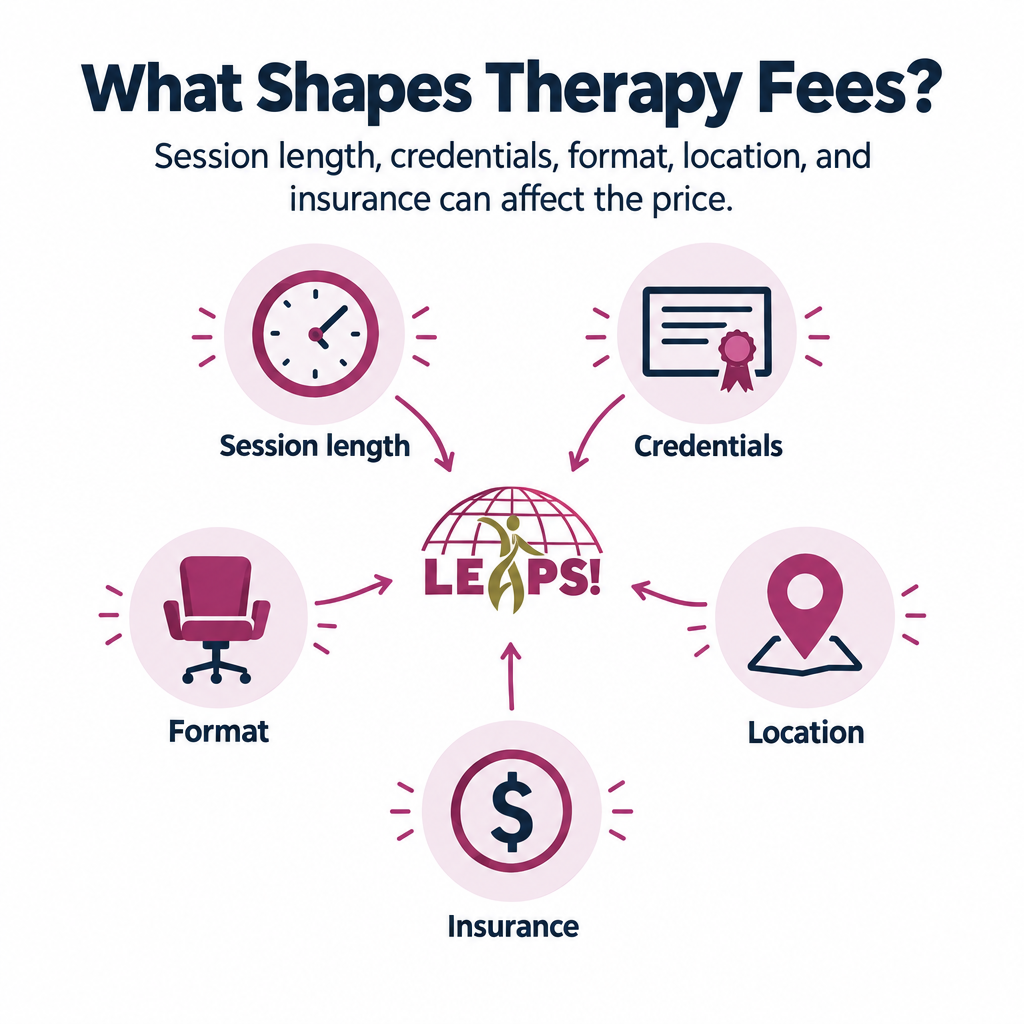
Individual therapy fees vary by provider, credentials, location, session length, format, insurance participation, and whether the service is therapy, coaching, or another offering. There is no single standard fee for New York City or for every life-transition concern.
Ask about the private-pay rate, intake fee, session length, insurance or out-of-network paperwork, sliding-scale availability, payment timing, cancellation policy, and charges for letters or forms. The supplied information does not include LEAPS Inc.’s current individual therapy pricing, insurance policies, or New York coverage, so request those details directly before booking.
Ask for the complete financial picture
Request a written explanation of what each appointment includes and when payment is due. Confirm whether an intake differs from a regular session, whether missed appointments create a charge, and whether administrative work has a separate fee. Clear answers help you compare options without unexpected costs.
Compare value without choosing on price alone
Consider fit, continuity, privacy, access, communication, and the usefulness of the treatment plan alongside the fee. A lower price may not meet your needs if scheduling is inconsistent or the format is impractical. The right arrangement should be financially understandable and workable enough to support ongoing care.
What are the next steps for starting counseling after a life change?
Start with a short contact message that describes the life change, names your main concern, states your preferred format, confirms your location, and asks about licensure, availability, and fees. Identify urgent needs clearly so the provider can explain whether routine counseling is appropriate or whether immediate support is needed.
For an intake conversation, bring relevant history, current symptoms, goals, medications or care-provider information when appropriate, and questions about confidentiality. You do not need a perfectly organized story. The first conversation can help determine whether the therapist listens carefully, explains the process, respects boundaries, and collaborates on realistic goals.
Prepare for the first conversation
Write three short notes before contacting a provider: what changed, what feels hardest now, and what you hope will improve. Add your location, preferred session format, availability, and questions about fees and privacy. This preparation can reduce pressure and help you notice whether the provider responds clearly and respectfully.
Review fit after the initial sessions
A lack of immediate emotional relief does not by itself determine whether therapy is a fit. Review whether you feel heard, understand the purpose of sessions, can discuss concerns openly, and see how goals are being revisited. If the approach or format does not meet your needs, raise the concern and ask whether adjustments or referrals are appropriate.
If you are considering support after a major life change, contact LEAPS Inc. at info@leapsinc.com or +18558853277 to ask about individual therapy formats, related counseling services, and whether your location can be served. Tampa and Orlando are the confirmed service areas supplied for this practice.
Frequently Asked Questions
Can individual therapy help with a major life transition?
Yes. Individual therapy can offer confidential support for stress, anxiety, emotional overwhelm, self-esteem concerns, coping strategies, self-awareness, and decisions connected to a transition. The therapist should first clarify your goals and assess whether individual counseling fits your needs.
What is included in individual therapy?
Sessions commonly include a check-in, discussion of the main concern, therapeutic exploration, skill-building or reflection, and agreed next steps. Exact methods, session length, goals, and frequency depend on the provider and your needs; LEAPS Inc. describes its care as client-centered and tailored to each person.
How much does individual therapy cost?
There is no single standard fee. Ask about private-pay rates, session length, insurance or out-of-network options, intake costs, cancellation terms, and additional charges. LEAPS Inc.’s current pricing is not included in the supplied information, so prospective clients should request it directly.
Does LEAPS Inc. provide individual therapy in New York City?
The supplied information confirms Tampa and Orlando, Florida, as service areas and does not confirm New York availability. Contact LEAPS Inc. before scheduling to ask whether its licensing and current service options allow care for someone located in New York.
How do I know whether individual therapy is right for me?
Individual therapy may be a good fit if you want private support for personal stress, emotional reactions, coping, self-esteem, self-awareness, or a major transition. If the main concern involves a couple, family, or group dynamic, ask whether a related service should be considered.
How do I get started with counseling?
Prepare a short description of the life change, your main concerns, preferred format, location, and questions about fees and availability. Contact the provider, confirm licensure and service area, schedule an intake if appropriate, and review the working relationship after the first few sessions.