


Article by
Dr. John E. N. Daniel
Dr. John E. N. Daniel is a visionary with a burning desire to coach, counsel, teach and empower individuals from diverse backgrounds towards the attainment of their maximum potential, life purpose and destiny. He coaches, counsels, consults, mentors, and ministers to the global community through diverse media and environments.
A parent’s death can bring grief, anger, numbness, guilt, or even relief, sometimes all at once. Grief counseling for loss of a parent can help you make sense of these conflicting emotions and explore how the loss is affecting your body, beliefs, identity, and relationships. There’s no single correct way to grieve, and the intensity of your loss doesn’t have to define your future.
If you’re asking, “How can this be?” you may be trying to understand why your feelings seem to contradict one another, or why the loss is changing parts of life you didn’t expect. These reactions can be part of grieving, especially when your relationship with your parent was complicated or caregiving shaped your days.
This article explores common emotional, physical, and spiritual responses to losing a parent, along with changes in family life and self-identity. It also considers how self-care, supportive conversations, and meaningful memories can help you carry your parent’s influence forward while making room for your own next chapter.
Key Takeaways
- Recognize that grief after a parent’s death can include conflicting emotions and changes in how you feel physically or spiritually.
- Understand how loss can reshape your sense of mortality, identity, and responsibilities toward a surviving parent.
- Consider how family roles, shared memories, and significant occasions may change, and why those shifts can affect relationships.
- Explore meaningful ways to keep a parent’s values and life lessons present without needing to remember only the easy parts.
- Learn how self-care, supportive conversations, and professional guidance can help you make space for grief as it changes over time.
Common emotional, physical, and spiritual reactions to a parent’s death
A parent’s death can unsettle emotional, physical, and spiritual life at once. You might feel sadness one moment, anger the next, then numbness or guilt. Relief can also arise when a parent has suffered through a life-changing illness. These feelings can coexist: feeling relief doesn’t erase love, grief, or the importance of the relationship.
Grief may show up in the body, too. Tension, disrupted sleep, or a reduced appetite can accompany emotionally difficult days. A familiar cue, such as an unanswered call or an empty chair, may bring those reactions into focus. Notice what changes and when, so you can describe the pattern clearly if you seek support.
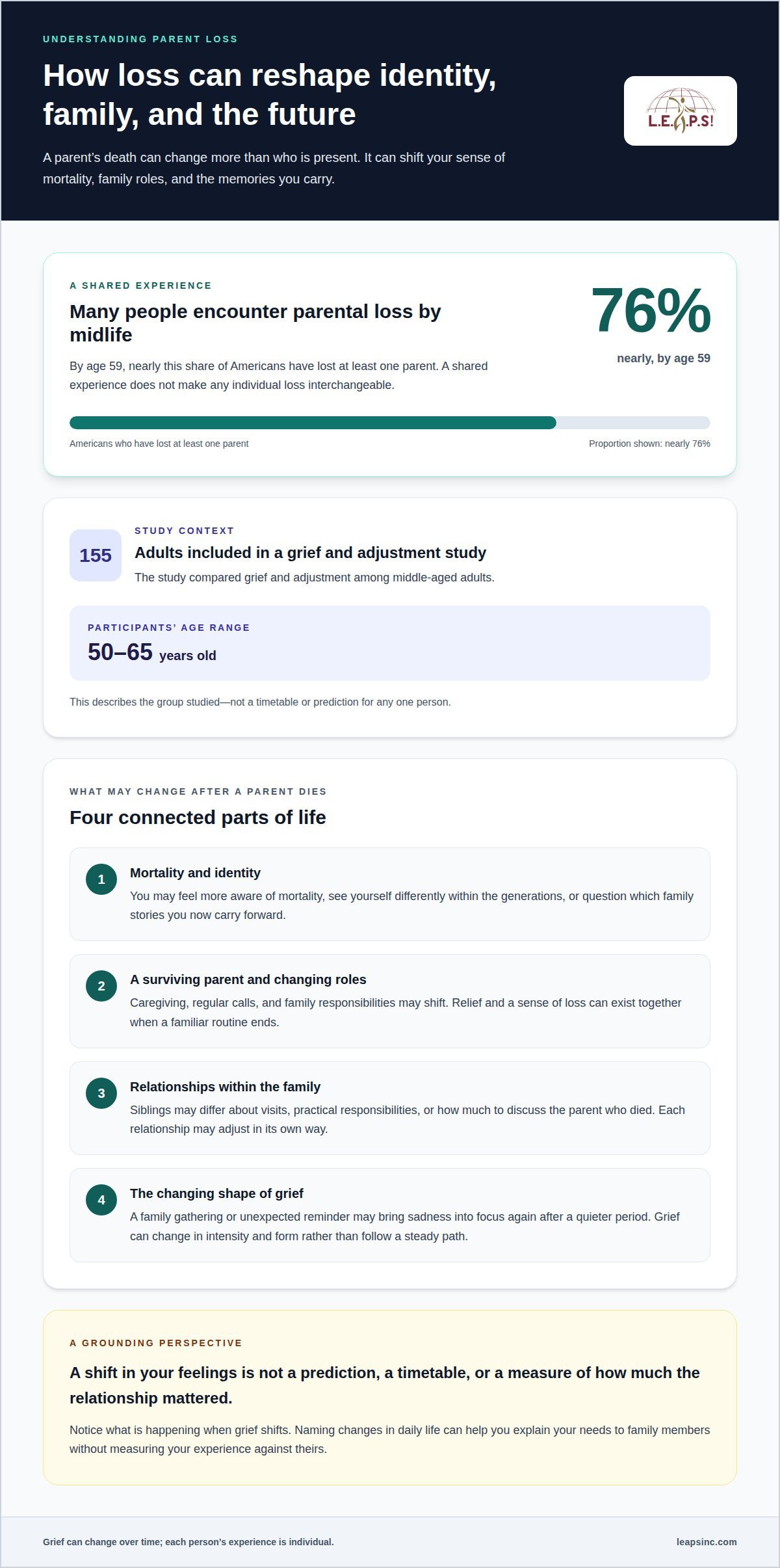
For adults grieving in midlife, a parent’s death may bring regret, unfinished conversations, or questions about decisions made during illness. A study comparing grief and adjustment included 155 middle-aged adults ages 50 to 65. That detail reflects the experiences of a group, not a timetable or prediction for any one person.
The death of a second parent can remove another connection to childhood and family history. You may also lose the person who shared memories of your early years. Fear of death can become more immediate, including worry that you’ll die in the same way your parent did. Naming that fear can help distinguish it from a prediction.
Beliefs may shift as well. Some people draw closer to faith or spiritual practices; others question what they once believed. If family strain is part of the grief, Christian marriage counseling may help partners address how the loss affects their relationship.
If emotional distress becomes an immediate safety concern, call 911 or your local emergency services number if you feel safe to do so, according to the Federal Communications Commission.
What qualifications should a grief counselor have? Look for a mental health professional whose credentials allow them to provide counseling in their state and whose experience includes bereavement. Ask how they approach grief after a parent’s death.
Are free grief counseling services available after losing a parent? Free options may include peer-led grief groups or community programs, though availability and format vary by location. Individual counseling fees depend on the provider and arrangement.
How do I find a grief counselor near me in the United States? Search by your city or ZIP code with terms such as “grief counselor” or “bereavement support.” Review professional credentials, experience, session format, and whether the approach feels right for you.
What should I expect in a first grief counseling session? A counselor may ask about your parent, the circumstances of the death, your current feelings, and what support you have. You can also discuss what you hope to work through.
How long does grief counseling usually last? The duration depends on your needs, the concerns you bring, and how support is helping. You and the counselor can revisit your goals as your circumstances change.
Parental loss, mortality, and changing self-identity
A parent’s death can alter how you understand your place in the family and the future ahead. The effects may involve your identity, family relationships, and changing emotional responses.
Mortality and Changing Identity
Parental loss can sharpen awareness of mortality while changing how you see your own place in the generations. By age 59, nearly 76% of Americans have lost at least one parent. That shared experience doesn’t make each loss feel interchangeable. You may now see yourself as the older generation, or question which memories and family stories remain yours to carry forward.
This shift can feel especially pronounced when a parent was a source of guidance or family history. A familiar role, such as the child who calls for advice, may no longer fit. Naming what has changed can help you distinguish your enduring identity from responsibilities or expectations tied to your relationship with your parent.
Relationships With a Surviving Parent
After one parent dies, your relationship with the surviving parent may change as both of you adapt to a different family structure. You might become more involved in their care while also managing your own grief. Regular calls or caregiving routines can structure daily life, so their end may bring relief and a sense of loss at once.
Conversations can shift, too. The surviving parent may begin a new relationship, or family members may disagree about how to respond. Siblings, for example, may differ about visits, practical responsibilities, or how much to discuss the deceased parent. These changes don’t cancel shared memories. They show that each relationship is adjusting in its own way.
Changing Feelings of Grief
Grief can change in intensity and form rather than follow a steady path. A family gathering or unexpected reminder may bring sadness into focus after a quieter period. The loss remains part of your life, even as its intensity may lessen over time.
Notice what is happening when your feelings shift. A change in caregiving duties, for example, may leave more time for reflection, while a family milestone may renew a sense of absence. These responses can reveal which parts of daily life have changed and help you explain your needs to family members without measuring your experience against theirs.
Signs of Prolonged Grief Disorder
Signs worth discussing with a mental health professional include persistent preoccupation with the deceased, difficulty accepting the death, or feeling unable to reengage with daily life. These experiences alone don’t establish a diagnosis. A professional can explore how persistent they are, how they affect relationships and responsibilities, and the circumstances of the loss. Sharing specific examples can make the conversation more useful.
If grief continues to dominate your daily life, a focused conversation may help clarify what support could fit. You can schedule an appointment to discuss what you’re experiencing.
The loss of a parent’s role in family life and personal identity
A parent often holds a distinctive place in family life, connecting relatives through shared history, traditions, and familiar routines. After their death, a birthday dinner may feel different because the person who gathered everyone is absent. You may also lose someone who remembered childhood events firsthand, leaving questions about family stories or your early years. These changes can affect both belonging and self-understanding.
Roles shift as relatives adjust. An adult who once relied on a parent to host Sunday meals might now decide whether to continue them. Another family member may take responsibility for organizing visits or keeping traditions alive. These responsibilities can create purpose, but they can also feel imposed. Identifying which roles you want to carry forward can help distinguish meaningful connection from expectations that no longer fit.
Birthdays, anniversaries, and Mother’s or Father’s Day can bring the absence into sharper focus. Planning ahead may make these occasions more manageable. You could agree to gather with relatives, keep the usual tradition, or mark the day quietly. The choice can change from year to year. Discussing plans early also gives family members room to want different things without treating one preference as the only right way to remember.
A death can draw relatives together, yet it can also revive old arguments and sibling rivalries. A disagreement about who will host a holiday meal may carry years of unspoken expectations. One sibling might value a familiar ritual, while another wants a simpler gathering. Naming the practical issue, such as the location or timing, can keep the conversation focused instead of turning it into a judgment about who cared most.
Family members may grieve differently, even when they shared the same parent. One person may want to tell stories, while another prefers to avoid a family gathering. Coping doesn’t require matching reactions. You can explain what would help you attend, such as a shorter visit or permission to step outside. Relatives can also agree on a simple signal for when someone needs a pause, keeping connection possible without demanding the same emotional pace.
When communication becomes difficult, Family Therapy can give relatives a structured setting to discuss changing roles, tensions, and shared expectations. It may be especially relevant when repeated conflict disrupts family gatherings or makes decisions about traditions difficult. Conversations can focus on listening, clarifying what each person needs, and finding workable ways to relate while honoring the parent’s place in the family.
Remembering a parent’s values and life lessons
Remembering a parent can mean more than revisiting photographs or recalling major milestones. It can also involve identifying the values they lived by and deciding what you want to carry forward. Perhaps your mother welcomed neighbors who needed help, or your father taught you to keep promises. Those examples can inform your own choices without requiring you to idealize the relationship or repeat every behavior.
Start with a specific memory rather than trying to summarize an entire life. Recall a moment when your parent showed patience, curiosity, generosity, or courage. Ask what happened, what they did, and why it stayed with you. If the memory feels complicated, include that complexity. You might value a parent’s persistence while recognizing that the same person sometimes struggled to listen.
Conversations can bring to mind memories one person might not recall alone. The OUR HOUSE Grief Support Center recommends inviting others to share memories of the deceased parent. A relative might remember a holiday tradition, while a former colleague recalls how your parent supported a new employee. Listening to these perspectives can broaden the family story and help you talk about qualities you want to preserve.
A memory box or photo album gives these stories a tangible place. You might include a handwritten recipe, a photograph from a family gathering, or a note describing a lesson learned during a difficult conversation. A gathering can serve a similar purpose: invite people to share one meaningful memory, or display photographs representing different chapters of your parent’s life. Choose objects and rituals that feel significant to you, not merely familiar to others.
Honoring someone’s influence doesn’t require repeating every part of their example. A therapist can help you identify positive traits to adopt while choosing not to carry forward harmful tendencies. You might, for example, keep a parent’s commitment to family while setting clearer boundaries than they did. This distinction makes remembrance an active, thoughtful process rather than a demand to imitate the whole person.
Some memories may bring warmth; others may raise regret, anger, or questions about what was left unsaid. You can discuss both in a trusted conversation or write a letter expressing what you wish you could tell your parent. The letter doesn’t need to resolve every feeling. It can give words to gratitude, disappointment, love, or unresolved questions, helping you understand what the relationship means to you now.
Over time, values become part of how you live, not just what you remember. You might practice a parent’s generosity by supporting a neighbor, or preserve their love of music by sharing a favorite song with family. These choices don’t erase the loss. They let your life reflect what mattered to you while leaving room for a fuller understanding of the person you remember.
Self-care and allowing time to grieve
Self-care during grief means protecting the basic routines that help you meet daily demands while making room for loss. It isn’t a demand to feel better on schedule. The article’s guidance recommends setting aside 7 to 9 hours each night for sleep. If rest is difficult, note what disrupts it and discuss the pattern with a health professional rather than treating one difficult night as failure.
Emotions can become harder to carry when they remain unnamed or hidden. Identify what is present, such as sadness, anger, guilt, or relief, and share it with someone you trust. A friend who listens without rushing to fix the feeling may offer useful support. If prayer is part of your life, you might also ask a trusted friend to pray with you.
Grief can collide with work before you feel ready to return. The article describes an expectation that people return to work after 3 days of bereavement leave, possibly with a few extra personal days. That short interval may leave little room for the practical demands of a parent’s death. Consider which responsibilities need attention first, and communicate specific limits or requests to the people who need to know.
Keep expectations manageable. If a family gathering feels demanding, for example, you might attend for less time or arrange a quiet break. On a difficult workday, focus on the essential task and postpone nonurgent decisions. These adjustments don’t erase grief; they help you meet immediate responsibilities without requiring every part of life to resume its previous pace.
Journaling can give complicated feelings a place to be expressed. A short entry might describe what happened that day, what emotion surfaced, and what support would help tomorrow. You can also write about a conversation you wish you’d had with your parent. The purpose isn’t to produce a polished account or force a positive conclusion. It’s to make your experience clearer to you.
People close to you may want to help but not know what would be useful. Make a concrete request, such as asking a friend to accompany you to an appointment or handle a specific errand. If you need quiet instead, say so directly. Clear requests help supportive people respond to your circumstances, while leaving you free to revise those needs as grief changes.
Professional support can help you understand emotional patterns, identify what feels hardest, and decide what kind of support fits. If grieving is disrupting sleep, work, or important relationships, schedule an appointment to discuss what you’re experiencing and what you need next.
LEAPS
LEAPS offers professional support for people working through grief and its effects on daily life. If a parent’s death is affecting family relationships, Family Therapy can help relatives address changing roles and communication. Group Therapy offers a setting to connect with others, while a Therapy Intensive provides focused therapeutic work. The right direction depends on what you want support with, whether that means processing the loss, strengthening family understanding, or finding a clearer way forward. Support can help you make space for grief while reconnecting with the relationships and priorities shaping your life now.
If you’re ready to discuss what support could look like, contact LEAPS.
Make Space for the Life Ahead
Your relationship with a parent continues to shape you, but it doesn’t have to define every choice that follows. Grief counseling for loss of a parent can offer space to examine what you’re carrying, decide what you want to preserve, and recognize where your own needs call for attention. The next step doesn’t need to resolve everything. It can begin with an honest conversation about what feels hardest now.
As you consider support, think about what would make it meaningful: room to speak openly, help understanding family changes, or a steadier way to approach daily responsibilities. Bring those priorities into a conversation with LEAPS and explore a direction that fits your circumstances.
Contact LEAPS to discuss support. Your path forward can honor the past while making room for what comes next.
Frequently Asked Questions
How Can This Be?
Conflicting reactions can arise because a parent’s death changes several parts of life at once. You might miss a parent and feel anger about how the relationship unfolded, or experience relief after a long caregiving period. One difficult feeling doesn’t invalidate another. You can feel grateful that suffering has ended while still wishing you had more time together.
What is grief counseling after the loss of a parent?
Grief counseling is professional support for understanding and responding to the effects of a death. In grief counseling for loss of a parent, conversations may explore the circumstances of the death, unresolved concerns, and how grief is affecting your current life. You can bring a specific concern, such as replaying a final conversation, and work with a counselor to examine what it means to you.
How can grief counseling help after a parent dies?
It can help you examine regret and counterfactual thoughts, such as wondering whether you should have noticed a change sooner. A counselor may help you consider what information and choices were available at the time, including how you advocated for your parent’s interests. This can move the conversation from repeated self-blame toward a fuller understanding of the decisions surrounding the loss.
What types of grief therapy are available for adults who lost a parent?
Adults may choose individual, group, or family therapy depending on what they want to address. Individual sessions allow focused attention on personal experiences; group therapy creates space to hear from others, while family therapy can address shared relationship concerns. LEAPS also offers a Therapy Intensive for focused clinical work. Consider whether you need individual reflection, connection with others, or help addressing family dynamics.
How can I tell whether I need grief counseling or grief support groups?
A support group may suit someone who wants connection and shared understanding from others experiencing bereavement. Individual counseling may be a better fit when you want focused attention on personal concerns, difficult decisions, or how grief affects daily life. You don’t have to treat these options as exclusive: some people value group connection while also seeking individual support for issues they prefer to explore privately.