

Private contemplation has its place, but profound relational breakthrough doesn’t happen in isolation. In reality, group therapy operates as an active interpersonal laboratory, not a compromised alternative to one-on-one counseling. Robust clinical research consistently demonstrates that structured group work delivers psychological outcomes that rival individual treatment, serving as a powerful catalyst for measurable, long-term healing.
Still, stepping into a shared therapeutic space can feel daunting. It is entirely natural to worry about confidentiality, dread social exposure, or wonder whether peers can truly understand your unique professional and personal pressures. You’re likely exhausted from analyzing recurring behavioral patterns without the benefit of honest, real-time feedback.
This guide demystifies the clinical architecture of collective healing. You will discover how group therapy accelerates emotional mastery, examine the protocols that protect your privacy, and gain the structural clarity needed to step confidently toward your highest potential.
Key Takeaways
- Understand how group therapy functions as a dynamic interpersonal laboratory, accelerating emotional growth through real-time feedback and relational cohesion.
- Distinguish between unstructured process groups and curriculum-driven cohorts to identify the clinical framework best suited for your developmental goals.
- Discover the established ethical protocols and structured boundaries that protect client confidentiality and create lasting psychological safety.
- Compare the distinct advantages of one-on-one sessions, therapy intensives, and shared group modalities to strategically map your path to transformation.
- Follow an actionable roadmap from clinical intake to active participation, ensuring you enter the collective space with clear personal boundaries and purpose.
Understanding Group Therapy: Definitions, Core Mechanisms, and Clinical Foundations
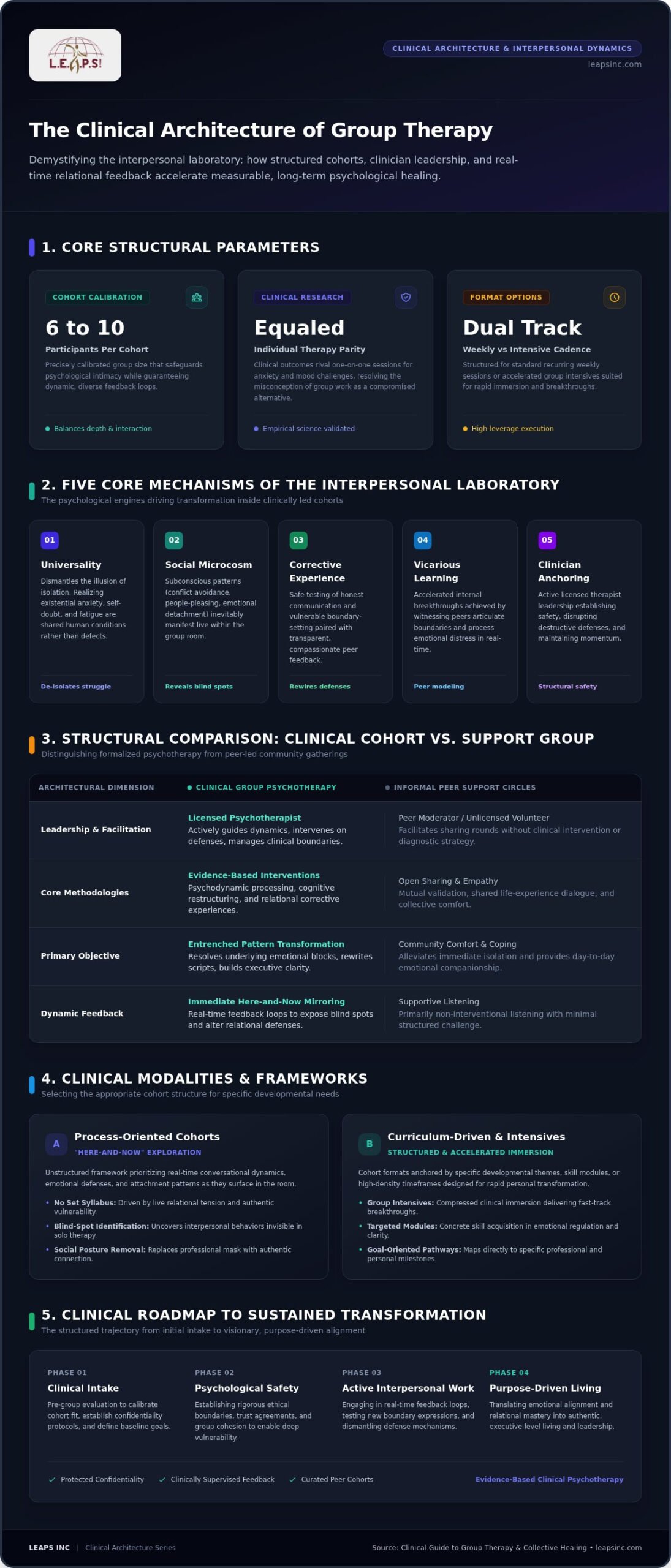
Many people view collective healing simply as a low-cost alternative to private sessions. In reality, clinically structured group therapy functions as a high-leverage relational accelerator designed for deep psychological transformation. Rooted in empirical science, group psychotherapy is a specialized discipline where a licensed psychotherapist guides a curated cohort through dynamic feedback, emotional regulation, and intentional vulnerability.
Within this container, participants unlock universality: the profound realization that existential anxiety, chronic self-doubt, and emotional fatigue are shared human conditions rather than isolated defects. A seasoned clinician actively anchors this process. Rather than acting as a passive moderator, the therapist establishes psychological safety, disrupts destructive defenses, and preserves the structural momentum necessary for genuine personal mastery.
To better understand how structured clinical cohorts differ from informal gatherings, watch this helpful comparison:
The Core Therapeutic Factors Behind Group Dynamics
Clinical cohorts operate as an immediate social microcosm. The interpersonal patterns you rely on in personal or professional spheres, such as conflict avoidance, people-pleasing, or emotional detachment, inevitably show up in the room. In this controlled environment, these dynamics spark corrective emotional experiences. By testing new behaviors and receiving transparent, compassionate peer feedback, you rewrite defensive narratives. Witnessing how others articulate boundaries and process distress also fuels vicarious learning, accelerating your own growth through their lived breakthroughs.
The Clinical Evolution: From Support Circles to Modern Psychotherapy
Clinician-led groups diverge fundamentally from informal peer support circles. While peer meetings offer community comfort, formal group therapy employs validated interventions like psychodynamic processing and cognitive restructuring to resolve entrenched behavioral blocks. Decades of clinical literature confirm that group formats achieve therapeutic outcomes on par with individual counseling for anxiety and mood challenges. Modern methodologies refine this foundation further, synthesizing psychological healing with executive-level clarity to help individuals transform emotional alignment into visionary, purpose-driven living.
Therapeutic Modalities: Comparing Modern Group Therapy Formats
Selecting the right clinical setting requires recognizing that collective care isn’t one-size-fits-all. Clinical research published by professional associations underscores the value of understanding group therapy frameworks before enrolling. Clinicians typically calibrate cohorts to maintain between six and ten participants. This precise size protects psychological intimacy while ensuring dynamic feedback. While recurring weekly sessions remain a standard cadence, specialized programs like a group therapy intensive offer accelerated immersion for professionals seeking rapid personal and relational breakthroughs.
Process-Oriented Groups: Exploring Interpersonal Realities
Process groups prioritize the “here-and-now” interactions occurring within the room. Rather than following a set syllabus, participants explore live conversational dynamics, emotional defenses, and attachment patterns as they surface. Real-time feedback loops reveal blind spots that private contemplation often conceals. By daring to voice vulnerable truths and observe interpersonal reactions without social posturing, members develop genuine relational agility and executive poise.
Psychoeducational and Skills-Focused Cohorts
In contrast to fluid processing, psychoeducational groups utilize structured clinical curricula. Grounded in frameworks such as Cognitive Behavioral Therapy (CBT) and Dialectical Behavior Therapy (DBT), these cohorts focus on targeted psychological capabilities:
- Nervous System Regulation: Learning somatic grounding and physiological distress tolerance.
- Cognitive Restructuring: Identifying and dismantling cognitive distortions alongside accountability partners.
- Behavioral Rehearsal: Practicing boundary setting, de-escalation, and assertive communication in a low-risk environment before testing them in boardrooms or personal relationships.
Targeted and Theme-Specific Group Formats
Targeted cohorts unite individuals facing unified operational and emotional challenges. These specialized spaces frequently center on executive burnout, existential life transitions, complex grief, or leadership isolation. Clinicians run these cohorts in two distinct structures:
- Closed, Time-Limited Cohorts: Uniform enrollment where all members start and conclude simultaneously over eight to twelve weeks, building high cohesion.
- Open Ongoing Groups: Rolling admission models where senior members mentor incoming participants, sustaining cultural momentum over months.
When you’re ready to determine which structural modality best matches your developmental timeline, consider taking a moment to schedule an initial consultation to explore targeted placement options.
Overcoming Apprehension: Confidentiality, Vulnerability, and Psychological Safety
Anticipating the prospect of sharing personal struggles before strangers naturally triggers apprehension. High achievers and leaders frequently worry about judgment, reputational exposure, or accidental breaches of privacy. In an authentic clinical setting, however, vulnerability serves as a strategic catalyst for emotional resilience rather than a liability. Clinicians treat the group perimeter as an inviolable container, actively guarding emotional boundaries so members can shed performative masks and pursue meaningful psychological growth.
The Pillars of Group Confidentiality and Clinical Safety
Ethical guidelines from the American Psychological Association on group therapy mandate strict confidentiality standards for licensed providers, yet group dynamics require an added layer of mutual commitment. Before attending a single session of group therapy, every participant signs an explicit non-disclosure agreement. This binding compact establishes that narratives, identities, and disclosures remain strictly within the room. Clinicians actively intervene if conversational boundaries blur, addressing minor missteps immediately and dismissing individuals who fail to honor peer privacy.
Reframing Vulnerability as a Strategic Catalyst for Growth
Sustaining a polished exterior takes immense cognitive and somatic energy. When you enter a structured psychological cohort, the pressure to project effortless competence dissolves. Watching respected peers articulate hidden doubts, boundary failures, and emotional exhaustion immediately normalizes complex internal experiences. This shared transparency calms chronic nervous system vigilance, shifting the brain out of defensive self-protection and into neurobiological openness where genuine relational reframing takes place.
Clinical Screening: Ensuring Balanced Group Cohorts
High-functioning cohorts never happen by accident; they are methodically built. Before placing anyone into a cohort, clinicians conduct an in-depth intake evaluation to assess developmental goals and emotional stability. This rigorous vetting process serves three distinct purposes:
- Assessing Psychological Readiness: Ensuring each member possesses the emotional stamina to engage in collaborative processing without feeling overwhelmed.
- Balancing Group Dynamics: Curating varied perspectives while ensuring baseline alignment in functional capacity and relational maturity.
- Protecting the Collective Container: Identifying individuals experiencing acute decompensation who require focused individual stabilization before entering a group setting.
Through careful intake and structured rules, group therapy transforms social apprehension into profound psychological safety, creating an environment where lasting interpersonal mastery thrives.
Individual Therapy Versus Group Therapy: Selecting Your Optimal Path
Deciding between one-on-one counseling and collective work isn’t an either-or compromise. Each approach serves a distinct clinical function in your developmental journey. Individual sessions provide an exclusive sanctuary for deep biographical exploration, acute trauma stabilization, and strict pacing control. You can examine the foundational benefits of individual therapy to understand how private sessions establish self-awareness. Conversely, group therapy excels where individual work meets natural limits: confronting relational blind spots live, testing real-time boundary setting, and dissolving the illusion of isolated struggle.
Evaluating Modality Fit Based on Personal Objectives
Selecting your optimal path requires auditing where your emotional resistance actually lives. The decision often hinges on three core factors:
- Locus of Struggle: If your challenges stem from social anxiety, conflict avoidance, executive isolation, or people-pleasing, group therapy offers the exact interpersonal laboratory needed to rewire those behaviors.
- Emotional Capacity: Processing unintegrated crisis or profound biographical trauma often demands the pacing control and targeted containment of private clinical sessions.
- Transformation Speed: Collective cohorts compress the developmental timeline. Peer observations dismantle rationalizations far quicker than dialoguing with a single practitioner alone.
The Multi-Tiered Approach: Integrating Individual and Group Work
The most lasting breakthroughs frequently occur when you run both modalities concurrently. An integrated strategy creates a compounding clinical rhythm. You identify core attachment wounds and unpack emotional history in individual therapy. Then, you step into the group container to practice assertive communication and authentic vulnerability among peers. Finally, you bring the interpersonal feedback back to your individual clinician for deeper processing.
This dual approach eliminates therapeutic stagnation and propels you toward sustained emotional mastery. If you are ready to evaluate whether individual work, a cohort, or a blended model best serves your future, schedule an intake consultation to map your customized path forward.
Entering the Group: Preparation, Cadence, and Sustained Transformation
Transitioning from hesitation to active participation requires an intentional roadmap. Engaging in structured group therapy isn’t a passive exercise; it demands mental preparation, clear boundary articulation, and a commitment to personal accountability. When you understand the developmental trajectory of a clinical cohort, you can approach the room with strategic clarity rather than performance anxiety.
Preparing for Your Inaugural Group Session
Your primary task during the opening session isn’t dramatic disclosure. Instead, focus on establishing your emotional equilibrium. Outline one or two specific developmental targets, such as articulating a boundary without apologizing or tolerating the discomfort of honest reflection. Resist the instinct to withdraw into total silence, but recognize that building trust is an iterative process. You control the pacing of your vulnerability as you adapt to the cohort’s rhythm.
Maximizing the Therapeutic Return on Investment
Transformative outcomes require active interpersonal engagement. Treat each weekly meeting as an executive developmental laboratory:
- Offer Direct, Regulated Feedback: Voice your genuine reactions to peer disclosures with empathy rather than critique, fostering mutual accountability.
- Bridge Insights to Daily Life: Test newly acquired communication styles and emotional boundaries in your professional and personal relationships between sessions.
- Maintain Unwavering Attendance: Sporadic participation fractures trust and disrupts cohort cohesion. Showing up consistently solidifies your psychological commitment.
Graduation and Sustaining Transformational Momentum
Clinical group work has a definitive lifecycle. You will know you’re nearing completion when defensive reactions soften into authentic communication and relational patterns shift from self-preservation to purposeful presence. Clinicians structure the termination phase intentionally to honor shared progress and consolidate internalized breakthroughs. Many participants then leverage this elevated self-awareness to step into executive leadership coaching or pursue deep-dive therapy intensives to master targeted life milestones.
Advancing Beyond Isolation Toward Relational Mastery
True psychological transformation doesn’t occur in isolation. While individual contemplation builds self-awareness, only a structured interpersonal container can test and refine how you show up in the world. By stepping into collective healing, you exchange chronic self-protection for live relational agility, replacing emotional fatigue with authentic connection, peer feedback, and shared resilience.
At LEAPS Inc., our clinical practice bridges grounded emotional healing with executive excellence. Led by seasoned clinical practitioners and visionary mentors, we utilize a rigorous intake framework to curate secure, balanced cohorts where high-achieving individuals thrive. Structured group therapy provides the dynamic space you need to confront hidden blind spots, dismantle outdated defenses, and align your inner life with your ultimate purpose.
Take decisive action toward sustained developmental growth. Schedule a clinical consultation with LEAPS Inc. today to explore cohort placement, and step confidently into your future.
Frequently Asked Questions
Is group therapy as effective as individual therapy for anxiety and depression?
Yes, clinical research consistently demonstrates that group therapy produces psychological outcomes statistically equivalent to individual therapy for mood and anxiety challenges. When treatment dosage, clinical frameworks, and practitioner qualifications align, collective care performs with equal clinical efficacy. The added advantage lies in relational dynamics: witnessing peer breakthroughs and receiving live feedback actively dismantles cognitive distortions, reducing isolation in ways private counseling cannot match.
What happens during a typical group therapy session?
A typical session follows a structured, therapist-facilitated arc that balances open reflection with intentional clinical intervention. Meetings usually open with a brief grounding check-in where participants articulate their current emotional state or weekly focus. The licensed clinician then tracks unfolding interpersonal interactions, guiding the cohort into live process work or targeted skills application. Sessions conclude with a synthesis period, consolidating key insights into practical behavioral commitments.
How is confidentiality maintained when sharing personal experiences in a group?
Confidentiality is maintained through binding agreements and rigorous ethical protocols enforced by the licensed facilitator. Every cohort member must review and sign an explicit non-disclosure contract before attending their first session. Clinicians establish clear boundaries regarding peer privacy, reinforcing that identities and personal disclosures remain strictly within the room. Breaching this trust results in immediate clinical intervention and dismissal, preserving the emotional safety of the container.
Do I have to speak and share my deepest secrets right away in group therapy?
No, you retain complete authority over your emotional pacing and are never forced to disclose sensitive history immediately. In early group therapy sessions, observing peer interactions and absorbing collective dynamics is a recognized clinical mechanism called vicarious learning. Facilitators encourage members to speak at a pace that respects their internal boundaries. As psychological safety deepens across the cohort, vulnerability unfolds naturally rather than under manufactured pressure.
How many people are usually in a therapy group, and how long does it run?
Most clinical cohorts maintain between six and ten participants to ensure high psychological safety and active dialogue. Weekly sessions typically run for 75 to 90 minutes, providing sufficient time for in-depth processing without emotional exhaustion. Cohort duration varies by modality: structured psychoeducational or targeted groups often run for eight to twelve weeks, while open-ended process cohorts may meet continuously to support ongoing developmental mastery.
Can I participate in group therapy and individual therapy at the same time?
Yes, combining individual sessions with concurrent group participation represents an exceptionally powerful multi-tiered therapeutic strategy. This integrated framework creates compounding momentum. Individual sessions offer a private sanctuary to explore biographical history, stabilize acute trauma, and regulate the nervous system. Meanwhile, group work serves as the live interpersonal laboratory where you practice boundary setting. Bringing cohort experiences back to individual sessions prevents clinical plateaus.
How do I know if group therapy is the right choice for my specific challenges?
Group work is ideal if your challenges manifest in relationships, social anxiety, chronic isolation, conflict avoidance, or executive fatigue. If you find yourself intellectualizing behavioral patterns without experiencing real-world changes, the dynamic mirror of a cohort disrupts that pattern. While acute clinical decompensation requires one-on-one stabilization first, an intake consultation with an experienced clinician will determine your psychological readiness and align you with the right cohort.