
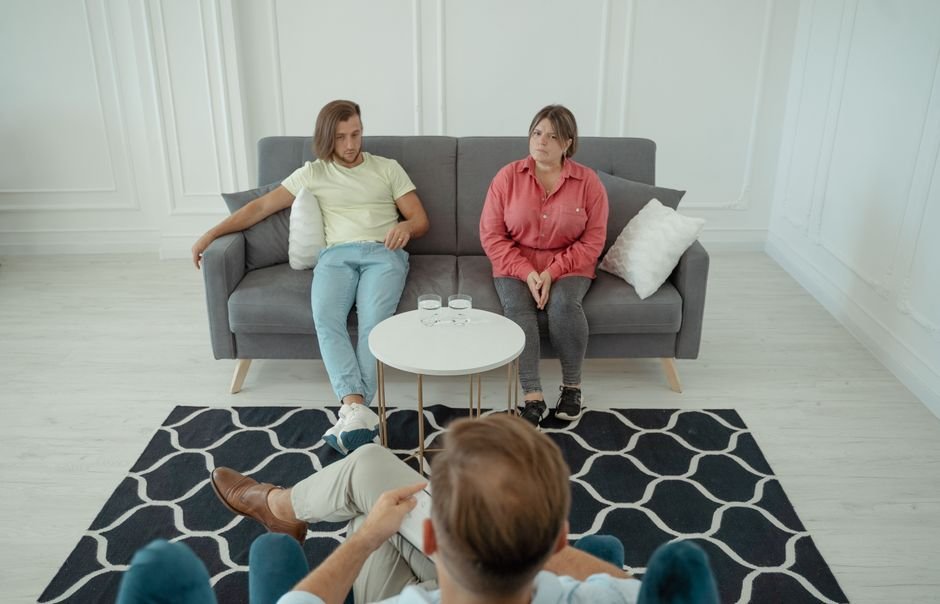
Marriage counseling is worth it if you’re serious about strengthening your relationship and learning how to talk through hard stuff without shutting down or fighting dirty.
Here’s the thing: seeking counseling isn’t a sign your marriage is failing. It’s actually the opposite. It’s an investment in your relationship’s future. Couples who work with a trained counselor end up better off than those who don’t, because they learn concrete skills to handle the topics that trip up most relationships: money, health, family expectations, and intimacy.
Related: Couples Counseling for Abusive Relationships: What You Need to Know
Why Marriage Counseling Actually Works
The real power of marriage counseling is that it gives you a safe space to talk about things you’ve been avoiding or fighting about for years.
Without structure and guidance, couples usually fall into the same patterns over and over. One person shuts down, the other gets frustrated, and nothing changes. A counselor breaks that cycle by teaching you new ways to communicate.
You learn how to bring up money without becoming defensive. You learn how to talk about your family’s expectations without it turning into a blame session. You learn how to stay connected even when you disagree, which is the skill that saves most marriages.
Good counseling also helps prevent the small issues from becoming big ones. When you can address conflict early and talk through it in a healthy way, you avoid years of built-up resentment. That’s worth a lot.
When Marriage Counseling Makes the Most Sense
You don’t have to wait until your marriage is in crisis to benefit from counseling. But certain situations make it especially valuable.
- You and your spouse argue about the same things over and over with no resolution
- You’ve experienced infidelity and want to rebuild trust and move forward together
- You’re growing distant or feel emotionally disconnected
- You’re navigating major life changes like job loss, having kids, or moving
- You want to improve intimacy or communication before small issues become big ones
- One or both of you is struggling with mental health, addiction, or past trauma that affects the relationship
If any of those sound familiar, LEAPS Inc specializes in helping couples work through exactly these kinds of challenges with a trauma-informed, faith-centered approach.
What You’ll Actually Learn in Counseling
Marriage counseling isn’t therapy where you sit and complain. It’s practical and skill-based.
A good counselor teaches you how to fight fair. That means expressing your needs without attacking your spouse, listening without getting defensive, and finding solutions instead of just venting. These aren’t things you pick up naturally. They’re learned skills, and they transform how couples relate to each other.
You’ll also gain insight into why you and your spouse react the way you do. Sometimes the real issue isn’t what you’re arguing about on the surface. Maybe money arguments are really about security or control. Maybe family conflict is about feeling unheard or unsupported. A counselor helps you understand the roots and work from there.
You’ll learn how to bring up vulnerable topics without the conversation falling apart. You’ll get tools for managing your emotions when things get heated. And you’ll build a stronger emotional connection because you’re actually being heard by your partner in a real way.
The Real Cost of Not Getting Help

Think about what it costs to stay stuck. Couples who never address their communication patterns spend years frustrated, disconnected, or even contemplating separation.
Related: Couples Counseling with a Narcissist: What You Need to Know
Unresolved conflict doesn’t just go away on its own. It grows. Small frustrations become deep resentment. Emotional distance becomes so normal that you forget what connection felt like. And if there’s a specific issue like infidelity recovery, avoiding professional help almost guarantees you won’t heal from it together.
Counseling costs time and money upfront. But not getting help costs you the quality of your relationship, your peace of mind, and potentially your marriage itself.
How to Know You’re Ready for Counseling
You don’t need your spouse to be thrilled about it. Often one person is more hesitant than the other.
What matters is that you’re willing to go and genuinely open to the process. You don’t have to be perfect or have your act together. You just need to want things to improve and be willing to try a different approach.
If you’ve been thinking about counseling but aren’t sure if it’s the right move, start by talking to your spouse about what you’re noticing. Maybe you’re feeling disconnected. Maybe you keep having the same fight. Or maybe you just want to work on your relationship before things get worse. That’s enough to start with.
Finding the Right Fit
Not all counselors are the same, and finding one who gets your situation and your values matters.
Look for someone trained in evidence-based approaches to couples therapy. If your faith is important to you, seek out a counselor who integrates that into their work rather than setting it aside. You want someone who understands your cultural background and life experience, not someone who applies a one-size-fits-all method to every couple.
When you connect with a counselor, pay attention to whether you feel heard and whether they ask good questions about your specific situation. The relationship you have with your counselor matters almost as much as the techniques they teach. If it doesn’t feel like a good fit after a session or two, it’s okay to try someone else. This is too important to settle.
If you’re in Tampa or Orlando and looking for Christian marriage counseling that’s trauma-informed and culturally sensitive, you can explore what LEAPS Inc offers and reach out to see if it’s a fit for you.
Have a health concern?
Real Talk: What Counseling Won’t Do

Counseling won’t fix everything or make your problems disappear overnight. It’s not magic.
What it does do is give you the tools and insight to handle your problems differently. You and your spouse still have to do the work. You still have to show up, be vulnerable, and practice the new skills even when it’s uncomfortable.
And honestly, some marriages aren’t meant to last. Counseling can help you figure out whether you want to stay and rebuild, or whether separation is the healthier choice. Either way, working with someone trained in helping couples navigate these decisions is better than making that choice alone or in anger.
The Bottom Line
Is marriage counseling worth it? If your relationship matters to you and you want to improve it, yes. It works because it teaches you how to communicate in ways most people never learn on their own.
The couples who regret not getting counseling sooner aren’t the ones who went and learned better tools. They’re the ones who waited too long and let the damage become irreversible.
If you’re considering it, that’s already a sign you care enough to try something different. That matters. Take that instinct seriously and reach out to someone who can help you and your spouse build the relationship you actually want.
How long does marriage counseling usually take?
That depends on what you’re working on and how committed you both are to change. Some couples see improvement in a few sessions. Others benefit from ongoing work over several months. Your counselor can give you a realistic timeline after they understand your situation.
Will the counselor take sides or judge me?
A good counselor doesn’t take sides. Their job is to help both of you communicate better and understand each other, not to decide who’s right or wrong. They’re trained to be neutral and non-judgmental, even when you’re talking about tough stuff.
What if my spouse doesn’t want to go?
You can still benefit from individual therapy to work on your own patterns and get support. Sometimes when one person starts making changes and getting healthier, it opens the door for the other person to consider couples work. But you can’t force someone into counseling. You can only control whether you show up for yourself.
Can counseling save a marriage that’s already broken?
It depends on whether both people want to repair it and are willing to do the work. If you’re both invested, counseling gives you the best chance of rebuilding. If one person has already checked out emotionally or is unwilling to engage, it’s harder but not impossible. A skilled counselor can help you figure out what’s actually possible.
Have a health concern?