
Table of Contents
- Understanding Anxiety's Impact on Christian Marriages
- Why Faith-Based Couples Counseling Matters for Anxiety
- How We Integrate Christian Values with Evidence-Based Therapeutic Approaches
- Common Anxiety Patterns We See in Couples
- Our Compassionate Assessment and Treatment Planning Process
- Practical Faith-Centered Strategies for Managing Couple Anxiety
- The Role of Spiritual Partnership in Healing
- What to Expect in Our Christian Couples Counseling Sessions
- Building Stronger Communication Through Our Coaching Methods
- Success Stories and Real Transformation at LEAPS Inc.
- Getting Started with Culturally Competent Christian Counseling
- Frequently Asked Questions (FAQ)
Understanding Anxiety’s Impact on Christian Marriages
Anxiety doesn’t announce itself politely in relationships. It shows up as constant worry about finances, health, or the future. One partner becomes hypervigilant about what the other said or didn’t say. Sleep becomes fragmented. Conversations that should feel connected instead feel fraught with tension. For Christian couples, anxiety can feel especially isolating because there’s sometimes an unspoken expectation that faith should simply resolve the struggle.
We’ve worked with countless couples who feel conflicted: their faith calls them toward peace, yet they experience persistent worry that seems to undermine their spiritual foundation. The reality is that anxiety is real, physiological, and emotionally demanding. When both partners are anxious or one partner’s anxiety triggers the other’s protective or avoidant responses, the relationship dynamics shift quickly. What starts as one person’s struggle becomes a shared crisis that affects communication, intimacy, and how couples support each other spiritually.
The good news is that anxiety in Christian marriages responds well to treatment that honors both the psychological and spiritual dimensions of who you are. Understanding how anxiety operates in your specific relationship is the essential first step toward healing.
Why Faith-Based Couples Counseling Matters for Anxiety
Secular approaches to couples anxiety are valuable, but they often miss something crucial for believers: the spiritual resources and worldview that shape how you interpret struggle, hope, and recovery. When your faith is central to your identity, counseling that doesn’t address it can feel incomplete or even misaligned with your values.
Our faith-based couples therapy approach integrates your Christian beliefs into the therapeutic work itself. We help you access spiritual practices like prayer, Scripture reflection, and faith community as active tools for anxiety management, not just as background beliefs. This isn’t about replacing clinical intervention with prayer alone; it’s about creating a treatment plan that uses the full toolkit of your life, including your faith.
For anxious couples, this means you can work through worry patterns while also deepening your spiritual partnership. You strengthen your marriage and your faith together rather than compartmentalizing them.
How We Integrate Christian Values with Evidence-Based Therapeutic Approaches
We don’t choose between clinical rigor and spiritual authenticity. Both matter, and they work best together. Our counselors are trained in evidence-based therapeutic modalities like cognitive-behavioral therapy, emotionally focused therapy, and narrative approaches. We apply these methods while also drawing on Christian wisdom, pastoral theology, and your church’s traditions where relevant and helpful.
In practical terms, this might look like using cognitive-behavioral techniques to identify anxiety spirals while also examining how biblical truths about God’s provision speak into your particular worry pattern. If you’re both wrestling with control, we might explore that through both attachment theory and theological reflection on surrender and trust. Your values aren’t set aside during “clinical time”; they’re woven into every session.
Our therapists understand the nuances of Christian belief and the diversity within faith communities. We’re culturally competent in your spiritual context, which means we ask good questions, listen closely, and avoid one-size-fits-all assumptions about what your faith means to you.
Common Anxiety Patterns We See in Couples
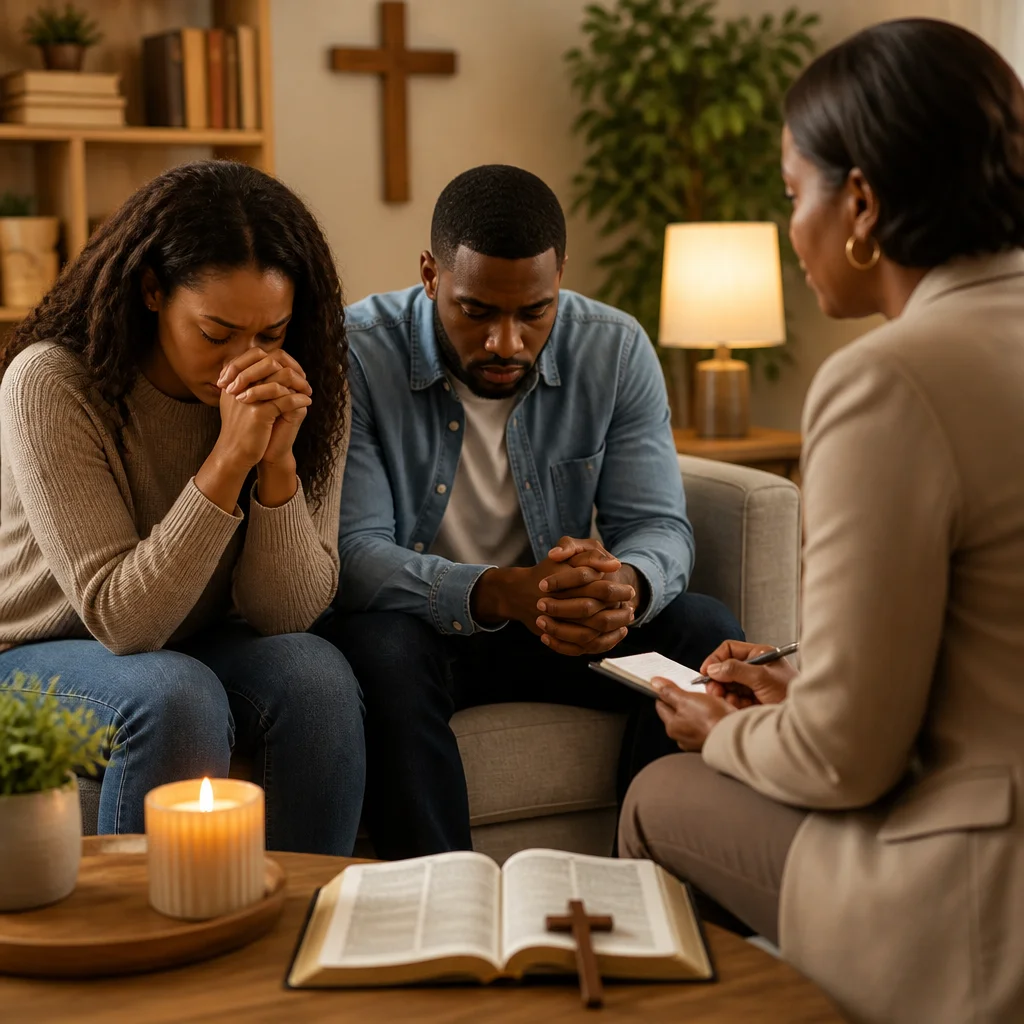
Anxious attachment patterns often show up as one partner seeking constant reassurance while the other withdraws to protect themselves from the emotional intensity. In Christian couples, we sometimes see scrupulosity or spiritual anxiety, where one person’s worry about moral perfectionism spills into the relationship as criticism or self-condemnation. Another pattern involves one partner’s unresolved trauma or financial stress creating a baseline of hypervigilance that affects both people’s sense of safety.
Some couples experience synchronized anxiety, where both partners feed each other’s worry. Others have complementary patterns: one partner’s anxious style activates the other’s avoidant style, creating a push-pull dynamic that leaves both feeling unheard. Financial uncertainty, health concerns, or extended family stress often amplifies these patterns significantly.
Recognizing your specific pattern is crucial because treatment targets the cycle itself, not just individual symptoms. When we identify how your anxiety patterns interact and reinforce each other, you gain clarity about what’s actually happening and why your usual attempts to comfort each other sometimes backfire.
Our Compassionate Assessment and Treatment Planning Process
We begin with thorough individual and couple assessments. We listen to your history, your relationship timeline, and your experience of anxiety without judgment. We ask about your faith journey, your family-of-origin patterns, and what brought you to seek help now. This isn’t a checklist; it’s a genuine conversation designed to understand your story.
From there, we develop a treatment plan that’s specific to your situation. Some couples benefit from weekly sessions; others do better with intensive coaching retreats that create focused time and space for deeper work. We might recommend individual therapy alongside couples work if one person has a significant anxiety disorder, or we might focus primarily on the relational dynamics. The plan is flexible and adjusted based on what you’re experiencing.
You’ll always know what we’re doing and why. We explain the therapeutic approach, discuss goals together, and maintain transparency about progress and any needed shifts in strategy. Your agency and input matter throughout.
Practical Faith-Centered Strategies for Managing Couple Anxiety
Several strategies help couples reduce anxiety while deepening their faith connection. Structured prayer time together, where you explicitly bring worries and hopes to God as a couple, creates both spiritual intimacy and a container for anxiety. It signals that you’re facing this together, not in isolation.
Communication practices like scheduled check-ins prevent worry from accumulating unspoken. You set aside time to ask, “What’s on your heart this week?” and really listen without trying to fix or dismiss. This simple practice often dramatically reduces background anxiety because concerns are voiced and processed rather than festering.
Grounding exercises rooted in Scripture help too. Practices like lectio divina (meditative Scripture reading), or even simple breathing techniques paired with affirmations about God’s faithfulness, help regulate your nervous system. Many couples find that a shared spiritual practice like attending church together, reading Scripture, or working through a Christian devotional creates a shared rhythm that supports both faith and relational stability.
Boundary-setting and discernment practices help distinguish between legitimate concerns worth problem-solving and rumination that feeds anxiety. We help you develop the skill to ask, “Is this something I can influence, or am I carrying something that belongs to God?” This isn’t spiritual bypassing; it’s learning to direct your energy wisely.
The Role of Spiritual Partnership in Healing
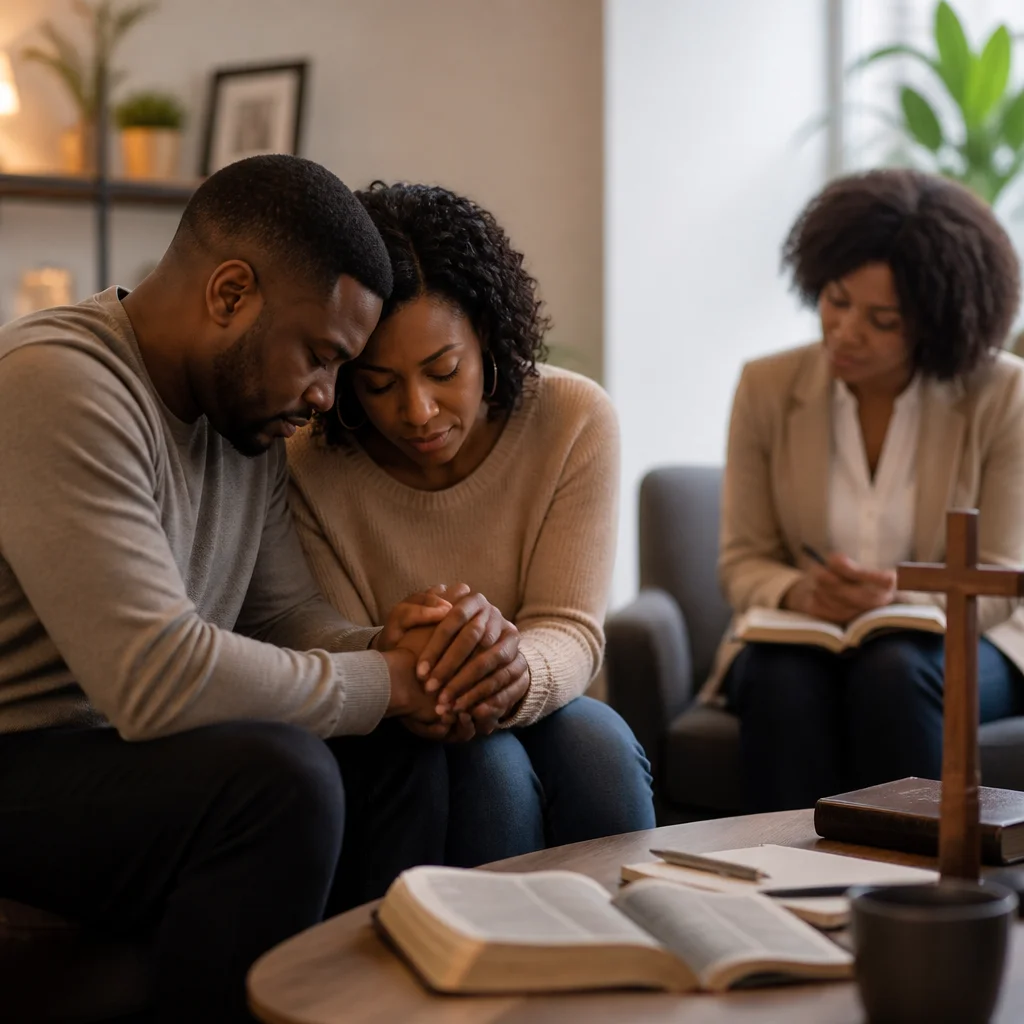
Marriage at its best is a spiritual partnership, not just a practical arrangement. When anxiety is high, that partnership often breaks down into either codependency or disconnection. Healing requires restoring your sense of being on the same team, united in faith and committed to supporting each other’s growth.
We help you articulate shared spiritual goals and values. What does a Christ-centered marriage mean to you both? How do you want to show up for each other when things are hard? These conversations strengthen the relational foundation and create meaning around your work together. Spiritual partnership isn’t abstract; it’s showing up for each other, holding each other accountable with gentleness, and choosing trust even when anxiety whispers otherwise.
Many couples find that their anxiety actually becomes a gift, in hindsight, because addressing it together deepens their intimacy and faith. They develop compassion they didn’t know they needed. They learn to pray together in ways they’d never imagined. They experience God’s faithfulness through the hard work of healing.
What to Expect in Our Christian Couples Counseling Sessions
Sessions typically last 50-60 minutes. We begin with a brief check-in about what’s happened since your last session, then focus on either the dynamic you want to shift, a specific challenge, or skills practice. You might spend one session exploring communication patterns, another practicing a new way to discuss finances without triggering anxiety, and another reflecting on your spiritual partnership.
Our approach is warm and collaborative. We’re not clinical observers; we’re actively engaged in helping you find clarity and new responses. You might see us name a pattern you’re in and immediately feel understood. We normalize that anxiety and relationship stress are real and treatable. We balance support with gentle challenge, always working toward your goals.
Depending on your needs, we might recommend Christian marriage counseling that focuses on specific issues, or broader couples coaching that addresses communication, conflict resolution, and relational patterns. Some couples benefit from our intensive retreat format, which allows for deeper and faster progress by dedicating several days to focused work.
Building Stronger Communication Through Our Coaching Methods
Communication is often the first casualty when anxiety rises. You start interpreting each other’s words through an anxious lens. Simple statements get misread as rejection or criticism. We teach concrete communication skills that work specifically for anxious couples.
Validation comes first. Before problem-solving, your partner needs to know you understand and care about their experience, even if you don’t share their worry. Simple phrases like, “That sounds really hard,” or “I hear that you’re scared,” signal partnership. This doesn’t mean agreeing with all interpretations; it means honoring the person’s experience.
We teach you to separate the emotion from the content. “I’m feeling anxious about money” is different from “You’re irresponsible with money.” One invites support; the other triggers defensiveness. Learning to express your internal experience rather than criticizing your partner changes everything.
Couples also learn to take breaks when conversations escalate and return when they’re regulated. There’s no shame in pausing; it’s actually mature and protective of the relationship. We help you signal that a break is about self-regulation, not avoidance or rejection.
Success Stories and Real Transformation at LEAPS Inc.
We’ve worked with couples who came in feeling disconnected and defensive, both drowning in worry about the future. Through consistent work, honest conversations, and spiritual deepening, they rebuilt trust and intimacy. One couple told us that addressing their anxiety together actually became the doorway to their strongest season of marriage. They learned to pray for each other in specific ways, to celebrate small wins, and to extend grace when anxiety flared.
Another couple came in after infidelity had shattered their foundation. Anxiety was compounded by betrayal trauma. Over months of dedicated work, including our faith-based couples therapy model, they moved from survival mode into genuine healing. Their faith community became a source of support rather than shame, and they discovered a marriage stronger than before.
These aren’t quick fixes. Transformation takes consistency and courage. But we’ve witnessed countless couples move from “I don’t know if we’ll make it” to “I’m so grateful we chose to fight for this together.”
Getting Started with Culturally Competent Christian Counseling
If anxiety is affecting your marriage and you want support that honors both your psychological needs and your faith, we’re here. Our team includes licensed therapists and coaches trained in Christian counseling, trauma recovery, and couples work. We understand the nuances of Christian marriage, the pressures you face, and the hope that faith offers.
Starting is simple: reach out to schedule a consultation. We’ll talk about what you’re experiencing, discuss our approach, and determine what level of care makes sense for you. Some couples begin with weekly sessions; others prefer coaching. We offer individual, couple, and intensive retreat formats.
Your marriage matters. Your faith matters. Anxiety doesn’t have to steal either one. At LEAPS Inc., we’re committed to helping you build a relationship that’s both deeply connected and deeply rooted in your Christian faith. Contact us today to begin your journey toward healing and renewed partnership.
Call us today for a free 15 minute consultation.
Frequently Asked Questions (FAQ)
How do we integrate Christian faith with professional therapy for couples dealing with anxiety?
We combine evidence-based therapeutic techniques with Christian spiritual principles to address anxiety in your relationship. Our counselors honor your faith journey while using clinically proven methods, ensuring that treatment aligns with your values and beliefs. We create a safe space where your spiritual foundation becomes a source of strength rather than added pressure as you work through anxiety together.
What specific anxiety patterns do we typically address in Christian couples counseling?
We often see couples struggle with worry about financial security, fear of judgment within their faith community, anxiety around maintaining “perfect” Christian marriages, and stress from unmet spiritual expectations. Many couples also experience anxiety stemming from past relationship wounds or infidelity that affects their current trust and communication. Our assessment process helps us identify your unique patterns so we can tailor our faith-centered strategies to your situation.
What should we expect during our first session with you?
During your initial appointment, we conduct a compassionate assessment to understand how anxiety manifests in your relationship, your spiritual background, and your goals for counseling. We’ll discuss your communication patterns, stressors, and how your faith connects to your healing journey. You’ll leave with clarity about our approach and a realistic sense of how we’ll work together to strengthen both your emotional connection and spiritual partnership.