
Table of Contents
- Why Standard Counseling Often Falls Short for Infidelity
- The Hidden Complexities of Betrayal Trauma
- How We Assess Your Unique Infidelity Recovery Needs
- The Specialized Framework We Use for Betrayal Healing
- Rebuilding Trust: Our Evidence-Based Approach
- Couple Healing vs Individual Processing in Our Therapy
- When to Choose Our Specialized Infidelity Recovery Program
- Real Transformation: What Our Clients Achieve
- Taking Your First Step Toward Recovery with Us
- Frequently Asked Questions (FAQ)
Why Standard Counseling Often Falls Short for Infidelity
When infidelity enters a relationship, the impact reverberates far beyond the betrayal itself. We’ve observed that many couples turn to general relationship counseling expecting standard communication tools and conflict resolution techniques to heal what is fundamentally a trauma response. This approach often misses the mark.
Standard counseling typically focuses on improving dialogue, identifying patterns, and finding compromise. Those skills matter, but they don’t address the neurobiological aftermath of betrayal. The betrayed partner often experiences hypervigilance, intrusive thoughts, and a shattered sense of safety that generic “date night” exercises cannot resolve. Meanwhile, the unfaithful partner may feel stuck in a cycle of apology without understanding what led them to the infidelity in the first place.
The real issue is this: infidelity recovery requires a specialized lens. It demands understanding trauma responses, attachment wounds, and the specific psychological work needed to rebuild trust at a deeper level. Without that specialized framework, couples often cycle through the same arguments, feel progressively more hopeless, and either stay stuck in resentment or separate believing healing wasn’t possible.
Your takeaway: If standard therapy feels circular or isn’t moving you forward after infidelity, you may benefit from a more targeted approach designed specifically for betrayal recovery.
The Hidden Complexities of Betrayal Trauma
Infidelity isn’t simply a relationship conflict. For the betrayed partner, it activates trauma responses similar to other significant losses or violations of safety. The brain’s threat-detection system goes into overdrive. Questions loop endlessly: Why wasn’t I enough? Can this ever be trusted again? Will this happen again?
These aren’t failures of the relationship’s communication. They’re normal, predictable reactions to betrayal that require specific therapeutic attention.
The unfaithful partner faces their own complex terrain. Sometimes infidelity stems from unresolved attachment issues, avoidance patterns, or a disconnect from their own needs. Other times it reflects deeper identity questions or unaddressed trauma. Simply promising “I won’t do it again” without understanding the root rarely creates lasting change. The unfaithful partner may experience shame, defensiveness, or a sense of being permanently labeled, all of which can block genuine accountability and growth.
Additionally, the couple’s shared narrative has fractured. The story they told themselves about their relationship, their partner, and their future no longer feels true. Rebuilding that narrative requires more than technique; it requires a skilled, compassionate guide who understands how betrayal specifically reshapes the brain and relationship system.
What this means for you: Effective infidelity recovery addresses trauma patterns, individual psychological wounds, and relational rupture simultaneously. Surface-level fixes don’t reach the depth of what’s needed.
How We Assess Your Unique Infidelity Recovery Needs
Every infidelity story is different, and so is every path to recovery. Our first step is always a thorough, individualized assessment that goes beyond the surface facts of the affair.

We explore several key dimensions:
- The betrayed partner’s trauma signature. How did you typically handle loss or betrayal before this? Do you have earlier relationship wounds that this infidelity has reactivated? What does safety actually mean to you?
- The unfaithful partner’s internal world. What was happening in you before the infidelity occurred? Were you avoiding intimacy, seeking validation, disconnected from your own needs, or caught in a pattern you didn’t consciously choose?
- The relational history. What was the quality of your connection before the affair? Were there unaddressed grievances, emotional distance, or communication breakdowns that created conditions for infidelity?
- Individual mental health and attachment patterns. Do anxiety, avoidance, or other patterns influence how each of you is experiencing this crisis?
- Your stated goals. Are you committed to rebuilding, or are you exploring whether rebuilding is possible? Both are valid starting points, and clarity matters.
During our free 15-minute consultation, we listen for these dimensions and recommend whether individual therapy, couples work, or a combination makes the most sense for your specific situation. This clarity prevents you from investing time in an approach that doesn’t match your actual needs.
Your action step: Schedule a consultation to discuss your specific infidelity recovery needs rather than assuming any general therapy program will work for your situation.
The Specialized Framework We Use for Betrayal Healing
We’ve integrated evidence-based approaches specifically designed for infidelity recovery into a framework that honors both individual healing and relational restoration.
Our approach typically includes:
- Trauma-informed individual therapy. We help the betrayed partner process the betrayal as a significant emotional event, regulate the nervous system’s threat response, and gradually rebuild a sense of safety and identity separate from the infidelity.
- Accountability and insight work. For the unfaithful partner, we facilitate deep exploration of the internal and relational factors that led to infidelity, moving beyond remorse into genuine understanding and behavioral change.
- Structured couples sessions. Once individual stabilization begins, we guide couples through specific conversations about the affair, current needs, and the conditions for rebuilding. These aren’t free-form discussions; they’re carefully sequenced dialogues designed to prevent re-traumatization while building understanding.
- Values and vision work. Many couples discover that infidelity, while devastating, also reveals misalignments in values, expectations, or life direction. We help you clarify who you each want to become and whether your paths align.
- Faith-integrated options. For couples whose spiritual foundation matters, we weave faith-based perspectives into the healing work, honoring how many people process betrayal, forgiveness, and restoration through their faith tradition.
This framework isn’t rigid. We adapt based on what emerges in sessions, always prioritizing safety and genuine progress over predetermined timelines.
Rebuilding Trust: Our Evidence-Based Approach
Trust doesn’t return because someone says “I’m sorry” or promises change. Rebuilding trust after infidelity follows predictable psychological stages, and we guide couples through each one intentionally.
Stage One: Stabilization and Safety. Before trust can rebuild, the betrayed partner’s nervous system needs to settle. We teach grounding techniques, help establish transparent communication agreements, and create conditions where the betrayed partner begins to feel some control and predictability again.
Stage Two: Understanding and Accountability. The unfaithful partner must demonstrate genuine understanding of the impact of their actions, not just intellectual acknowledgment. We facilitate conversations where the unfaithful partner can articulate what they did, why they did it, and how they’re changing the internal and external factors that enabled the infidelity. This is often harder than it sounds.
Stage Three: Incremental Trust-Building. Small, consistent actions replace grand gestures. Showing up as you said you would. Being transparent without being asked. Following through on commitments. These build trust far more effectively than dramatic declarations.
Stage Four: Deepening Connection. As trust stabilizes, couples work on reconnection through vulnerability, intimacy, and shared meaning-making. Some couples emerge with a stronger relationship than before because they’ve genuinely addressed underlying issues.
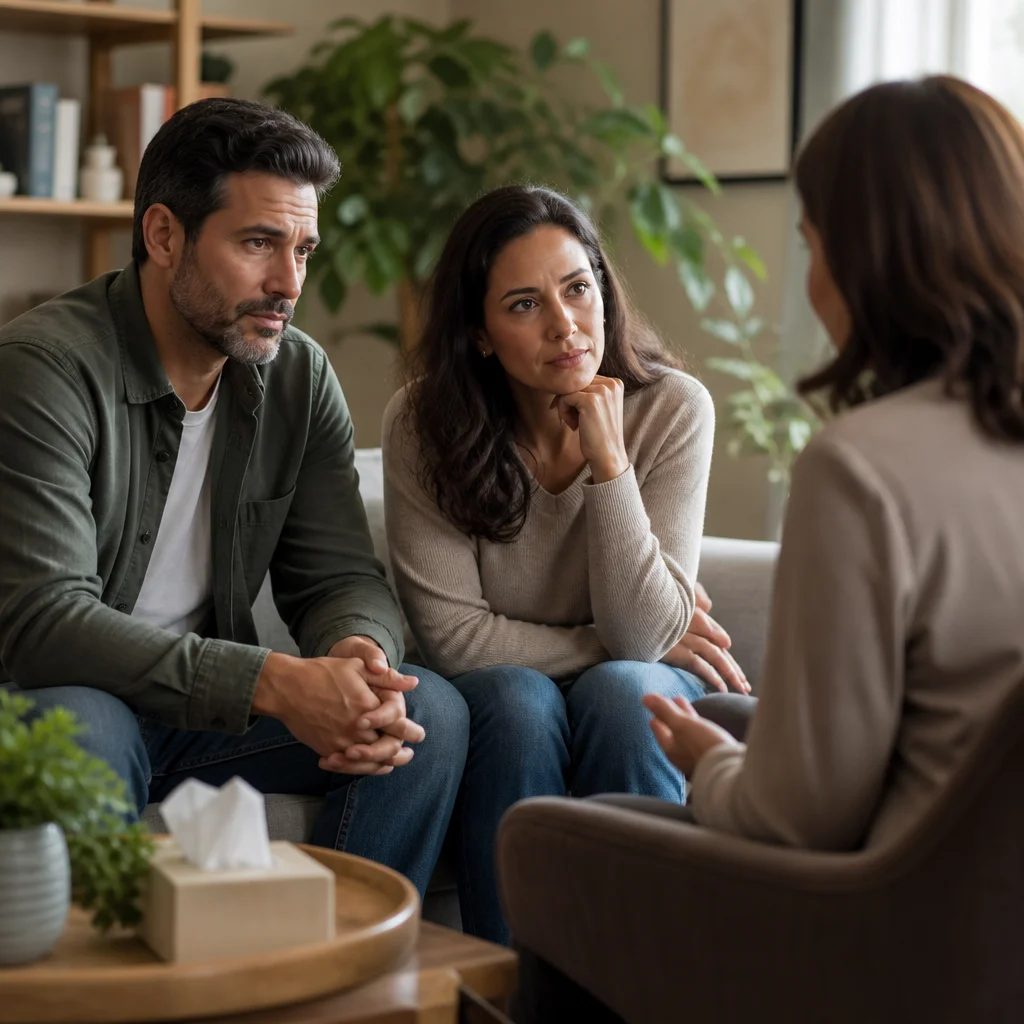
This process typically takes months, not weeks. Patience with the timeline is itself part of the healing.
What to do next: If you’re in a relationship after infidelity, assess which stage resonates with where you are and bring that awareness into your first therapy session.
Couple Healing vs Individual Processing in Our Therapy
One critical question we address early: Should you start with individual therapy, couples therapy, or both simultaneously?
The answer depends on your situation. If the betrayed partner is in acute crisis, experiencing severe anxiety, or needs to stabilize their nervous system, individual therapy often comes first. If the unfaithful partner is in deep denial or hasn’t begun to examine their own role, individual work may be necessary before couples sessions become productive.
However, in many cases, we run parallel processes. The betrayed partner processes the trauma individually while the couple meets together to rebuild understanding. The unfaithful partner works individually on insight and accountability while the couple practices new communication patterns together. This dual approach prevents the couple’s therapy from becoming overwhelmingly focused on crisis management, allowing space for both partners to do their own inner work.
Some couples find that individual therapy alone isn’t enough; they need the relational container of couples work to feel truly understood and to practice new ways of being together. Others discover that individual work must stabilize first, or couples sessions become retraumatizing.
We assess this continuously, adjusting the balance based on progress and readiness. There’s no one-size-fits-all formula.
When to Choose Our Specialized Infidelity Recovery Program
You’re a good fit for our infidelity recovery therapy program if:
- Infidelity has occurred and you’re either committed to rebuilding the relationship or genuinely exploring whether it’s possible.
- Standard relationship counseling hasn’t resolved the core issues, or you sense you need specialized expertise in betrayal trauma.
- You need both individual and couples support to navigate the complexity.
- You value an approach that integrates psychological depth with practical tools and, if relevant, faith perspectives.
- You’re willing to invest time in genuine healing rather than seeking a quick fix.
- You’re located in or near one of our Florida locations (Orlando, Tampa, Fort Lauderdale, Jacksonville, Miami, St. Petersburg, Tallahassee, or Cape Coral) or prefer telehealth sessions.
We also work with high-achieving professionals and couples who understand the value of expert guidance and are ready to do meaningful work.
If you’re in acute crisis, experiencing thoughts of self-harm, or facing an active threat, we encourage you to reach out to a crisis resource first. Our specialized infidelity recovery work is most effective when both partners (or the individual seeking healing) are safe and willing to engage.
Real Transformation: What Our Clients Achieve
The outcomes we see vary, but they follow certain patterns.

Some couples rediscover genuine connection. They move from a relationship held together by obligation or inertia into one where both partners feel truly chosen. They communicate differently, handle conflict with more skill, and often report feeling closer than before the infidelity.
Other couples discover through the work that while they care deeply for each other, their paths have diverged in ways that can’t be bridged. They separate with mutual respect, gratitude for shared history, and the clarity that they’re making a conscious choice rather than reacting from trauma.
Individuals who work through infidelity—whether the relationship continues or ends—consistently report greater self-knowledge. The betrayed partner moves from a place of questioning their worth into a grounded sense of identity separate from the infidelity. The unfaithful partner often experiences profound growth in understanding themselves, their patterns, and what genuine accountability means.
Across all outcomes, clients tell us they’re grateful for the guide who helped them navigate it with honesty, compassion, and skill rather than trying to white-knuckle through alone.
Taking Your First Step Toward Recovery with Us
Healing from infidelity is possible. It requires the right support, the right framework, and your genuine commitment to the work. We’re here to provide that specialized, compassionate guidance.
Start with a free 15-minute consultation. Talk with one of our experienced therapists about what you’re facing, what you’ve tried, and what might help most. There’s no obligation; it’s simply a chance to explore whether our approach is the right fit for your healing path.
We serve high-achieving professionals and couples across Florida through in-person and telehealth sessions. Our therapists bring expertise in infidelity recovery, trauma, attachment, and faith-integrated approaches tailored to your values and needs.
Contact us today to schedule your consultation and take the first step toward genuine recovery.
Frequently Asked Questions (FAQ)
How does your infidelity recovery therapy differ from standard counseling?
We specialize in addressing the specific trauma and trust issues that arise from betrayal, whereas standard counseling typically uses general relationship frameworks that don’t account for the unique neurological and emotional impact of infidelity. Our therapists are trained to recognize betrayal trauma patterns and guide both individuals and couples through our evidence-based recovery process designed specifically for this context. We assess whether you need individual processing, couples work, or both to create your personalized healing path.
What should I expect during my first consultation with your team?
We offer a free 15-minute consultation where we listen to your situation and ask targeted questions to understand the specific challenges you’re facing. This helps us determine whether our specialized infidelity recovery program is the right fit and which of our therapists would be best suited to support your healing journey. We’ll also explain our assessment process and answer any questions you have about our approach, whether you’re seeking telehealth or in-person sessions.
How long does infidelity recovery typically take with your program?
Recovery timelines vary based on factors like the depth of betrayal, how long ago it occurred, and whether you’re working individually or as a couple, so we don’t use one-size-fits-all timelines. During our assessment phase, we evaluate your specific situation and provide realistic expectations for your particular healing path. Our focus is on genuine transformation rather than quick fixes, and we guide you through each stage of rebuilding trust and emotional safety.