

Couples counseling can help when the same argument keeps returning, conversations end in silence or escalation, and both partners feel less connected but do not know how to change the pattern. You do not have to wait until separation feels imminent to seek structured support.
Which relationship problems are a good reason to seek couples counseling?
Couples counseling may help with recurring conflict, communication difficulties, emotional distance, trust concerns, betrayal, infidelity recovery, parenting stress, and premarital concerns. When every conversation becomes defensive, one partner withdraws, or both people repeat the same unresolved argument, outside guidance can create a safer structure for understanding what keeps happening.
At LEAPS Inc., couples therapy provides a supportive setting to improve communication, understand relationship patterns, address conflict, and strengthen emotional connection. Early support can help partners identify resentment and unhelpful habits before they become more entrenched. Counseling is not a substitute for immediate safety planning when there is danger, intimidation, or coercive control. Those situations require an appropriate safety assessment and specialized support.
Recognizing repeated communication patterns
Repeated patterns are a strong reason to consider couples counseling, especially when one partner pursues a conversation while the other shuts down, or when defensiveness prevents either person from feeling heard. A therapist can help identify the cycle rather than treating each argument as an isolated event. The goal is to notice triggers, emotional responses, and the interaction that follows.
Distinguishing a rough season from an ongoing relationship problem
A difficult season may improve with rest, honest conversation, or practical changes, while an ongoing relationship problem continues despite repeated attempts to resolve it. Counseling may be useful when disconnection, trust concerns, parenting strain, or conflict repeatedly interferes with daily life. Seeking help early does not mean the relationship has failed; it means both partners are taking the pattern seriously.
What happens when couples counseling turns conflict into specific goals?
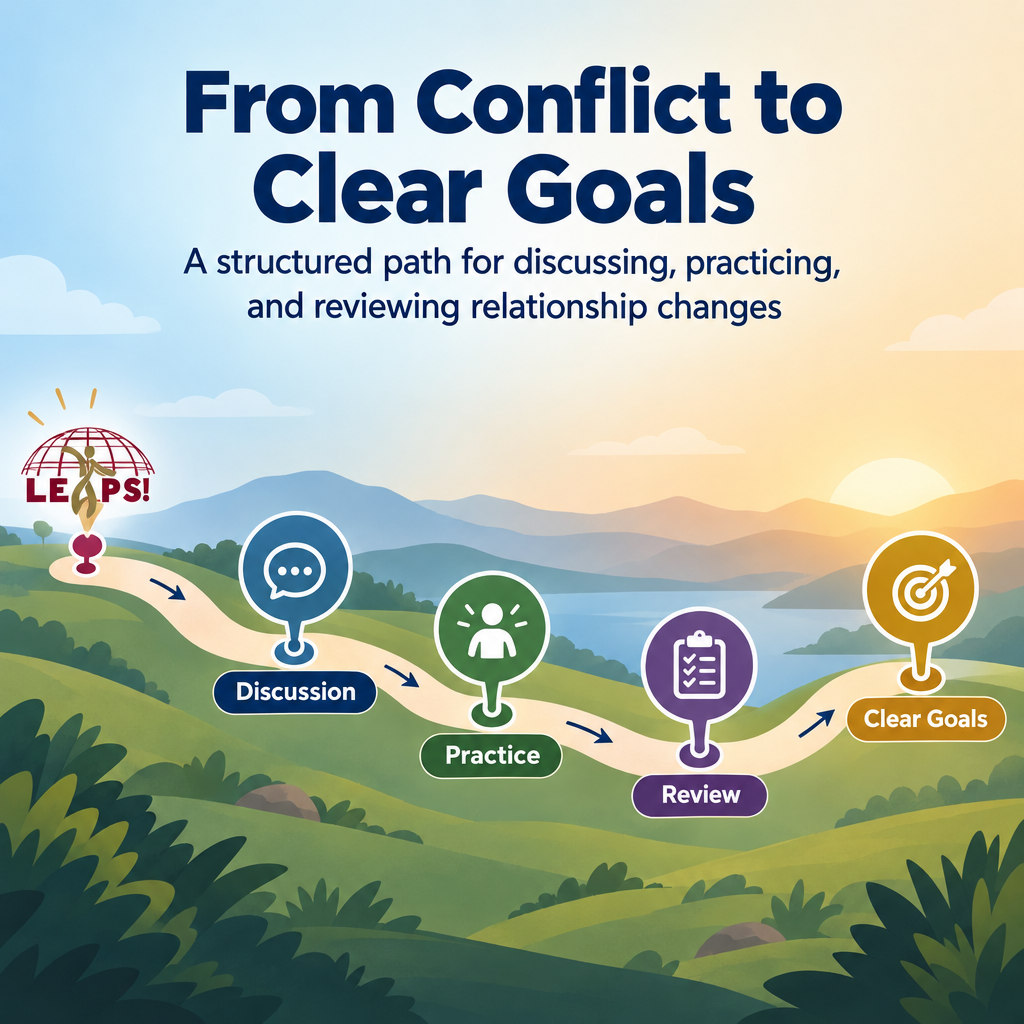
Couples counseling turns a broad complaint into practical goals that partners can discuss, practice, and review. Both people have space to explain what they want to change while the counselor helps identify the interaction cycle that keeps the problem going.
For example, “we never communicate” can become a plan to listen without interruption, express emotions clearly, respond with empathy, or agree on how to pause a heated conversation. Guided practice helps couples move from insight to action instead of discussing relationship history without a next step. LEAPS Inc. brings a structured, compassionate approach that uses collaborative goal-setting, accountability, and practical action planning without promising a particular outcome.
Starting with each partner’s concerns
Each partner should be able to describe the concern from their own experience, including what happens, how it feels, and what they hope will change. A structured conversation helps prevent one person’s account from becoming the entire definition of the relationship problem. The counselor can then look for shared concerns and the cycle connecting them.
Setting measurable relationship goals
Useful goals describe observable actions rather than vague hopes. Partners might agree to use one speaker at a time, ask a question before assuming, or pause and return to a discussion at an agreed time. These details make progress easier to recognize and give both people a practical way to participate.
Practicing new responses during difficult conversations
Change often requires practice while emotions are present, not only discussion after the conflict has ended. Couples may rehearse reflecting what they heard, naming the underlying feeling, and responding with empathy even when they disagree. The purpose is to build a different response to a familiar trigger, one conversation at a time.
How can you prepare for your first couples counseling conversation?
Prepare by bringing one main concern, a few recent examples, and one or two changes you both want to see. Before the first conversation, consider when the pattern began, what you have already tried, and what each partner believes would make the relationship feel healthier.
Specific examples are more useful than a complete list of grievances. Describe feelings, needs, and observations without threats, name-calling, or pressure for an immediate agreement. After the initial conversation, each partner should be able to state the shared concern, the first goal, and the next agreed step.
What to write down beforehand
Write down the main problem, when it usually appears, and one or two recent examples. Add what you tried, what happened afterward, and the change you hope counseling can support. Include a communication goal such as “we want to discuss finances without interrupting” rather than bringing every past disagreement into the first session.
How to describe the problem without assigning blame
Use observations and personal experience: “When plans change without discussion, I feel anxious and become critical.” This gives your partner something specific to understand and respond to. Avoid labels such as “you always” or “you never,” because they often shift attention from the pattern to defending character.
What practical work may couples do between counseling sessions?
Between sessions, couples may practice a short conversation routine, pause before escalation, replace assumptions with questions, and acknowledge the other person’s experience even when they disagree. A setback provides information for the next session; it does not prove that counseling has failed.
- Choose a calm time: Ask whether both partners can talk without rushing.
- Name one issue: Keep the conversation focused on a single concern.
- Allow uninterrupted turns: Give each person time to speak before responding.
- Reflect what was heard: Summarize the other person’s point and ask if you understood.
- Identify the feeling or need: Look beneath the complaint for fear, hurt, reassurance, respect, or another need.
- Agree on one next action: Choose a small step both partners can complete.
- Schedule a check-in: Set a time to review what changed and what remains difficult.
A repeatable conversation routine
A repeatable routine works best when it is short, focused, and used before either person feels overwhelmed. Partners can take turns speaking, reflect what they heard, ask one clarifying question, and name one request. If the discussion escalates, pause respectfully and return at the agreed time rather than abandoning the issue.
Repairing conflict after a difficult exchange
Repair begins with acknowledging the impact of the exchange and taking responsibility for a specific action, such as interrupting or using a harsh tone. Each partner can state what they needed and what they will try next time. Agreement is helpful, but recognizing the other person’s experience can begin repair even when perspectives differ.
Tracking progress without expecting perfection
Track observable changes such as shorter arguments, faster repair, clearer requests, or fewer repeated misunderstandings. Do not measure progress by expecting every conversation to go well. Bring difficult examples to counseling so the process can examine what triggered the setback and identify a more workable response.
How do you choose the right couples counseling support in Tampa or Orlando?

Choose support by matching the provider’s experience and process to the relationship concern. Ask about experience with communication difficulties, recurring conflict, emotional distance, trust issues, betrayal, parenting stress, or infidelity recovery, as well as session format, confidentiality, scheduling, fees, and payment arrangements.
LEAPS Inc. provides couples services in Tampa and Orlando focused on communication, conflict resolution, emotional connection, trust concerns, parenting stress, and infidelity recovery. Confirm current availability, pricing, and service format directly with the practice because a specific therapy fee is not provided here. Couples coaching information and program details are available through LEAPS Inc.’s couples services. Ask whether therapy or coaching better fits your needs.
Questions to ask before scheduling
Ask how the provider approaches your primary concern, how partners set goals, what happens if one person feels unheard, and how confidentiality works. Also confirm appointment availability, session format, fees, and payment arrangements. Clear answers help you decide whether the support feels appropriate before you commit to a process.
Matching the service to the relationship concern
Couples therapy may fit relationship distress, recurring conflict, emotional distance, or trust concerns that require therapeutic support. Infidelity recovery may call for focused work around betrayal and rebuilding trust. Couples coaching may suit partners seeking structured goals and practical accountability, so discuss the difference with LEAPS Inc. before selecting a service.
When should couples contact a professional, and what is the first step?
Contact a professional when conflict remains unresolved, emotional withdrawal continues, trust breaches recur, or you cannot discuss an important issue safely and productively. Infidelity, betrayal, parenting strain, and long-standing communication patterns can require focused support rather than more informal conversations that repeat the same cycle.
The first step is to describe the relationship concern, the outcome you hope for, and your preferred location. You can contact LEAPS Inc. through the practice’s contact page, email info@leapsinc.com, or call +1-855-885-3277 to ask about couples services in Tampa or Orlando.
Signs the pattern needs guided support
Guided support may be appropriate when disagreements repeat without resolution, one or both partners avoid emotional connection, trust remains damaged, or discussions quickly become hostile or silent. You may also benefit when you want to prevent a difficult season from becoming a fixed pattern. An initial conversation can clarify whether couples counseling matches the concern.
How to contact LEAPS Inc.
Tell LEAPS Inc. what is happening, what change you hope to see, and whether Tampa or Orlando is the preferred location. Ask about couples therapy, relationship therapy, or infidelity recovery support, and confirm current availability and fees. We understand that reaching out can feel vulnerable, and we can help clarify the available options.
Frequently Asked Questions
How do I know whether couples counseling can help with our relationship problems?
Couples counseling may fit when recurring conflict, shutdowns, emotional distance, trust issues, betrayal, parenting stress, or communication difficulties keep returning without resolution. You can seek support before a crisis becomes more severe, and an initial conversation can help clarify whether the service matches your concerns.
What happens in the first couples counseling session?
The first session generally gives both partners space to describe concerns, understand recurring interaction patterns, and identify initial goals. LEAPS Inc. uses a structured, compassionate approach that connects collaborative goal-setting with practical action planning, so you can begin identifying what needs to change.
Can couples counseling help us communicate without escalating?
It can provide guided practice for expressing emotions clearly, listening effectively, responding with empathy, and resolving conflict. Progress may involve learning to pause, identify the interaction pattern, and try a different response during and between sessions.
Does LEAPS Inc. provide couples counseling in Tampa and Orlando?
Yes. The supplied business information identifies Tampa and Orlando as service areas for couples services. Contact LEAPS Inc. to confirm current availability, service format, scheduling, and whether couples therapy, infidelity recovery, or coaching best fits your situation.
How much does couples counseling cost at LEAPS Inc.?
A current couples counseling fee is not provided in the available business information. Contact LEAPS Inc. directly for pricing, appointment details, and payment questions by emailing info@leapsinc.com or calling +1-855-885-3277.
How do we get started with couples counseling?
Start by identifying the main relationship concern and one change you both want to work toward. Then contact LEAPS Inc. through the contact page, info@leapsinc.com, or +1-855-885-3277 and ask about couples therapy, infidelity recovery support, or couples coaching.