
Parenting and attachment go hand in hand. The bond you build with your child in those early years doesn’t just feel good in the moment—it shapes how your kid relates to people, handles stress, and sees themselves for the rest of their life.
Here’s the honest take: attachment isn’t something you either have or don’t have. It’s something you actively build through how you show up, respond, and connect. And the good news? You don’t need to be perfect. You just need to be present and intentional.
What Is Attachment in Parenting?
Attachment theory tells us that children develop a deep emotional bond with their primary caregiver—usually a parent. This bond acts like an anchor. When it’s secure, your child feels safe exploring the world. When it’s shaky, they might cling too tightly or pull away.
Related: Children’s Grief Counseling: When & How to Help a Grieving Child
The research is clear: responsive and contingent parenting produces securely attached children. That means when your kid cries and you respond with warmth, when they’re excited and you celebrate with them, when they’re confused and you help them understand—that’s attachment building.
Related: Co-Relationship: What It Means & How to Build Healthy Ones
Securely attached kids actually become more independent, not less. They have higher curiosity, better self-reliance, and more confidence to try new things. The paradox is wild, but it works.
The Four Parenting Styles and Attachment Outcomes
Not all parenting looks the same, and different styles create different attachment patterns. Let’s break down the four main approaches:
- Authoritative Parenting: This is warm plus structured. You set clear boundaries and expectations, but you do it with kindness and explanation. Kids know you care and they understand the rules. This style typically produces secure attachment and emotional stability.
- Authoritarian Parenting: High rules, low warmth. It’s “because I said so” without much room for connection or dialogue. Kids might obey, but they often develop anxious attachment and struggle with independence.
- Permissive Parenting: Lots of warmth but few boundaries. You’re the cool parent who lets everything slide. Kids may feel loved but confused about limits, sometimes leading to ambivalent or resistant attachment.
- Uninvolved Parenting: Low warmth, low structure. There’s emotional distance and minimal engagement. This often creates insecure or avoidant attachment, where kids learn not to rely on you.
Here’s what matters: secure attachment comes from the authoritative mix—being emotionally responsive while also providing clear guidance. That’s the sweet spot.
How Emotional Responsiveness Builds Secure Attachment
The single most important thing you can do for your child’s attachment is respond emotionally. Not perfectly. Responsively.
Related: Coregulation for Couples: Build Emotional Safety Together
Your kid falls down. They cry. You pick them up, soothe them, and help them figure out what happened. That’s responsive parenting. Your teenager comes home upset about a friendship. You listen without immediately trying to fix it. That’s responsive parenting too.
Emotional responsiveness means:
- You notice when your child is struggling, even if they don’t say it out loud.
- You acknowledge their feelings as real and valid, even if you’d handle it differently.
- You’re physically available—eye contact, hugs, being in the same room.
- You follow their lead sometimes instead of always directing the conversation.
- You repair quickly when you lose your cool (because you will).
This doesn’t mean you’re permissive or that your kid always gets their way. It means your child knows you’re tuned in to them and that their emotional world matters to you.
The Role of Physical Proximity and Touch

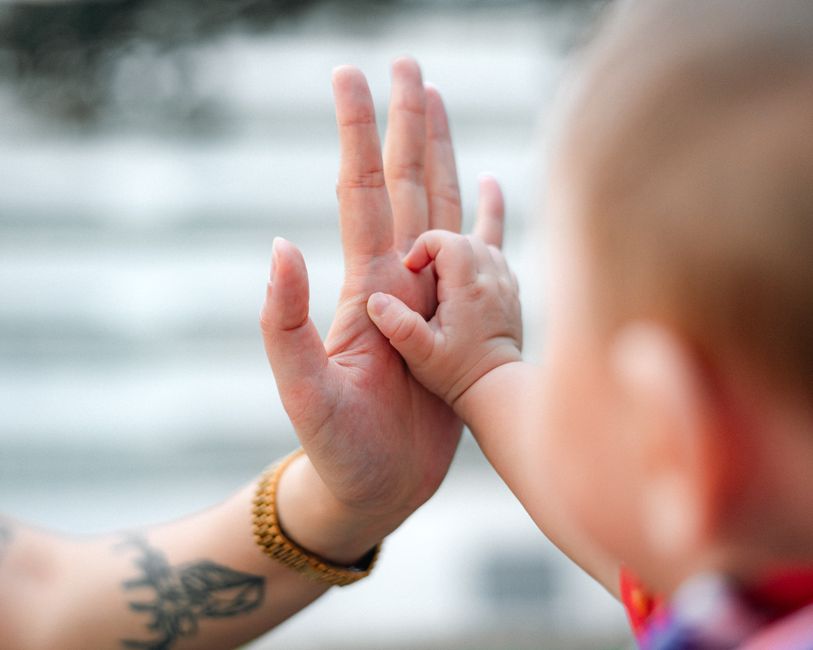
Attachment parenting emphasizes something science backs up completely: physical closeness matters. Your presence literally calms your child’s nervous system.
This looks different at different ages. With infants, it’s holding them, skin-to-skin contact, and responding to their cries. With toddlers, it’s hugs, sitting close while reading, playing on the floor. With older kids, it might be a hand on their shoulder, sitting next to them while they talk, or a hug when they’re stressed.
Touch and proximity signal safety to your child’s brain. When your kid feels safe with you, they’re better equipped to handle challenges, be curious, and eventually separate and become independent. Again, that paradox.
Caregiver Mental Health Affects Your Child’s Attachment
Here’s something that doesn’t always get said plainly: you can’t give your child secure attachment if you’re not taking care of yourself.
Have a health concern?
Your stress, anxiety, depression, and unresolved trauma show up in your parenting. When you’re overwhelmed, you’re less emotionally available. When you’re burned out, you can’t be responsive. This isn’t about blame—it’s about reality.
If you’re struggling with your own mental health, your kid’s attachment suffers. The flip side? When you get support for your own challenges, your entire family feels it. Your parenting shifts. Your connection deepens.
That might mean therapy for you, coaching to work through your own attachment patterns, or learning new tools to manage stress. Whatever it takes. Your wellness is your child’s wellness.
Practical Steps to Strengthen Attachment With Your Child
So what do you actually do? Here are concrete moves:
- Create consistent routines. Bedtime rituals, morning coffee talks, weekly one-on-one time. Predictability builds trust.
- Get curious about their inner world. Ask real questions. Listen without planning your response. Ask “what happened next?” instead of jumping to advice.
- Validate feelings before solving problems. “That sounds really frustrating” comes before “here’s how to fix it.”
- Play and laugh together. Attachment doesn’t only happen during serious moments. Silly games, inside jokes, and laughter create bonds.
- Be honest about your limits. Tell your kid when you’re tired, upset, or need space. Then follow through with repair. “I snapped at you earlier. That wasn’t okay. I was stressed, and I took it out on you. I’m sorry.”
- Show interest in what matters to them. Even if you don’t care about their video game or TikTok obsession, they care. Asking about it shows they matter to you.
These aren’t fancy strategies. They’re just consistent, warm, intentional presence. And that’s exactly what builds secure attachment.
When Attachment Struggles Show Up
Sometimes attachment doesn’t develop smoothly. Maybe you had a rough start with your kid. Maybe you struggled with postpartum depression or were dealing with your own trauma. Maybe there’s been loss or instability. Maybe you and your child just have different temperaments and click less naturally.
That doesn’t mean it’s too late. Attachment can be built or repaired at any age. It takes intentional work, and sometimes it takes professional support.
If you’re noticing signs of insecure attachment—your child is anxious, withdrawn, acting out, or emotionally distant—or if you’re struggling to connect with your kid, that’s worth exploring with someone trained in family dynamics. Parenting and Family Communication Counseling can help you understand what’s happening and give you tools to shift the relationship. LEAPS Inc specializes in family work that’s trauma-informed and compassionate, helping parents rebuild connection with their kids from a place of understanding, not judgment.

Your Attachment Legacy
Here’s something worth sitting with: your own attachment history shapes how you parent. If you grew up with secure attachment, you probably parent with more ease. If you grew up with insecure attachment, you might find yourself repeating patterns you didn’t want to repeat, or swinging hard in the opposite direction.
That’s not a failure. That’s an opportunity. Once you understand your own attachment story, you can make different choices for your kid. You can break cycles. You can build something healthier.
The best part? Your child doesn’t need a perfect parent. They need a parent who shows up, tries, repairs when they mess up, and genuinely cares about their emotional world. That’s it. That’s the foundation of secure attachment.
FAQs: Parenting and Attachment
What age does attachment start forming?
Attachment begins forming from birth or even before. In the first few months, your baby is learning whether they can trust you to meet their needs. By around 6-8 months, babies typically show clear attachment to their primary caregiver. But attachment development continues throughout childhood and into adulthood. It’s never too late to work on it.
Can a child have secure attachment to more than one caregiver?
Absolutely. Kids can and do have secure attachments to multiple people—parents, grandparents, consistent caregivers. The key is that each person is emotionally responsive and available. Your child can have a secure base with more than one person, and that’s actually healthy.
What if I didn’t have secure attachment growing up?
You can still build secure attachment with your child. The awareness that you want something different is the first step. Many parents who grew up insecurely attached become deeply intentional about parenting differently. You might need support—whether that’s therapy, coaching, parenting classes, or reading—but healing and change are absolutely possible. Your past doesn’t have to be your child’s future.
How do I know if my child is securely attached?
Securely attached children typically show these signs: they cry or seek you out when upset or scared, they calm down when you comfort them, they’re willing to explore and play even when you’re not right next to them, they greet you when you return after separation, and they show genuine affection. They’re not clingy or distant—they have a healthy balance of independence and connection.
Have a health concern?